

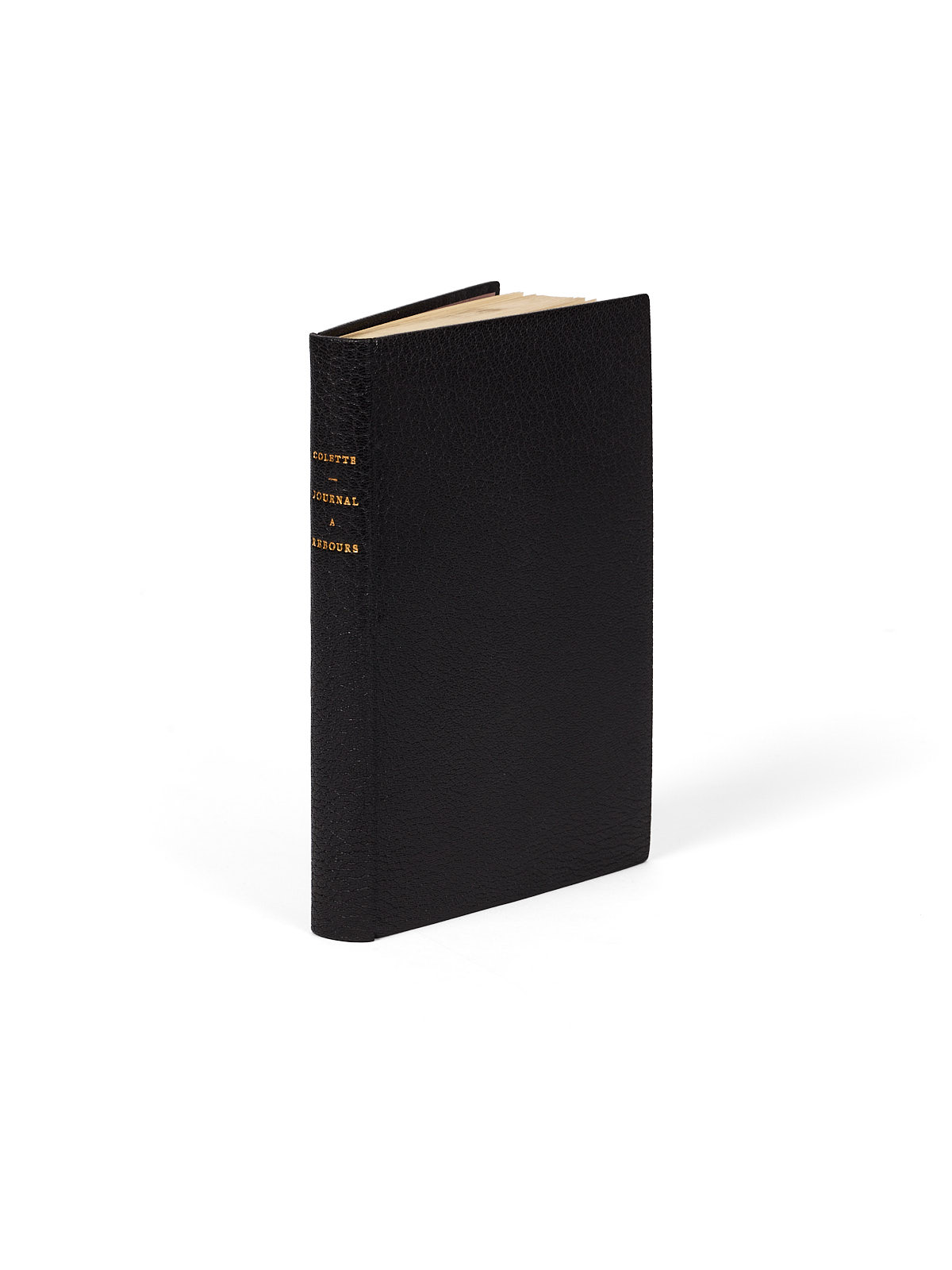
Journal à rebours
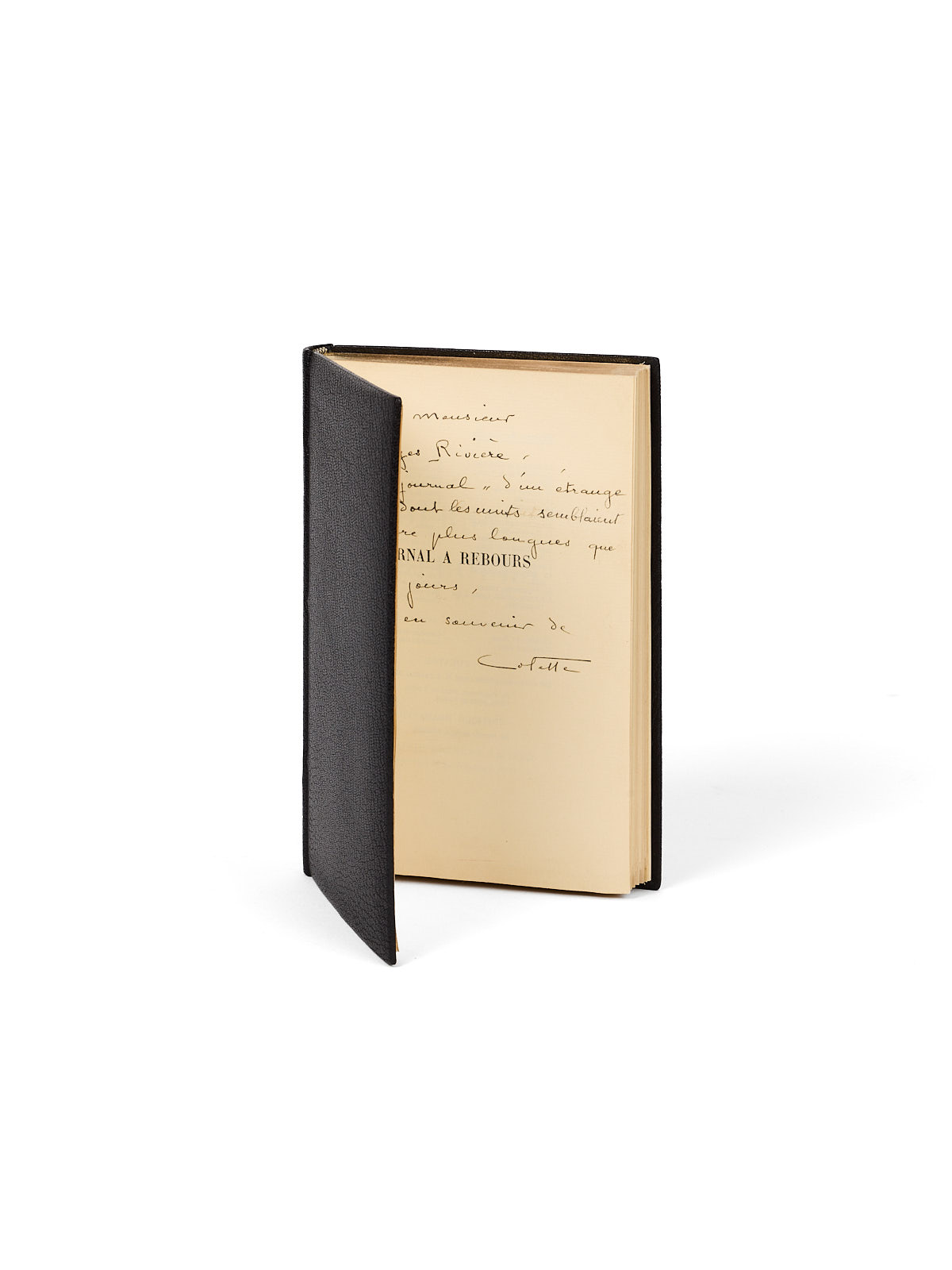
One of 20 copies on Hollande paper, first of the deluxe issue (no. 19).
Signed presentation inscription: “Pour monsieur Georges Rivière, ce ‘journal’ d’un étrange été dont les nuits semblaient encore plus longues que les jours, en souvenir de Colette.”
In the spring of 1940, as the shadow of defeat grew, panic-stricken France streamed south, fleeing the advancing enemy. Colette experienced the exodus like so many others: “pushed from behind,” she left Paris with her third husband, Maurice Goudeket, and went to stay with her daughter Colette de Jouvenel, known as Bel-Gazou, at Curemonte, where life was organized as best it could be.
An avid consumer of perfumes and cosmetics (lipstick, foundation, kohl…), Colette — drawing on her experience running a beauty institute that had met with little success — never missed an opportunity to allude to it in her writing. It is there, in the makeshift lodgings between the ruined châteaux of Saint-Hilaire and Plas, that Le Journal à rebours begins. She wrote the first part there, titled “Danger,” and published the collection in March 1941. In the meantime she had added a series of texts on Provence, memories of Maurice Ravel, animal pieces — including the magnificent “Le cœur des bêtes” — and a confession, “La chaufferette,” which reads almost as a proclamation: “No, I did not want to write. When one can enter the enchanted kingdom of reading, why write? […] It is a little late for me to ask myself that now. What is done is done.”
A fine copy of the deluxe issue, enriched with a presentation inscription.