

Manifeste du surréalisme – Poisson soluble
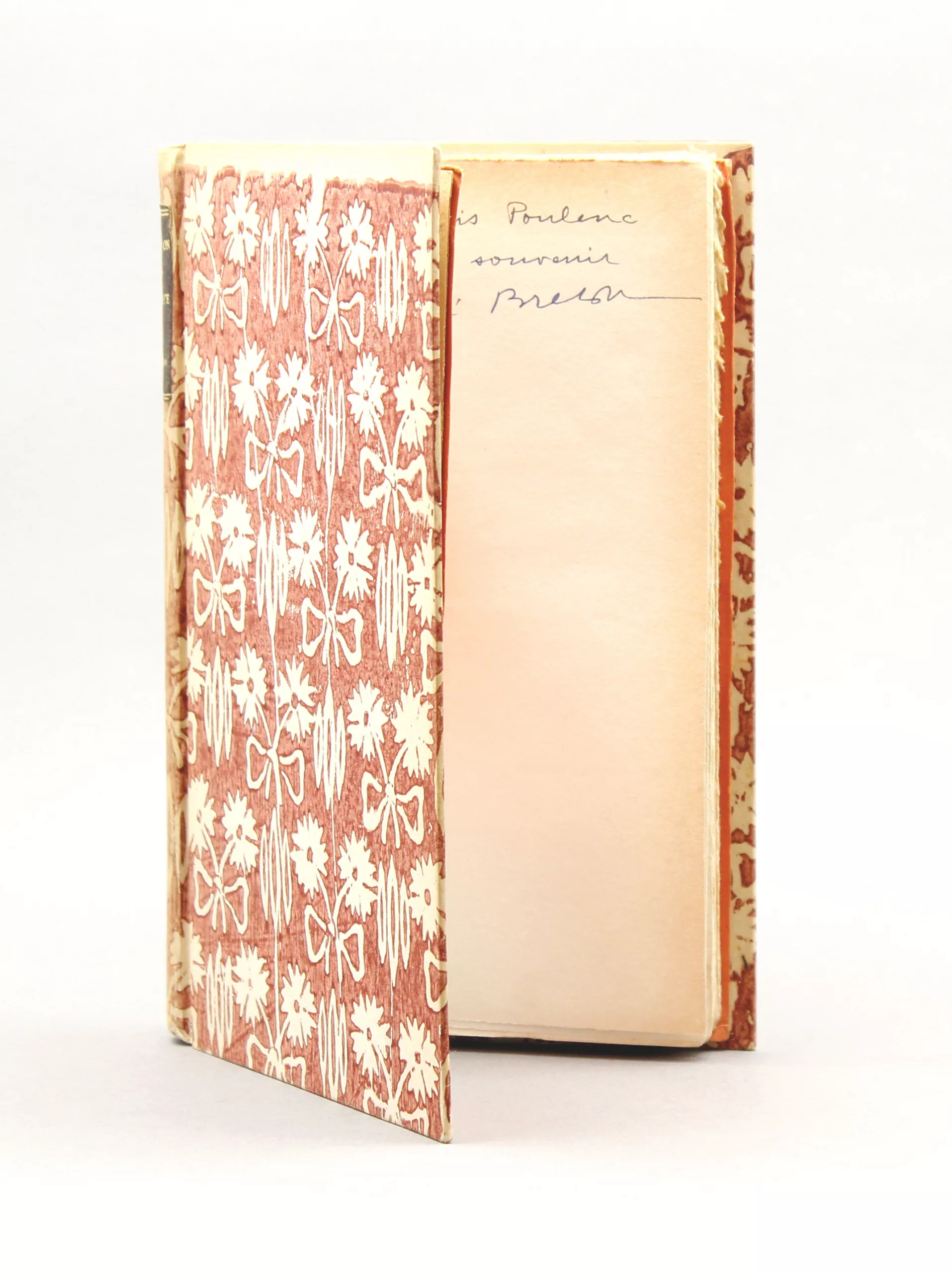
Signed presentation inscription: “à Francis Poulenc, amical souvenir, André Breton.”
The “Manifeste du surréalisme” was originally intended as a preface to Poisson soluble, a collection of automatic texts, but Breton instead published the first Manifeste du surréalisme on 15 October. Disillusioned with the apathetic Dadaists — Tzara above all, whom he had long admired — and backed by considerable literary standing and an impressive circle of allies (including Louis Aragon, Paul Éluard, Robert Desnos, René Crevel and Francis Picabia), Breton broke definitively with Dada and offered a first definition of Surrealism: “pure psychic automatism, by which one proposes to express, whether verbally, in writing, or by any other means, the actual functioning of thought.”
Francis Poulenc, though he never formally joined the movement, followed all its developments. Over his lifetime he passed through several cultural revolutions: the cubism of the “bande à Picasso,” Surrealism, Serge Diaghilev’s Ballets Russes, and even the Folies Bergères under Paul Derval. The link between cubism and Surrealism was forged as early as 1919 at the celebrated bookshop “Aux amis des livres” on the rue de l’Odéon, then a major center of literature in the making. Poulenc was one of the “potassons,” as regulars of this meeting-place run by Adrienne Monnier called themselves: “What rare and marvelous memories I owe to this friendship! It was on the rue de l’Odéon that I had the privilege of meeting Apollinaire several times. […] It was there, too, escorted by Breton and Aragon, that I first met Paul Éluard, who played such a role in my life.” Along with Apollinaire, Éluard was in fact the poet who most inspired Poulenc, who would later write that “if my tombstone read: here lies Francis Poulenc, the musician of Apollinaire and Éluard, I think that would be my finest claim to glory.”
A fine copy of the first printing, with its wrappers, in a charming period paper-covered binding of the kind that adorned all the books in Poulenc’s library.