

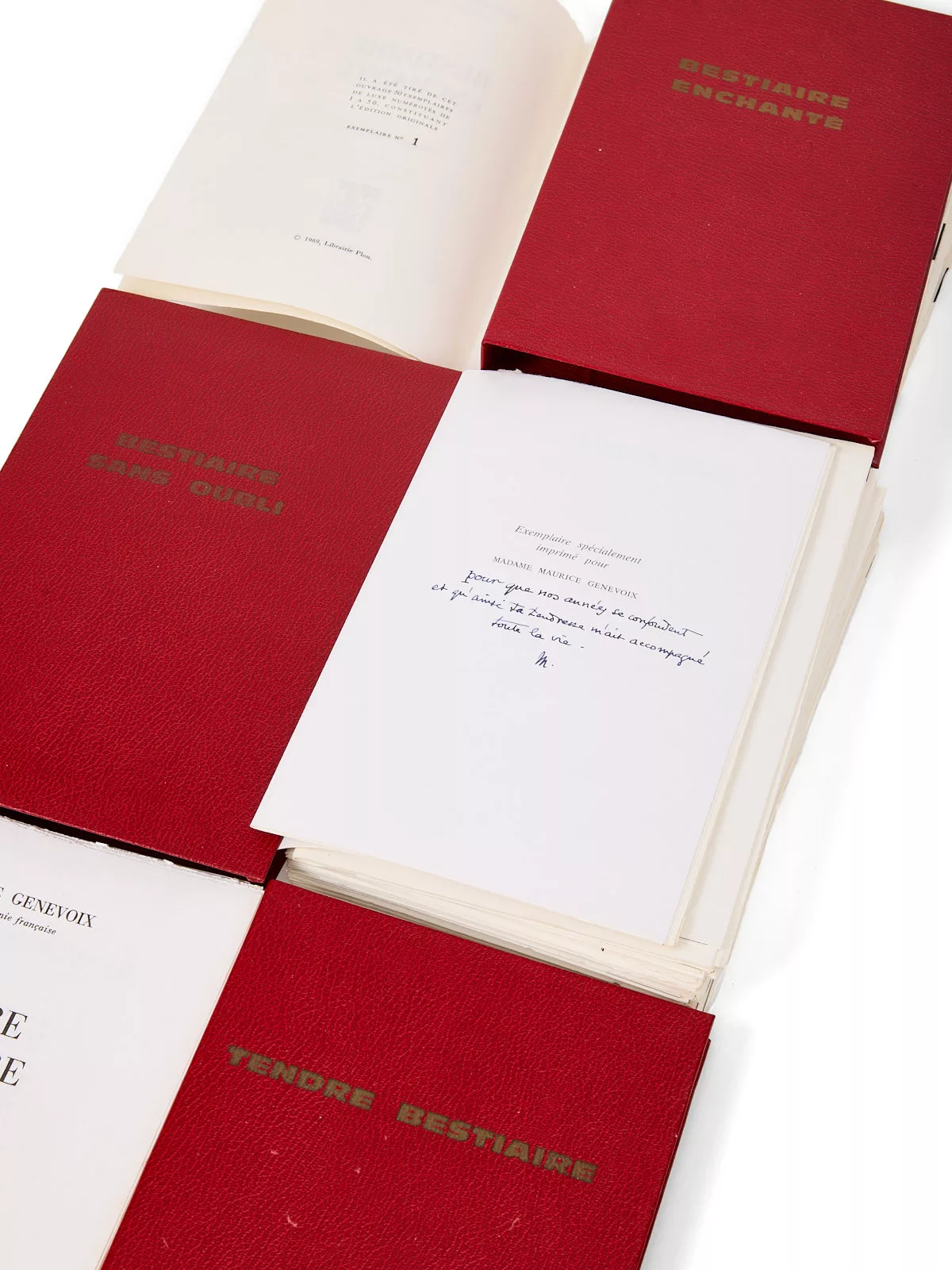
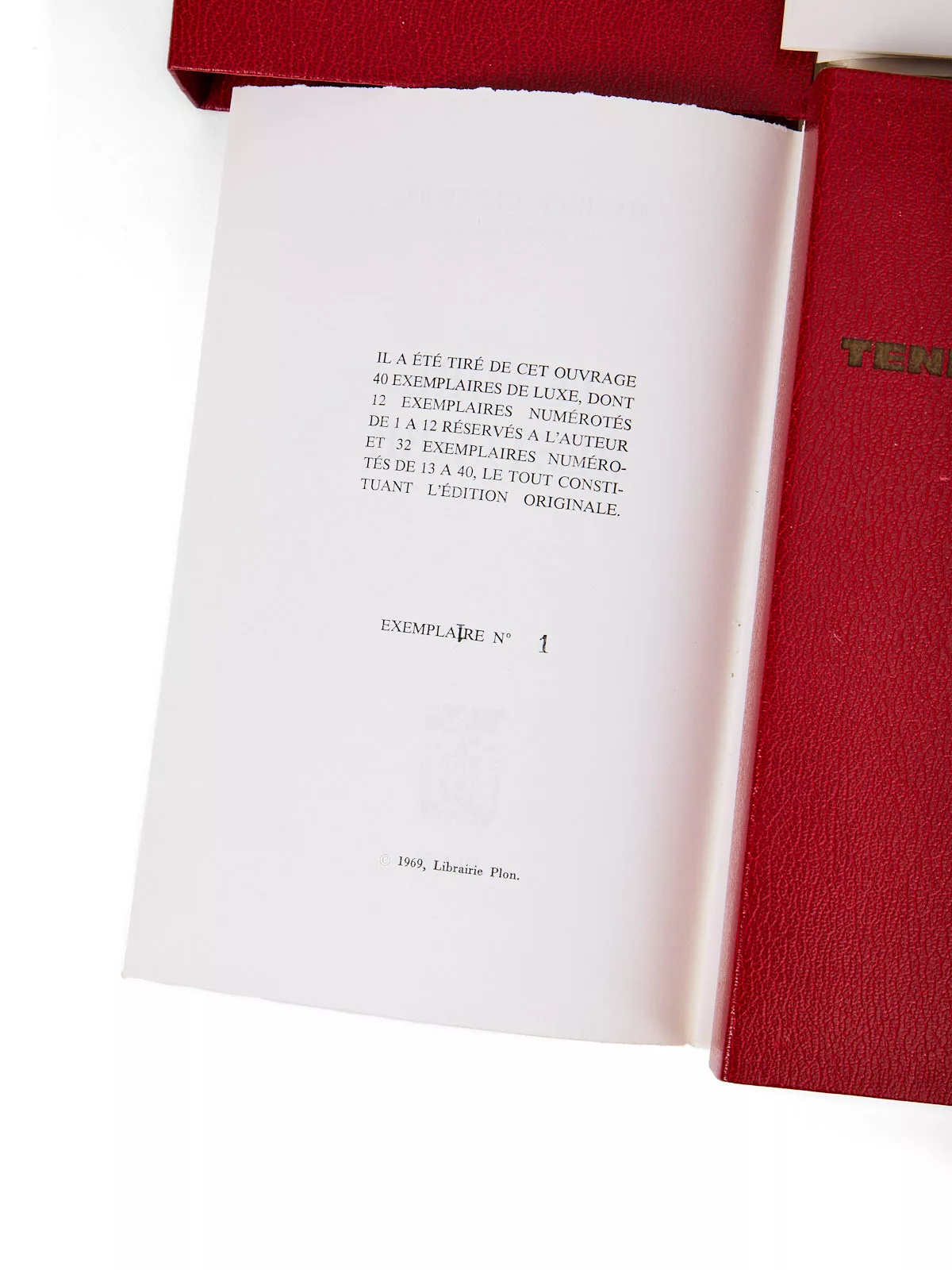
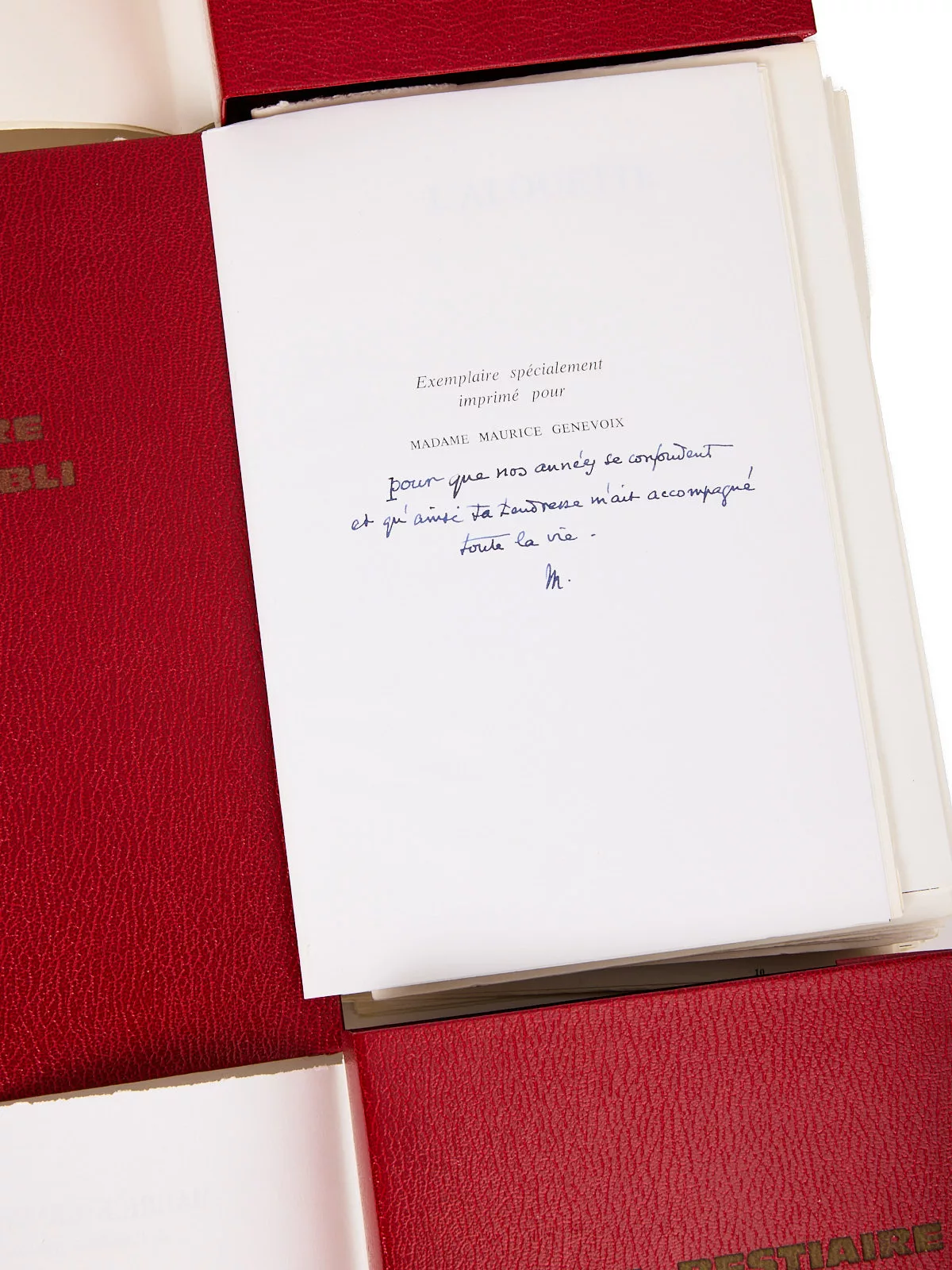
Tendre Bestiaire. Le Bestiaire enchanté. Bestiaire sans oubli
While serving as Permanent Secretary of the Académie française, Genevoix published Tendre Bestiaire in 1969, hailed at once as a literary event. The book presents a rich and striking panorama of animal life, offering him the chance to “renew friendship with other living creatures, free beasts,” each one captured vividly in the warmth of emotion and feeling. Genevoix had already produced a considerable body of work, including several titles devoted to animals, but it is in this book — and the two that followed, forming a triptych — that he probes most deeply into their mystery, opening with the moving and sublime text “L’Abattoire.”
The second volume, Bestiaire enchanté, allowed Genevoix to return to an essential point: “Let me state it once and for all, or twice if I have already said it. My only resource throughout all these pages has been, and will always be, my memory. From the very first pages, from my Tendre Bestiaire onward, I had unconsciously accepted the challenge. As I became aware of it, my resolve to see it through only grew stronger. I have rubbed shoulders with books enough in my life to know what help one can expect from them — and in what domain. This is not theirs. I leave to encyclopedias, with respect and often with admiration, the task of providing information necessary for other purposes. They too have their poetry, but it withers and fades at the compiler’s touch.”
The final volume, Bestiaire sans oubli, was published in 1971 and later adapted for radio. It gave Genevoix occasion to return once more to the Great War and to the importance of the cavalry, and thus of the horse. “I have breathed the stench of the charnel fields. If it is true, as the famous saying goes, that the corpse of an enemy always smells sweet, then I was wrong. But those who fought in August and September 1914 could never forget the atrocious odor of a battlefield where the dead lay unburied — the smell of men… the smell of horses […]. I also wanted to convey the suffering of animals in war: stray cats, lost cows, and above all, horses. The old gray horse of Les Éparges that I saved, for a few days, from the one that screamed in the night before the wood of Saint-Rémi among the abandoned wounded. ‘Stretcher-bearer!’ called the French, and the Germans, ‘Hilfe! Hilfe!,’ and then that long, wailing moan, as pathetic as the voices of men…”
Illustrations by J. Robion in the text.
A very fine set.