

D’un château l’autre
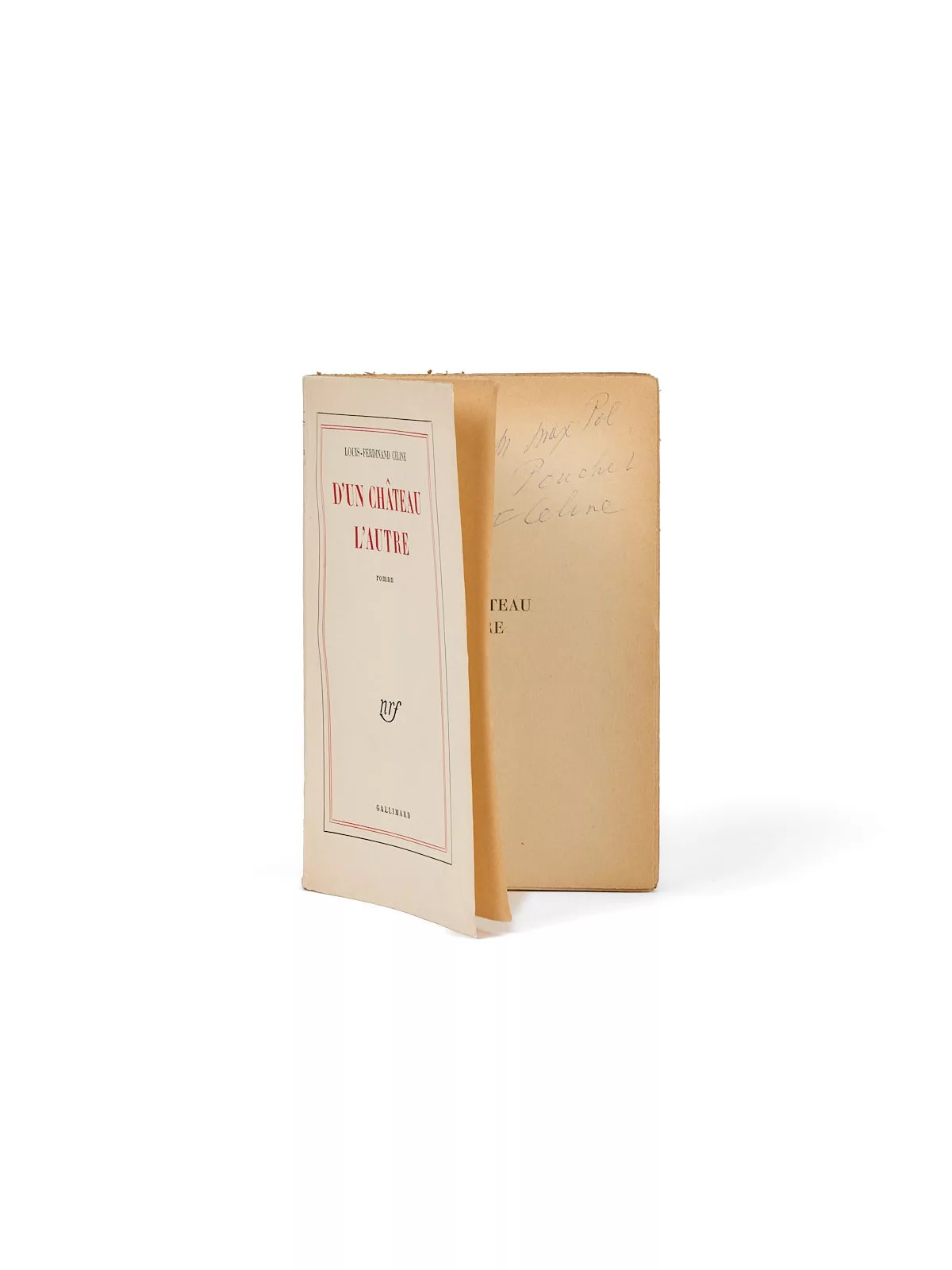
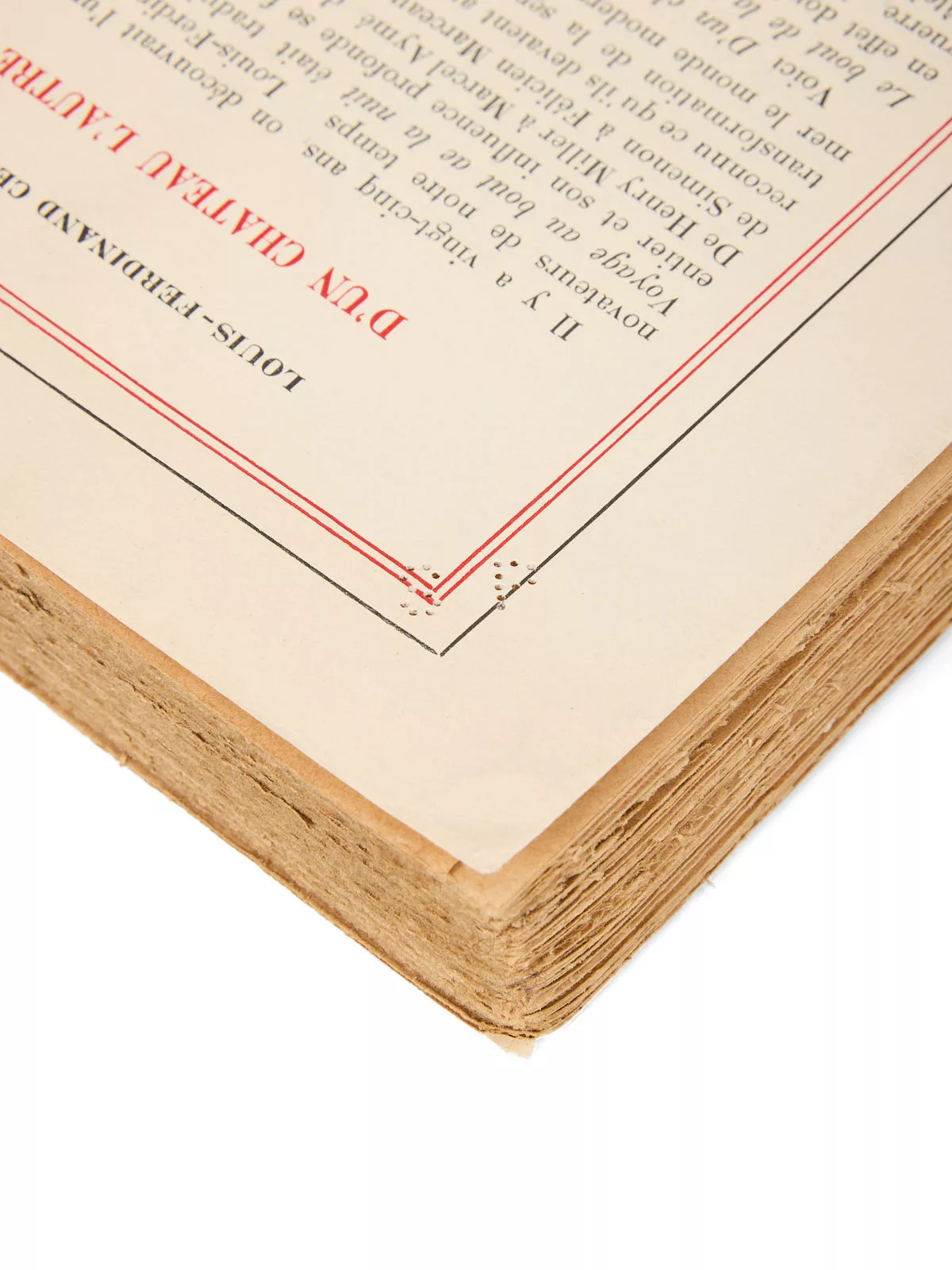
One of the review copies, stamped as such.
Inscribed and signed: “À Max-Pol Fouchet, Céline.”
A scandalous success as well as a publishing triumph, D’un château l’autre is the first volume of a novelistic trilogy, followed by Nord and Rigodon, and marks the writer’s return to the front rank of French letters.
Céline recounts his journey across Germany and his stay, until April 1945, in Sigmaringen. This former Hohenzollern capital had become the seat of the “Sigmaringen government,” sheltering the figures of the Vichy regime and of collaboration. As the publisher’s insert for the book states, “Céline is not made for objectivity. Under his pen, Sigmaringen becomes a tale of fairies and witches (few fairies, many witches).”
An interesting, even audacious provenance: Céline, taking advantage of the (false) amnesty he claimed for himself, sought to regain success. In this light, an inscription to Max-Pol Fouchet — the man behind the review Fontaine and a figure of literary resistance in Algeria — is particularly pointed.
In the May 1973 broadcast of Italiques, one of the most celebrated literary programs of the day, Max-Pol Fouchet devoted a debate to Céline, forcefully raising the question of his antisemitism, which he called “stupid, narrow-minded, unacceptable, unworthy of a man with any sense of honor […].” He added: “Antisemitism is not a political stance, it is a human one. One might still tolerate — tolerate, though of course I do not accept it — one might still tolerate being antisemitic in normal times, if you will, before the war, but to be so at the time of Hitler, that is despicable.”