

Le Droit de varech
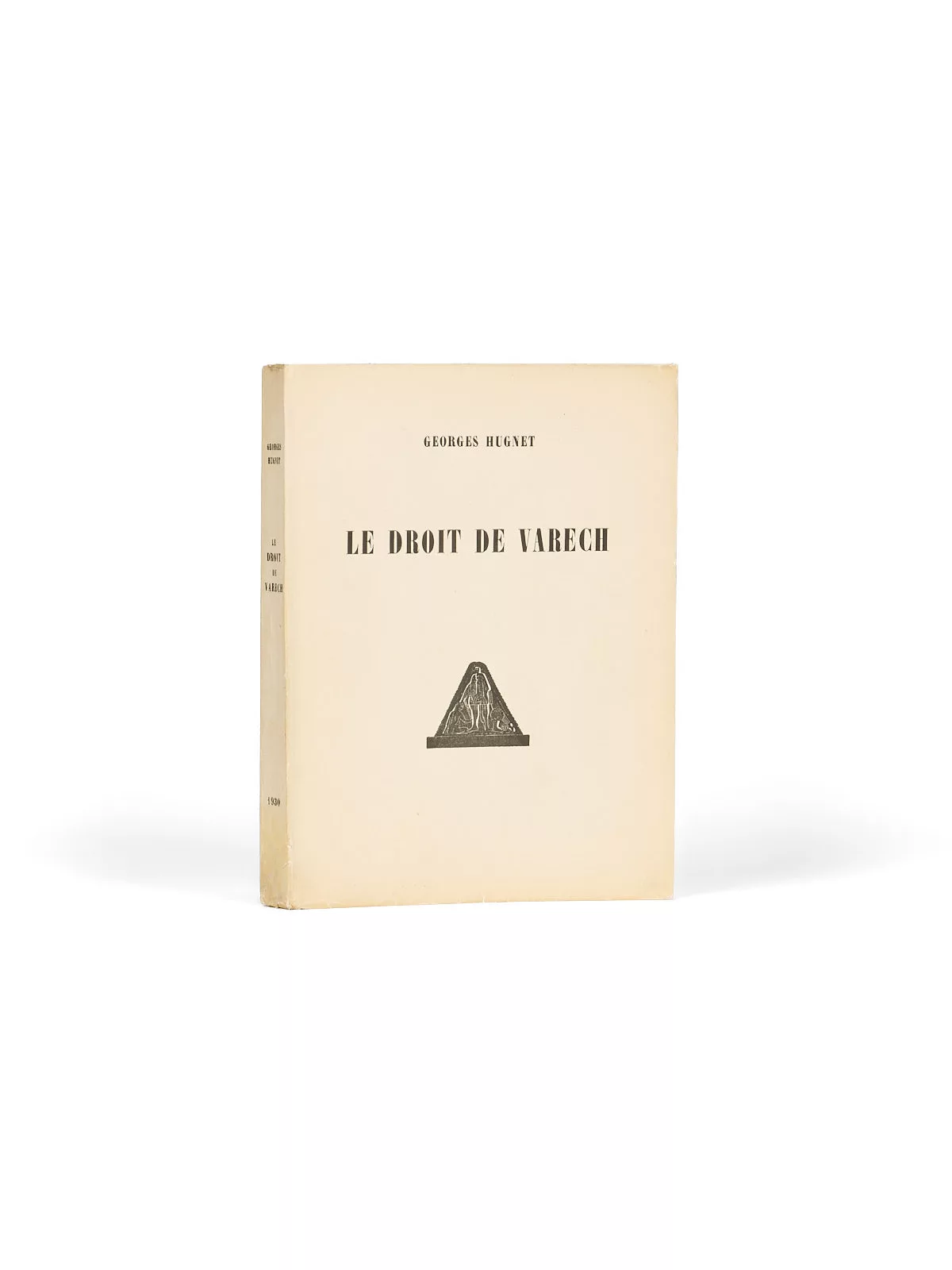
One of 400 copies on alfa paper (no. 104).
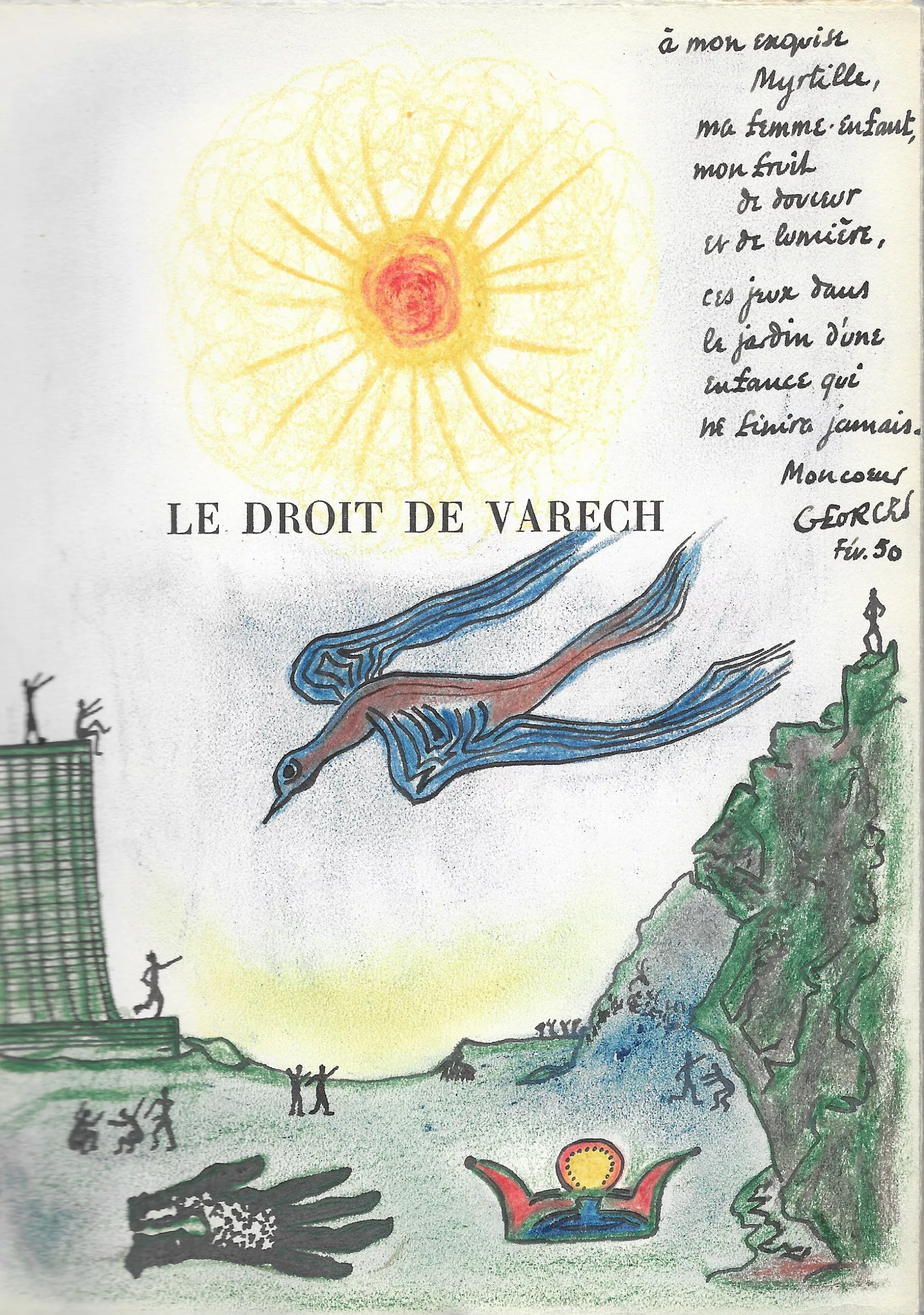
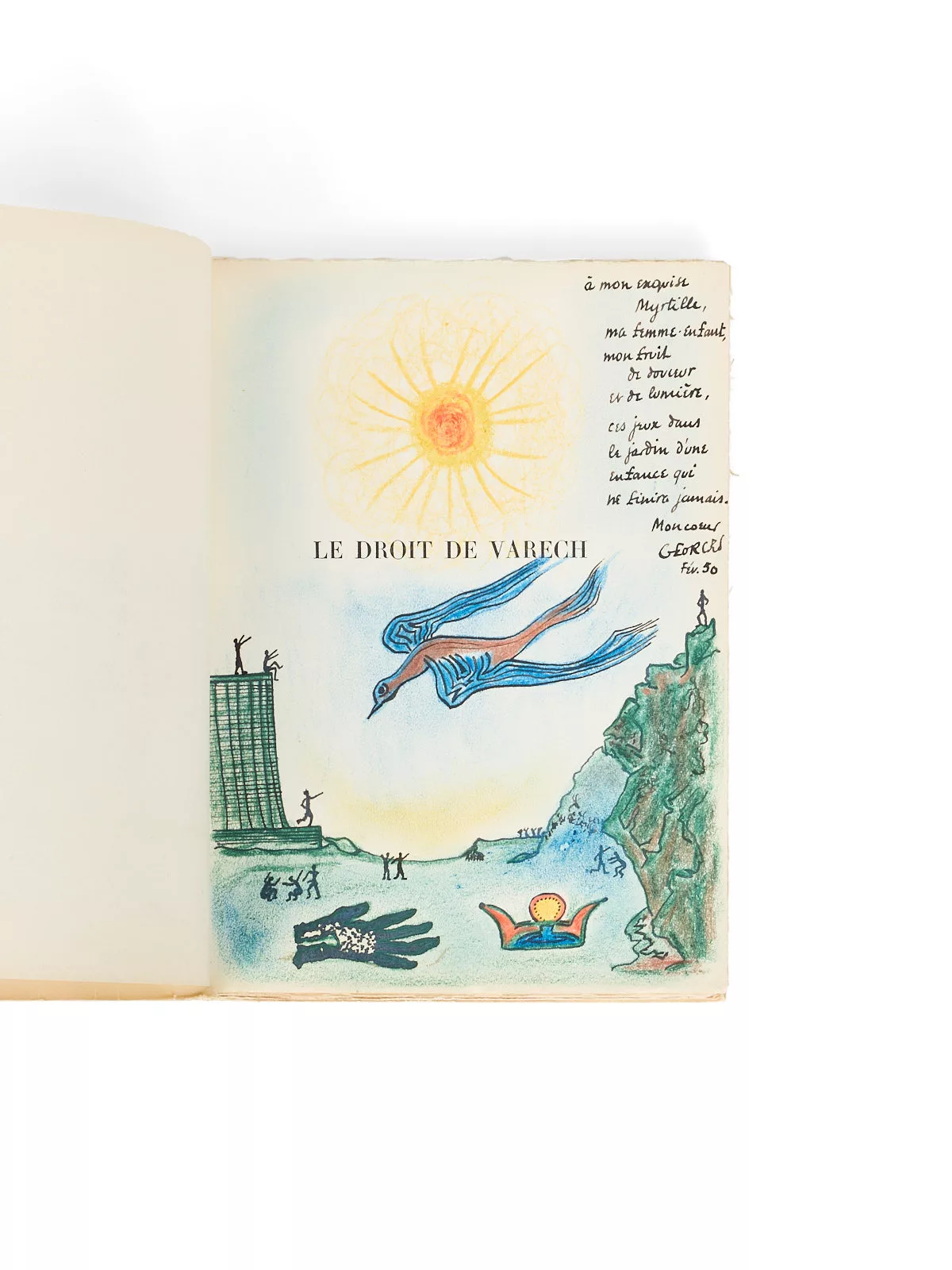
Presentation copy inscribed by Hugnet to Myrtille Hubert: “à mon exquise Myrtille, ma femme-enfant, mon fruit de douceur et de lumière, ces jeux dans le jardin d'une enfance qui ne finira jamais. Mon cœur. Georges. Fév. 50.”
Myrtille Hubert, to whom Hugnet inscribed this copy, was only seventeen years old; she would become his wife two months later. The inscription is accompanied by a very large original drawing by the author, in a Surrealist vein, in ink and colored pencils, covering the entire half-title.
Among the “political” figures of Surrealist theater, the tyrant is certainly one of the most recurrent. While Père Ubu, revived by Max Ernst in 1937, is the emblematic figure, others had used the type before him: Ribemont-Dessaignes as early as 1916 in L’Empereur de Chine, and Ivan Goll in Mathusalem in 1923. Hugnet offers his own version here in 1930, in Le Droit de Varech, “in connection with the utopian project of social prosperity based on the magical power (…) of a marvelous mechanism that draws ships toward an island in order to build its wealth” (Surréalisme et politique, p. 102). That he should present this copy to his young future wife is rather symbolic: the marvelous mechanism in question, like the siren luring sailors, turns out in Le Droit de Varech to be… a woman.