

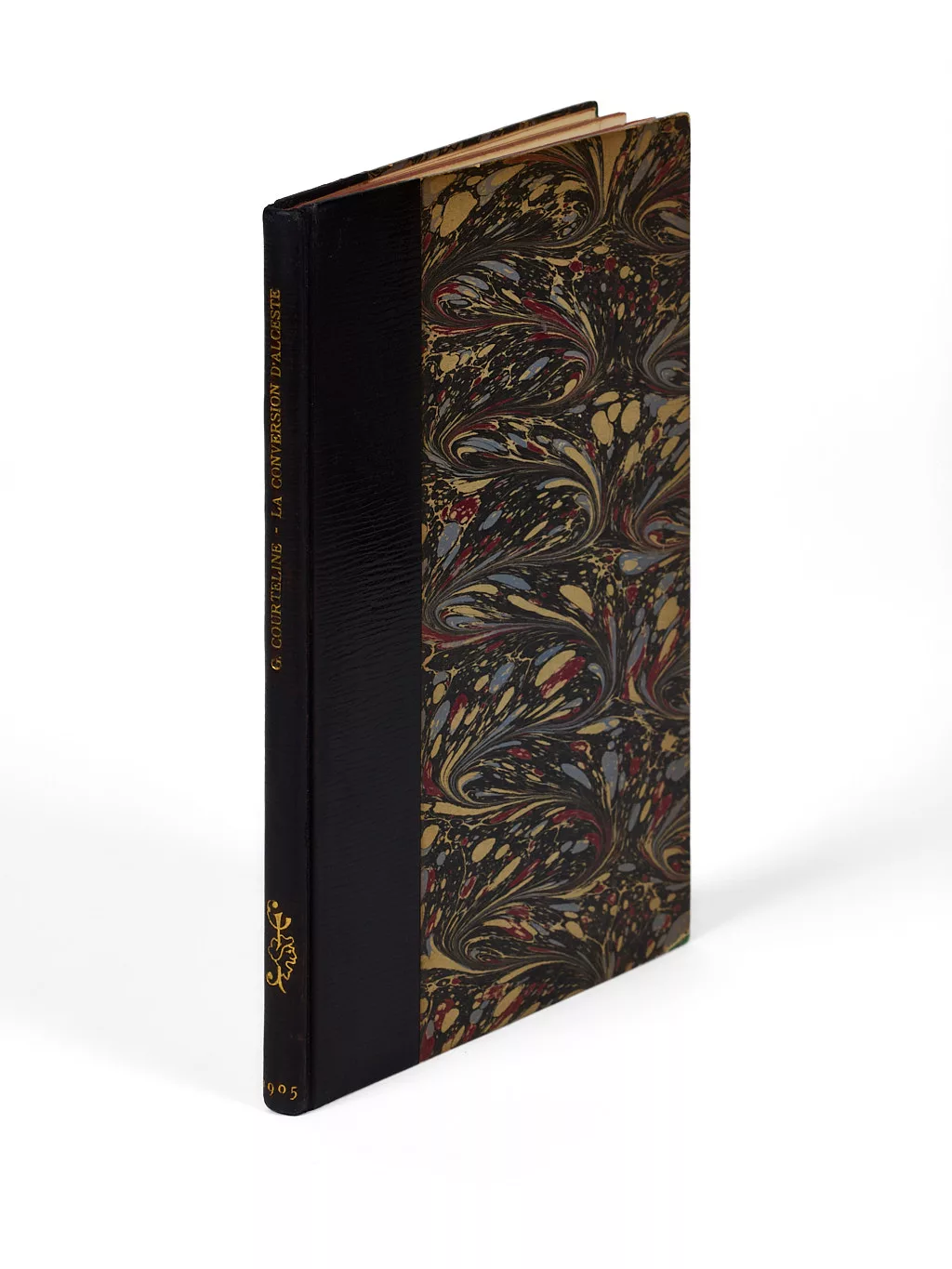
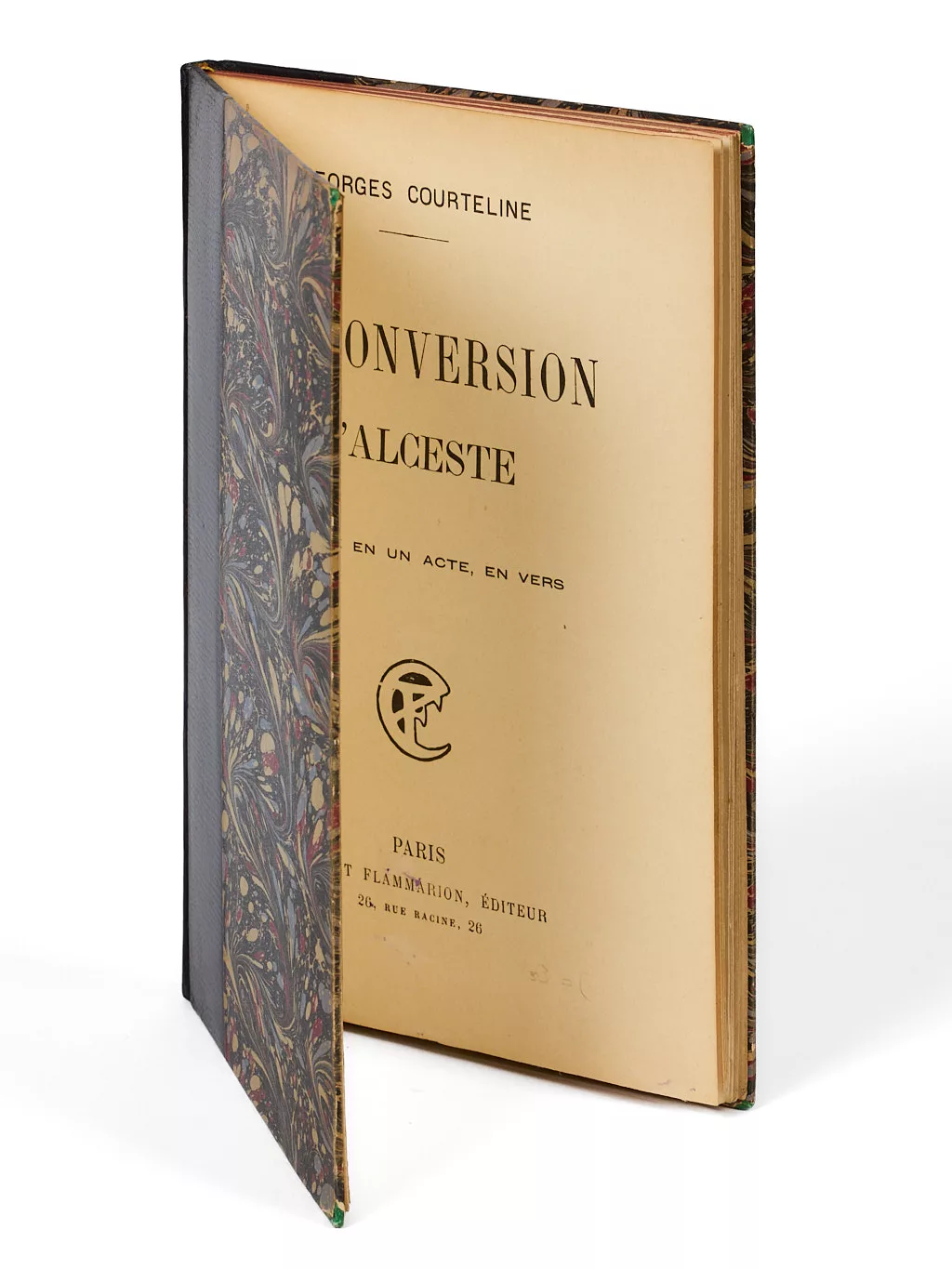
La Conversion d’Alceste
One of 20 copies on vergé de Hollande, justified in ink, this copy no. 3.
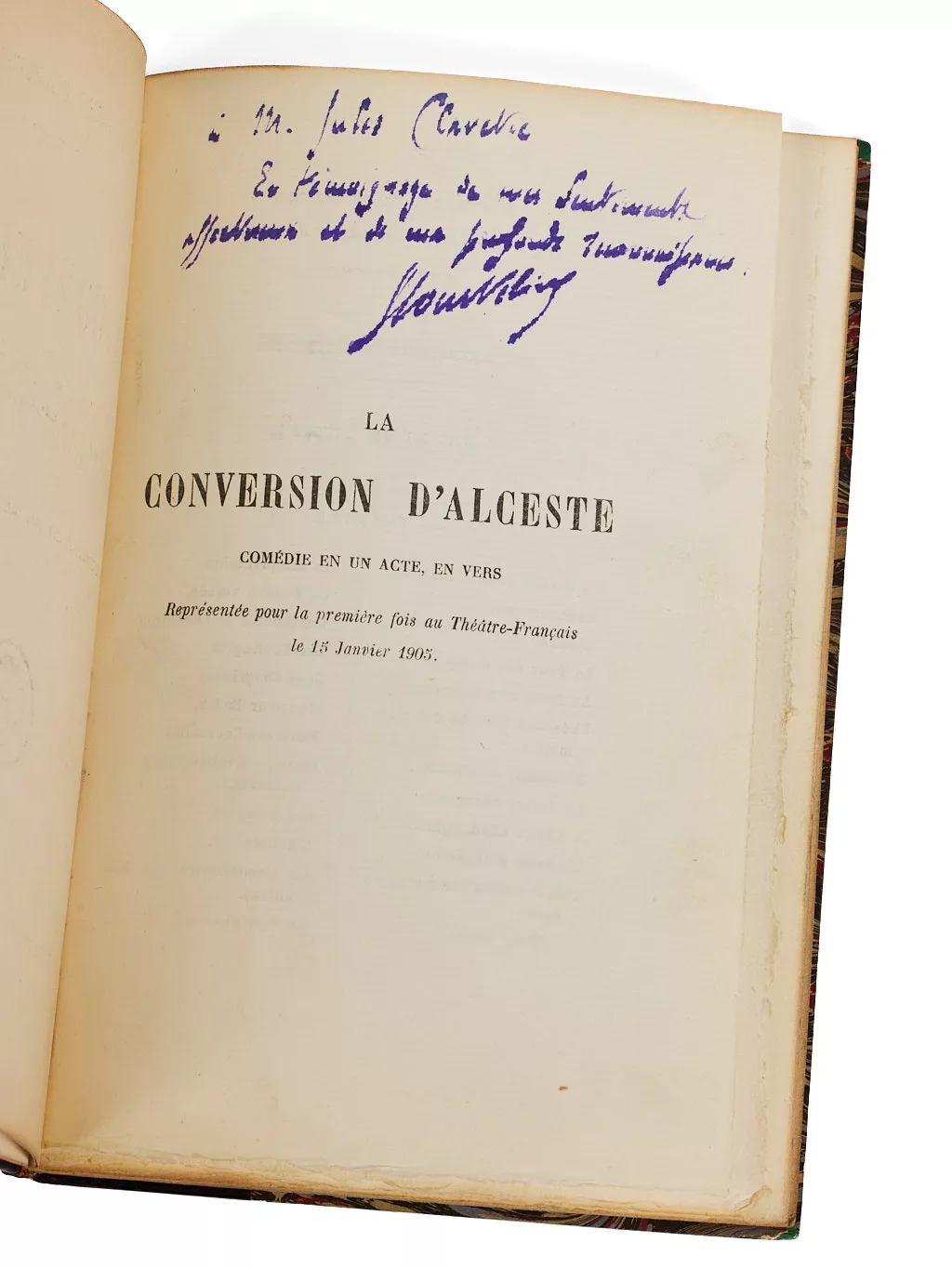
Presentation copy inscribed by Courteline to Jules Claretie:
“À M. Jules Claretie. En témoignage de mes sentiments affectueux et de ma profonde reconnaissance. G. Courteline.”
Courteline’s comedy was first performed at the Théâtre-Français on 15 January 1905. Conceived as a sequel to Molière’s Le Misanthrope, it was written in the same style, in alexandrine verse, and was first published in the review L’Illustration théâtrale on 28 January 1905.
The play was warmly received by critics: “This delightful little piece for all lettered readers […] was very spiritedly carried by M. Mayer as Alceste. The author has supposed, without much plausibility to be candid, though nothing forbids such a liberty, that Alceste has converted, or rather has tried to convert himself. He has sworn to always look for the good side of things; he has promised to be amiable in society and indulgent toward men’s failings; and in the end he marries Célimène, withdrawing the famous ultimatum he had claimed to impose on her: to retire into solitude and ‘renounce the world’” (Émile Faguet, Propos de théâtre, 4th series, 1907).
Jules Claretie, as administrator of the Comédie-Française from 1885, played a crucial role in supporting and promoting Courteline’s work. He notably facilitated the staging of several of his plays, contributing to their success, including that of La Conversion d’Alceste.
The play also attracted the attention of bibliophiles, as the “Société des XX” chose it as the first work it would publish. It was printed at the Imprimerie Nationale, with two states of a frontispiece, imitating Molière’s original editions in format, paper, typography, ornaments, frontispiece and even spelling, bound in limp vellum with flaps.
These two printings — the Flammarion issue and that for “Les XX”, each limited to 20 copies — together constitute the deluxe issue of the text.