

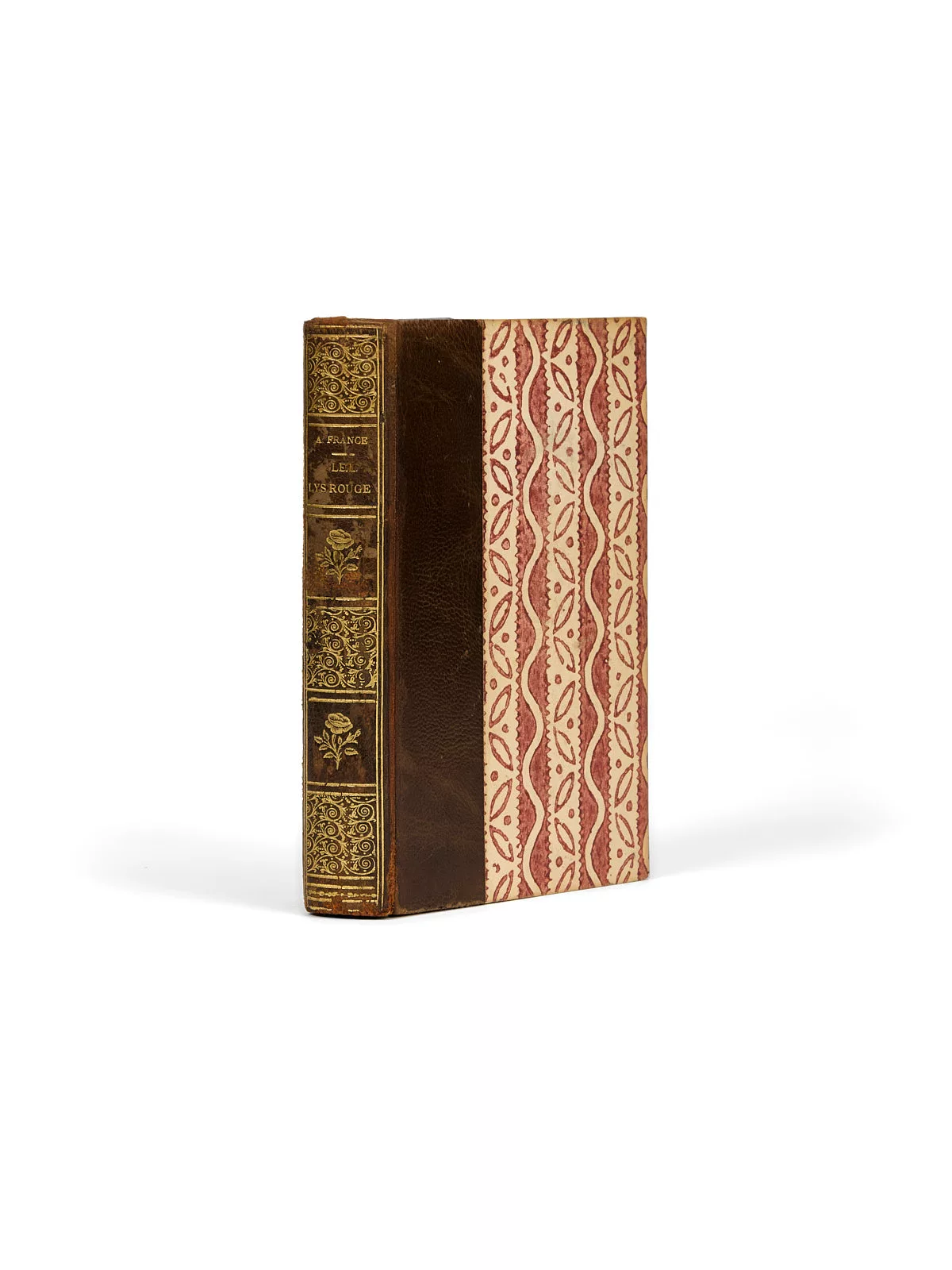
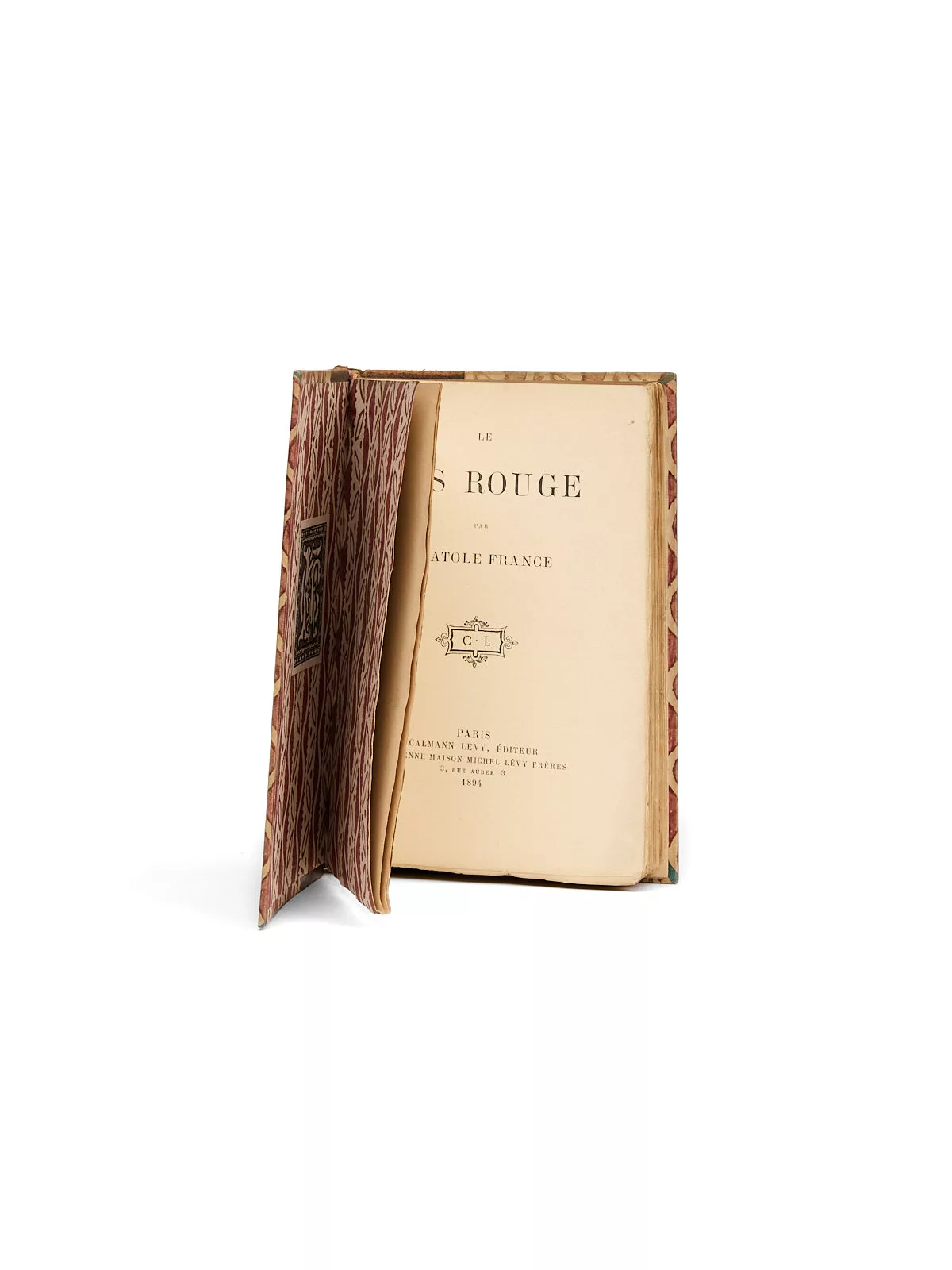
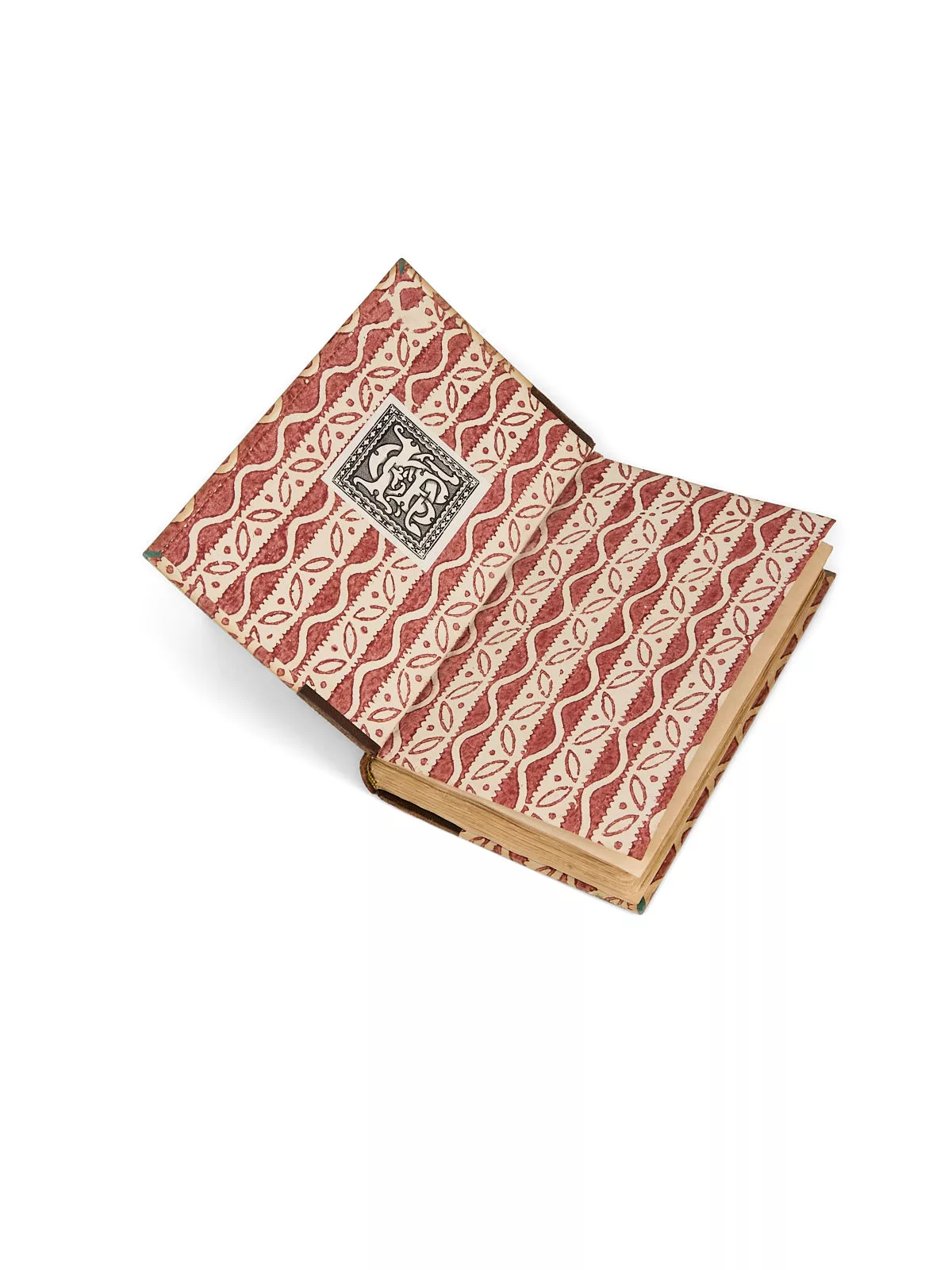
Le Lys rouge
Accompanied by: a bound copy of the second edition, published by Calmann-Lévy in 1924.
It has often been said that the figure of Léontine Arman de Caillavet lies behind Thérèse, the heroine of this novel. It would be almost impossible to name every guest who passed through Madame de Caillavet’s salon at her townhouse at 12 avenue Hoche: the whole of literary, political, artistic and fashionable Paris attended. Anatole France met her in 1883. A few years later, their liaison — kept secret even after France’s divorce in 1891 — informed the female figures of both his Thaïs (1890) and Thérèse in Le Lys rouge (1894). They remained closely bound until Léontine’s death in 1910: “The influence Madame Arman de Caillavet exerted on the foremost writer of her time is probably unique in literary history.”
A crucial witness to this relationship, and an admirer of Le Lys rouge, was Marcel Proust, a regular at avenue Hoche, whose first book, Les Plaisirs et les Jours, France agreed to preface. Presenting a copy of that book to Madame de Caillavet — through whom he had been introduced to France, and who had persuaded him to write the preface — Proust wrote: “To Madame Arman de Caillavet […] assuring her of my respectful and grateful friendship, and endlessly discussing with her, chosen by the author of Le Lys rouge, the famous line: ‘L’amitié d’un grand homme est un bienfait des dieux.’”