

La Guerre des mondes
Sole printing of 500 numbered copies, this a passe copy (unnumbered and unsigned).
32 full-page drawings printed on cream gummed paper, and 101 in-text engravings.
This is the very first illustrated edition, published eight years after the first publication. The original English edition, published in 1898, was not illustrated. It is worth noting, however, that the pre-original serialization (in Pearson’s Magazine, in 1897) was illustrated with a few drawings by Warwick Goble, with which Wells was disappointed — chiefly on account of the way the artist depicted the Martians.
A superb edition illustrated by the Brazilian artist Alvim Corrêa.
Born into an aristocratic family, Alvim Corrêa left Rio de Janeiro to settle with his family in Lisbon, then in Paris. In 1894 he began his artistic training with Jean Baptiste Édouard Detaille (1848–1912), a celebrated painter of military subjects, and the following year attended the studio of Jean Jacques Brunet. Having fallen in love with Blanche Fernande Barbant — daughter of the engraver Charles Barbant — he married her against his family’s wishes, who cut off his allowance. Undeterred, he moved with his wife to Brussels, where he opened a studio. To make ends meet, Corrêa worked in mural decoration, advertising design, caricature and erotic drawing, the latter signed under the pseudonym Henry Lemort.
It was in Brussels, in 1903, that he discovered Wells’s novel and decided to cross the Channel to meet him and propose illustrating it. After a few trial sketches, Wells agreed without hesitation. It took the artist a little over two years to complete the 137 illustrations for the book, which he brought to London to present in 1905. Wells was dazzled: “Alvim Corrêa has done more for my work with his brush than I have with my pen.” The result was a complete success; in his illustrations, Corrêa captures the strange landing and mounting fear, with caricatural Martian tripods looming over realistic landscapes. Following the text closely, he works in strongly contrasted, heavily shadowed tones with few figures, imagining an invasion of aggressive Martians with enormous, tentacled heads borne on immense metal tripods, reducing the English countryside to ashes with their heat-ray and draining human blood. To convey a London emptied of all life, he depicts buildings with round eyes in place of windows. A visionary achievement: modern films would repeatedly borrow this model for numerous screen adaptations featuring creatures from space — foremost among them those of Steven Spielberg, rumored to be the anonymous buyer of the original plates, sold at auction in Dallas in 2015 for $500,000.
The present edition offers the translation by Henry-Durand Davray, Wells’s longtime friend, first serialized in the Mercure de France (from no. 120, December 1899, to no. 123, March 1900) and subsequently issued in book form by the publishing house of the same name.
A masterpiece of illustration and a masterpiece of science fiction.
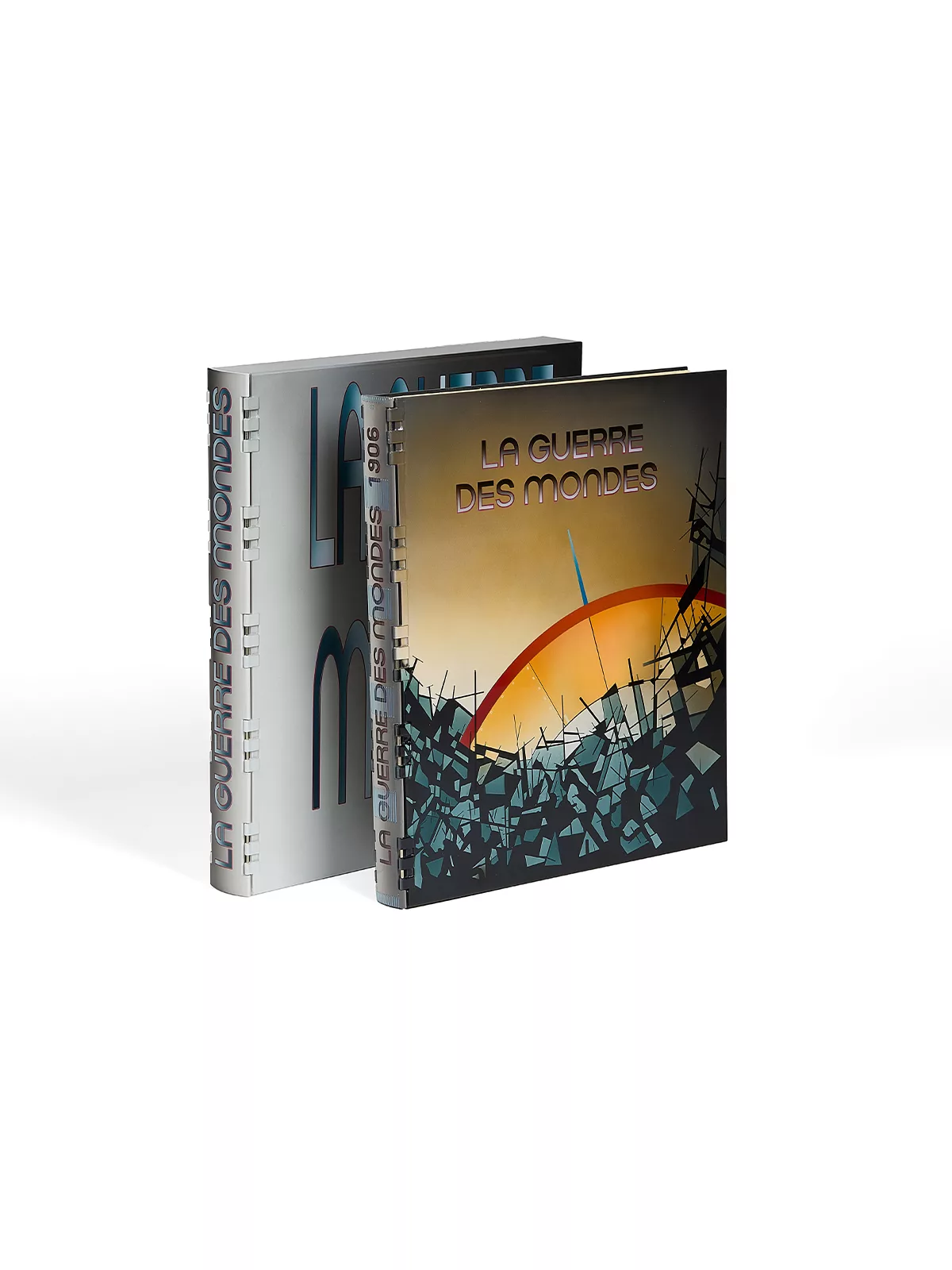
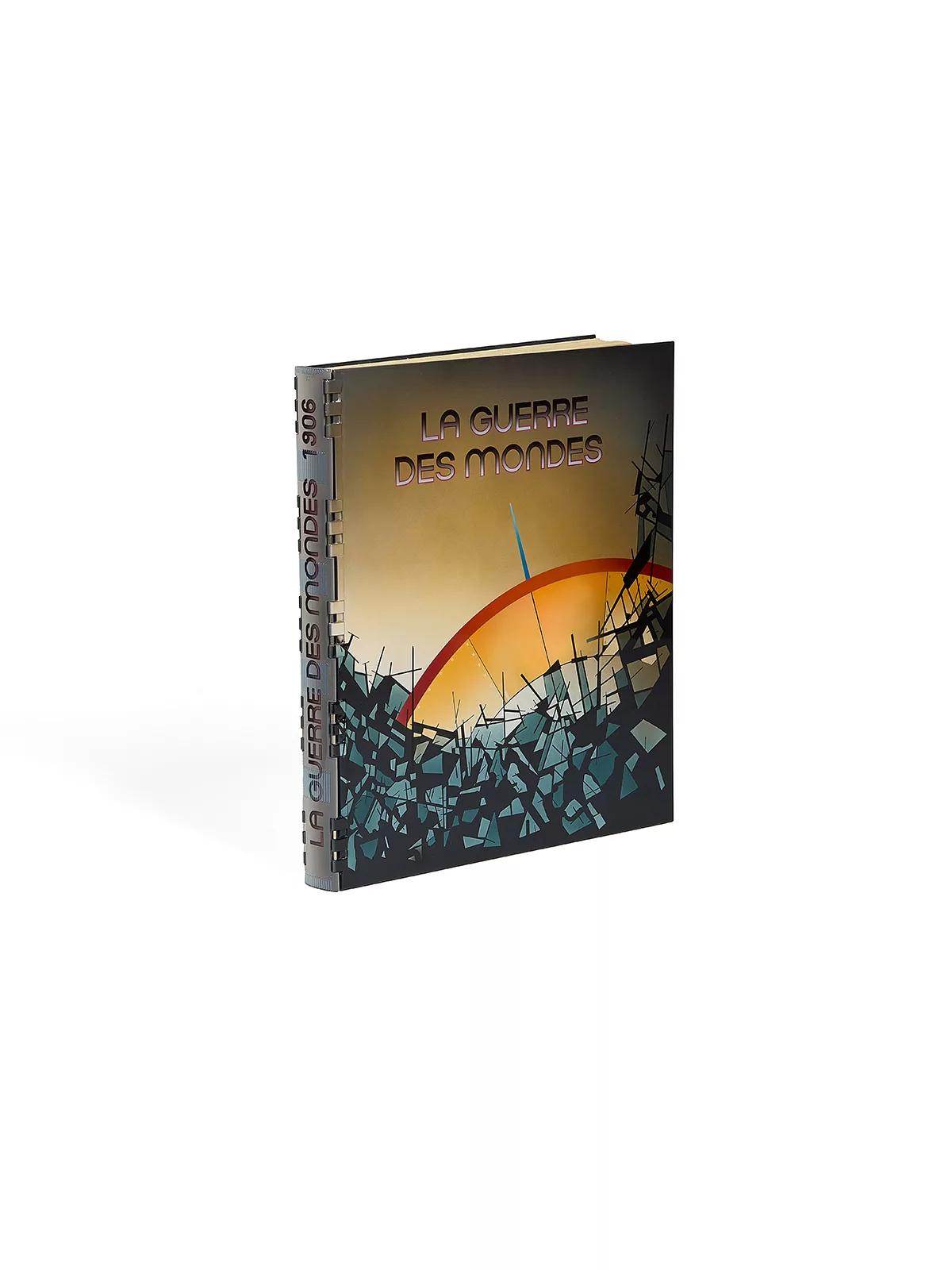
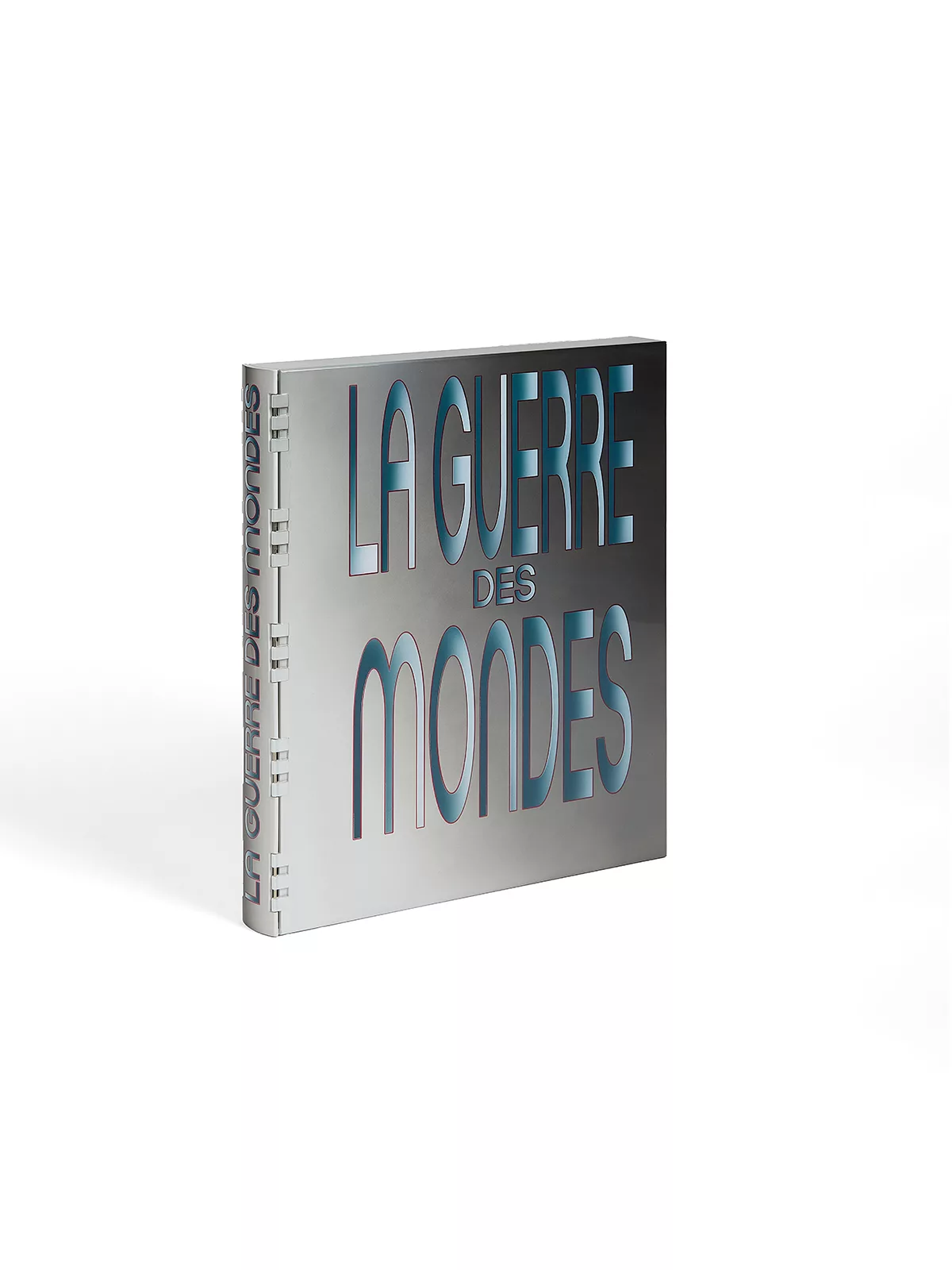
A remarkable binding by Brother Croisier Edgard Claes, who created, in his workshop at the Denderleeuw monastery, a striking, refined and radiant work: a multicolored counterpoint to Corrêa’s illustrations and to the aggressiveness of the invaders, rendered here far more appealing after the master’s polycarbonate and airbrush treatment!