

Mouchoir de nuages
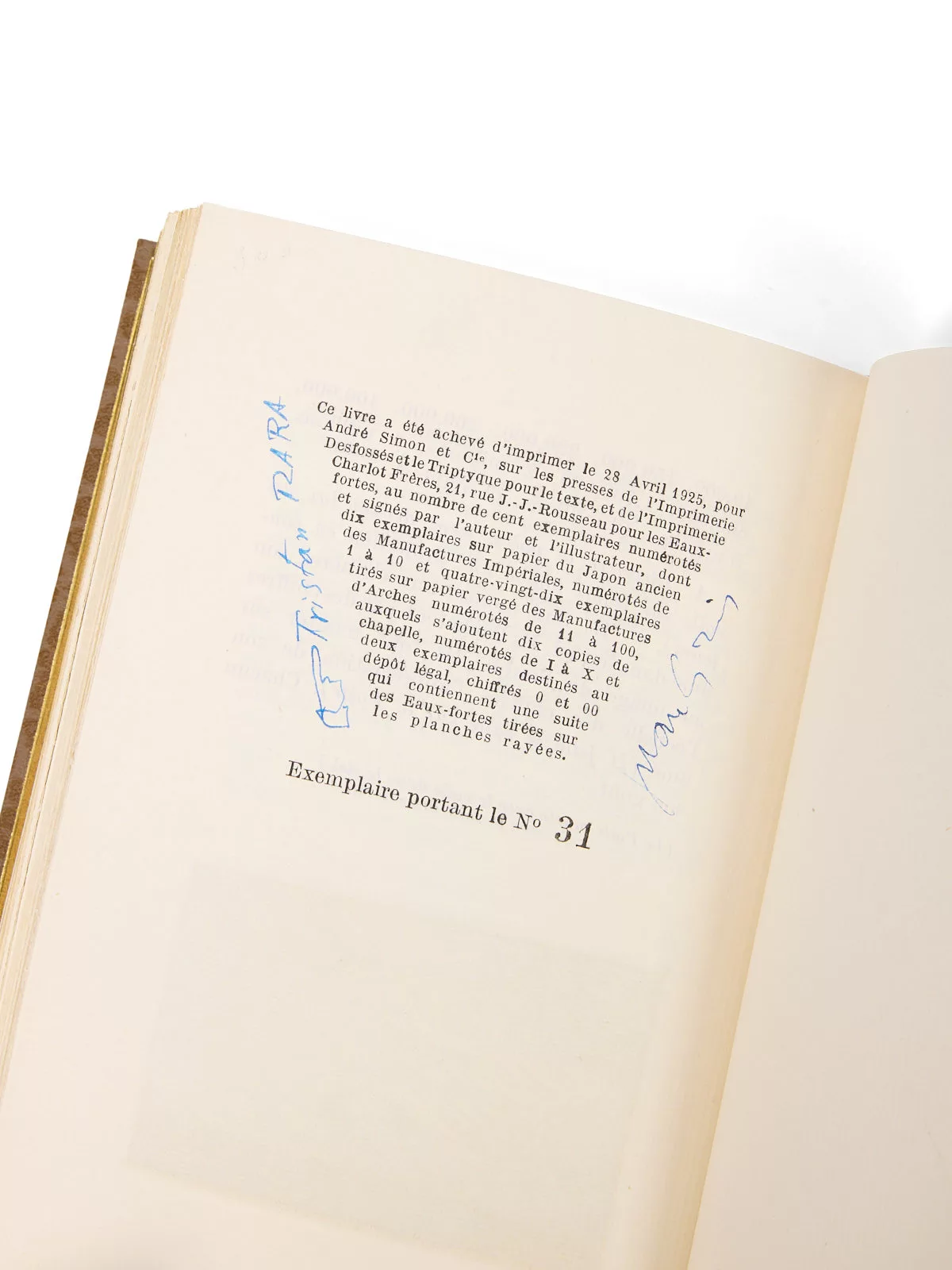
One of 90 copies on Arches paper with the suite of engravings in bistre, signed by the author and the artist.
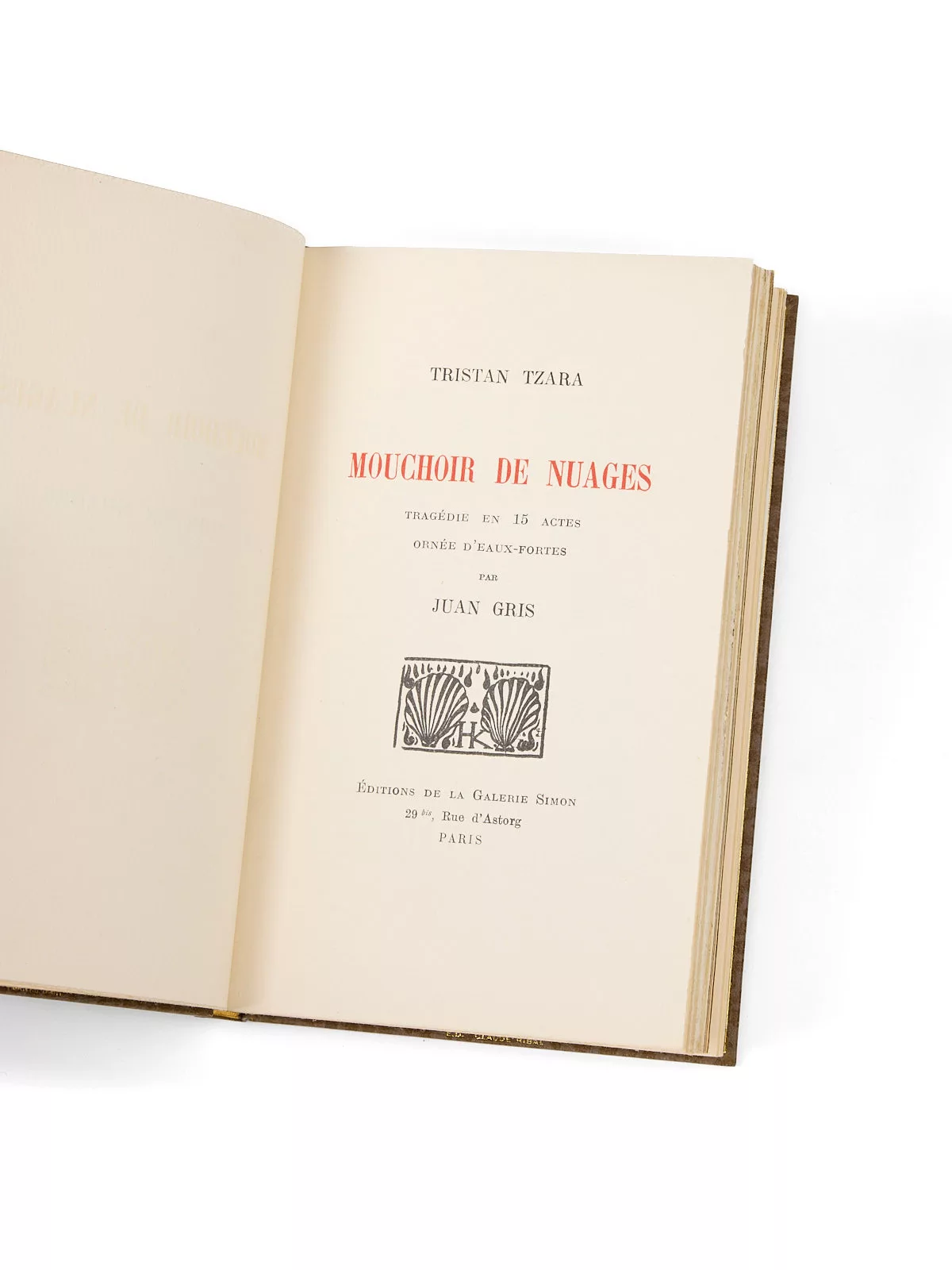
Published in a hors commerce printing in Antwerp on November 15, 1924, Mouchoir de nuages was not known to the French public until the following spring, when the first book edition appeared in Paris from the art publishing house of the dealer Henry Kahnweiler, illustrated with drawings by Juan Gris: “[…] one could barely obtain the offprint from the review Sélection (Antwerp, Nov. 1924) before 1925 in Paris, the year the book appeared from the Galerie Kahnweiler,” as Aragon later recalled — Aragon, who considered this text by Tzara a major work.
Tristan Tzara and Nancy Cunard, to whom the play is dedicated and to whom the author gave the typed “manuscript,” invented the title of this singular work with its avant-garde staging: the actors never left the stage throughout the performance, and the set changes took place in full view: “at the back, at a certain height, a screen indicating the place of the action, by means of enlarged reproductions of illustrated postcards, wound on two rollers which a stagehand unrolls as the acts pass, without hiding from the spectators.”
This “Tragedy in fifteen acts” was performed on May 17, 1924, at the Théâtre de la Cigale during one of Count Étienne de Beaumont’s “Soirées de Paris.” Among the audience, Louis Aragon retained a lasting memory of the performance and would vindicate it decisively years later: “I have always kept an exalted memory of the spectacle at the Cigale. That is why, when I was asked to write about Tzara for Le Monde, I immediately proposed to write about Mouchoir de nuages.”
Regretting the neglect into which the play had fallen, Aragon continues: “If this author’s earlier experiments on makeshift stages could be regarded by specialists as foreign to the History of Theater, with a capital H and T, the general contempt for Mouchoir cannot be explained by anything. It was in 1965 that I wrote, if you want to know my feeling on the matter straightaway, that this play was in my eyes ‘the most remarkable image of modern art.’ I may be mad, but that is what I have thought for half a century, and I retract nothing. If only for the staging given to it by Marcel Herrand, whose name, incidentally, does not hold the place it deserves in books devoted to theater history, for so singular a director. […] by its very content, this singular play deserves to be considered a giant step for poetic theater beyond Guillaume Apollinaire’s Les Mamelles de Tirésias, for the dates that mark this century of stages, from the Boulevard theaters to the Comédie-Française, and even the revolution of directors, marked in our country by the Cartel…, these dates cannot be complete without these two poets’ names, Apollinaire and Tzara.” And once again Aragon laments, persists and signs: “If Les Mamelles de Tirésias could become a very singular opera by Francis Poulenc, Mouchoir remains in the drawer of our forgetful historians.” (Aragon, “La nouvelle aventure terrestre de Tristan Tzara,” in Le Monde, October 17, 1975)
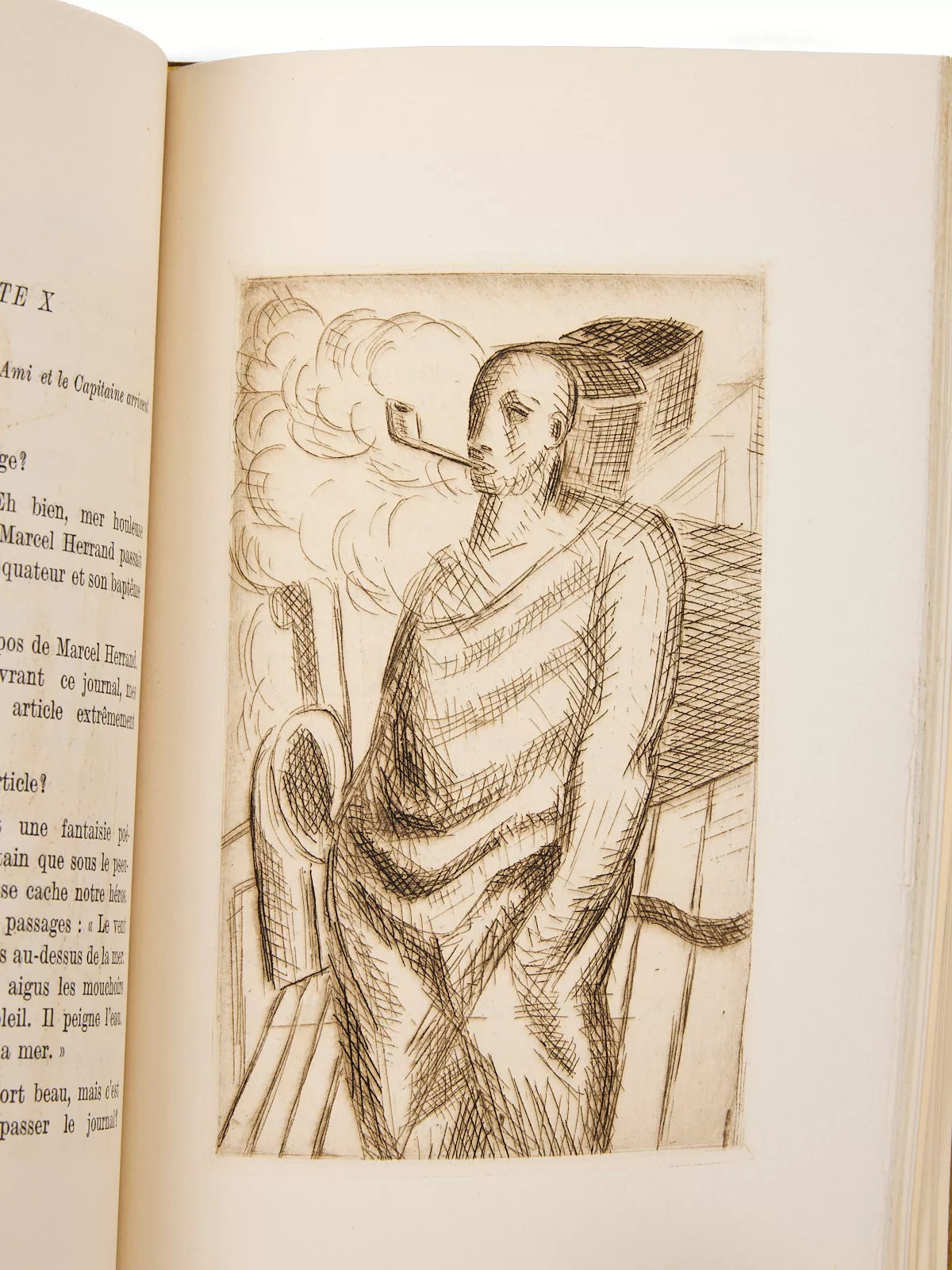
This illustrated edition is the result of the only collaboration between Tristan Tzara and Juan Gris: “Humor, non-conformism, even lyricism, insofar as they constitute a homogeneous reality — that of Tristan Tzara’s poetry — do not shy away from the powerful proximity of the engravings. Gris brought to the copper plate his experience of ink drawing. With the sobriety that characterizes the productions of his last years, the illustrator uses the interplay of hatching without ever resorting to the effects of virtuosity to which even the best etchers sometimes yield. Absolute master of his craft and material, he gives each character’s silhouette a quiet, almost monumental amplitude” (François Chapon).
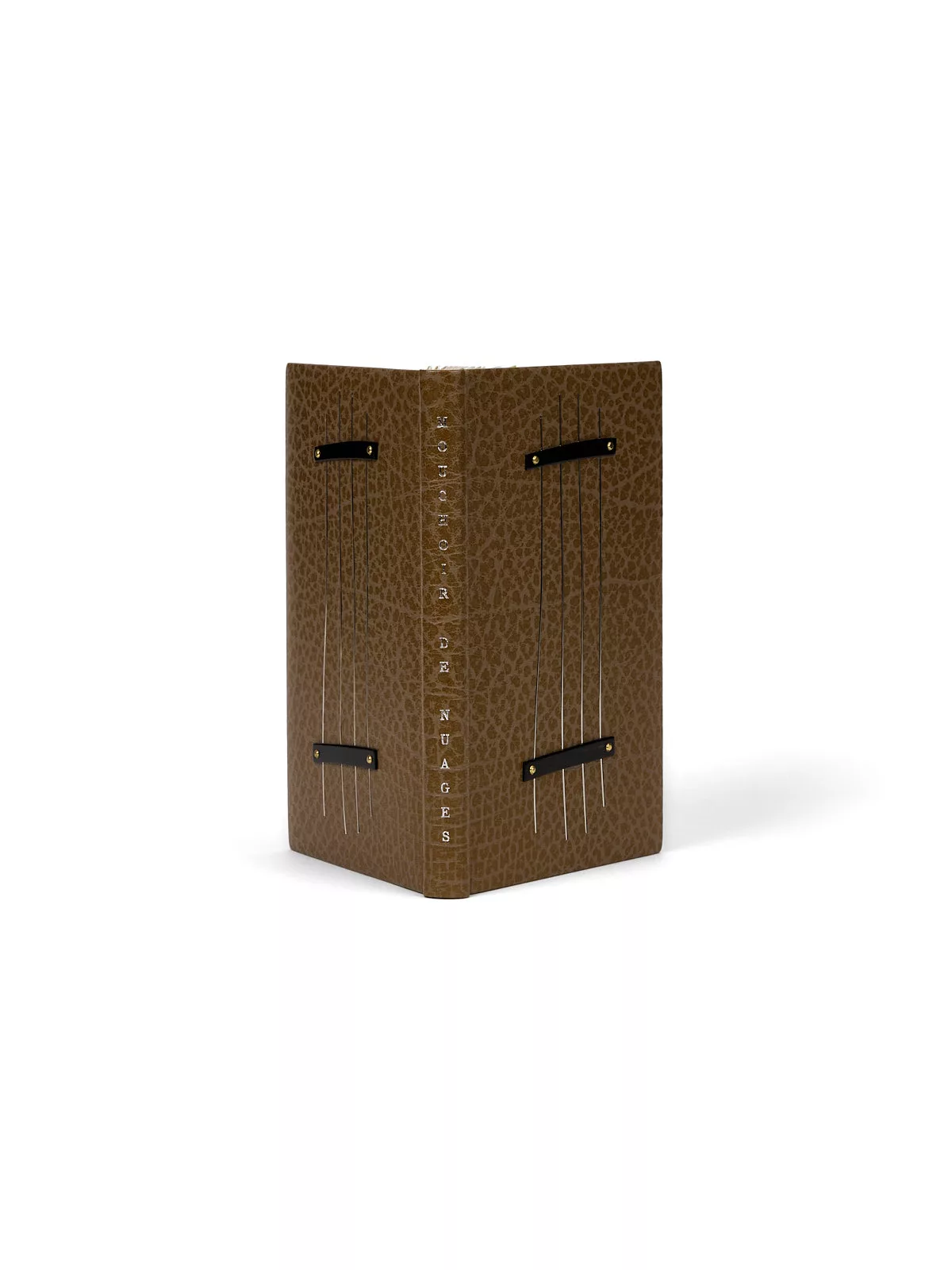
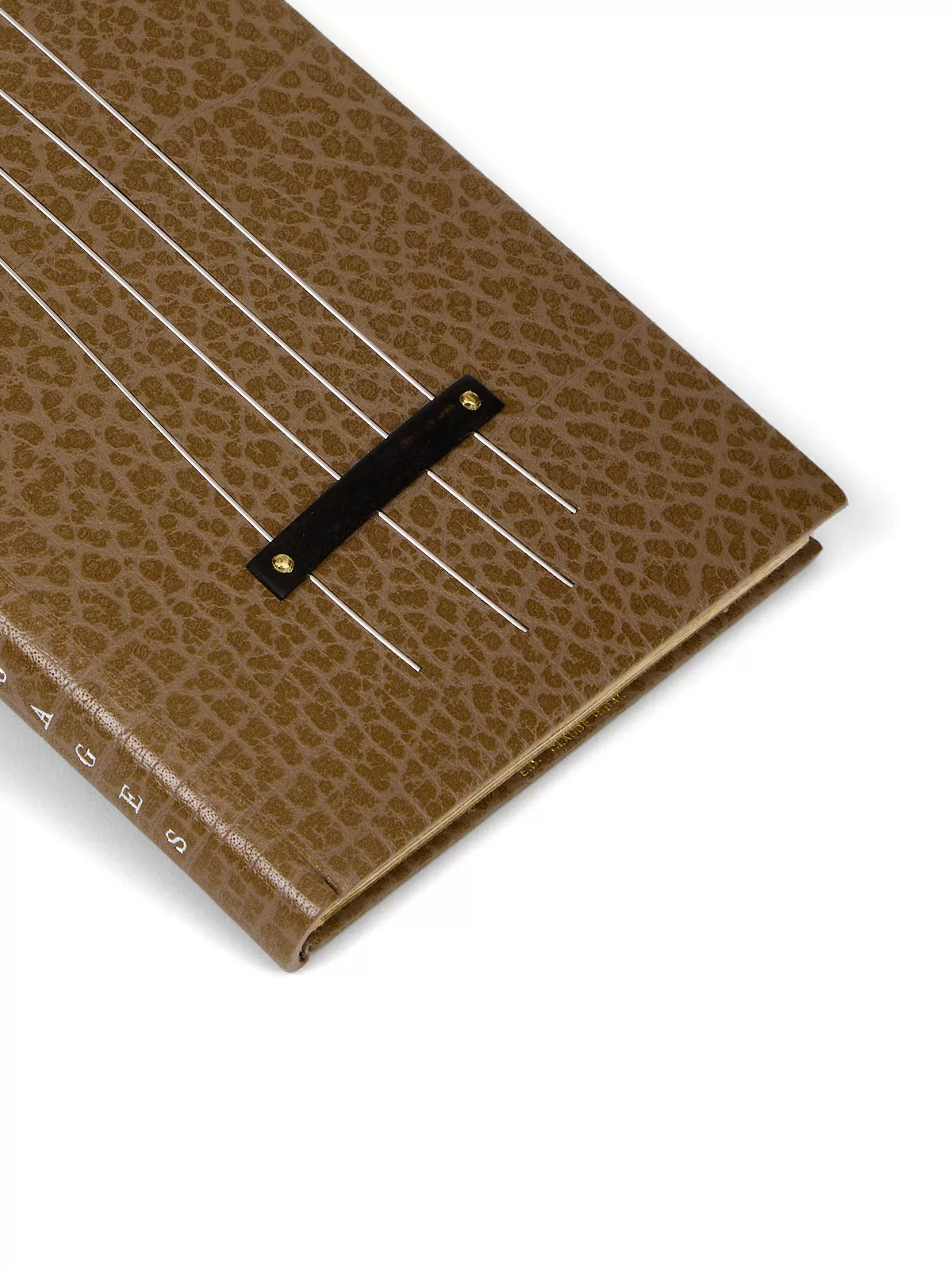
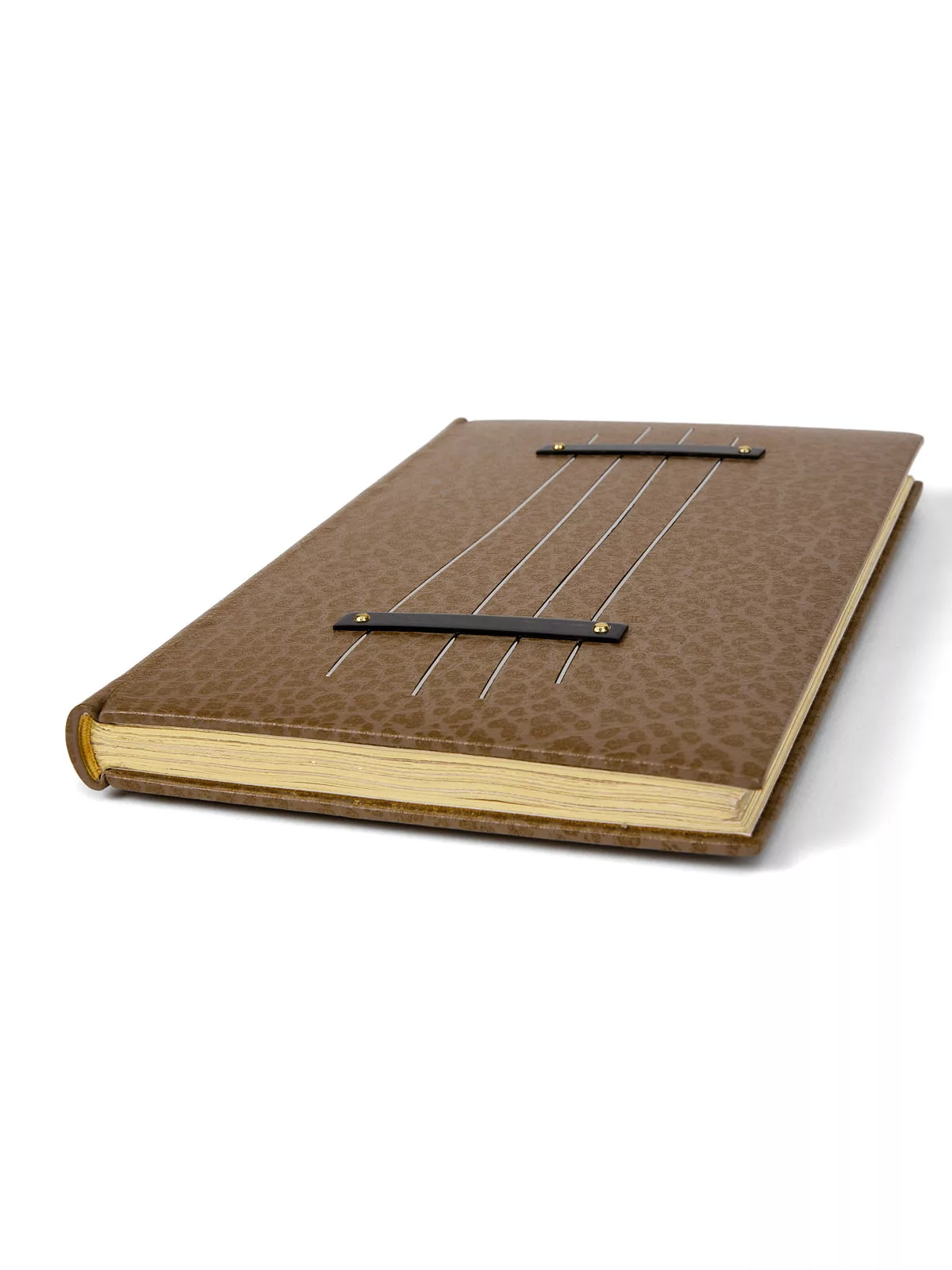
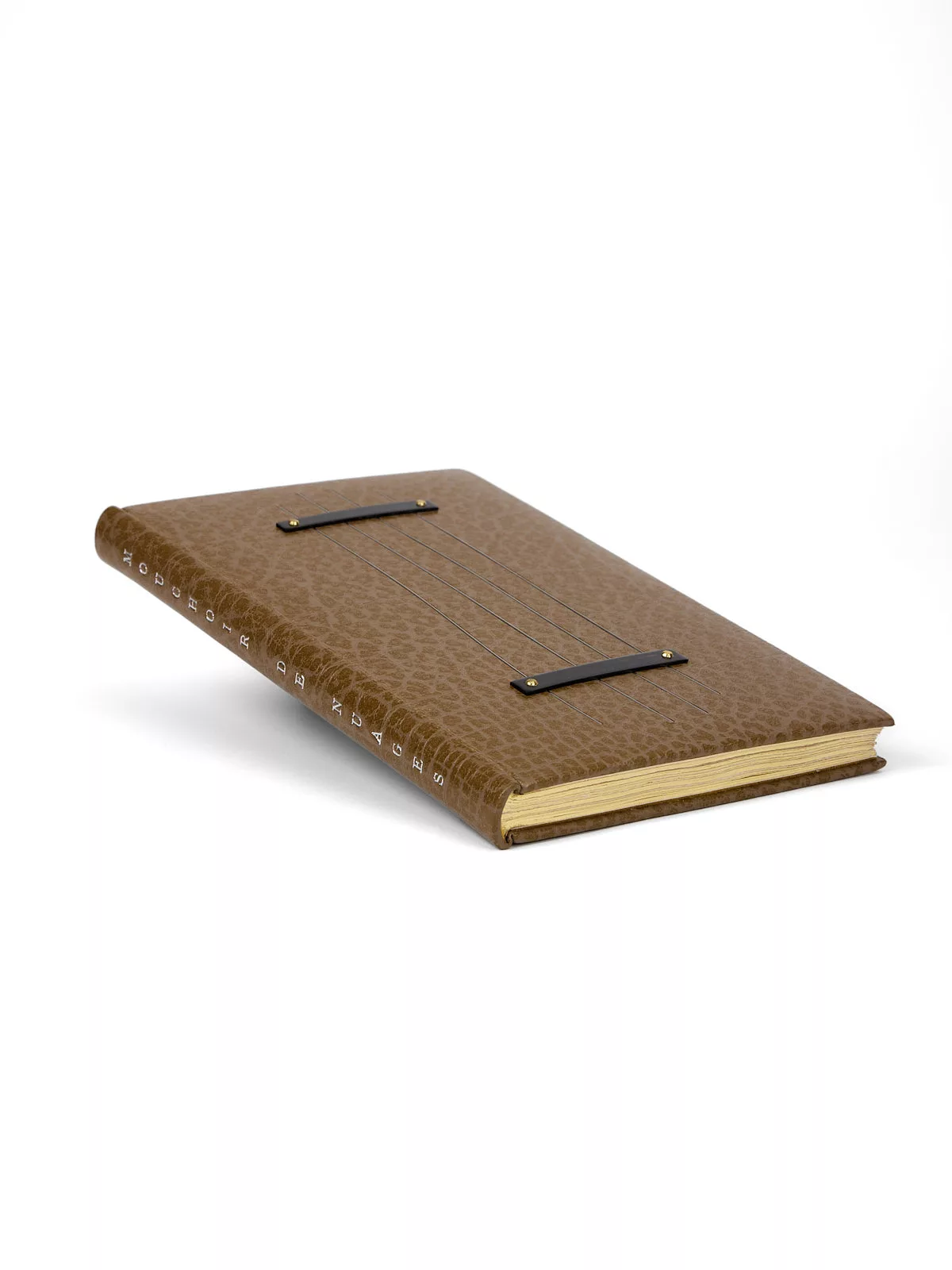
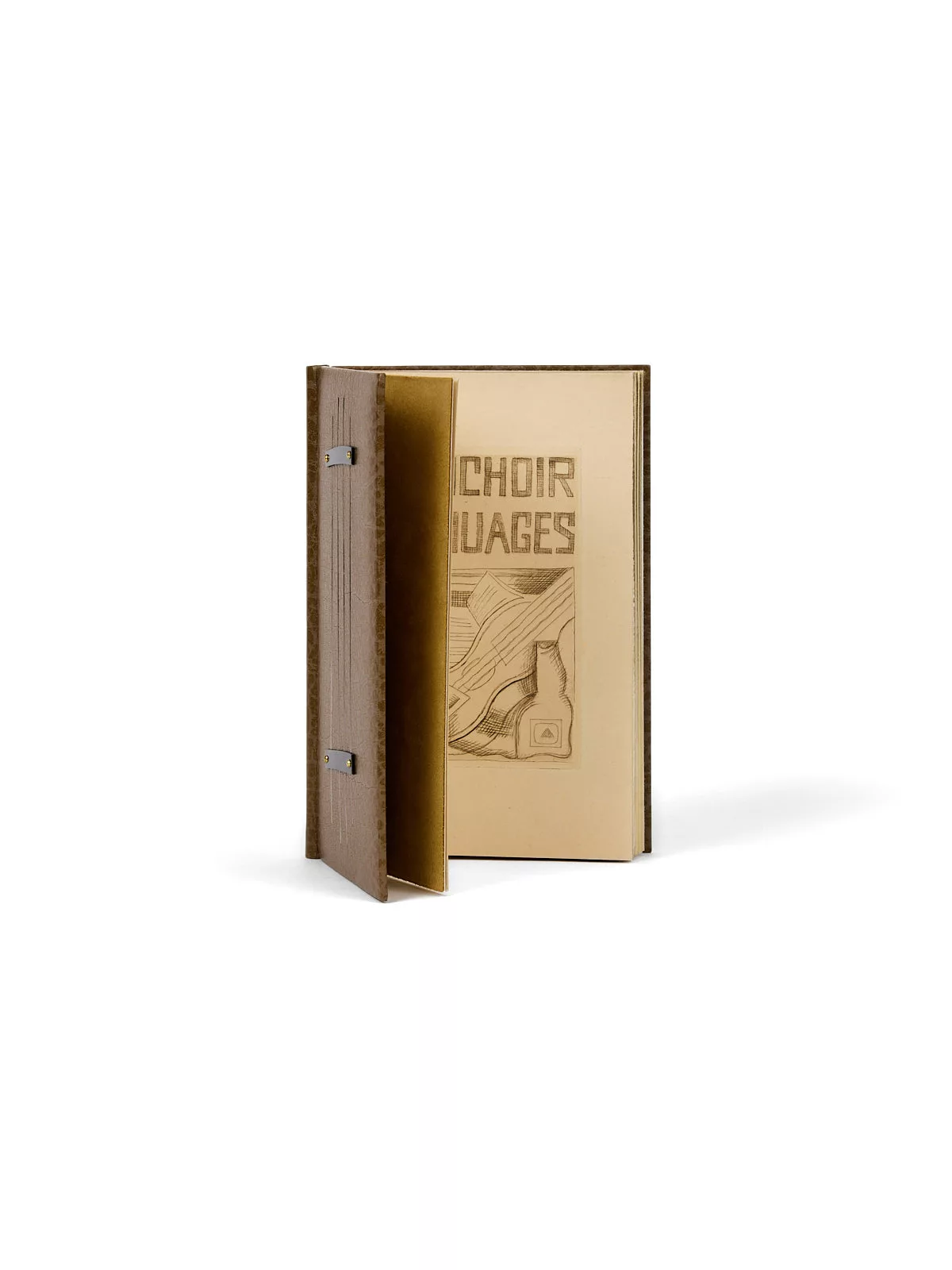
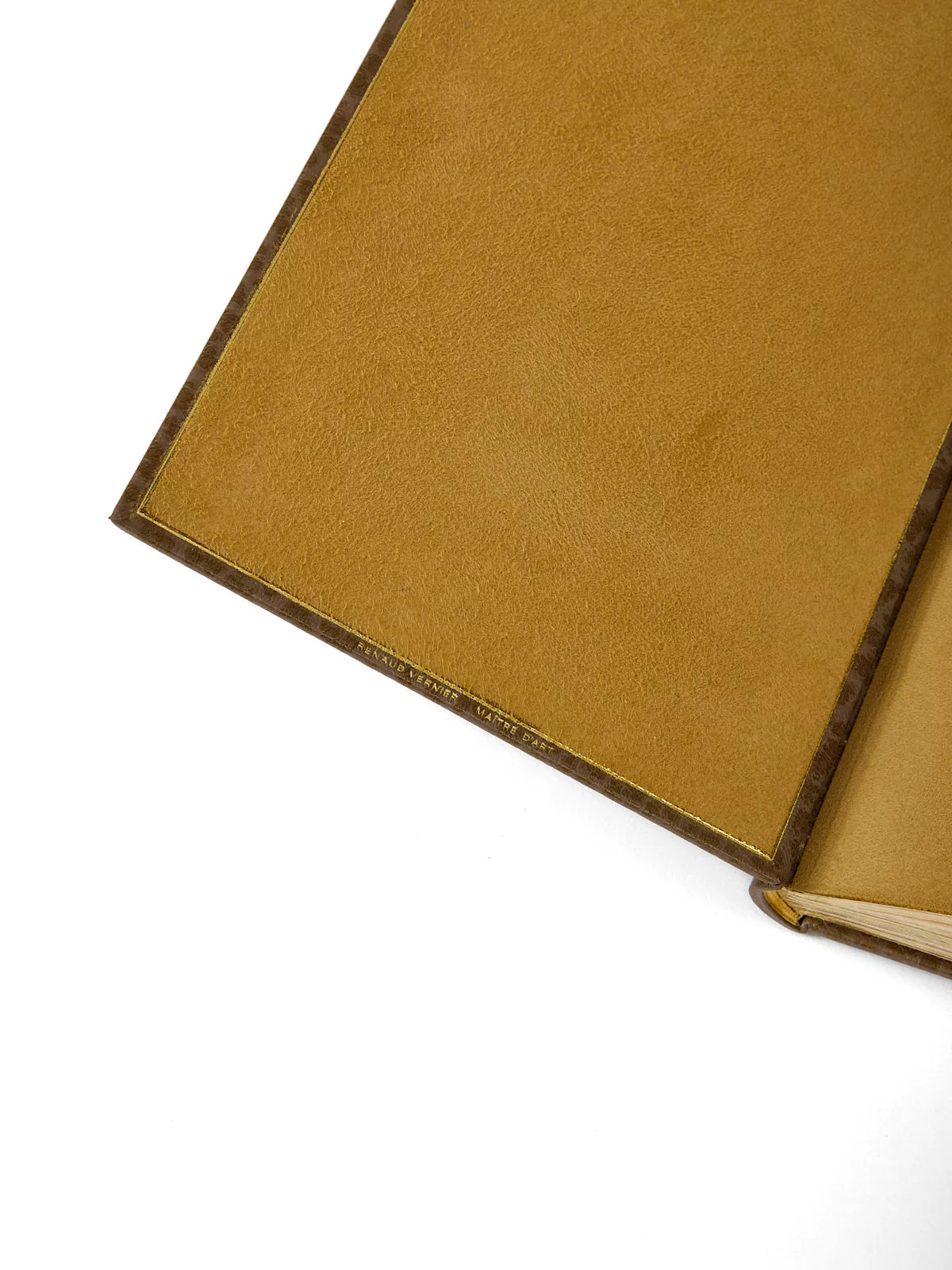
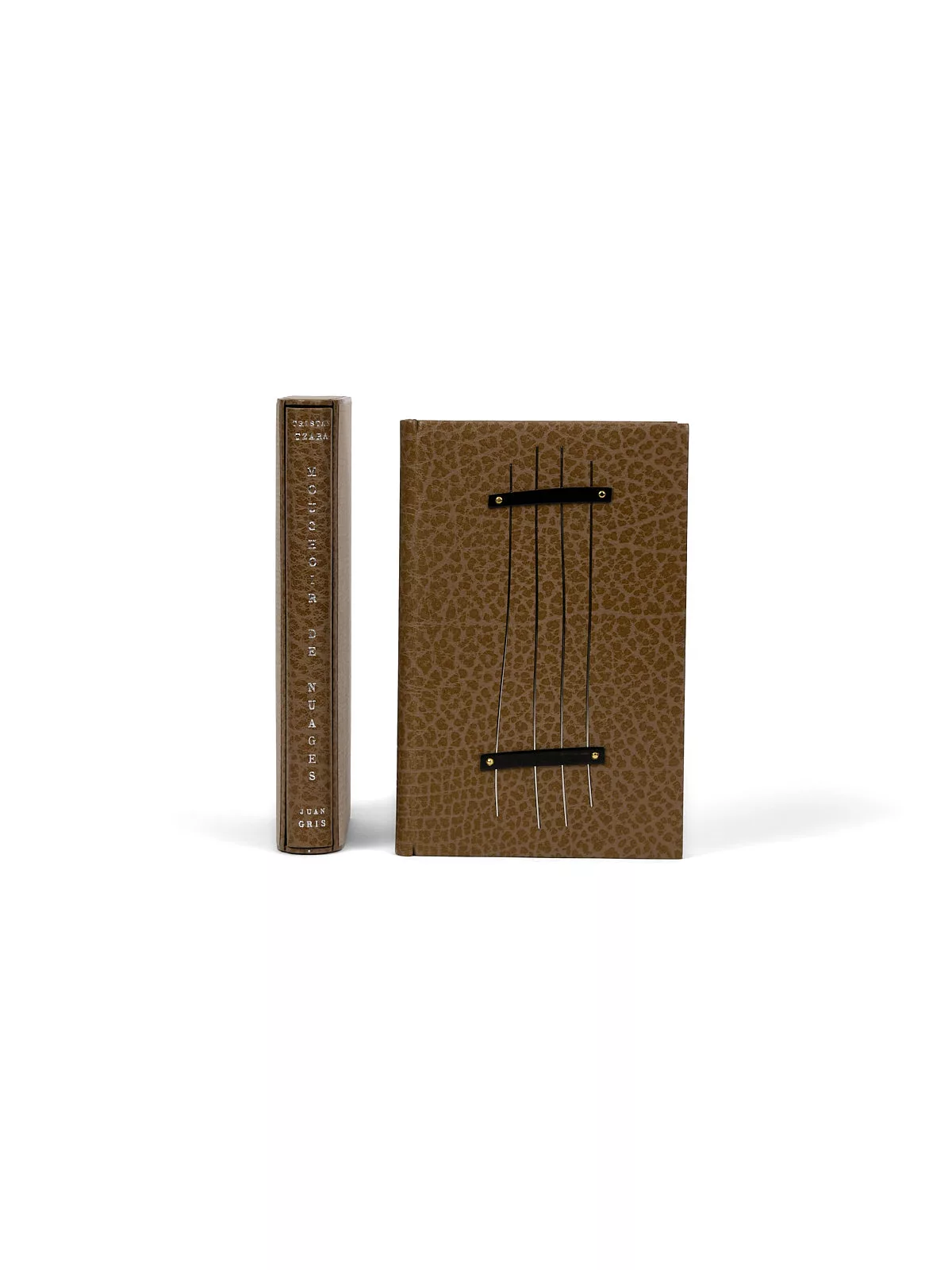
Binding design by Renaud Vernier, inspired by the Juan Gris engraving on the cover.