


Les Grands Fauves
Copy no. 1, justified by the author.
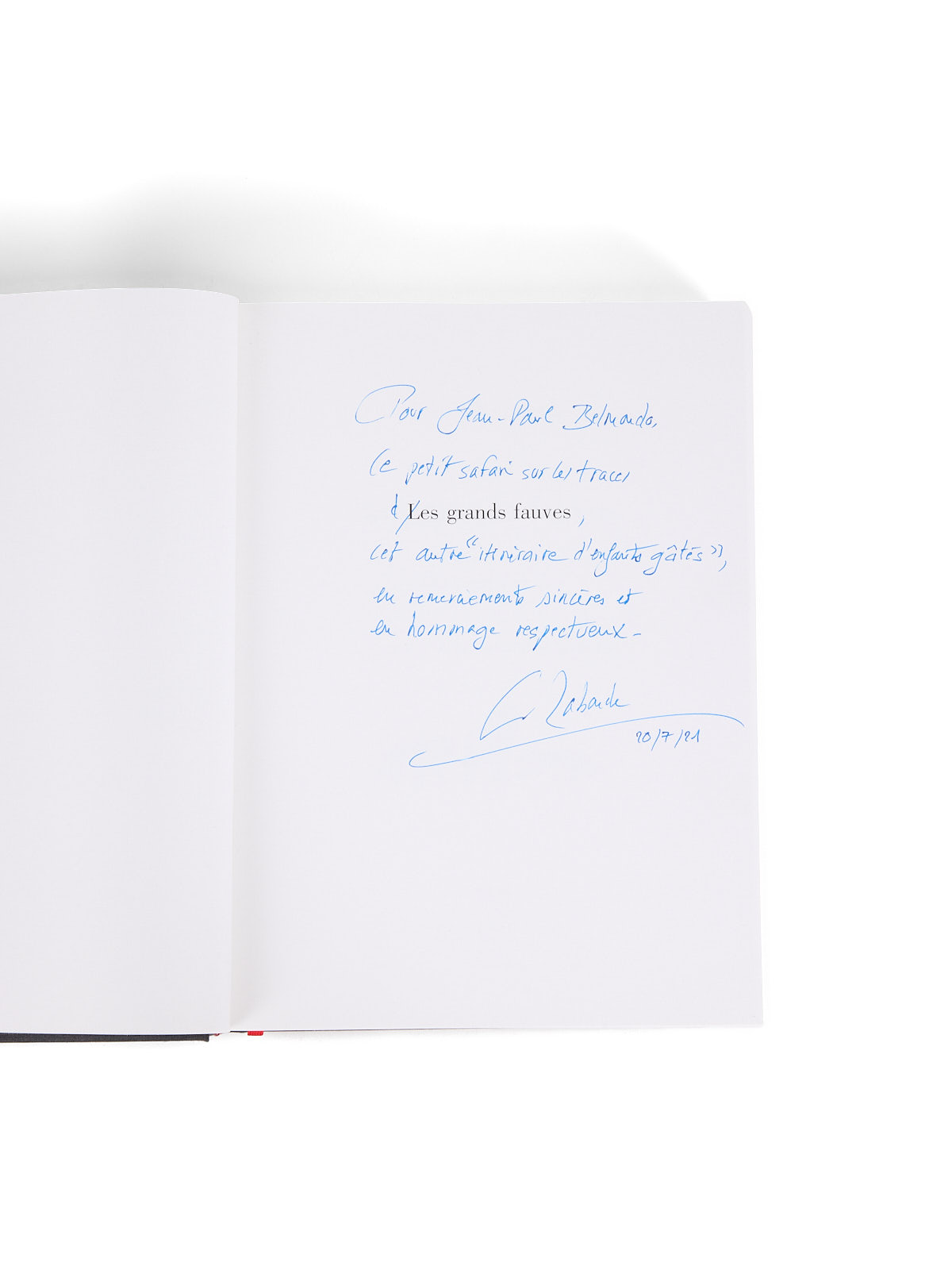
Signed presentation inscription: “Pour Jean-Paul Belmondo, ce petit safari sur les traces des [Grands Fauves], cet autre ‘itinéraire d'enfants gâtés’, en remerciements sincères et en hommage respectueux. Ch. Labarde, 20 juillet 2.”
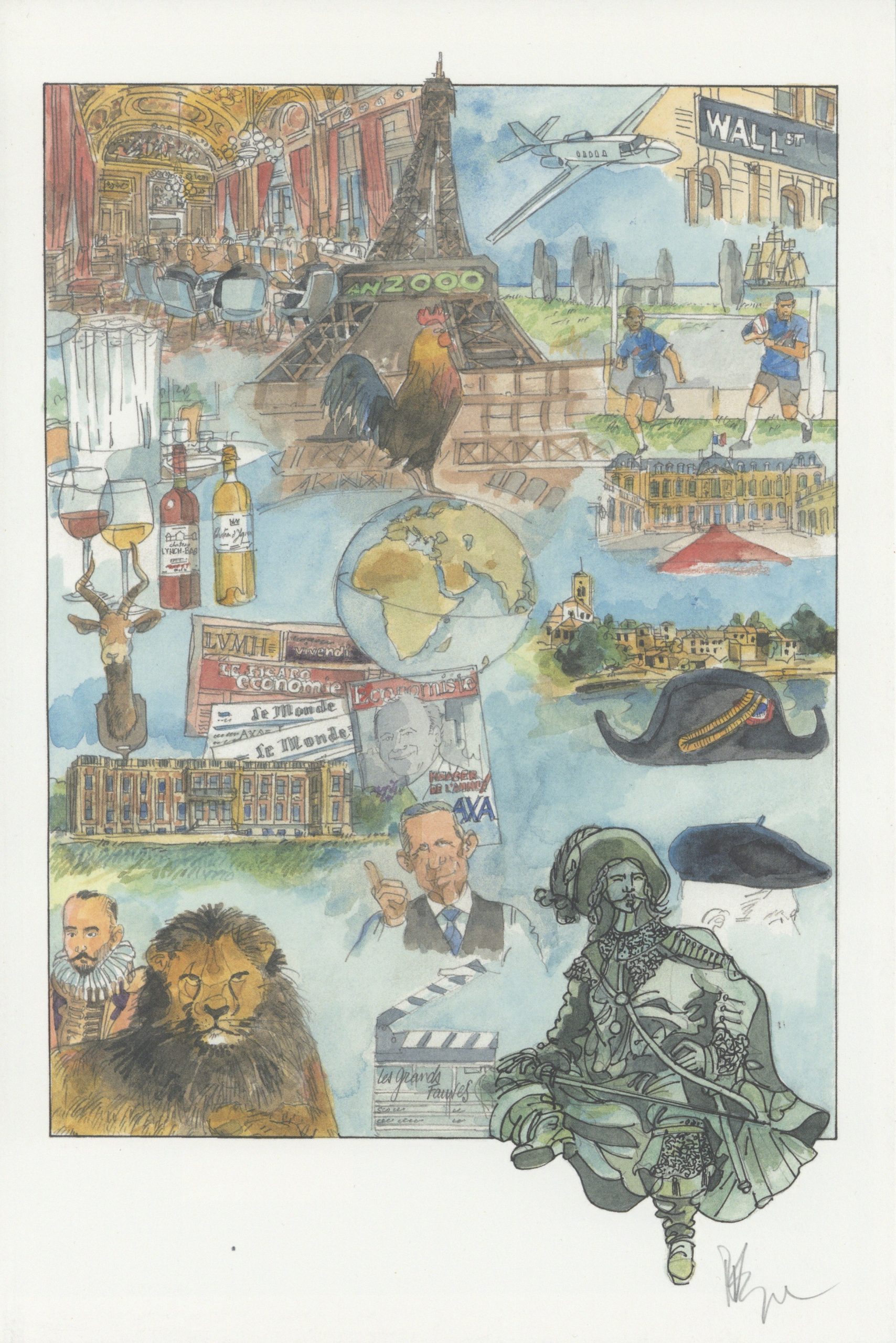
Claude Bébéar had, oddly enough, never been the subject of a biography. To fill this gap, Christophe Labarde, a former journalist at Le Figaro and longtime head of the HEC Alumni association, chose an original angle: recounting the story of Entreprise et Cité, the club that gathered, around the founder of Axa, all “the great beasts.” Entreprise et Cité was a pioneer among think tanks, the discussion clubs that have shaped French political life for some thirty years.
In 1983, as Claude Bébéar was transforming his small mutual insurance company into a world leader in the sector, he decided, with a few friends, to create this small debating group, which never grew beyond about thirty members — all men. Together they met to work on the relationship that should unite private enterprise and public engagement: the rights, duties and objectives of the former toward society as a whole. With no logo and no premises, they met informally around a rugby match, a good meal or an outing among friends. For nearly twenty-five years they hunted as a pack, led by Bébéar, who invited his close friends, almost all of them chief executives: Michel Pébereau (BNP), André Lévy-Lang (Paribas), David de Rothschild (Rothschild et Compagnie Banque), Bernard Arnault (LVMH), Didier Pineau-Valencienne (Schneider), Jean-René Fourtou (Rhône-Poulenc), Vincent Bolloré (Bolloré Technologies), Serge Kampf (Capgemini), Pierre Dauzier (Havas), Michel François-Poncet (Paribas), Thierry Breton (France Télécom), Philippe Midy (Poulain), Christian Blanc (RATP/Air France), Noël Forgeard (Matra, Airbus), Gérard Mestrallet (Suez), Pierre Bellon (Sodexo)… Everyone who “mattered” in the French economic landscape gathered around the table — literally as well as figuratively — the table around which, as Vincent Bolloré repeated on several occasions, “it is no exaggeration to say that, for twenty-five years, French capitalism was made and unmade.” As it turns out, he was not exaggerating: an astonishing and gripping plunge into a clannish capitalism, at once selfish and generous, solitary and choral, mischievous and jovial, driven by the boundless appetite of men of monstrous ambition and conviviality. “They all spoke English worse than one another,” Christophe Labarde writes, “but that did not stop them from becoming world giants, with rugby ingrained in body and soul as a philosophy.”
Stories of spoiled children? Not really — though it is amusing to note that this copy was intended for Jean-Paul Belmondo, presented a few weeks before his death (6 September 2021). “Bébel” likely never had occasion to sit at the table of Entreprise et Cité, but the world of business was not entirely foreign to him, whether on screen or in private life. His fees and various investments secured him a comfortable lifestyle, culminating notably in the sale of the Théâtre des Variétés in 2004.