

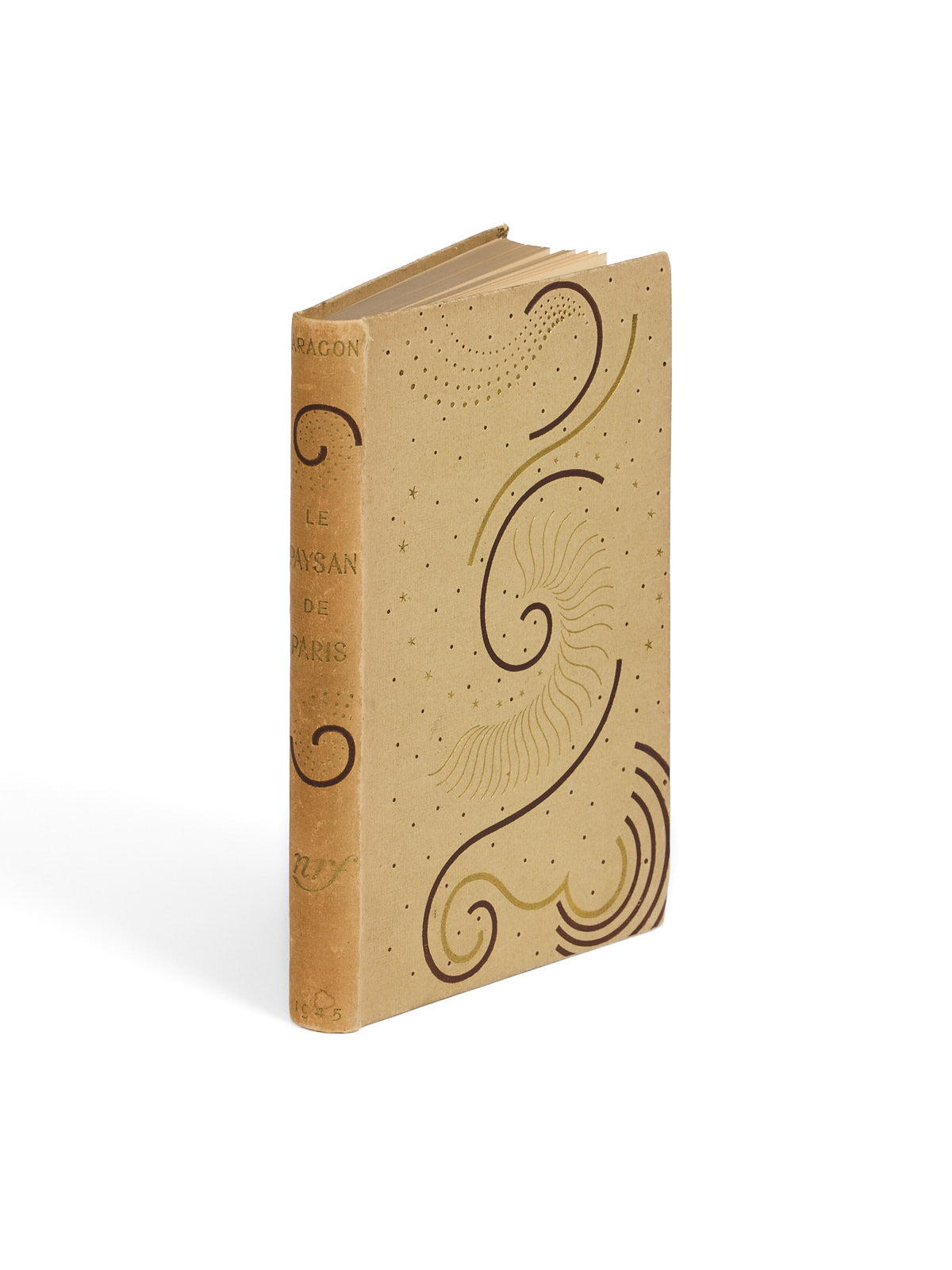
Le Paysan de Paris
One of 550 copies on alfa paper from the Papeteries Navarre (no. 184).
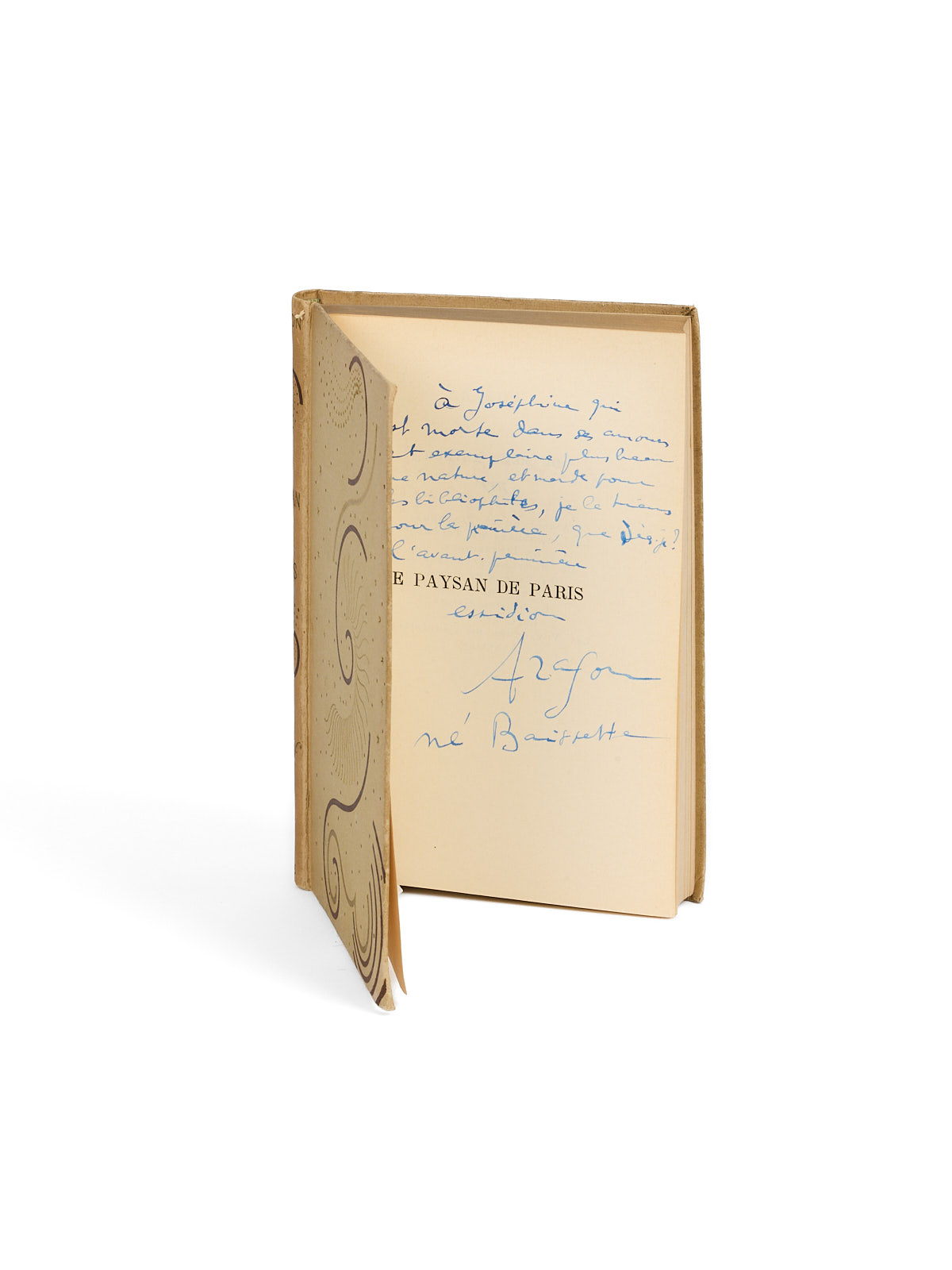
Signed presentation inscription: “À Joséphine qui est morte dans ses amours, cet exemplaire plus beau que nature et merde pour les bibliophiles, je le tiens pour la première, que dis-je l'avant-première édition. Aragon né Baissette.”
The novel’s singularity lies in these words: “I no longer wish to hold back the errors of my fingers, the errors of my eyes.” Surrendering himself to the power of his imagination, becoming that “peasant” who (re)discovers a city to which he no (longer) belongs, Louis Aragon reinvents the places he passes through. For Joséphine Baker, whose “second love” was Paris, reading it must have been a pleasure, since it evokes nothing more than a chance wandering through the streets of the capital — a landmark text for the Surrealists: “Through walking, the peasant gains access to the marvelous of everyday life […]. I like to let myself be crossed by winds and rain: chance, that is my whole experience.”
Gaston Baissette was an early friend of the Surrealists and a regular contributor to Cahiers du Sud. A doctor at the Nanterre hospital, he joined the Communist Party in 1933 and, during the war, entered the Resistance, taking charge of organizing medical care for the maquisards in the Alpes-Maritimes. As a liaison agent, he hosted Elsa Triolet and Louis Aragon during their stay in Nice in 1941: was this temporary “adoption” the reason for Aragon’s mention of this curious “kinship”?
Provenance: Joséphine Baker (presentation copy); Jean-Luc Mercié (sale, Paris, Cornette de Saint-Cyr, Collection littéraire d’un amateur, June 2022, no. 4).