

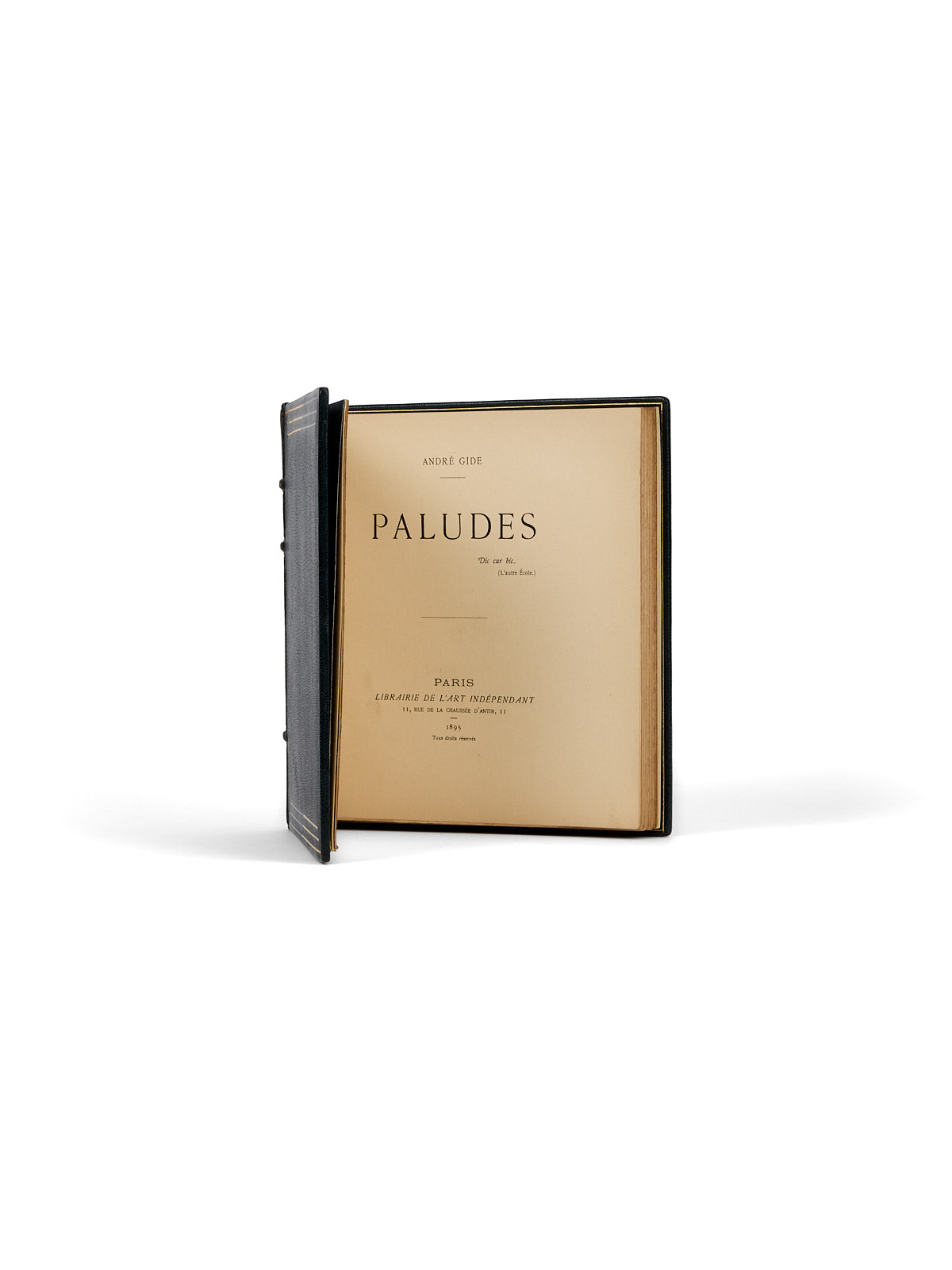
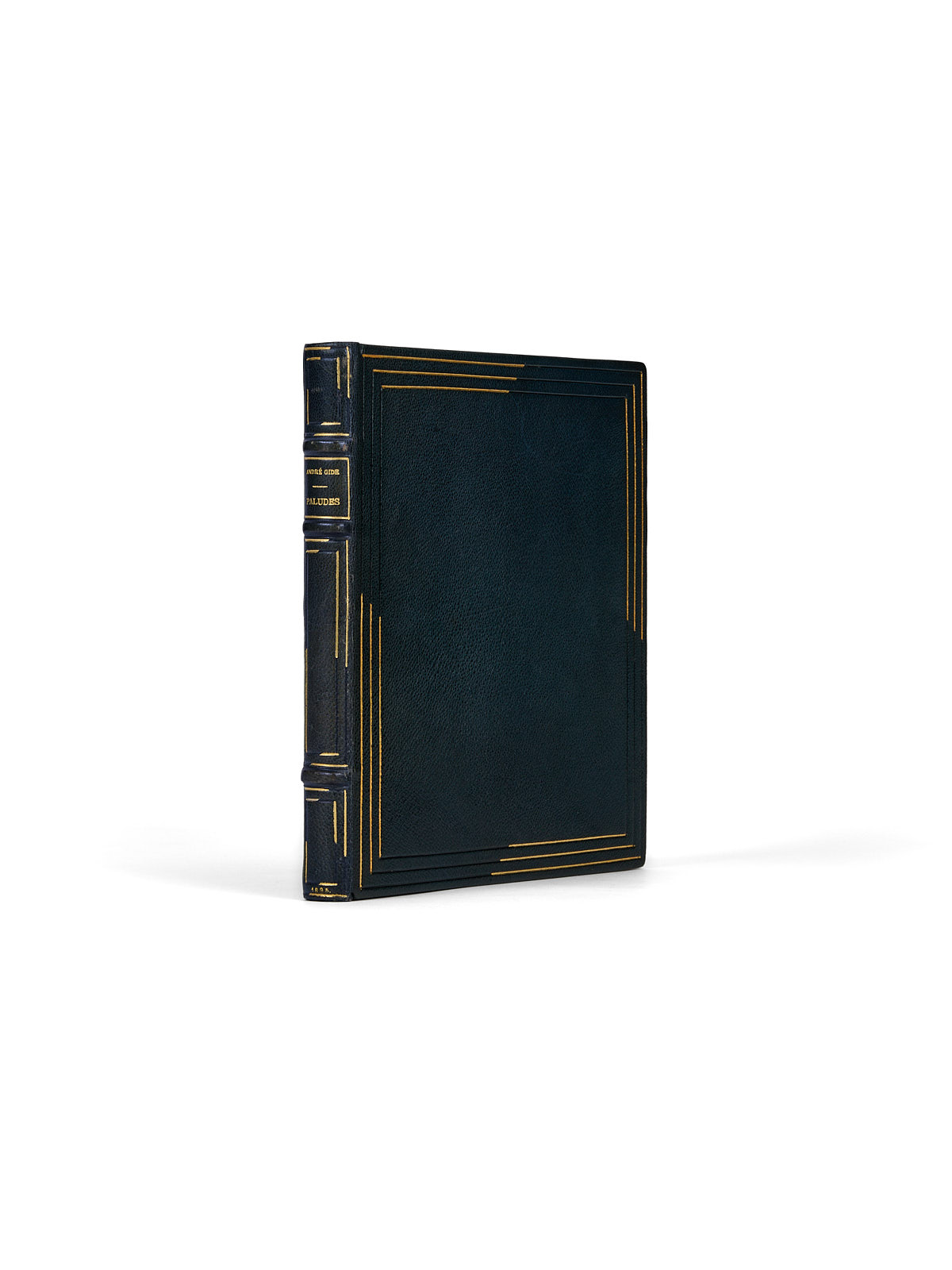
Paludes
A flagship work — alongside Les Faux-Monnayeurs — of the mise en abyme technique (this spelling itself originates with Gide), Paludes is a parody of the intimate diary. “Paludes is the story of one who cannot travel; in Virgil he is called Tityrus.” The book was indeed inspired by two lines from Virgil concerning Tityrus, the shepherd of the Bucolics, who, though the owner of a field “full of stones and marshes,” is nonetheless content with his lot. This Tityrus, living at the heart of a marsh, is presented from the outset as the double of the strange narrator, himself a figure of the writer. Gide finished writing the work on 5 December 1894 and published extracts in the journals Le Réveil de Gand, La Revue Blanche and Le Supplément français.
The text found an admirer in Pierre Louÿs, who served as the model for the character of Hubert: “Paludes is extraordinarily good […] it is a thousand times better than I hoped. Only you are a little scoundrel to have given it to Valéry first and then forbidden him to show it to me. The only thing that consoles me is that he has not read it, he has just admitted it to me […]. I want no one but myself to read Paludes […]. I am going to read it a second time and burn it leaf by leaf.” In revenge for this joke, Gide did not dedicate the book to Louÿs as he had planned, but to Eugène Rouart; he nonetheless inscribed one of the twelve copies on Arches paper to him, while presenting the first of the China-paper copies to Mallarmé (Bibliothèque Pierre Bergé, I, no. 114). The Arches printing has a beige wrapper; it is gray for the vergé copies, green for the China-paper copies, and white for the green-paper copies.
Paludes met with no success at the time, but the vogue of the novel later contributed to its literary fortune. It was celebrated by Roland Barthes in Le Plaisir du texte and ranked by Nathalie Sarraute among the “five or six most important works of our time.”
A good copy in an elegant early binding.