

La Dentellière
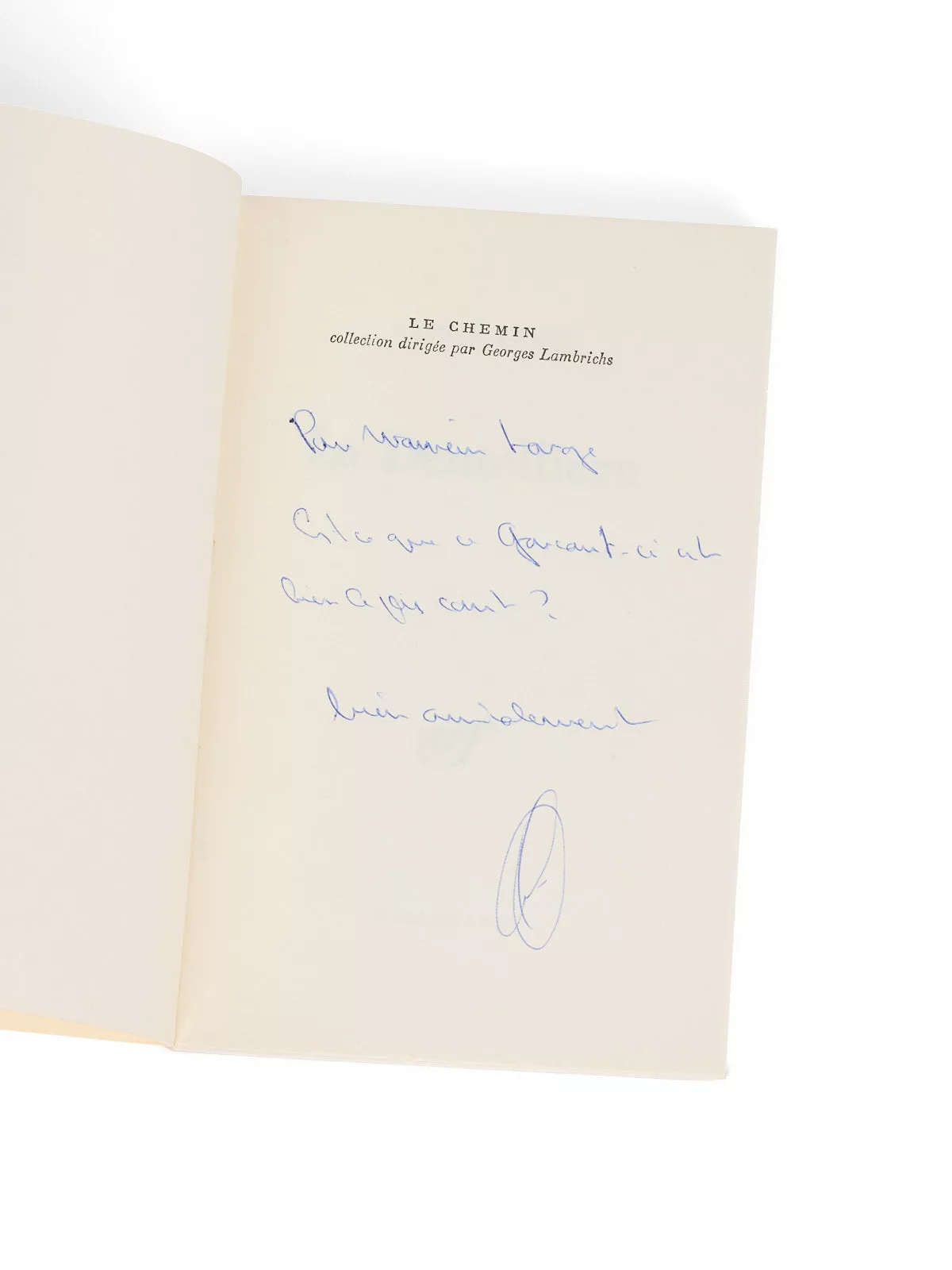
Signed presentation inscription: “Pour Monsieur Large, est ce que ce Goncourt-ci est bien le plus court ? Bien amicalement.”
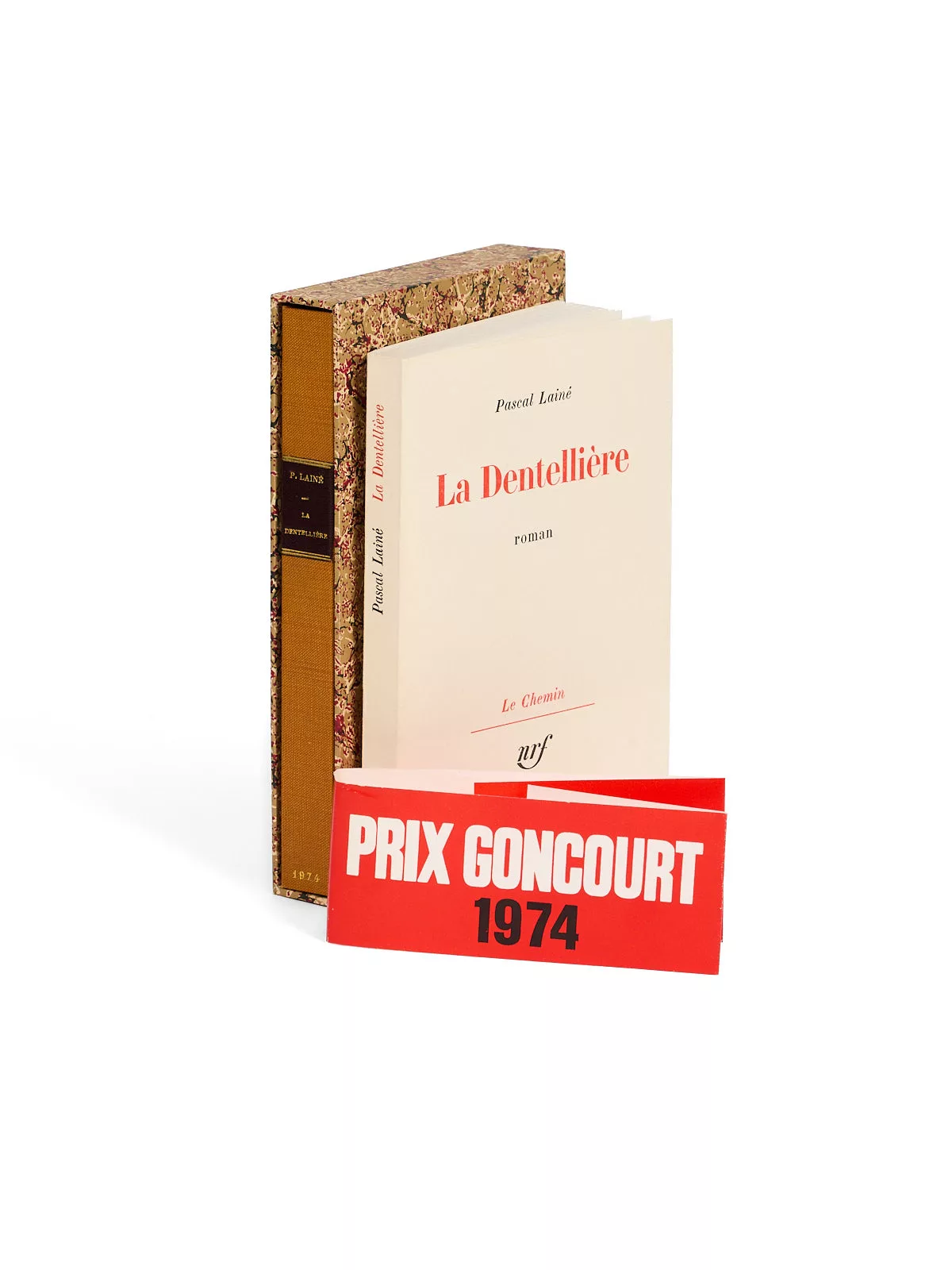
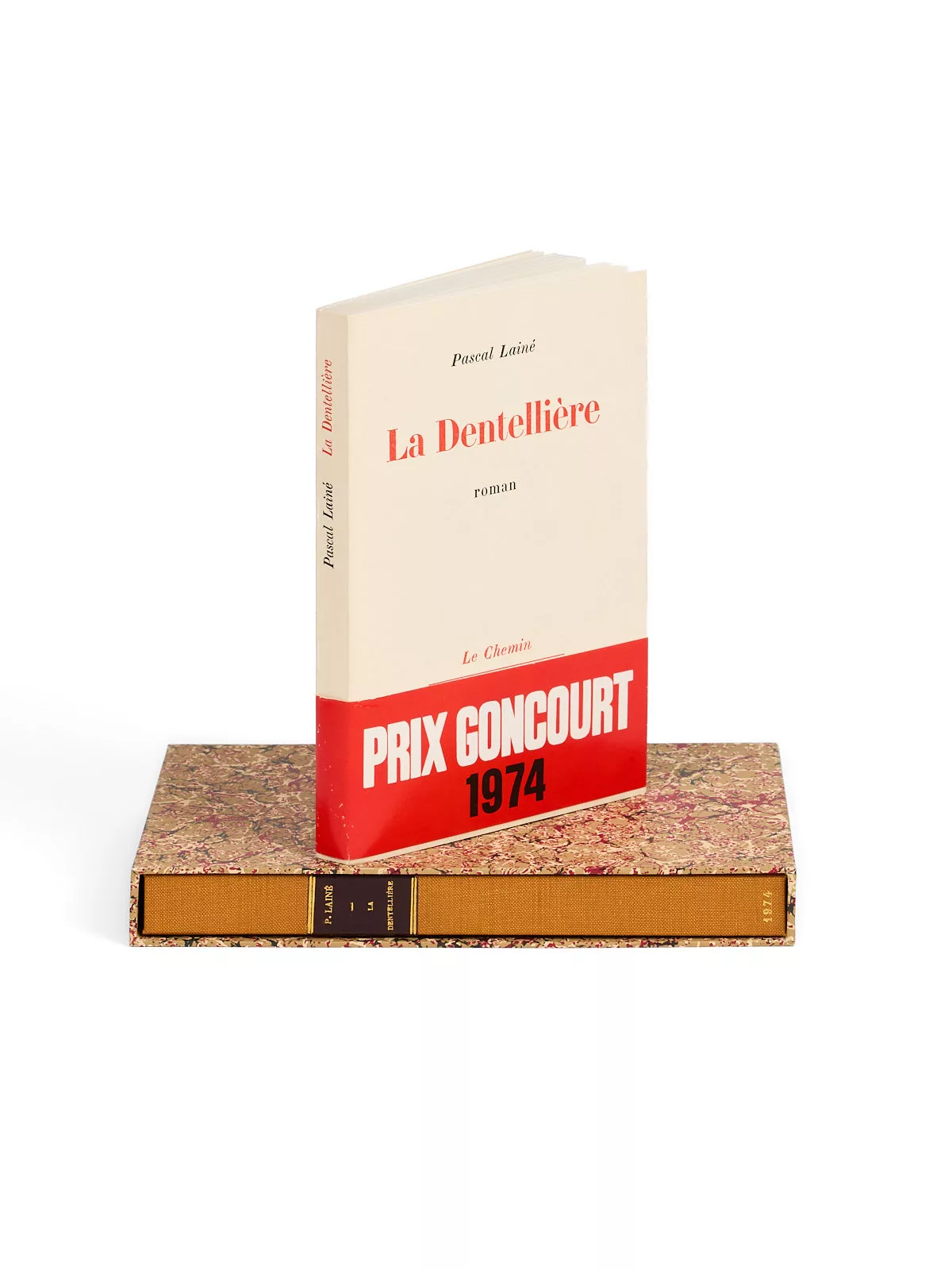
Original Goncourt wraparound band preserved.
Is this the shortest Goncourt winner ever? At the time, Pascal Lainé was right: prize-winning novels under 200 pages are rare — only Passage de l’homme, awarded the prize in 1943, qualified, at 180 pages. After Lainé, Atiq Rahimi’s Syngué sabour would win in 2008 at 154 pages, but the shortest of all remains Marguerite Duras’s L’Amant, at 142 pages.
Lainé, who has since written some thirty books, often spoke of the moral harm the Goncourt did him: “I resent this book, and I try hard to destroy the idea people have of it. This so-called masterpiece was, for me, only a stylistic exercise. I’ll tell you the truth, since you insist. I was thirty, a philosophy teacher at a technical high school in the North, when the magazine Elle commissioned a short story from me for the summer. Working from a photo-novel scenario, I devised a sentimental little tale. It amused me a great deal — it still amuses me to write pulp fiction. I love popular literature. I got caught up in the game, and turned the short story into a novel. Naively, I thought that the conventions I had followed, and even a certain silliness I had deliberately portrayed, would be so obvious that no one could miss my intentions, which were those of a formalist. I had been asked for a piece of light music, I composed it, and I was reduced to it. Readers were moved far beyond anything I had anticipated, and believed that the subject touched me personally, that Pomme, for instance, existed in real life. That was false, of course. Flaubert is not Madame Bovary, and La Dentellière is not me […] I had unknowingly perpetrated an enormous fraud on people’s emotions. It was all the harder to bear because my thoroughly bourgeois upbringing had taught me that one must be talked about and seen as little as possible. With the madness surrounding the Goncourt, I was well served. 330,000 copies in the trade edition, 50,000 through book clubs, and, across all editions, 1.5 million copies in French. Even today, 20,000 paperback copies are still sold every year. I’m not even counting the translations — 600,000 copies in Russian, for instance… You understand why La Dentellière overwhelmed and devoured me. If only I had had a dozen books behind me to hide behind at the time, but no, before this explosion I had written only two small novels. I had won this Goncourt too easily. That only added to my guilt. I wanted to shout to people: wait a little, I’ll do much better than La Dentellière. But by the time I had, in my own humble opinion, done better, there was no one left to listen to me, to read me. In short, I was rewarded for what I did not deserve, and not rewarded for what I did. That is my predicament.”