

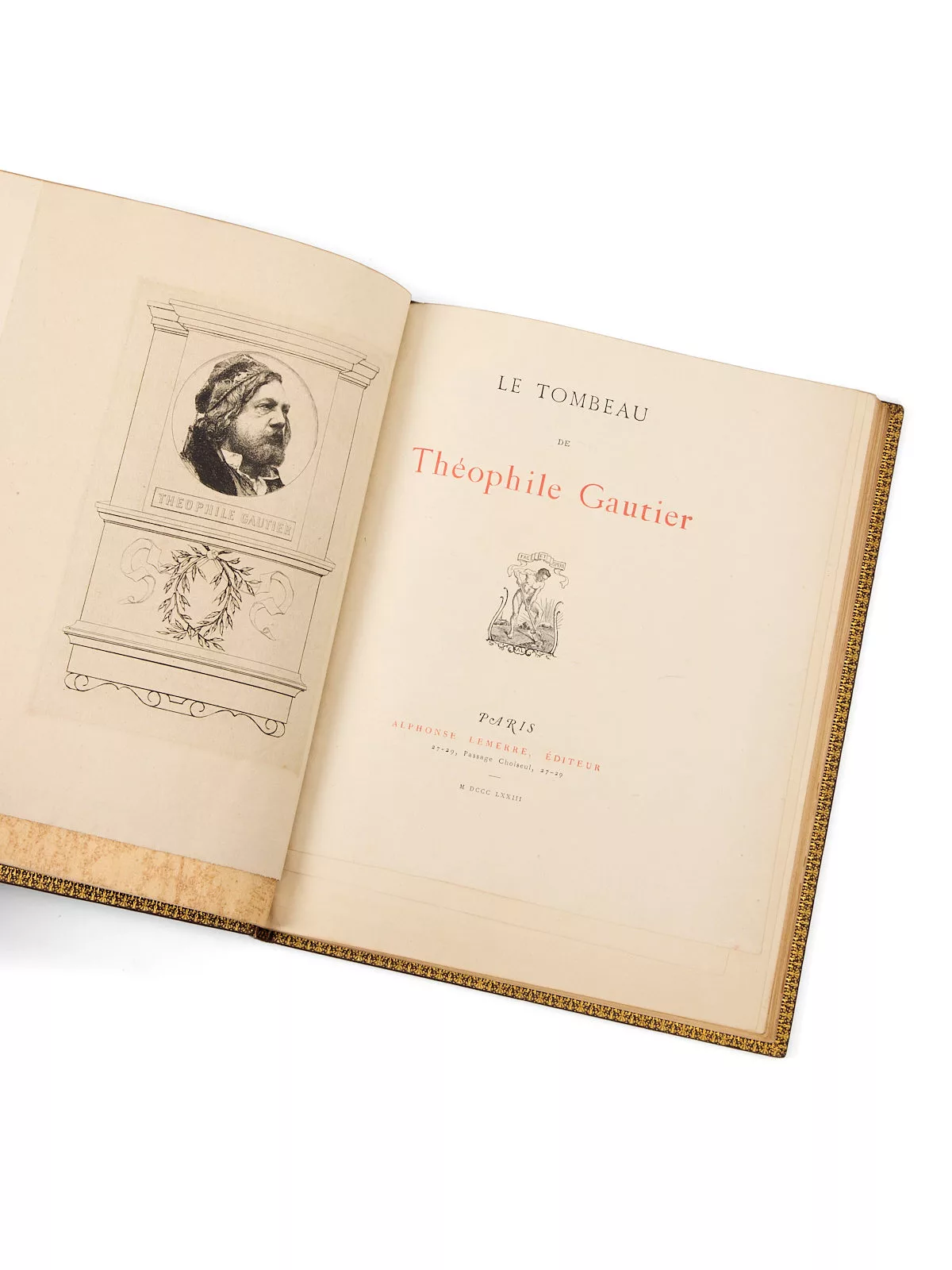
Le Tombeau de Théophile Gautier
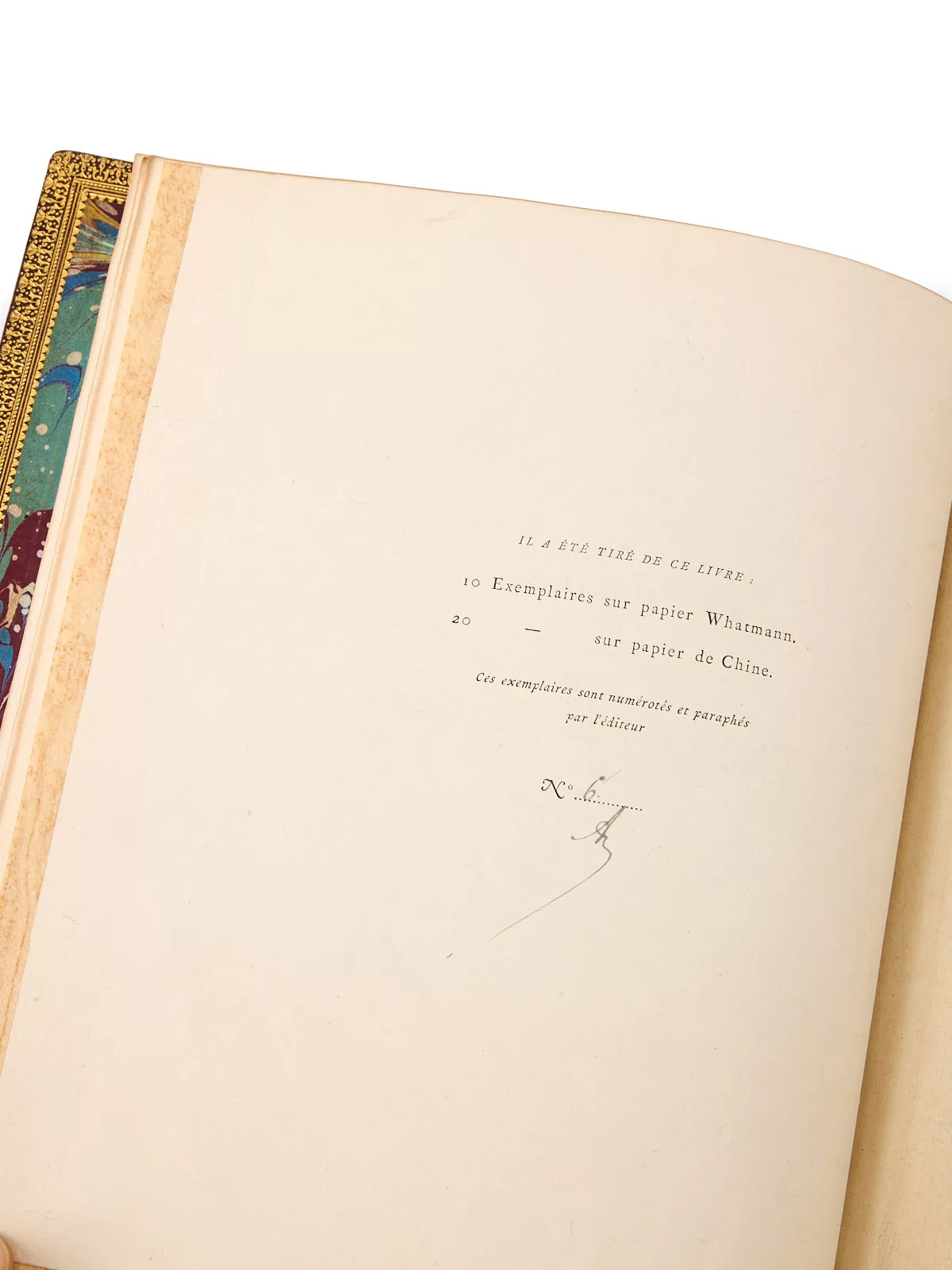
One of 20 copies on China paper (no. 6), justified and signed by the publisher, with all margins.
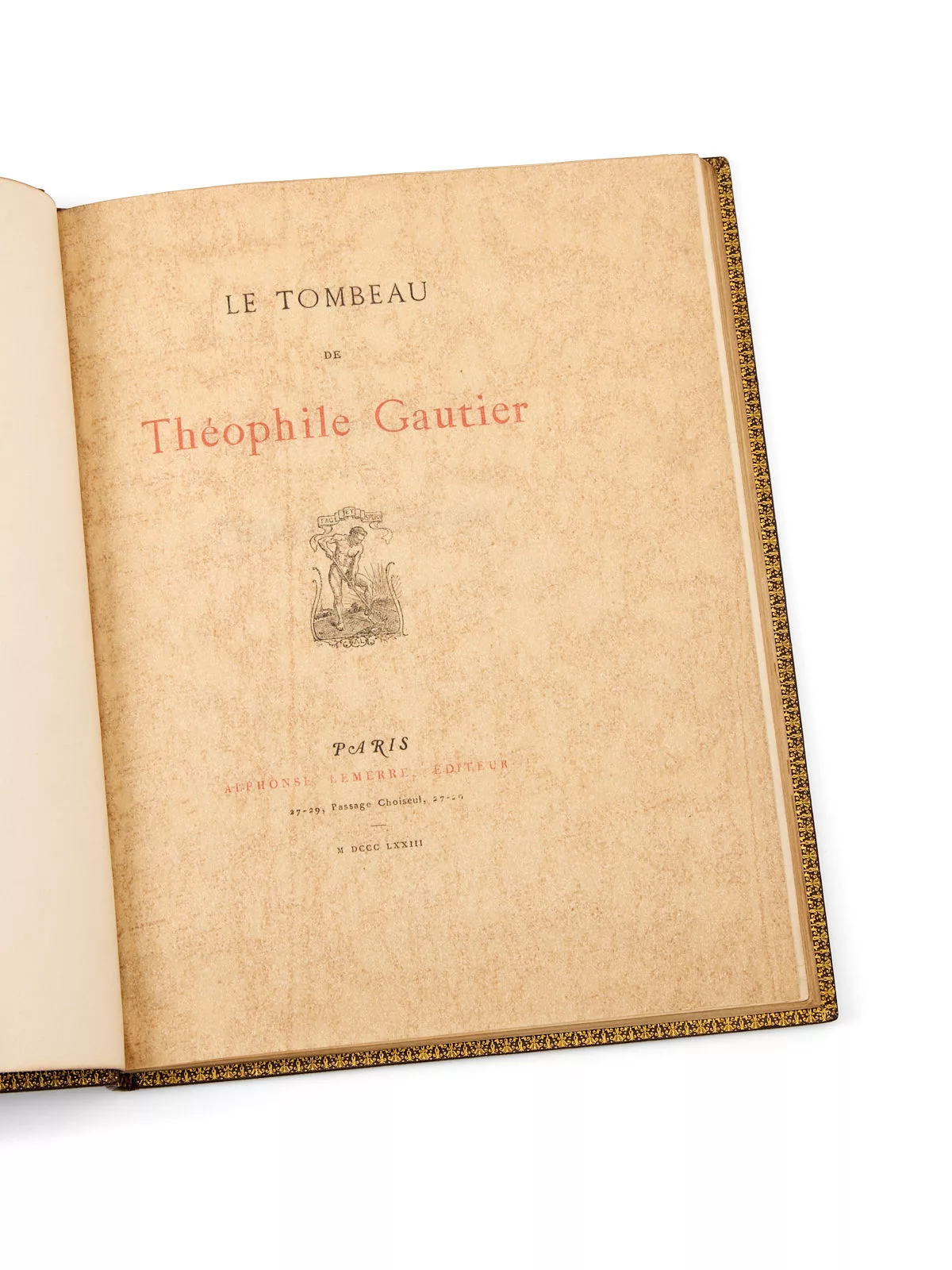
A collective volume of poetic tributes dedicated to Théophile Gautier, the tutelary figure of the Parnassian movement. The initiative, attributed to Albert Glatigny, was carried out by the publisher Lemerre, who as early as October 1872 asked contributors for “at least one sonnet, at most fifty lines.”
The volume brings together 93 poems by 83 contributors, among them Mallarmé (Toast funèbre), Banville, Cladel, Cros, Dierx, France, Glatigny, Heredia, Hugo, Lacaussade, Lafenestre, Leconte de Lisle, Mendès, Mistral, Ratisbonne, Swinburne and Theuriet. Mallarmé, in particular, defines the poet’s role through the figure of Gautier as an “emblem” rather than a master in the classical sense: “Ô de notre bonheur, toi, le fatal emblème!”
Together with the three volumes of Le Parnasse contemporain (1866, 1869, 1876) and Sonnets et eaux-fortes (1867), this Tombeau stands as one of the founding monuments of the Parnassian movement, continuing the sixteenth-century humanist tradition of funerary anthologies.
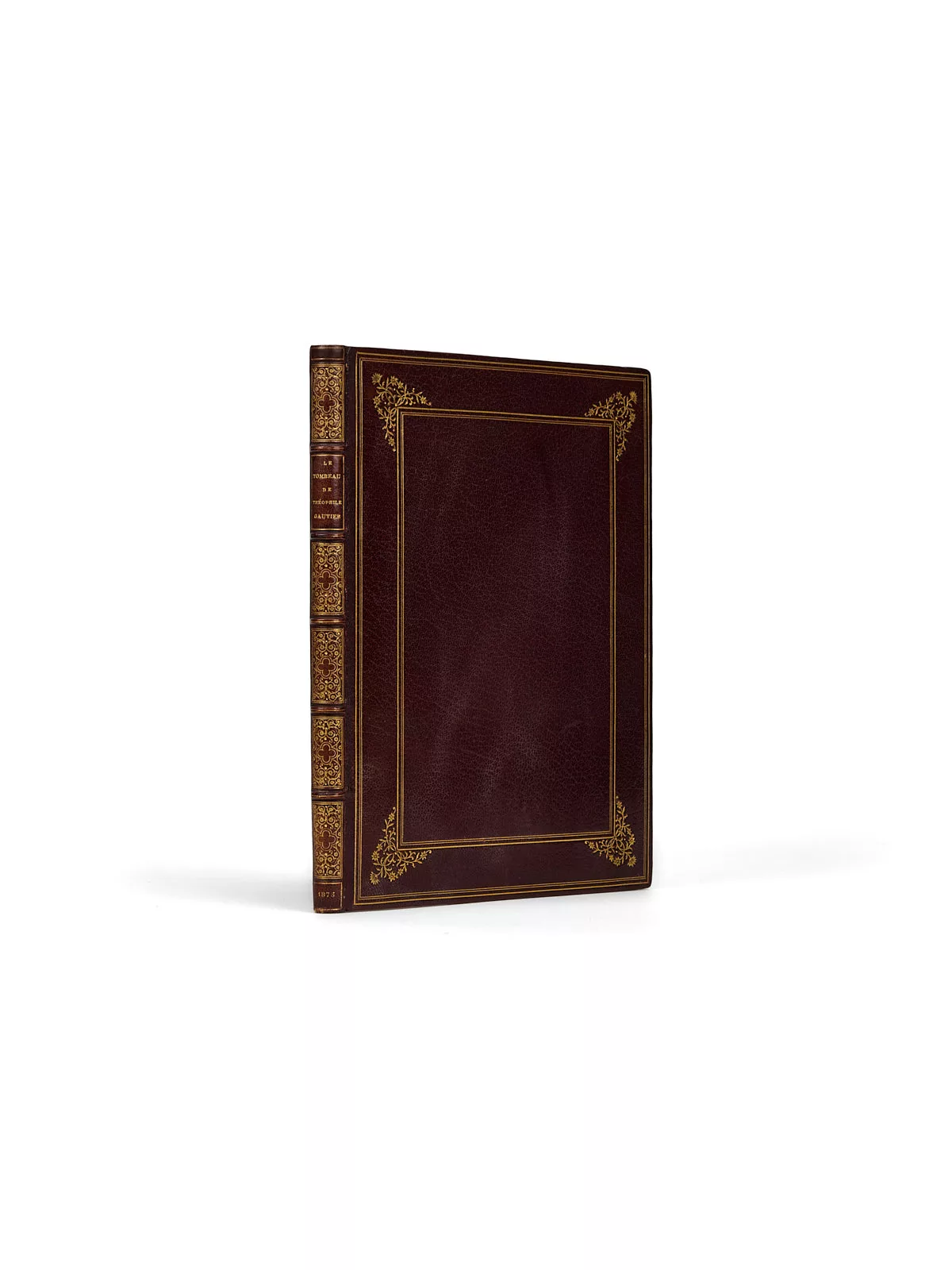
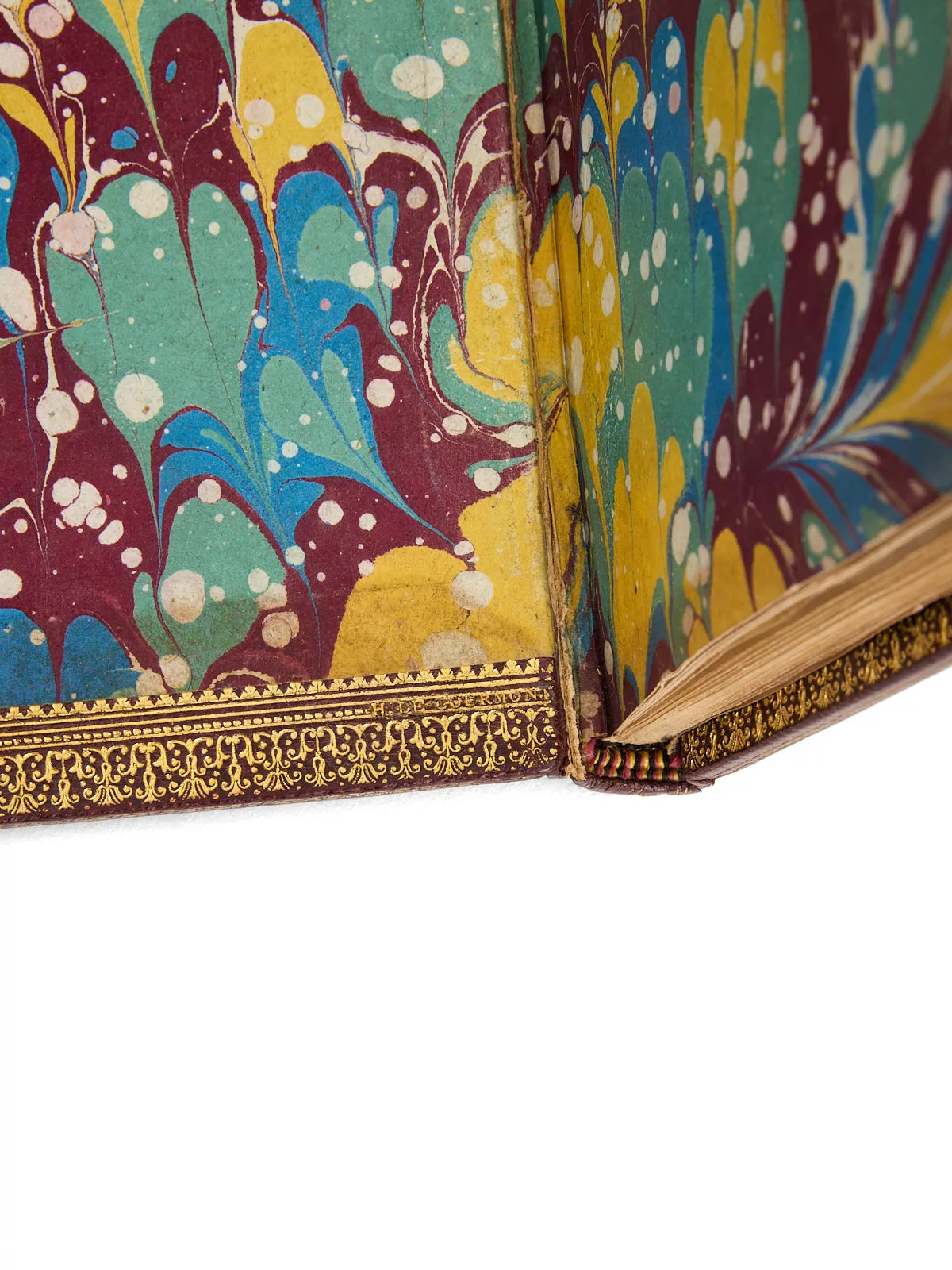
A choice copy on China paper, admirably bound at the time by Courmont in a full binding with rich decoration, most likely for Alfred Piat.
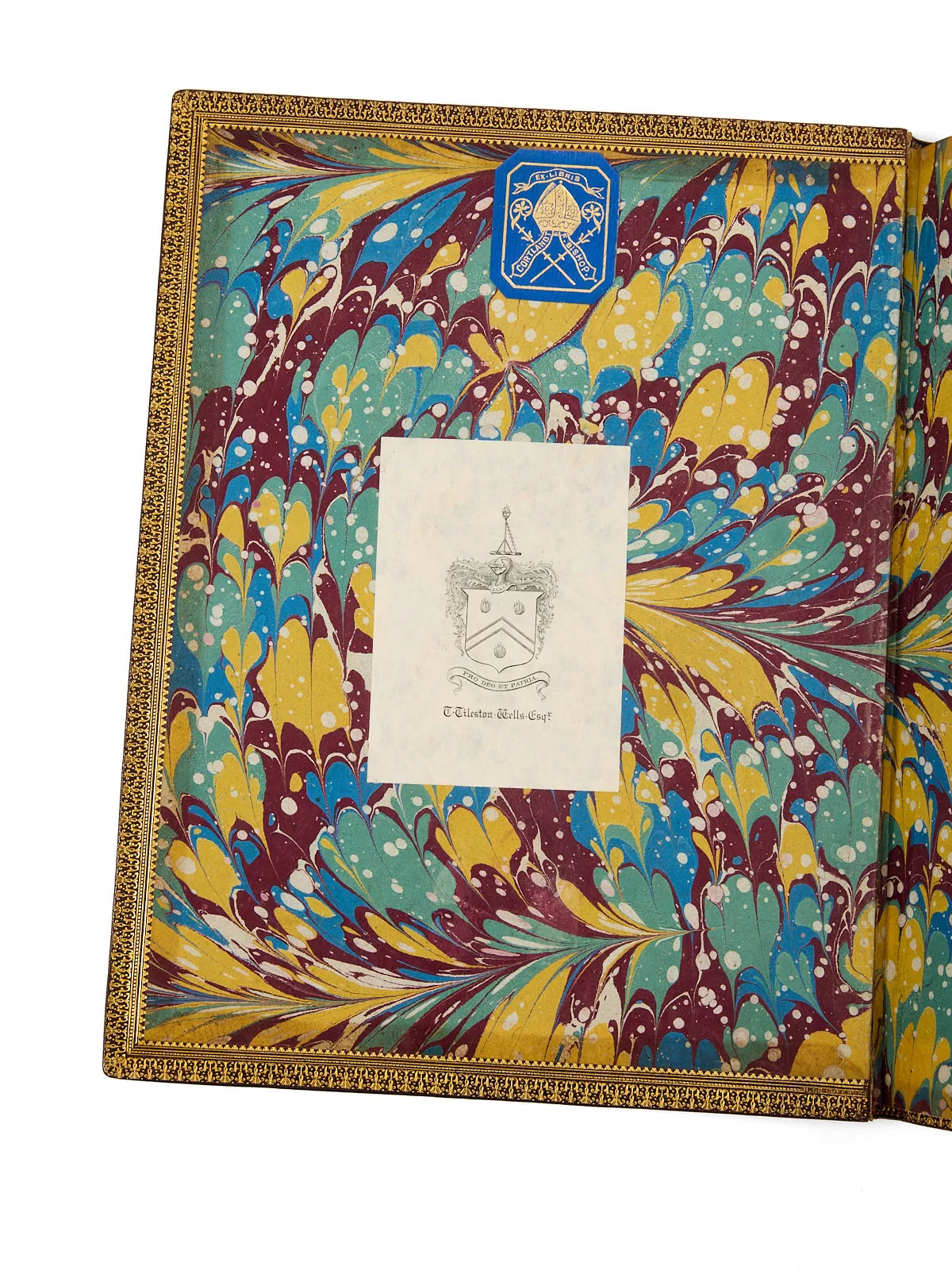
Notable provenance: Alfred Piat — with his “princeps” bookplate (first state of the tailpiece and manuscript correction to the line “Et l’instruit à vivre et mourir”); Cortland-Bishop (bookplate); Sicklès (sale, New York, 1947); Tileston-Wells, president of the Alliance Française (bookplate); French private collection.