

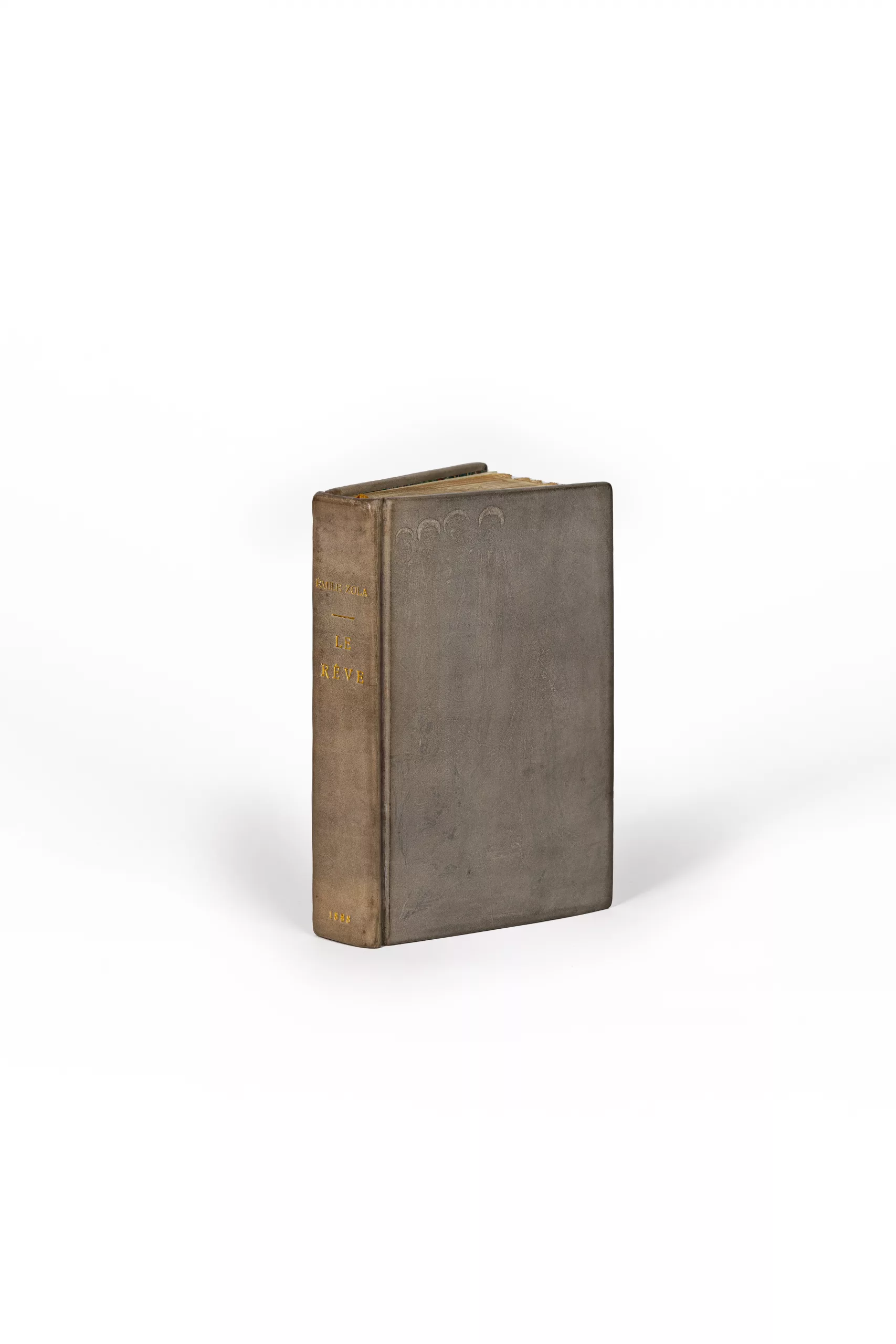
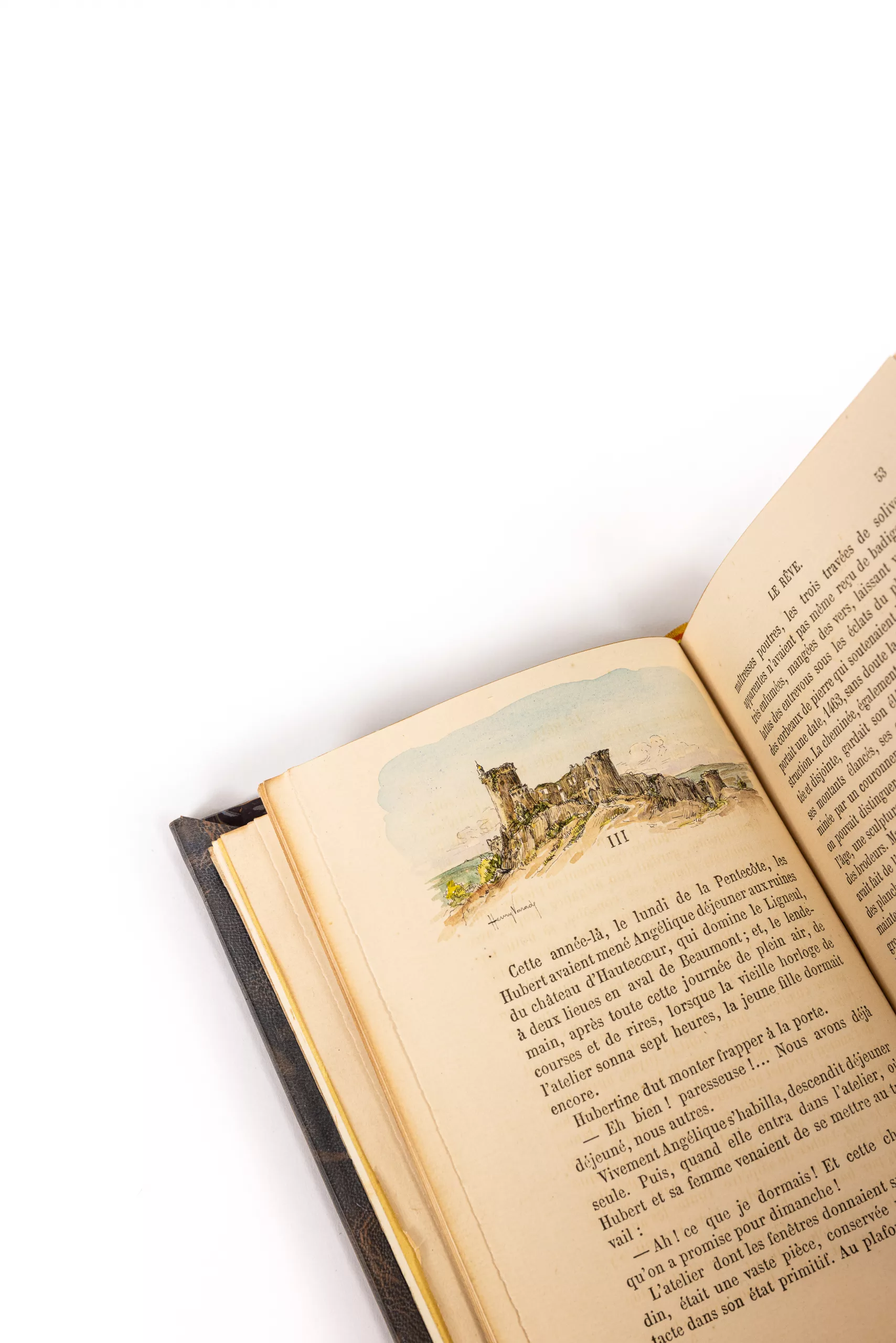
Le Rêve
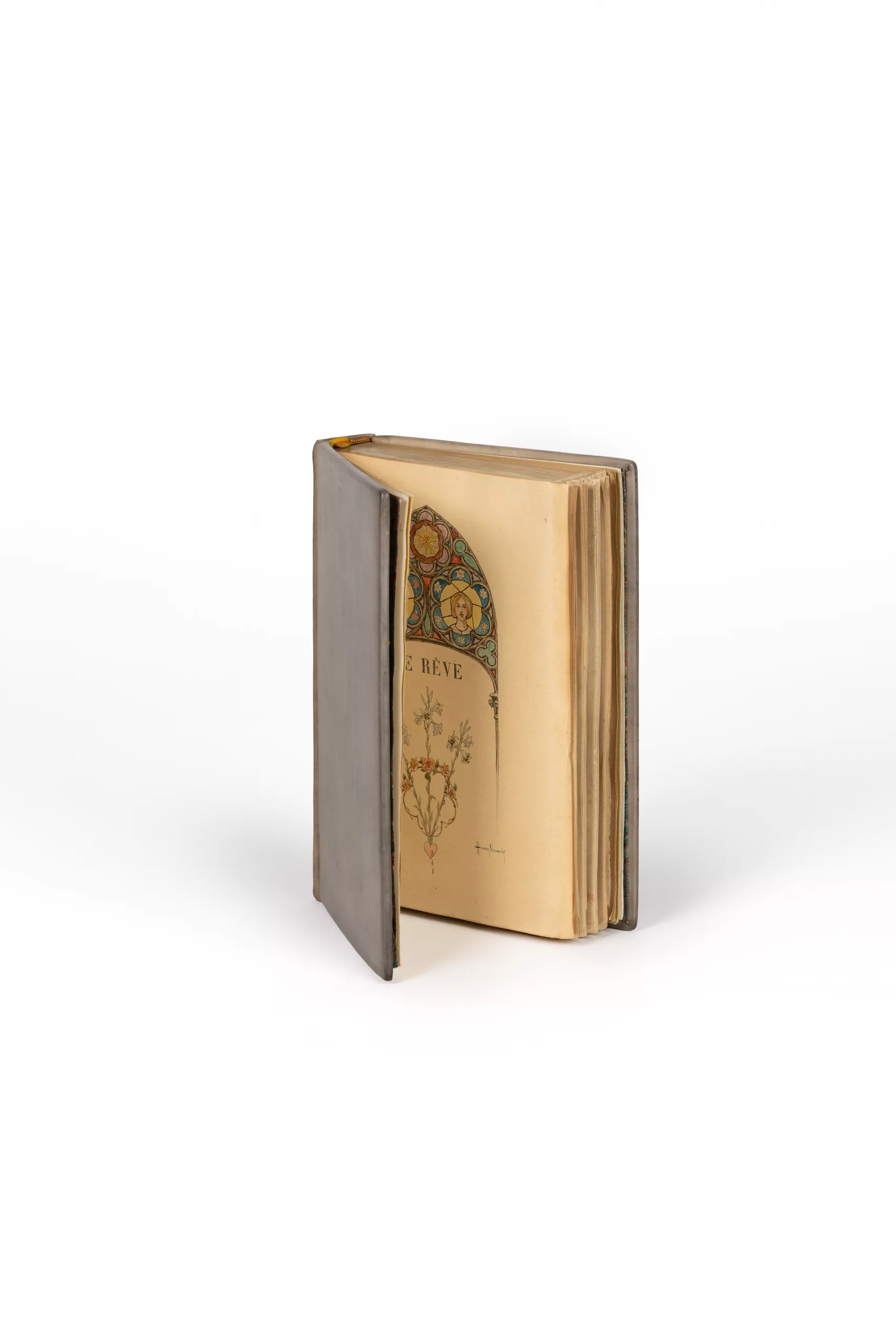
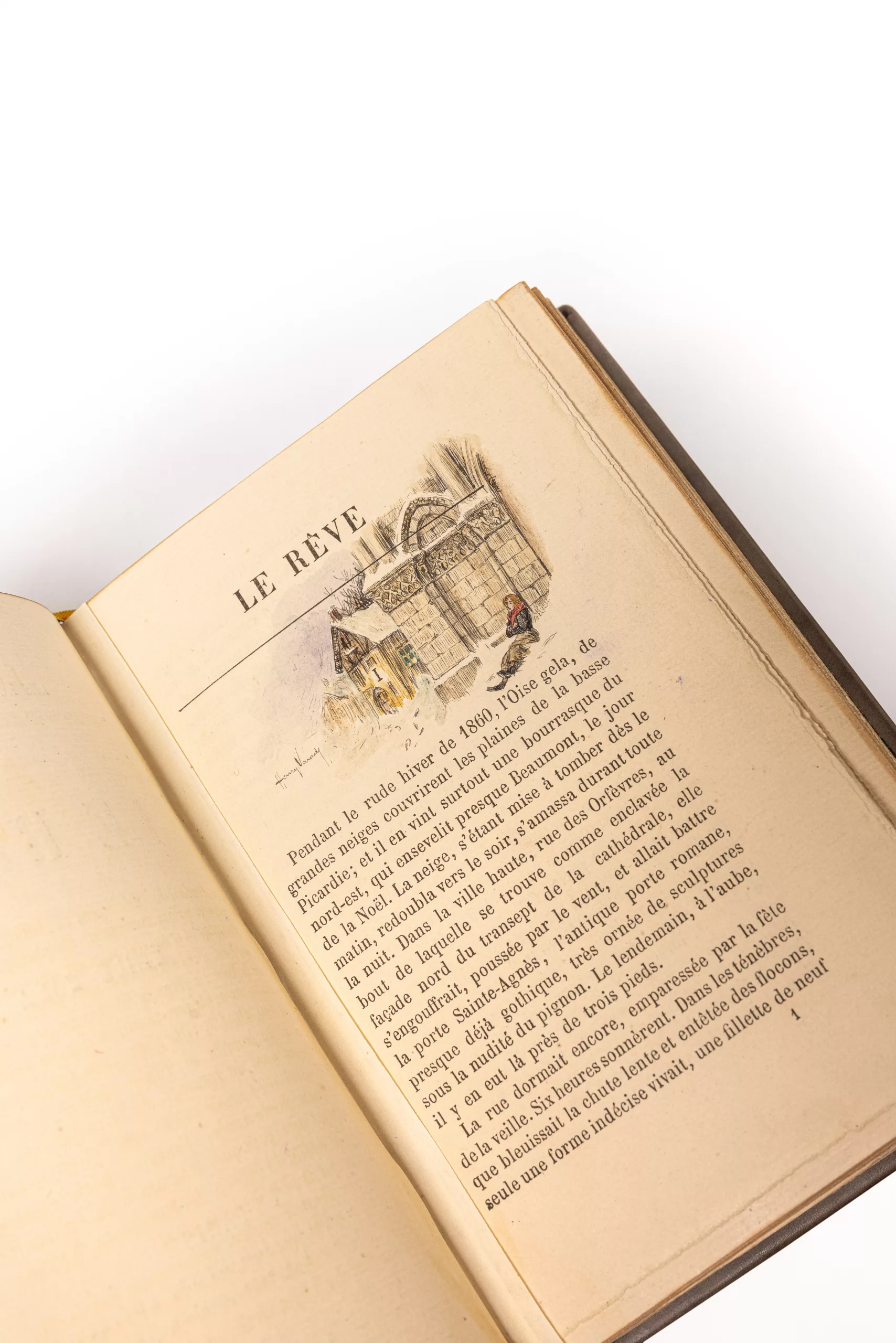
This copy is enriched with 29 color compositions by Henry Varade: 14 pen drawings in black and gold at the end of chapters, and 15 watercolor miniatures at the head of chapters.
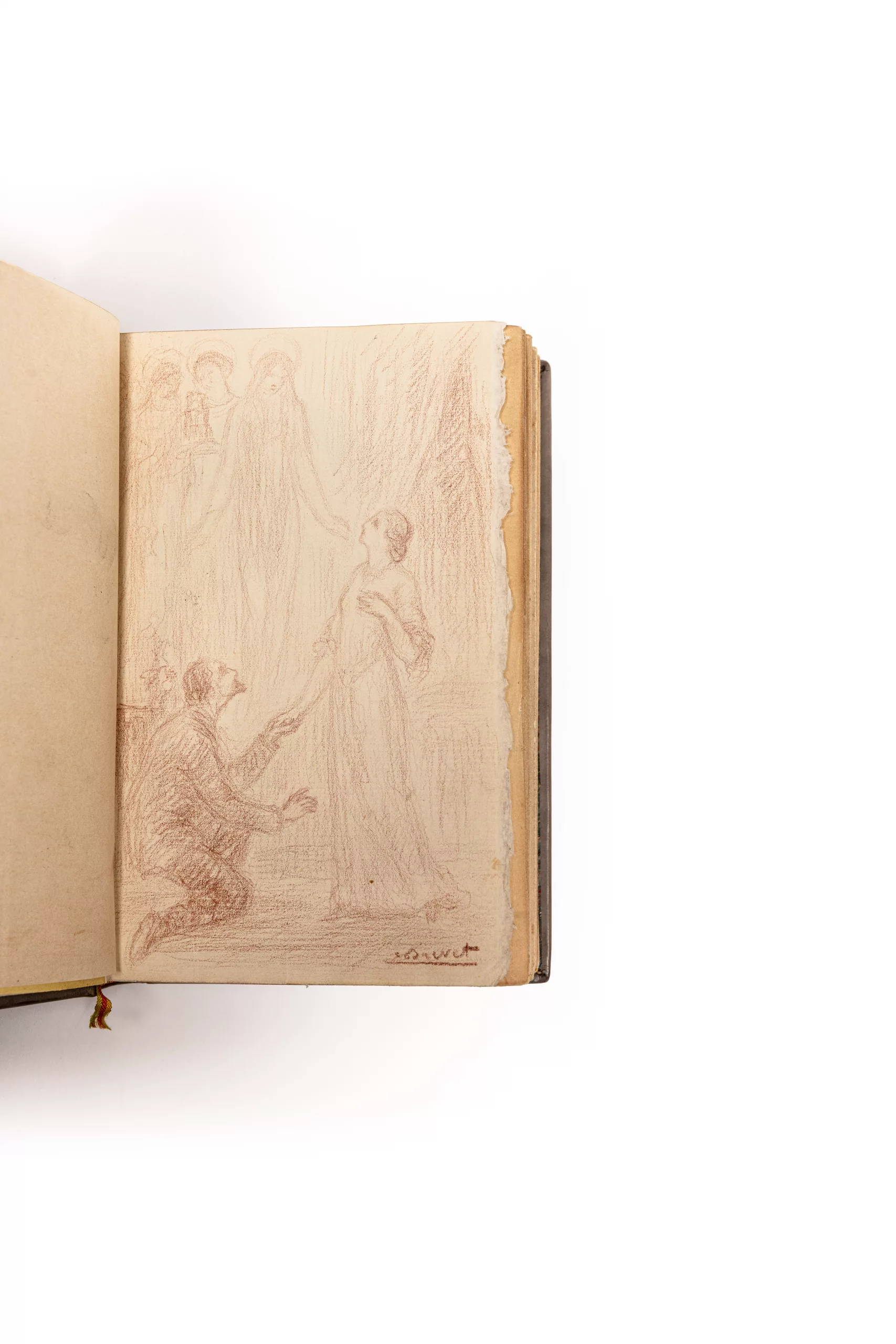
Mounted at the front, a signed sanguine drawing that served as the model for the stamped plate used in the binding’s decoration.
The binding was executed around 1920 in the workshop at 58 rue Sala in Lyon (which later became the well-known workshop of Patrice Goy and Carine Vilaine | Atelier Moura).
It is decorated with a singular design by Joannès Drevet, a Lyon painter and engraver descended from a line of renowned engravers, executed by stamping the leather directly. Only four other bindings signed from his association with E. Buer are recorded — all with stamped designs —, most of them for unique copies enriched with watercolors, a genre in which Henry Varade was, during the 1920s, one of the finest practitioners.
Varade also produced several celebrated illustrated editions, including one for R. L. Stevenson’s Treasure Island.
As for Zola’s text, it is the sixteenth title in the Rougon-Macquart cycle: “I should like to write a book that is not expected of me,” the author reflected. The period favored mystical flights and Sulpician piety, and Zola’s naturalism found itself supplanted by what literary history would call the “idealist reaction.”
In composing his novel in this vein, Zola was bound to surprise more than a few readers. When the book went on sale on 15 October 1888, the critic Jules Lemaître raised a sharp voice that rather aptly summed up its unexpectedness (was that not what the author wanted?) and its shortcomings: “This is a fairy tale, blue through and through. (…) Only it needed to be written as a fairy tale. Dare I say that this is not precisely what M. Emile Zola has done (…) Read Le Rêve, and you will see that this ingenuous tale reeks of impurity (indeed!), and that this unreal story is written in the same opaque and powerfully material style, and with the same methods of composition and development, as La Terre or L’Assommoir. The effect is bewildering.” And to finish off the drubbing: “the author was quite determined to mark that this fairy tale is an episode in the history of the Rougon-Macquart. He felt obliged to attach his little virgin to this dreadful family by some tie of kinship (…).”