



Mark Twain
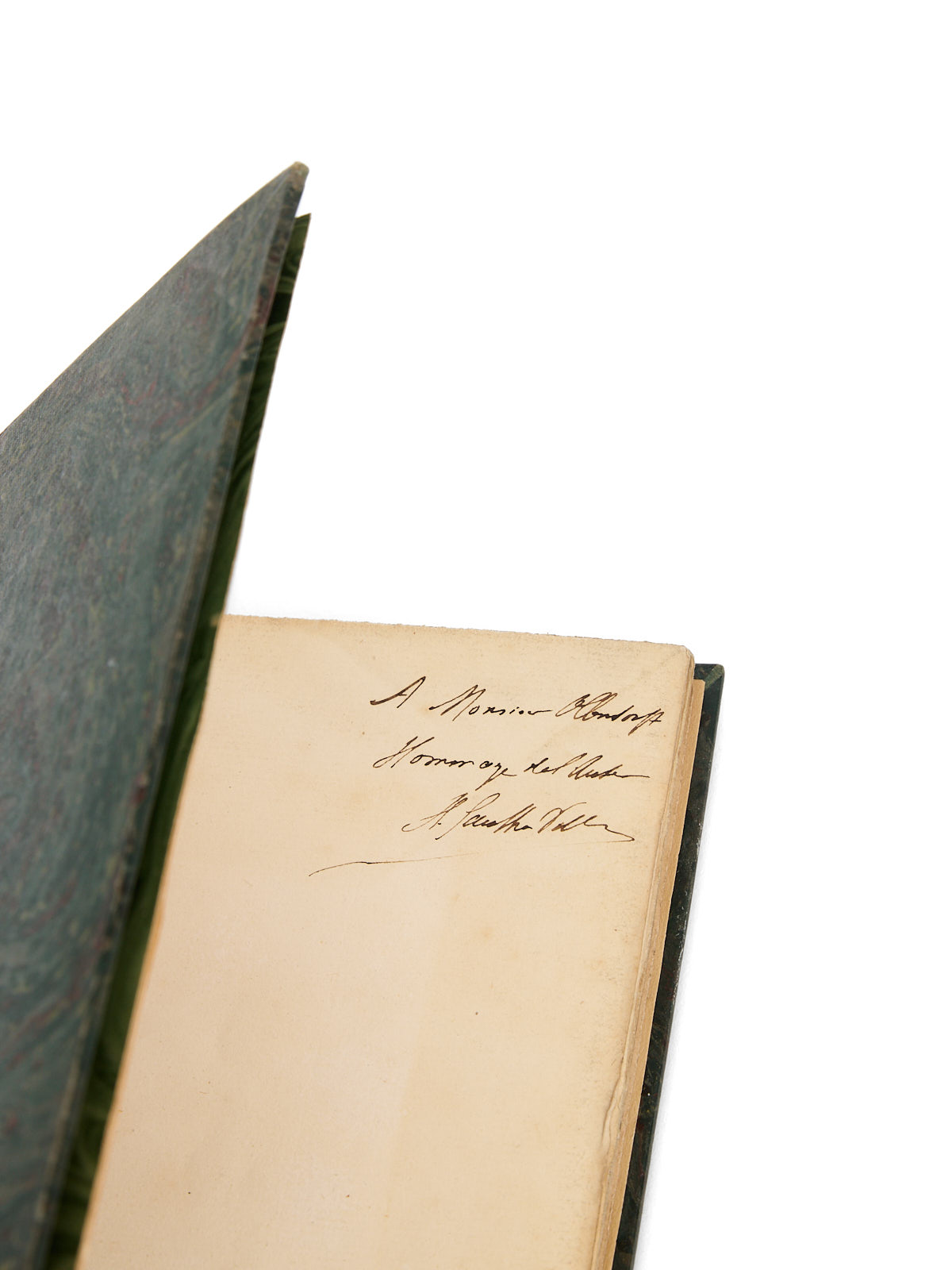
Presentation copy inscribed by the author to the publisher Ollendorff: “à Monsieur Ollendorf, hommage de l'auteur, H. Gauthier-Villars.”
Henri Gauthier-Villars was the eldest son of Jean-Albert Gauthier-Villars, owner of a rapidly expanding scientific publishing house. His father, uncle, younger brother and brother-in-law were all graduates of the École Polytechnique.
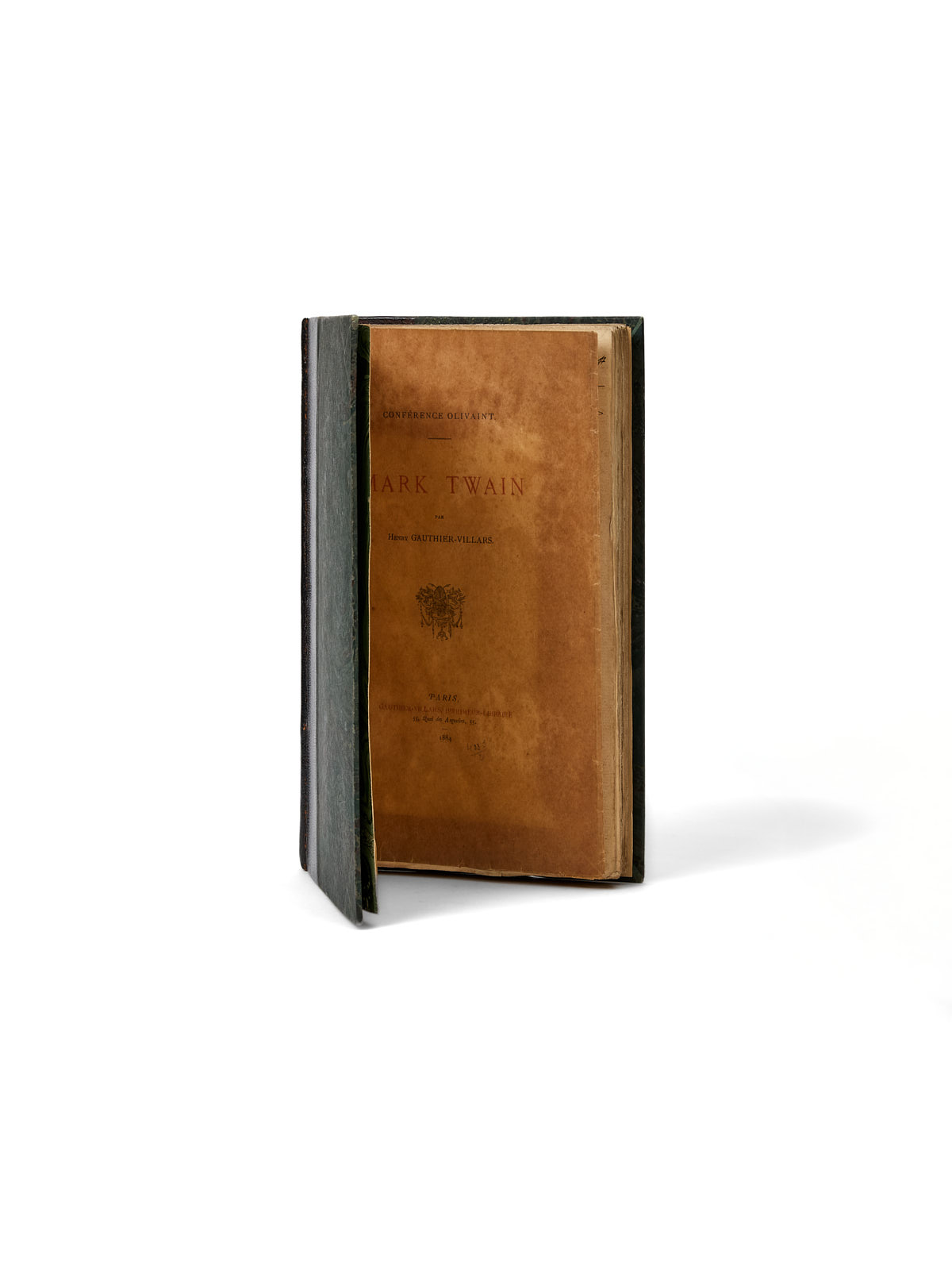
While completing his law studies, Gauthier-Villars’s passion for Anglo-American literature drew him to Mark Twain, of whom only a handful of stories had appeared in France since 1872, in La Revue des Deux Mondes. He decided to devote a monograph to the American writer, first presenting it as a paper read to the Conférence Olivaint, an influential Catholic student society. Well received, he decided to publish it at his own expense, considerably expanded, on the presses of the family firm at 55 quai des Grands-Augustins.
This was the first book ever devoted to Mark Twain: “the portrait he gives of the American novelist and his analysis of his humor allow us to understand what set him apart from the Parnassians, the Symbolists, the Decadents, and also from Naturalists such as Zola” (Madeleine Lazard, Colette, p. 41). The book opened the doors of the literary press to Gauthier-Villars, who would go on to contribute extensively to it. In 1888, Jean-Albert Gauthier-Villars took his two sons into partnership: the publishing house went to Henri, the printing works to his brother Albert. Financially secure, he led a fashionable life devoted to writing and music criticism; his first book signed Willy was L’Année fantaisiste (1891). He married Colette in 1893 at Châtillon-sur-Loing; she was twenty, he thirty-four. The couple settled in Paris, on the quai des Grands-Augustins, above the family’s scientific publishing house.
A very fine copy of distinguished provenance: that of his rival publisher Ollendorff, who published the works of his friend Alphonse Allais. It was with Ollendorff that Willy would, from 1900, publish the Claudine series, written by Colette but issued under her husband’s name, a commercial success he exploited to the full. “Thanks to Willy, Claudine became the most popular character of the early century. This craze had repercussions in the most unexpected commercial ventures: hats, cigarettes, perfumes… while Claudine ice creams and cakes appeared on the shelves of the La Boétie pastry shop. Success followed success, and Claudine became a windfall for her authors. But Willy was always short of money — gambling was expensive — and he sold the full rights to the four Claudine novels outright to their publisher, Ollendorff. One can imagine Colette’s fury, as she accused her husband of having robbed her. Colette never forgave Willy for squandering her fortune. That was the end of the triumphant couple who, only a few years earlier, had paraded on horseback in the Bois de Boulogne” (Carmen Boustani, Willy: le bonheur de l’imposture, Presses universitaires de Rennes, 2011).