

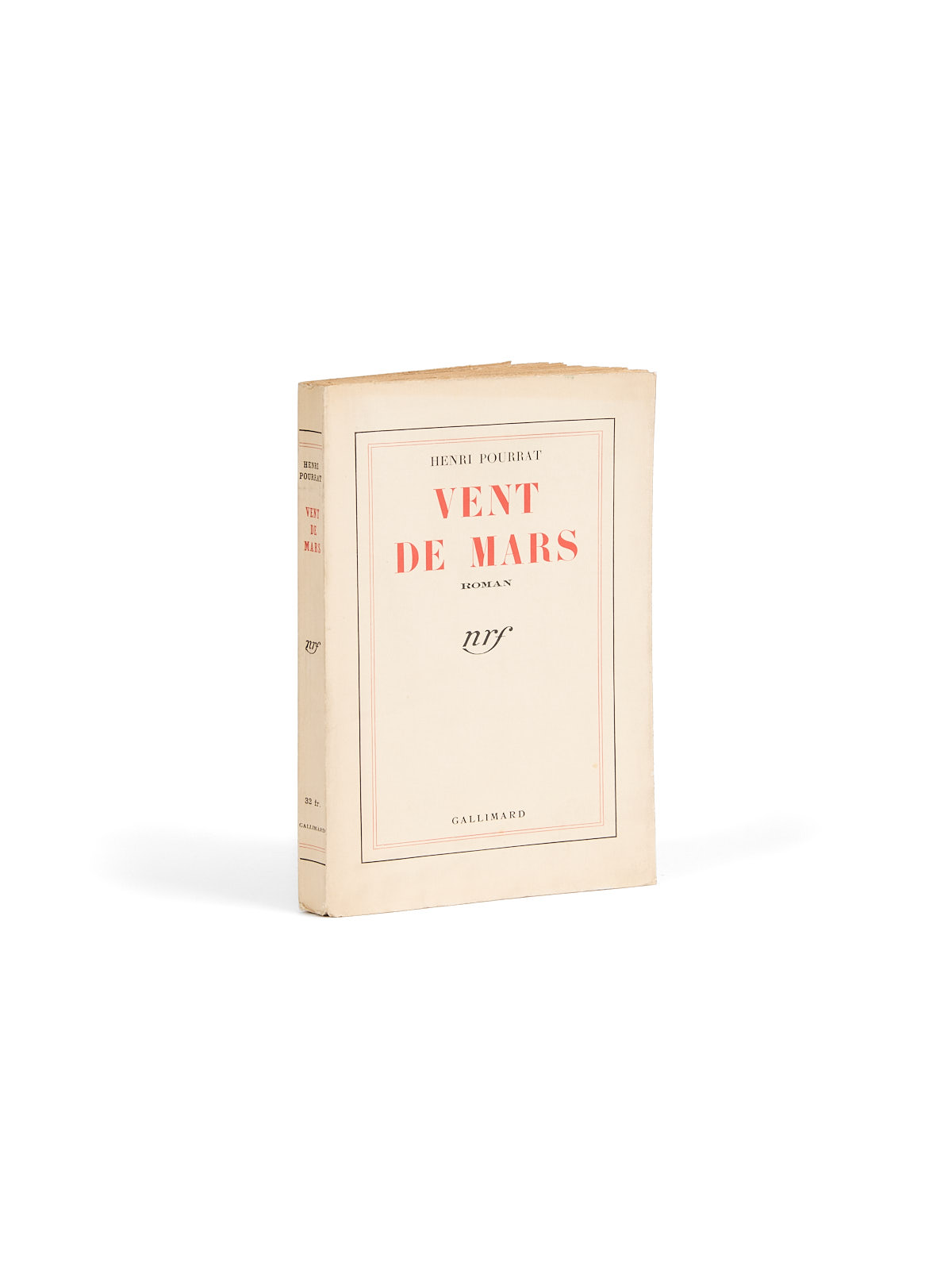
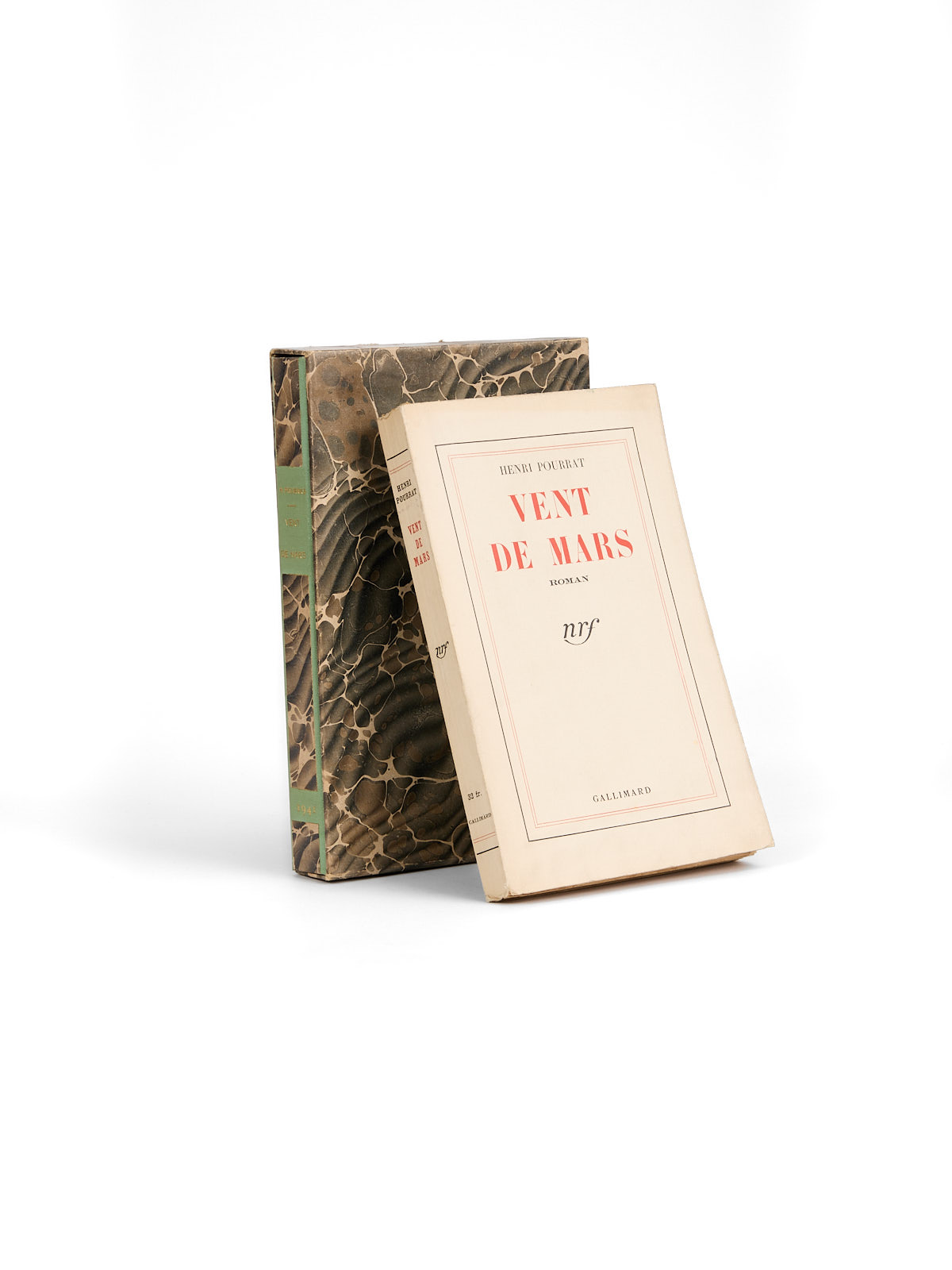
Vent de mars
Vent de mars is a diary of rural France on the eve of war, and during the collapse and defeat of 1940. It was awarded the Prix Goncourt under the peculiar circumstances of the Occupation and the Vichy government, which found in its subject — rural, nationalistic — a welcome theme. The previous year, on 14 October 1940, Marshal Pétain, at Pourrat’s invitation, had come “to meet the working people” at Ambert, near Vichy, visiting the oldest paper mill in the Livradois, the Moulin Richard-de-Bas. On that occasion Pourrat published Le Paysan français and Le Chef français, two books dedicated to the Marshal and his policy of “return to the land.”
Pourrat nonetheless soon distanced himself from the Corporation paysanne set up by the Vichy government and, from Ambert, sheltered and informed the Auvergne Resistance fighters, while also helping several Jewish families who had taken refuge in the unoccupied zone. His correspondence with Paulhan records the many parcels he sent to Paris during rationing, regularly dispatching sacks of charcoal, potatoes, Jerusalem artichokes and honey.
The Centre Henri-Pourrat, attached to the Bibliothèque municipale et interuniversitaire de Clermont-Ferrand, today holds a collection unique in the world devoted to folk tales and rural arts and traditions: manuscripts, documentation, correspondence (more than 20,000 letters received), and the thousands of volumes of the author’s own library. Since 1975 this collection has been continually enriched with manuscripts and fine editions on the subject.
A fine copy of this rare text, first printing, as issued.