

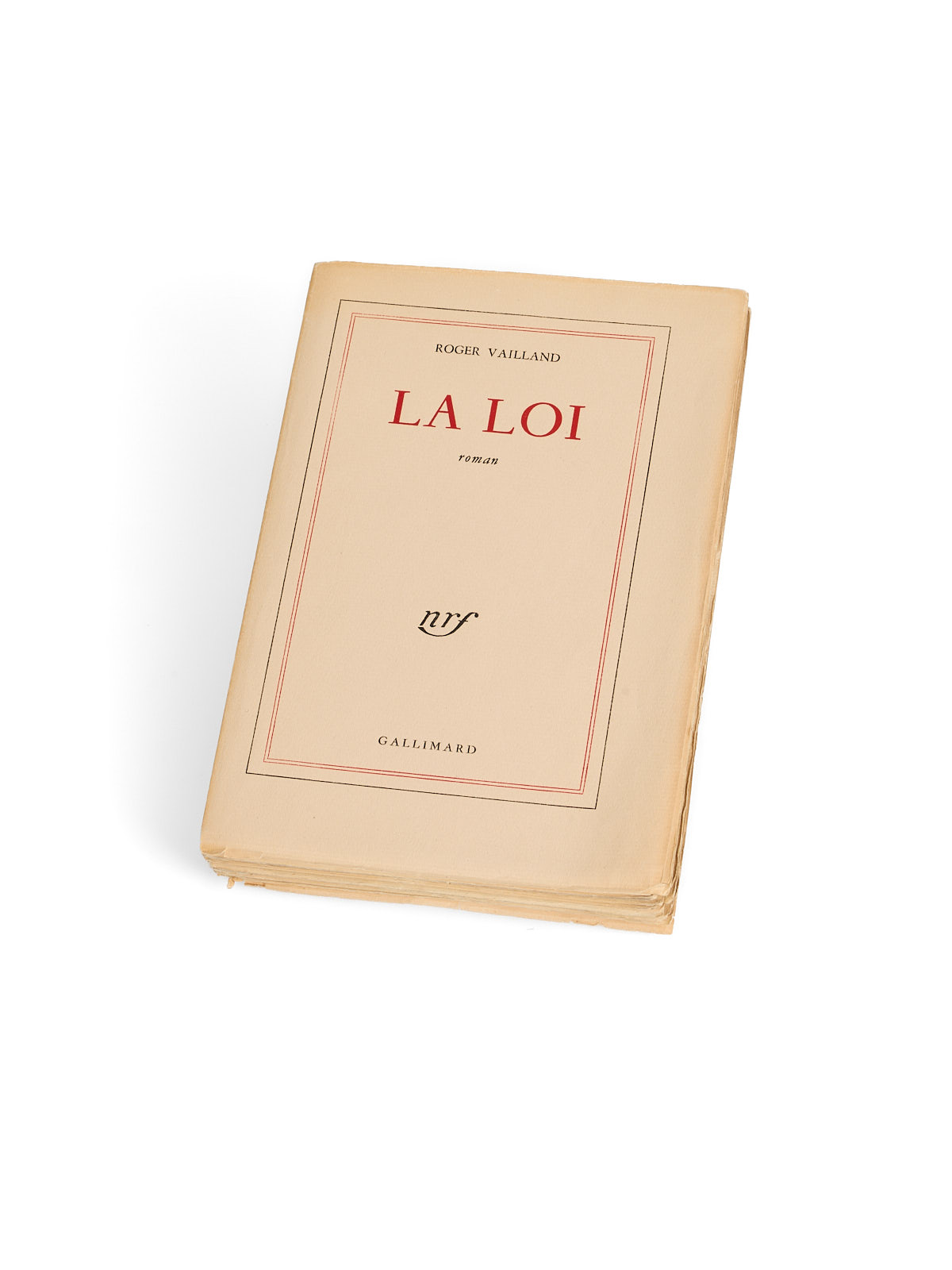
La Loi
Observing the inhabitants of a region of southern Italy, Roger Vailland examines the various classes that make up its society, where internal quarrels and rivalries lie at the heart of the narrative. The novel won on the second ballot, by 6 votes to 4 for Michel Butor’s La Modification, for the Prix Goncourt. A graduate in philosophy, Vailland was one of the founders of the review Le Grand Jeu, took part in the Surrealist movement and worked as a journalist. During the Occupation he joined the Resistance, specializing in sabotage and particularly in derailing trains. It was at this time, cut off from his network, that he began writing Drôle de jeu, which won him the Prix Interallié in 1945.
“An alcoholic and drug user, he is, in private, poorly regarded,” the Renseignements généraux wrote in a note dated 29 July 1952. Vailland would no doubt have been flattered by this portrait. But while the police watched him closely, meticulously listing his Communist associations, few people today, it must be said, take much interest in him. It was in Moscow itself that he learned of Khrushchev’s report in 1956, revealing Stalin’s crimes: his inner world collapsed. “I wept the day Stalin died. And I wept again on the road to Moscow […] when I had to kill him a second time, after reading the account of his crimes,” he noted in his journal on 5 June 1956.