

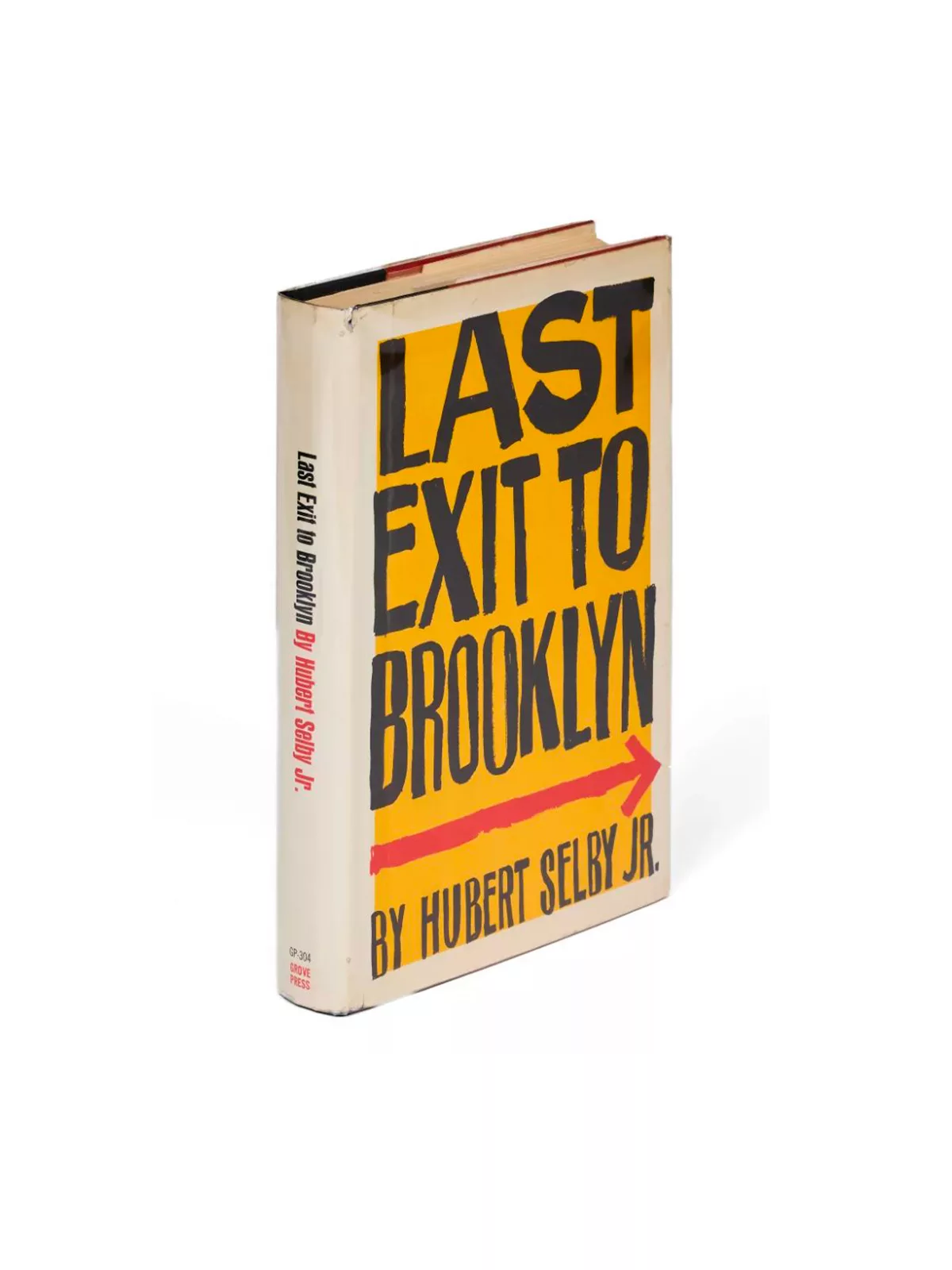
Last Exit to Brooklyn
Selby, who died in 2004, had lived since 1960 like a man under early sentence, in a long epilogue to tuberculosis. From then on he threw himself, feverish and frenzied, onto his typewriter, as though every subsequent piece of writing carried — at least in his own eyes — the weight of a last testament. It took him six years to complete this scathing portrait, Last Exit, depicting a fringe of American society exposed to the harshness of a dehumanized urban world.
A punk novel and a corrosive portrait of a disembodied generation, its descriptions — both in their phrasing and in what they depict — possess the same virulence and rawness found in Ellis, recounting the darkest and most pitiless behaviors and instincts of man. The writing is dense and spontaneous, allowing no respite and at times almost unbearable, as Selby delights in dissecting his characters like a coroner, exposing, without ever condemning, the abyss of the human soul struggling nonetheless toward the hope of an illusory redemption.