

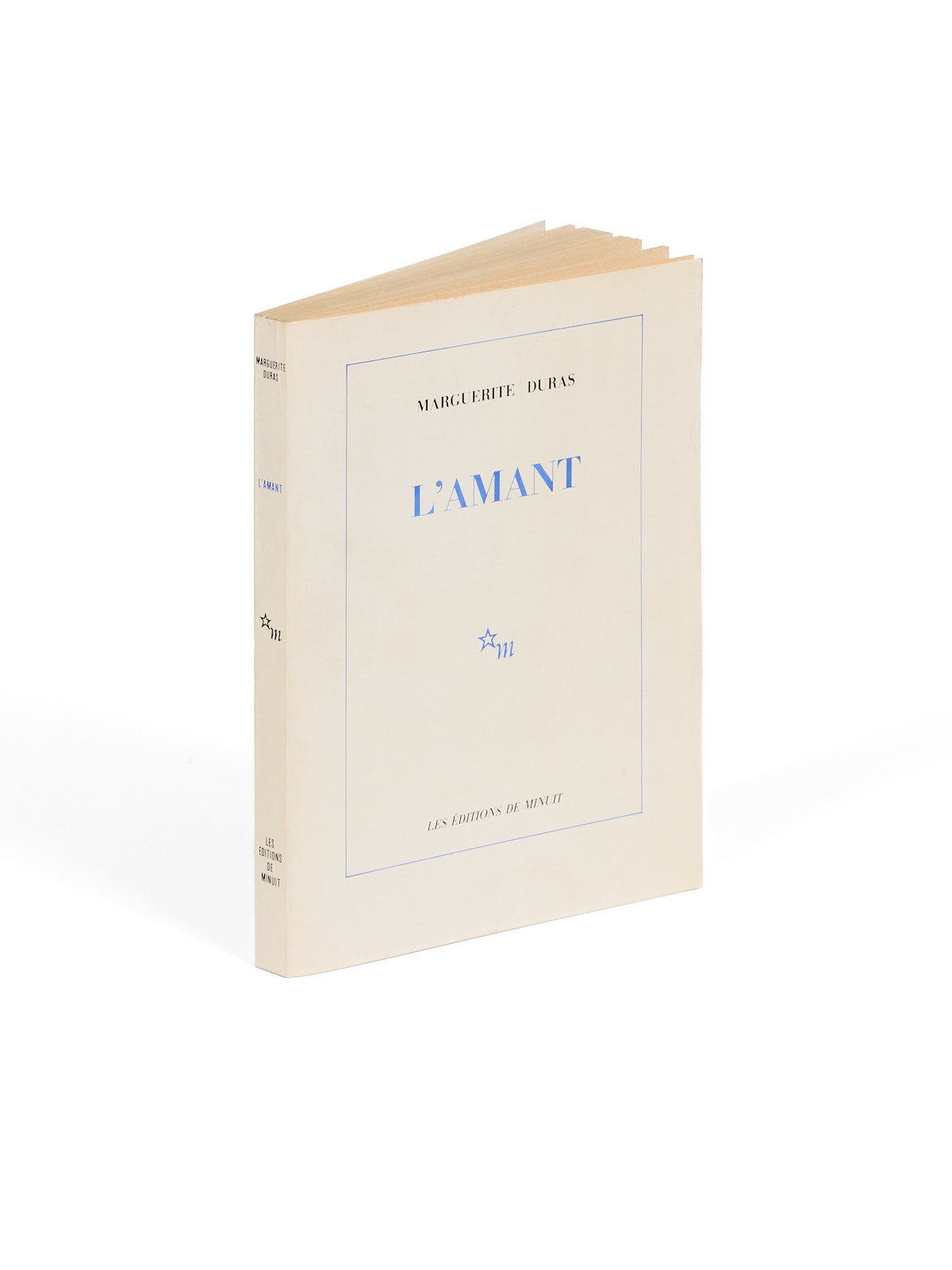
L’Amant
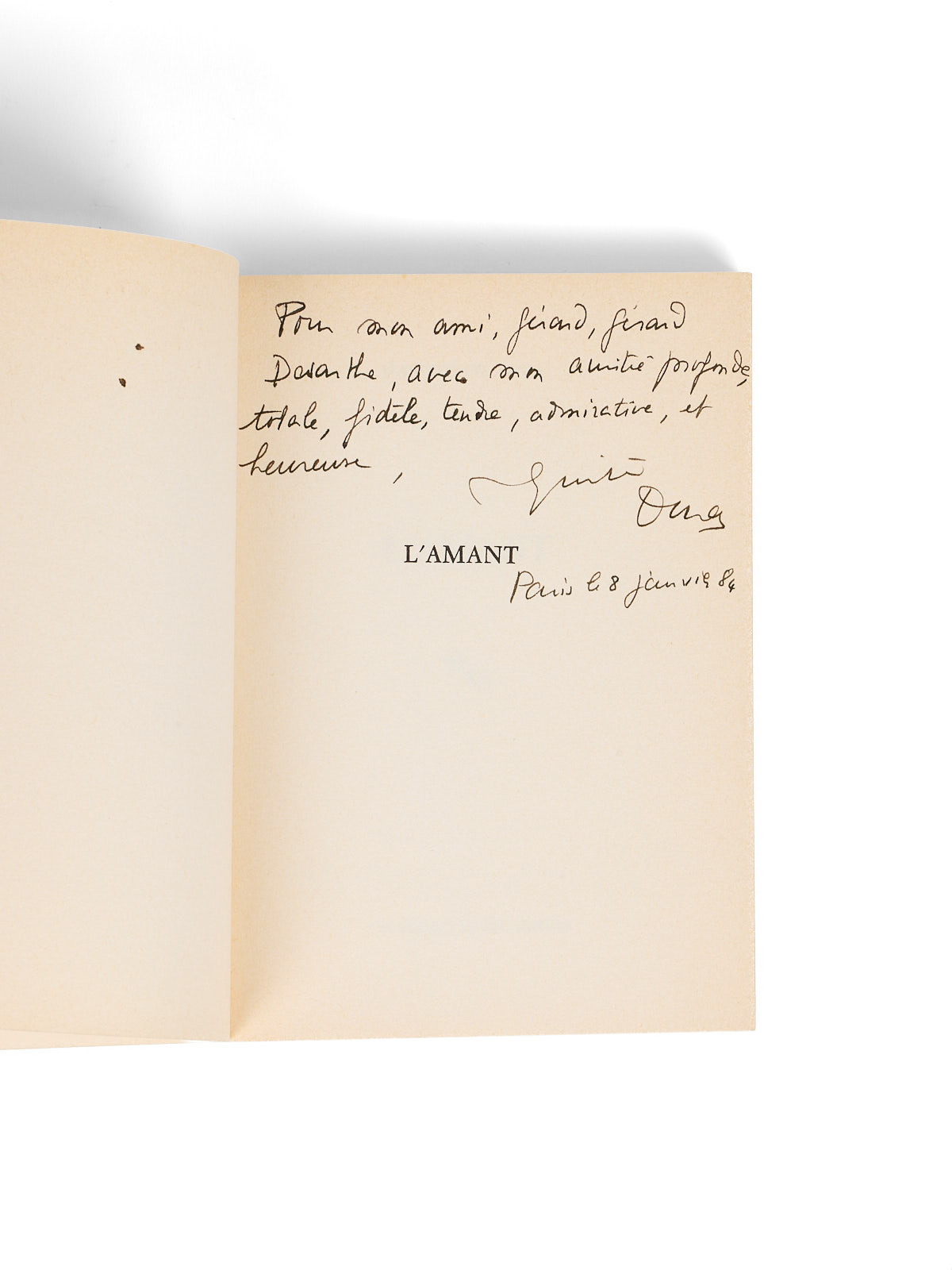
Inscribed and signed by Duras to Gérard Desarthe: “Pour mon ami Gérard, Gérard Desarthe, avec mon amitié profonde, totale, fidèle, tendre, admirative, et heureuse, Marguerite Duras. Paris, le 8 janvier 84 [sic].”
Reading L’Amant aloud is the best way to approach it. The voice-over of Jean-Jacques Annaud’s film does nothing else. It draws the listener still further into the intimate rhythm of this singular prose, which brought Duras worldwide fame.
“From the opening lines of the narrative,” wrote François Nourissier, “Duras’s art and mastery burst forth, her freedoms, her challenges, the achievements of thirty years’ work to arrive at this light, neutral, swift and haunting language, capable of capturing every nuance, of moving at the exact speed of thought and image.” The novel was awarded the Prix Goncourt in 1984, on the third ballot, with six votes against three for Bertrand Poirot-Delpech’s L’Été 36 and one for Bernard-Henri Lévy’s Le Diable en tête. “At last,” the author would say, thirty-four years after the failure of Un barrage contre le Pacifique.
A very fine copy inscribed to Gérard Desarthe. That same year, 1984, Desarthe had performed Aurélia Steiner alone on stage at the Théâtre du Rond-Point, directed by Duras herself. In 1971, Desarthe had one of his first film roles in Jaune le soleil, Marguerite Duras’s third film, adapted from her novel Abahn Sabana David. It was the beginning of a long and distinguished acting career, which culminated in his roles in Peer Gynt and Hamlet, staged by Patrice Chéreau in the late 1980s.