


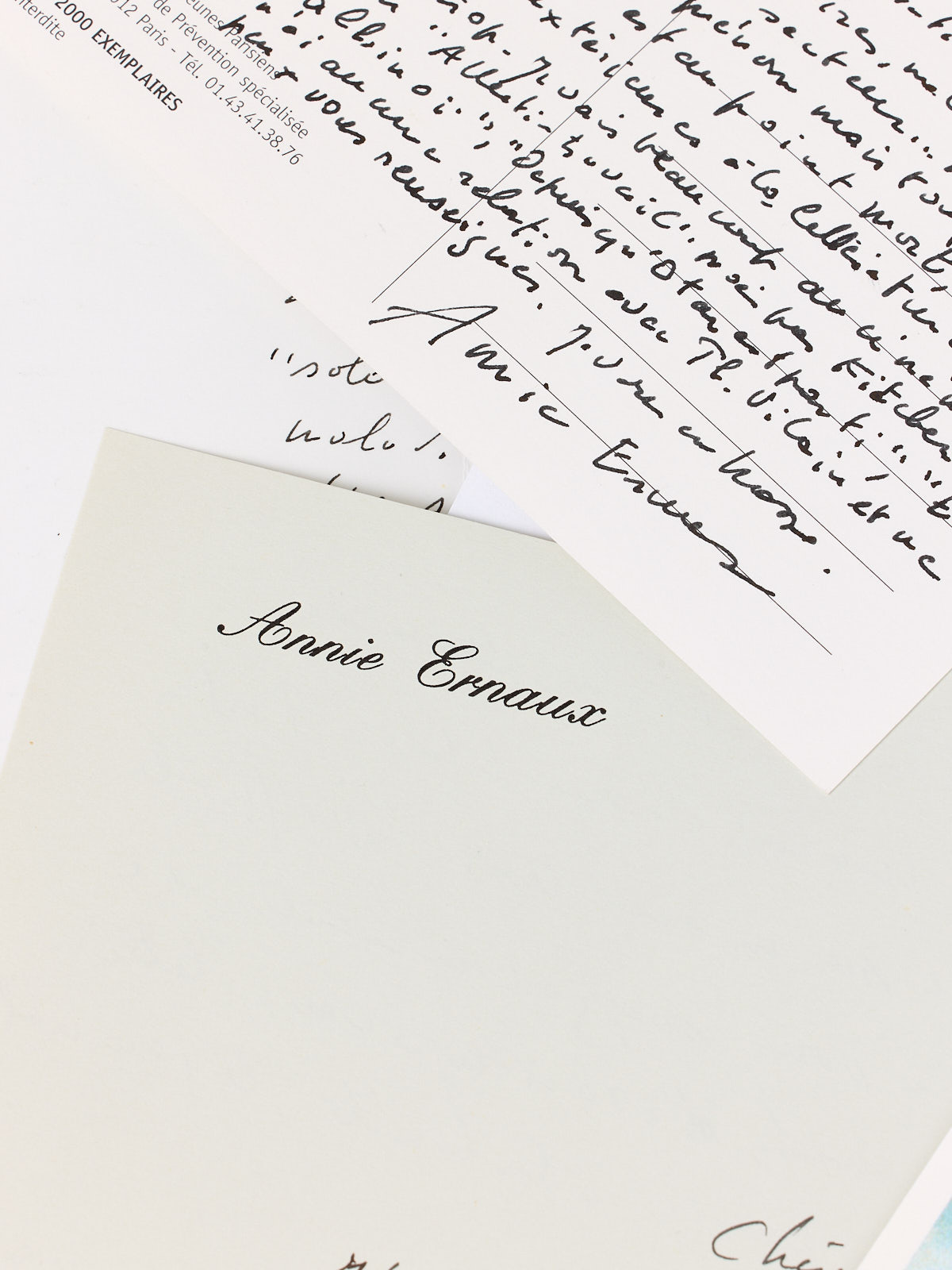

A moving correspondence, beginning in 1998 while Annie Ernaux was still teaching French at the Cned distance-learning center, preparing students for the Capes in modern literature. The letters address both literary and private matters, shedding light on many aspects of Ernaux’s novels and forming a coherent and important body of material for understanding her work.
The correspondence begins just as Ernaux emerges from a love affair with a student in Rouen thirty years her junior — a passion which, by her own admission, she “had never before experienced from a lover. With my husband, long ago, I felt like a working-class girl; with him, this time, I was the bourgeoise […] If I do not write things down, they have not been carried through to their conclusion, they have only been lived.”
She would return to this episode in Le Jeune Homme, published a few months before receiving the Nobel Prize in Literature in 2022, having already sketched it out in L’Événement in 2000: “I undertook the account of this abortion, around which I had been circling for a long time. The further I went in writing this event, which had taken place even before he was born, the more I felt irresistibly driven to leave A. As if I wanted to detach him and expel him as I had the embryo more than thirty years before.” Le Jeune Homme begins precisely where L’Événement ends.
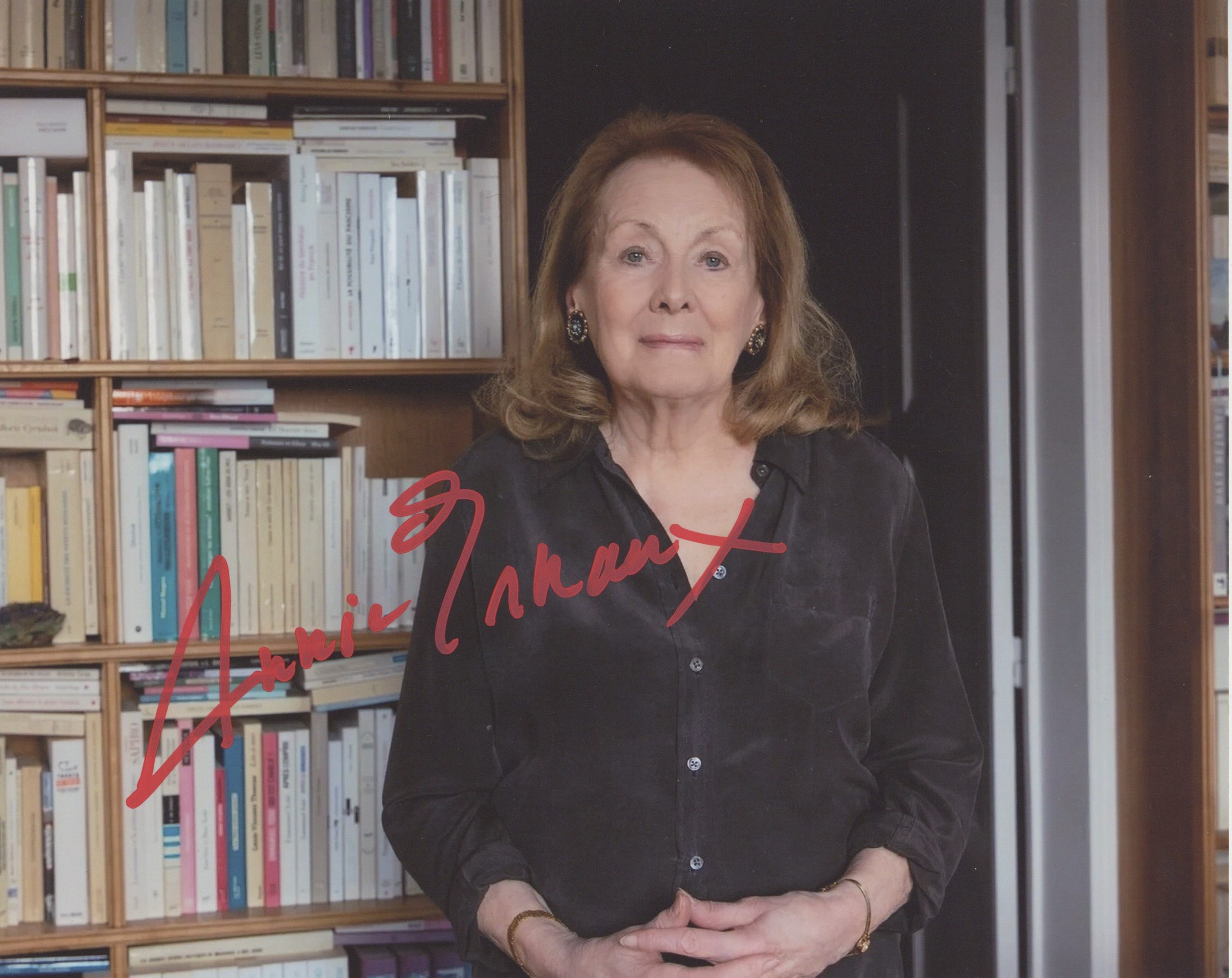
Accompanied by a large signed photograph of Annie Ernaux.