

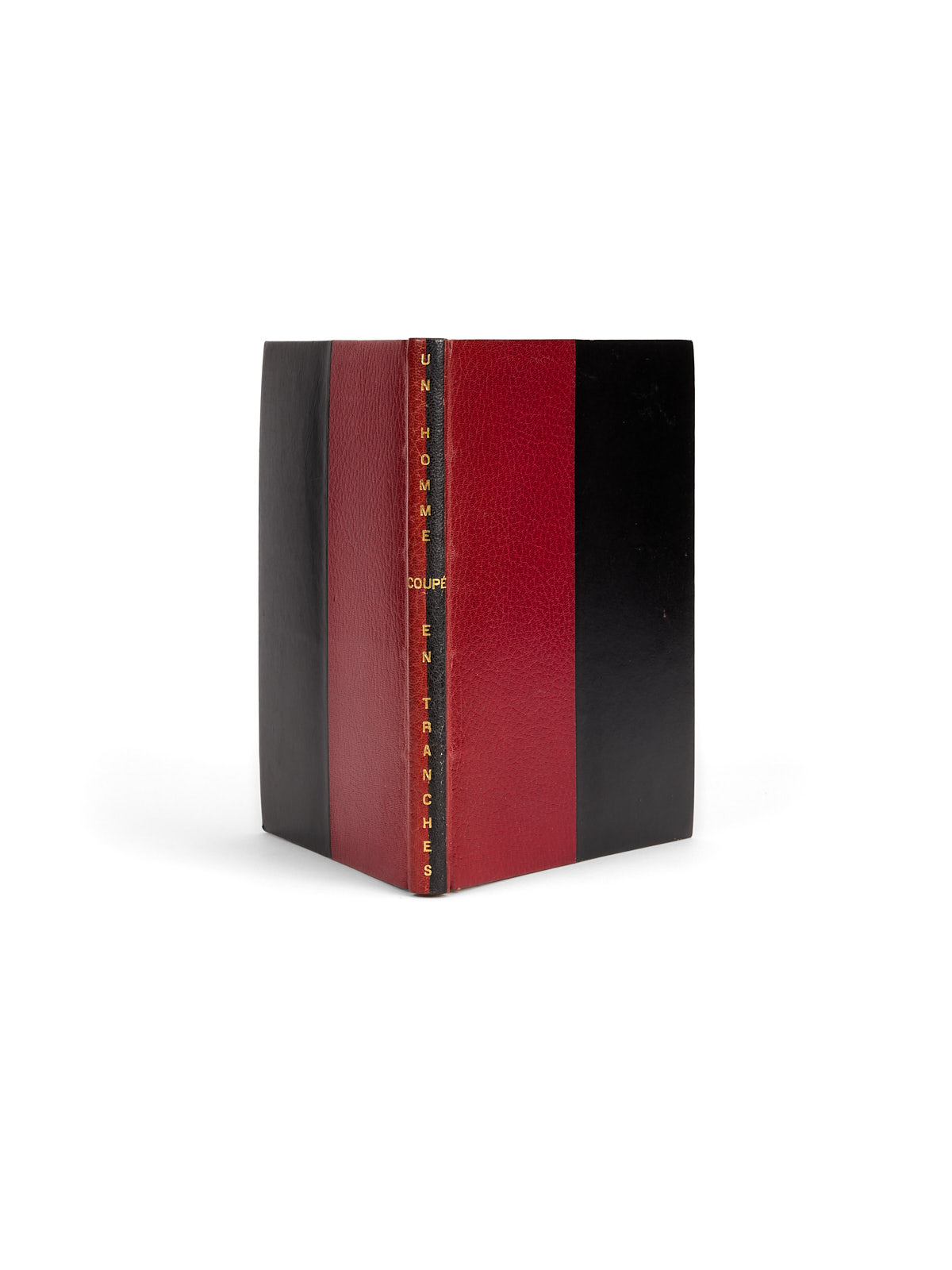


Un homme coupé en tranches
In the 1920s, the electrical engineer Jean Bruller, a young graduate, unexpectedly turned to satirical-philosophical drawing and joined the atelier de la Grande-Chaumière in 1926. Before becoming the celebrated Vercors, he built a successful career as a draftsman and engraver for the press and for fine editions, developing a personal body of work in which “love and tenderness … evoke a disenchanted humanism.”
Encouraged by the success of his first collection of drawings, 21 recettes de mort violente, Bruller pursued this personal work, a long meditation on Man that foreshadowed his major illustrated masterpiece, La Danse des vivants. “It was while preparing my second album that I began to think a little, and to ask myself what we were doing on earth,” he later confided. “… It was in discovering, as a lover of painting, how many of these characters exist within us, unrecognized by consciousness, that my Homme coupé en tranches imposed itself on me: a series of portraits of a single individual, but as seen differently by his father, his son, his doctor, his pious aunt, his employer and his subordinates, etc.”
Minor rubbing to corners and covers, scattered foxing.