

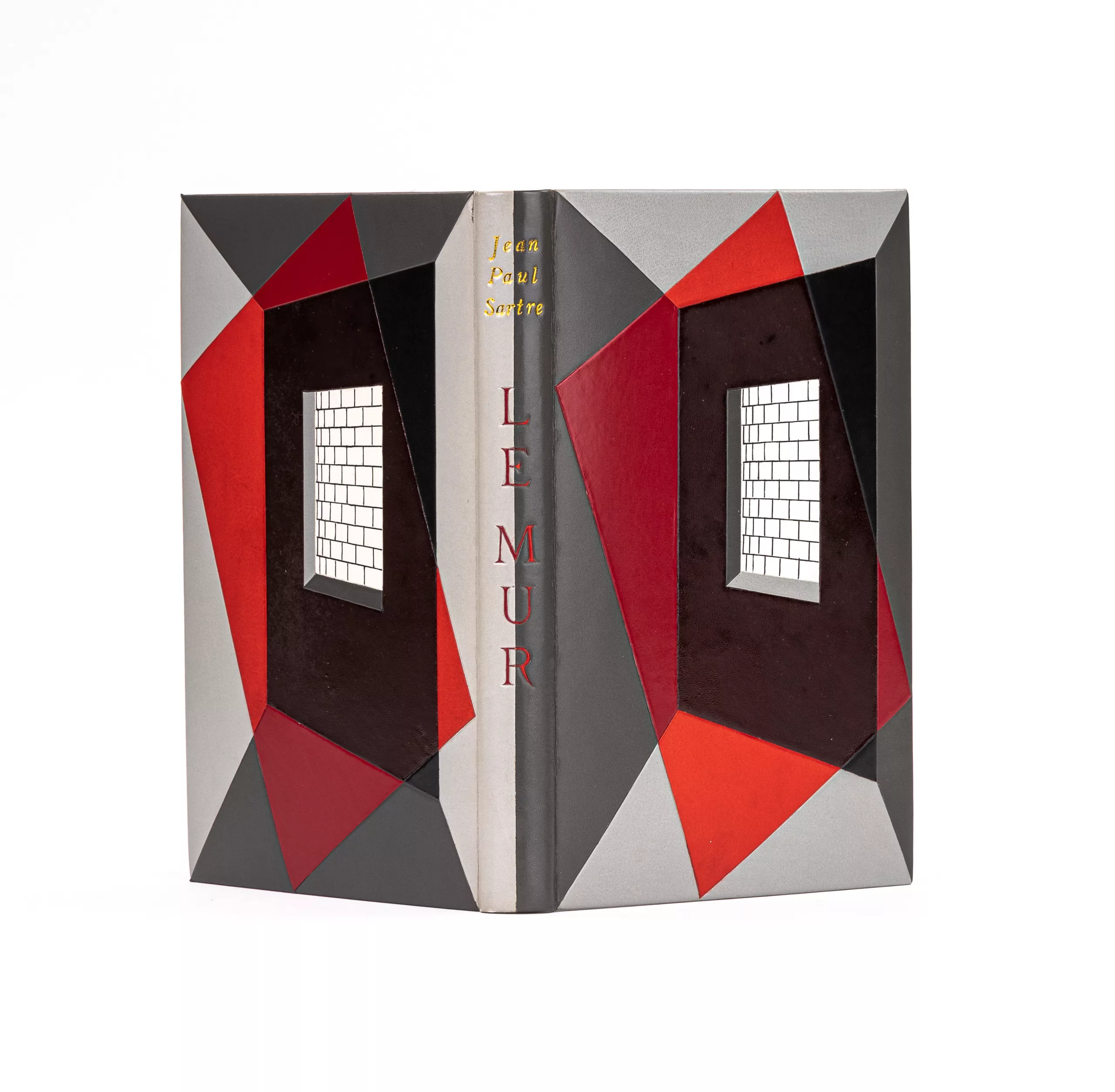
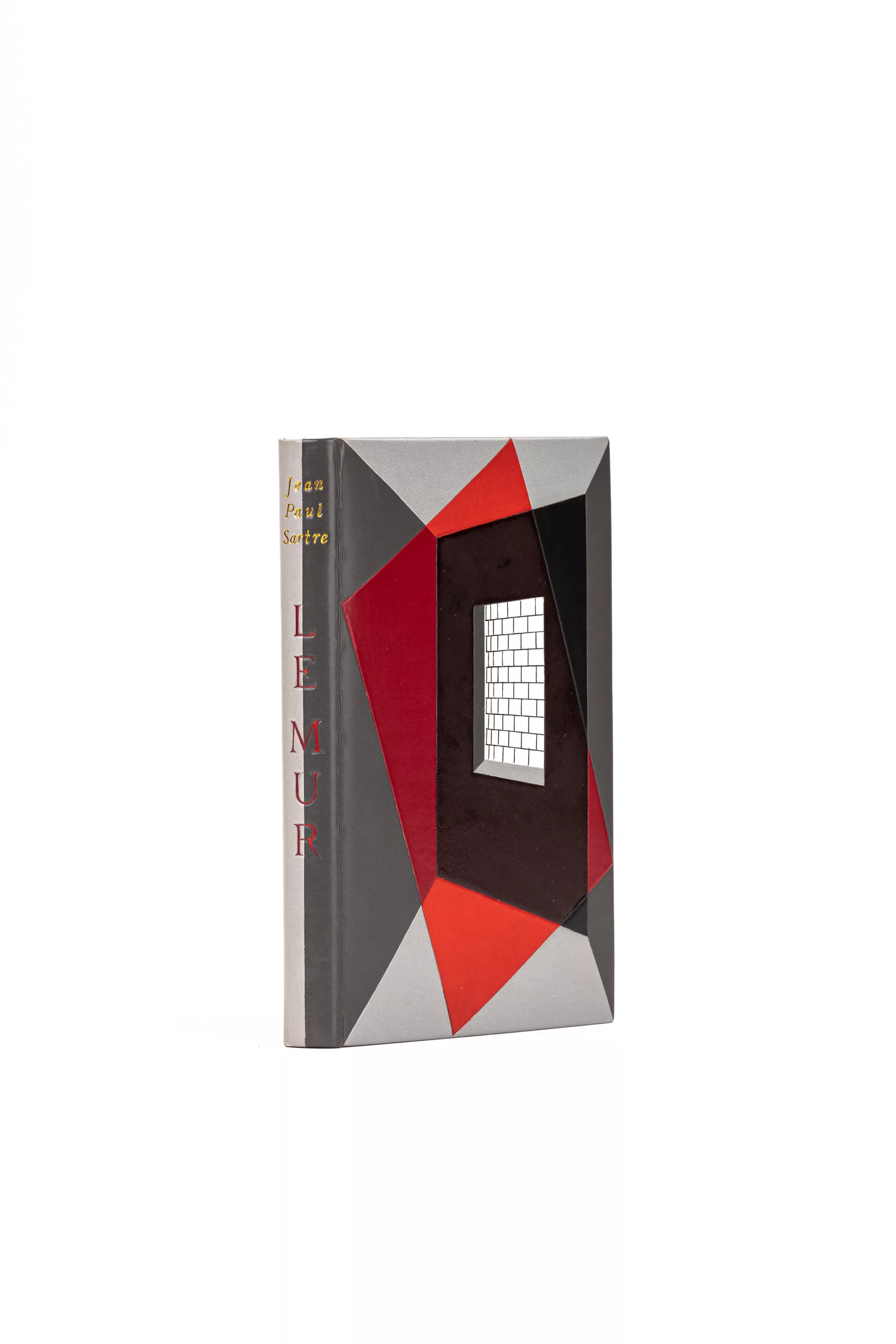
Le Mur
One of the first 40 copies on vélin pur fil, this one hors commerce, marked “h” (among the 10 hors commerce copies).
Signed presentation inscription: “à Monsieur André Malraux, en hommage de Jean-Paul Sartre.”
Le Mur was published in 1939, Sartre’s second work of fiction after La Nausée. The collection contains four short stories, the most celebrated of which is undoubtedly “L’enfance d’un chef.”
An exceptional copy inscribed by Sartre to Malraux — the only known inscription exchanged between the two men, at the heart of a struggle for influence within the NRF. The two writers stood, almost from the outset, on opposite sides. When the first stories of Le Mur and La Nausée were being written, in 1936, Malraux was a hero of the Spanish Civil War and the Popular Front, a figure strongly opposed in La Nausée; when the novel appeared in 1938, its wraparound band bore the line “Il n’y a pas d’aventures” (“There are no adventures”), a clear rebuttal of Malraux’s novels — from La Condition humaine to La Voie royale to the preface of Le Temps du mépris — all deeply rooted in the imaginative world of the adventure novel.
With La Nausée, then with Le Mur and the articles he wrote at the same time for the magazine, Sartre practiced a kind of “entrisme” at the NRF, intending to seize control of it. This he achieved in 1951, on Gide’s death: Sartre’s article in Les Temps modernes (March 1951), “Gide vivant,” is a tribute, but above all a first-class burial.
After 1939, Malraux and Sartre never ceased to oppose one another. As early as 1941, Sartre proposed to Malraux, then staying on the Côte d’Azur, that he join “Socialisme et Liberté,” an embryonic Resistance movement. Malraux refused, as Beauvoir recounts in La Force des choses: “Malraux received Sartre in a beautiful villa at Saint-Jean-Cap-Ferrat, where he lived with Josette Clotis. They lunched on grilled chicken, American style, lavishly served. Malraux listened to Sartre politely, but for the moment no action seemed to him effective: he was counting on Russian tanks and American planes to win the war.” Four years later, in 1945, Malraux refused to take part in Les Temps modernes; Sartre would “forget” him in his essay on committed literature, Qu’est-ce que la littérature? Their sole point of convergence came in 1956, when Sartre condemned the Soviet intervention in Hungary and broke with the French Communist Party; in 1958 he also joined Malraux and Mauriac in signing an appeal denouncing torture in Algeria.
A fine decorated binding by Pierre-Lucien Martin, executed in 1962, two years before the publication of Les Mots and the award — refused — of the Nobel Prize in Literature.