

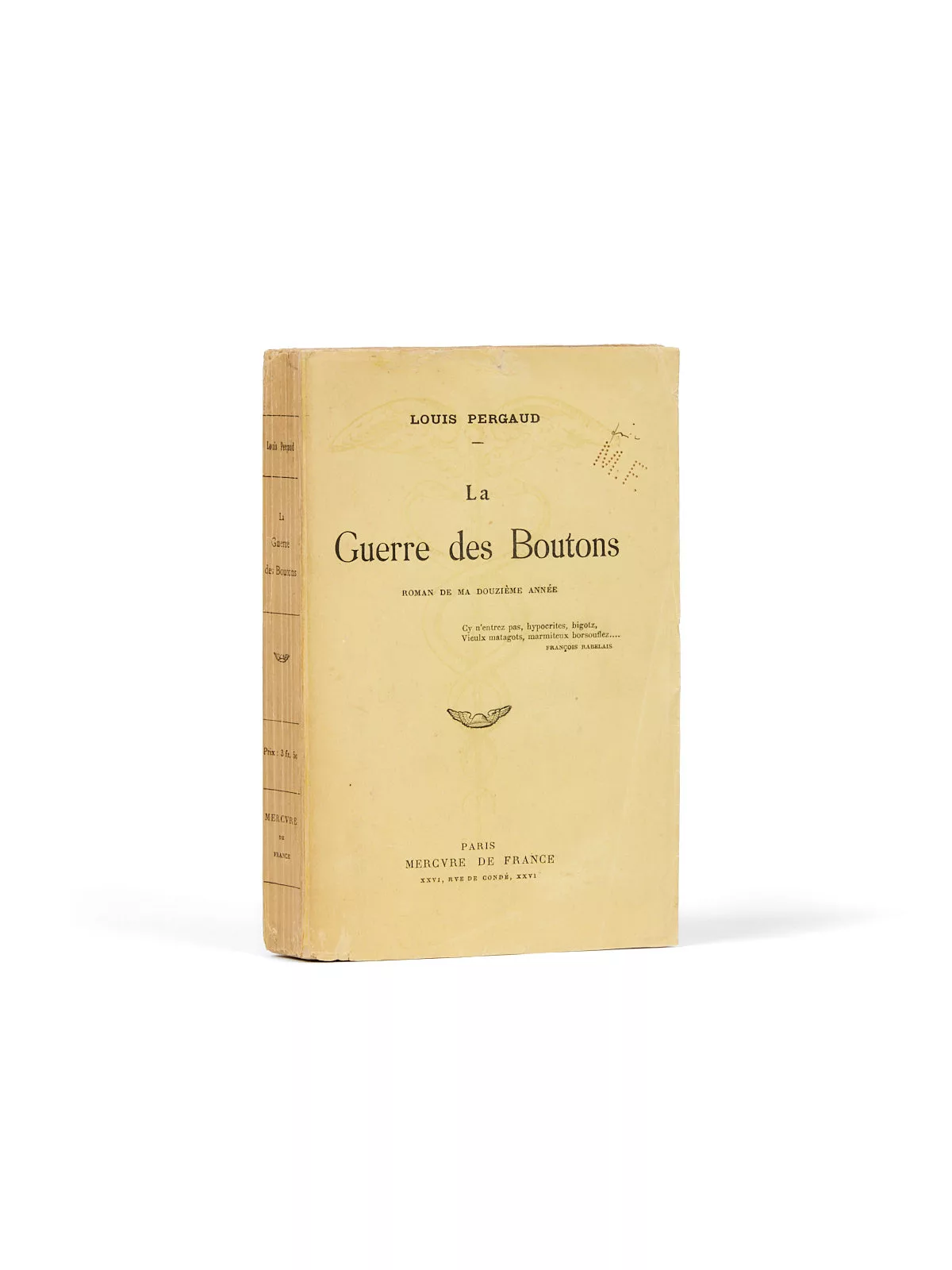
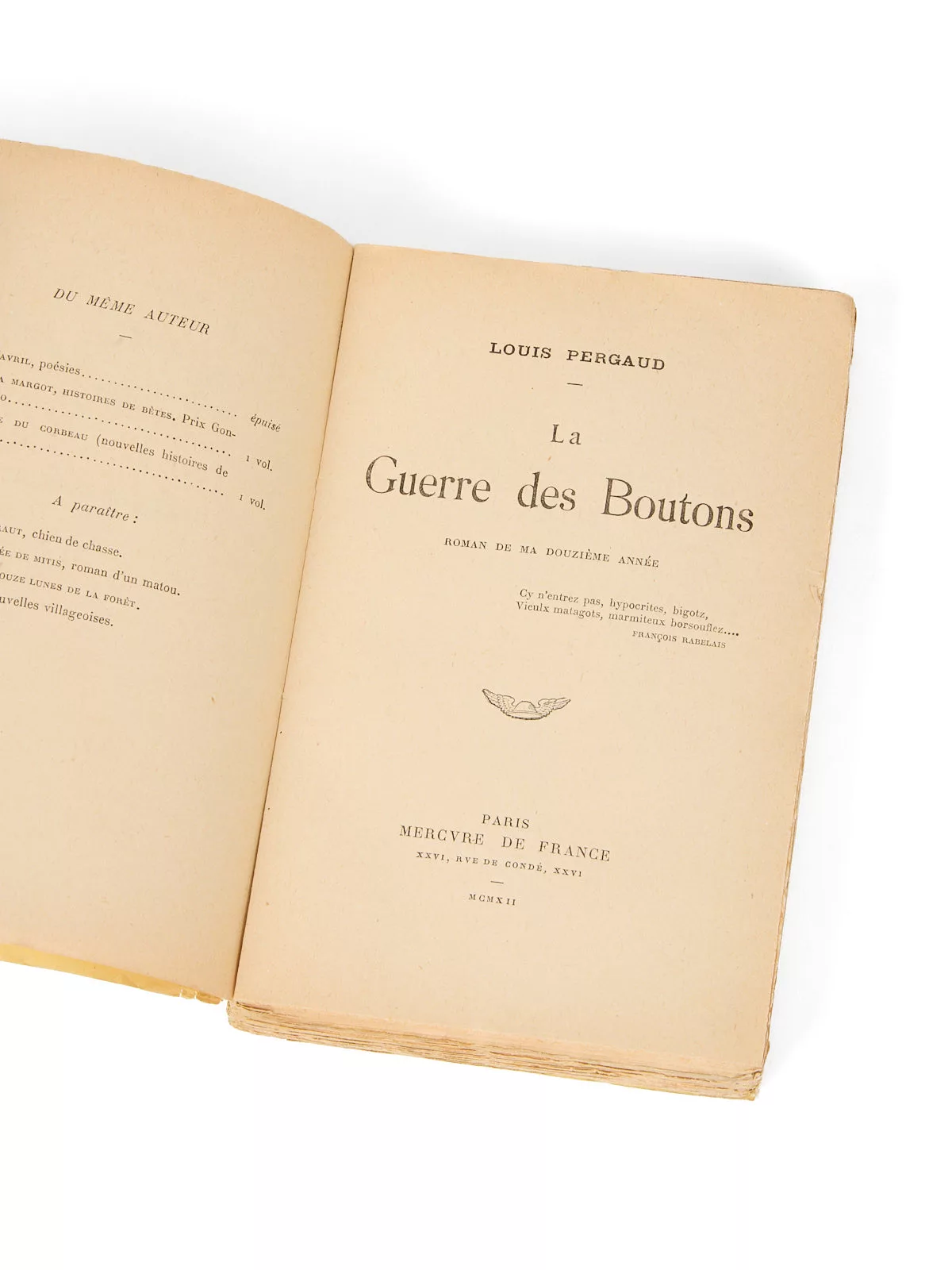
La Guerre des boutons
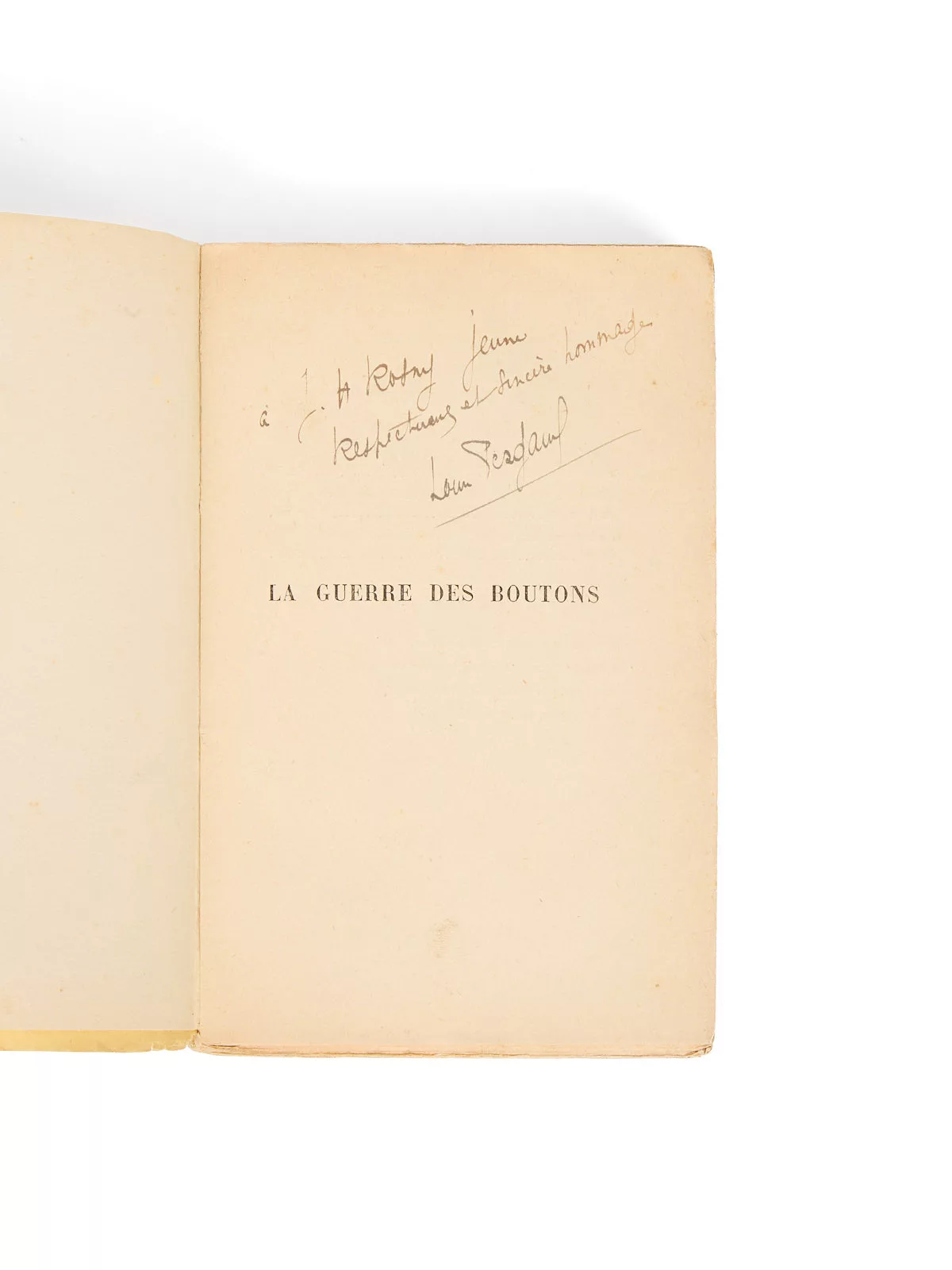
Presentation copy inscribed by the author to J.-H. Rosny jeune: “à J.-H. Rosny jeune, respectueux et sincère hommage, Louis Pergaud.”
“Cy n’entrez pas, hypocrites, bigotz”: the Rabelaisian apostrophe that Pergaud places as an epigraph sets the tone of the book. Pergaud claimed to have written a “wholesome book,” at once “Gallic, epic and Rabelaisian, flowing with the sap of life”: a book of childhood memories recounting the military exploits of two gangs of urchins, one led by le grand Braque of Longeverne, the other by l’Aztec des Gués of Velrans. The spoils of war fought over by the two rival armies — trouser buttons and shoelaces — are disputed constantly and ferociously.
Where the novel, published in 1912, set these forest skirmishes in the 1890s, Yves Robert, in his 1962 film adaptation, gave the story a contemporary setting at the time of the “end of the peasantry,” imagining that Lebrac runs away and lives for a time in the woods, hunted by respectable townsfolk. Hidden in an oak tree that woodcutters fell, he tumbles down shouting “Vive la liberté!” Sent to a reformatory, he meets L’Aztec again and makes peace with him. This “republic of children” already sensed the end of its state of grace: “To think that when we grow up, we might be just as stupid as they are.”
A good copy of good provenance: the youngest of the Boex brothers (Rosny jeune and Rosny l’aîné) was himself a member of the Académie Goncourt, of which he became president between 1940 and 1945, succeeding his brother, who had held the position since 1926. Both brothers had awarded Pergaud a prize for De Goupil à Margot in 1910.