

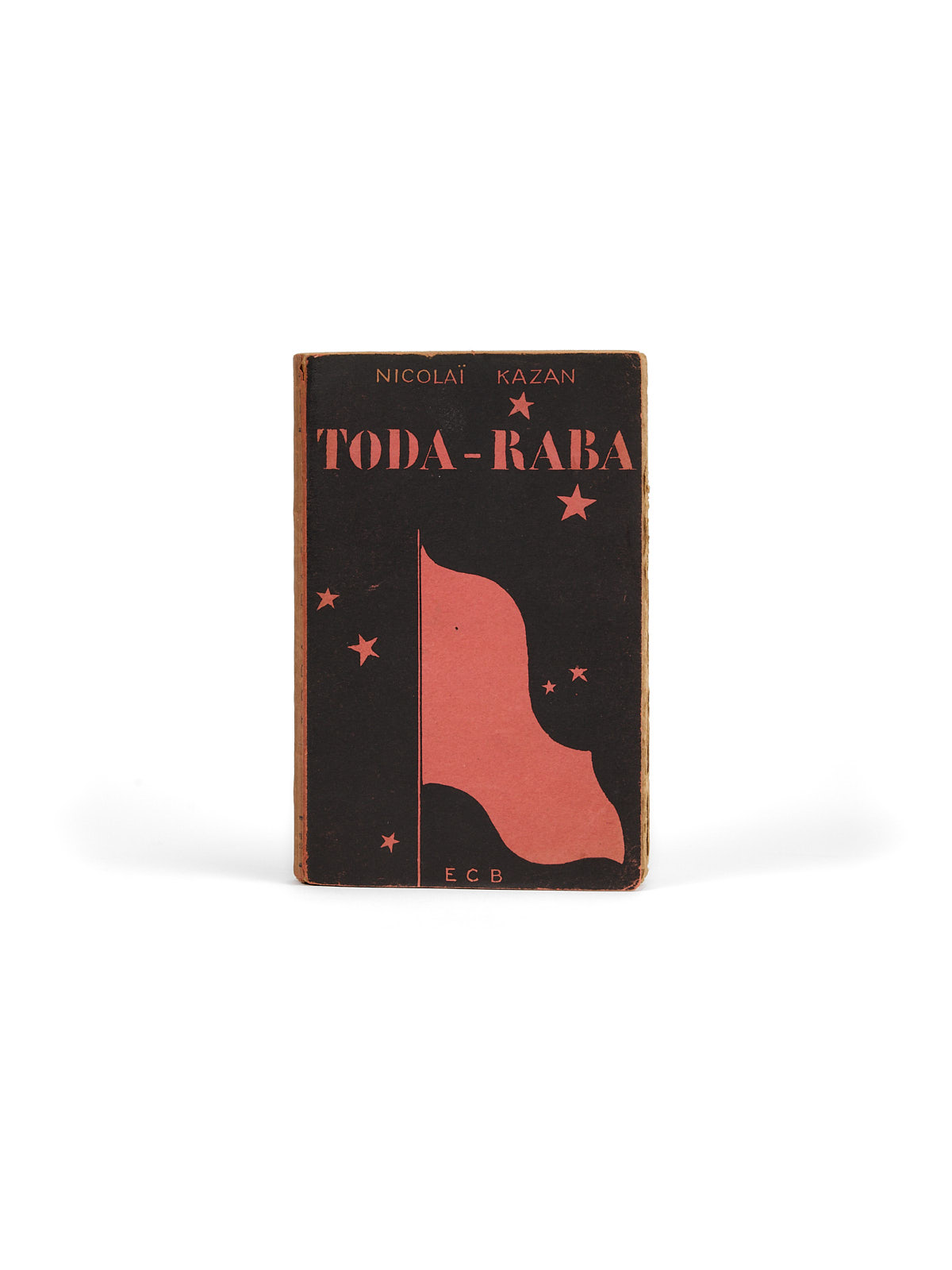
Toda-Raba
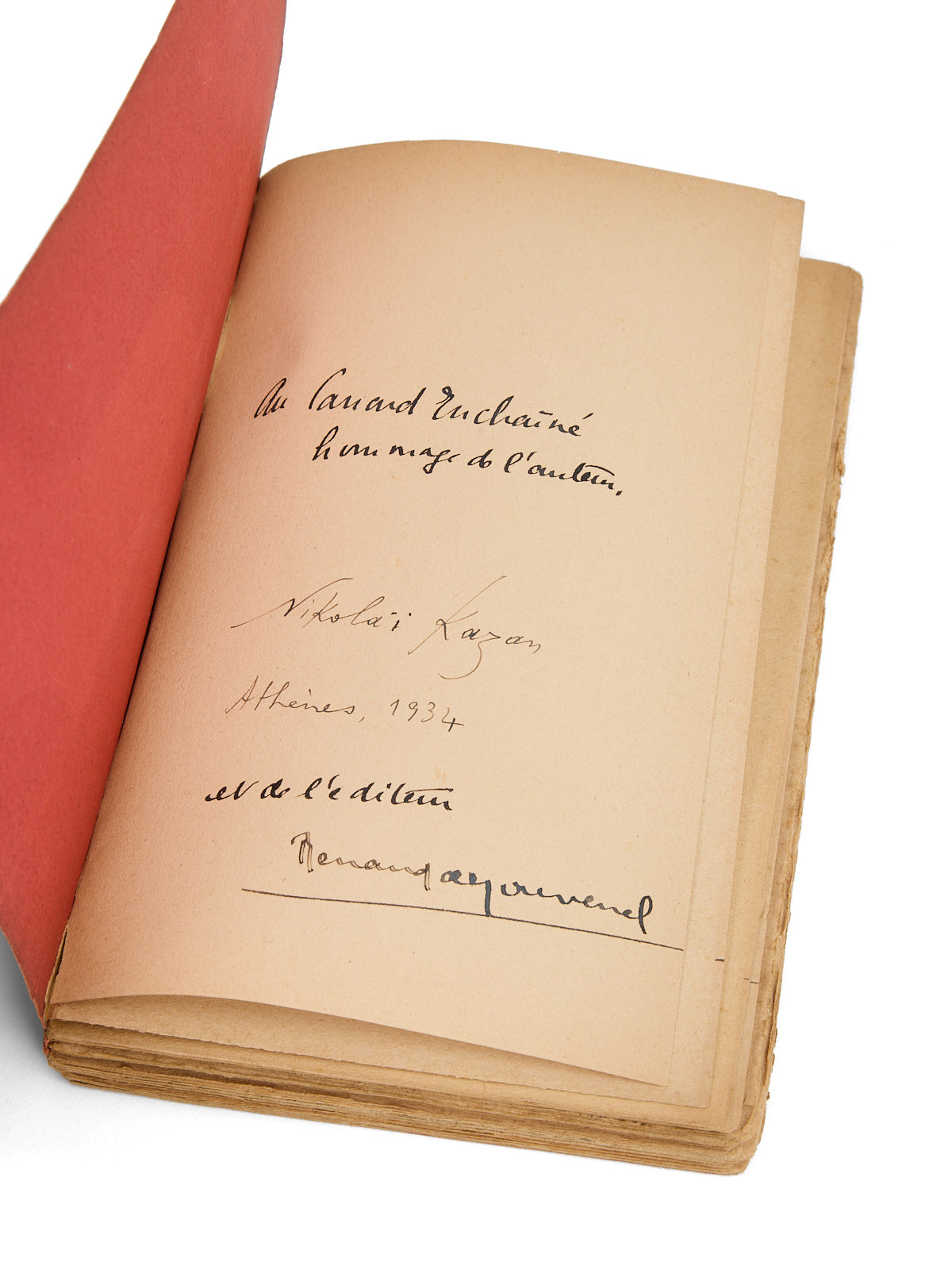
Inscribed and signed: “Au Canard Enchaîné, hommage de l'auteur, Nikolaï Kazan, Athènes 1934 et de l'éditeur, Renaud de Jouvenel.”
Among his many travels, Nikos Kazantzakis visited the USSR twice: first in 1925, then in 1929 at the invitation of the Soviet government. Following this second stay, he composed a strange and unruly novel distilling his impressions and experiences: Toda-Raba (named after its Black protagonist, whose name means “thank you” in Hebrew). Toda-Raba and his six companions — of different origins and cultures — travel first to Astrakhan for an Oriental Congress, then to Moscow, where the anniversary of the Revolution is being celebrated.
On his return, retired as a hermit to the Czechoslovak town of Gottesgab and even more isolated in the high mountains of the Erzgebirge, Kazantzakis wrote the novel directly in French: “I returned joyfully to the little house in the forest and found peace again. Serenity, sunshine, fir trees, the scent of mown grass — and before me once more, the open sea of the Odyssey.”
“Non-violent yet preaching violence, indulgent with others but implacable with himself, a hunter without lead or gun after invisible prey that escapes him, his feet deliberately rooted to the ground, his head lost in visions of the future…”: these words, followed by a long preface by Eleni Samios-Kazantzakis, introduced the new edition of Toda-Raba in the “Feux croisés” series published by Plon in 1962. She had met the Greek writer in 1920 and became his wife in 1945, a year before the publication of Zorba the Greek; after his death in 1957 she became his biographer, defending and describing the fiery writer he had been.
A fine copy of this rare book in first printing, all the more so with an inscription.
It is also signed by the publisher, Renaud de Jouvenel, half-brother of Bertrand and Colette de Jouvenel: a collective inscription to the editorial staff of an already celebrated publication of the 1930s, Le Canard enchaîné, the oldest satirical newspaper still in existence.