

Carnets de Gilbert
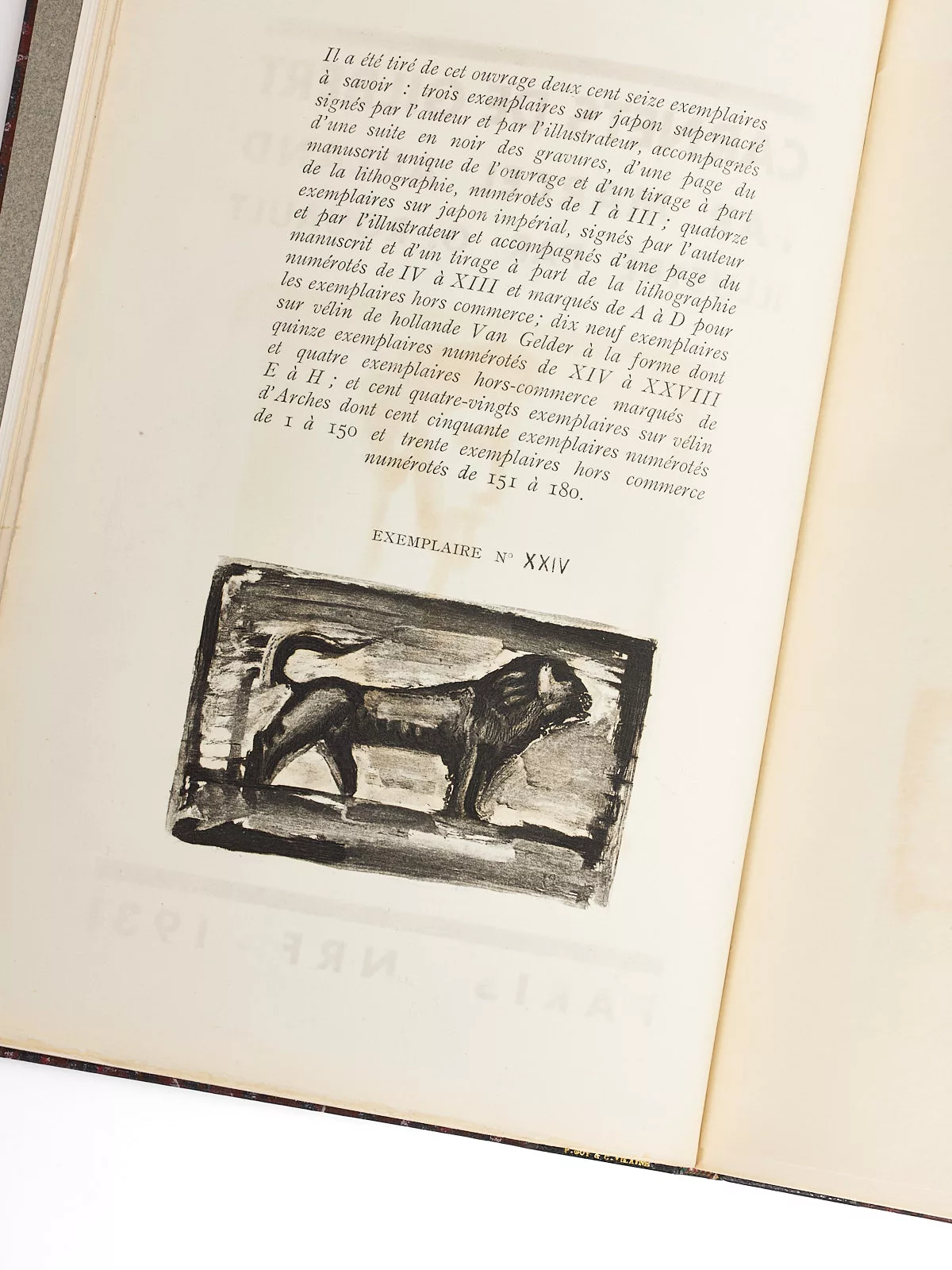
One of 19 copies on vélin de Hollande (no. XXIV).
Gilbert is the hero of L’Ordre, published two years earlier and awarded the Prix Goncourt that same year.
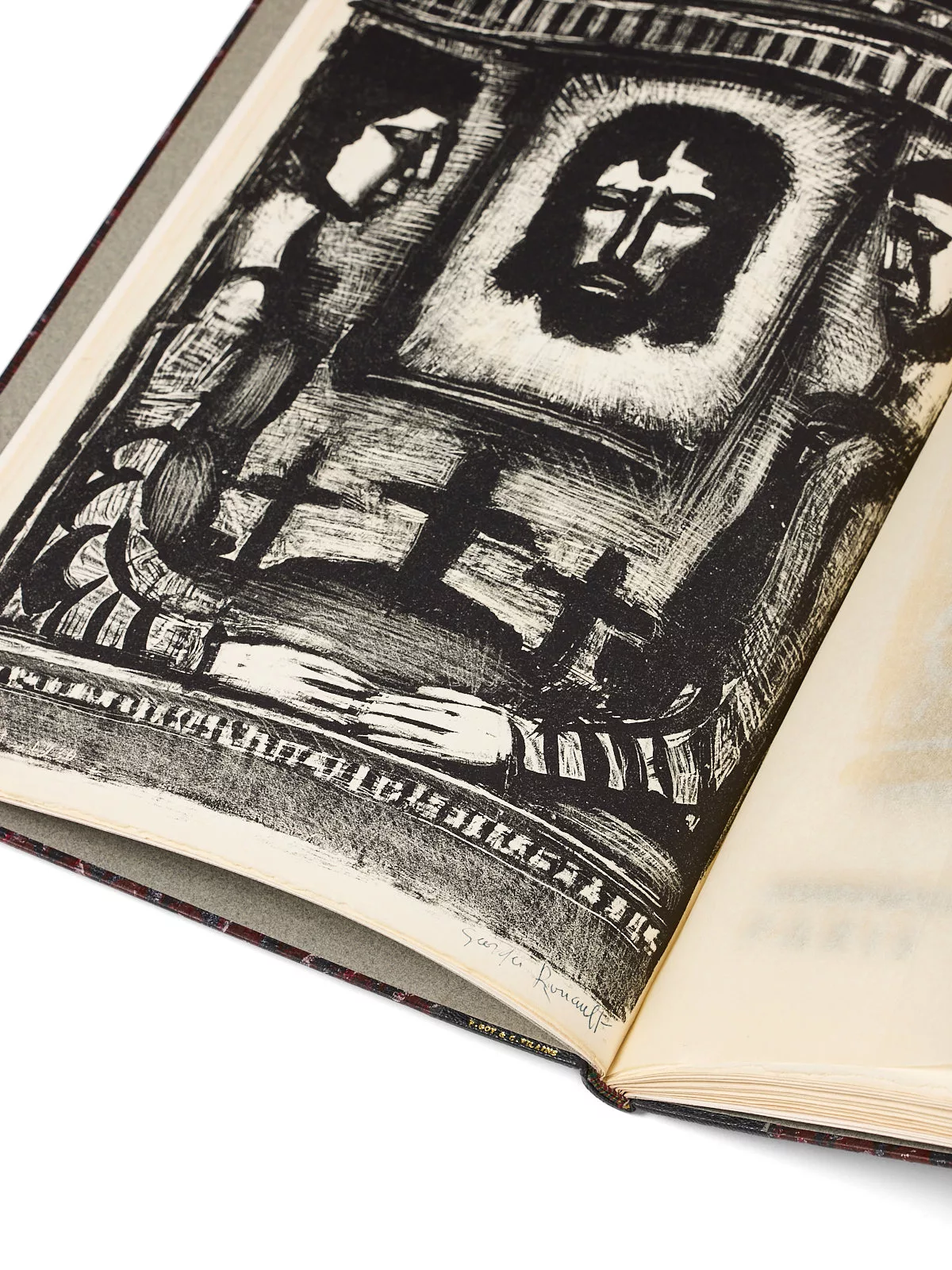
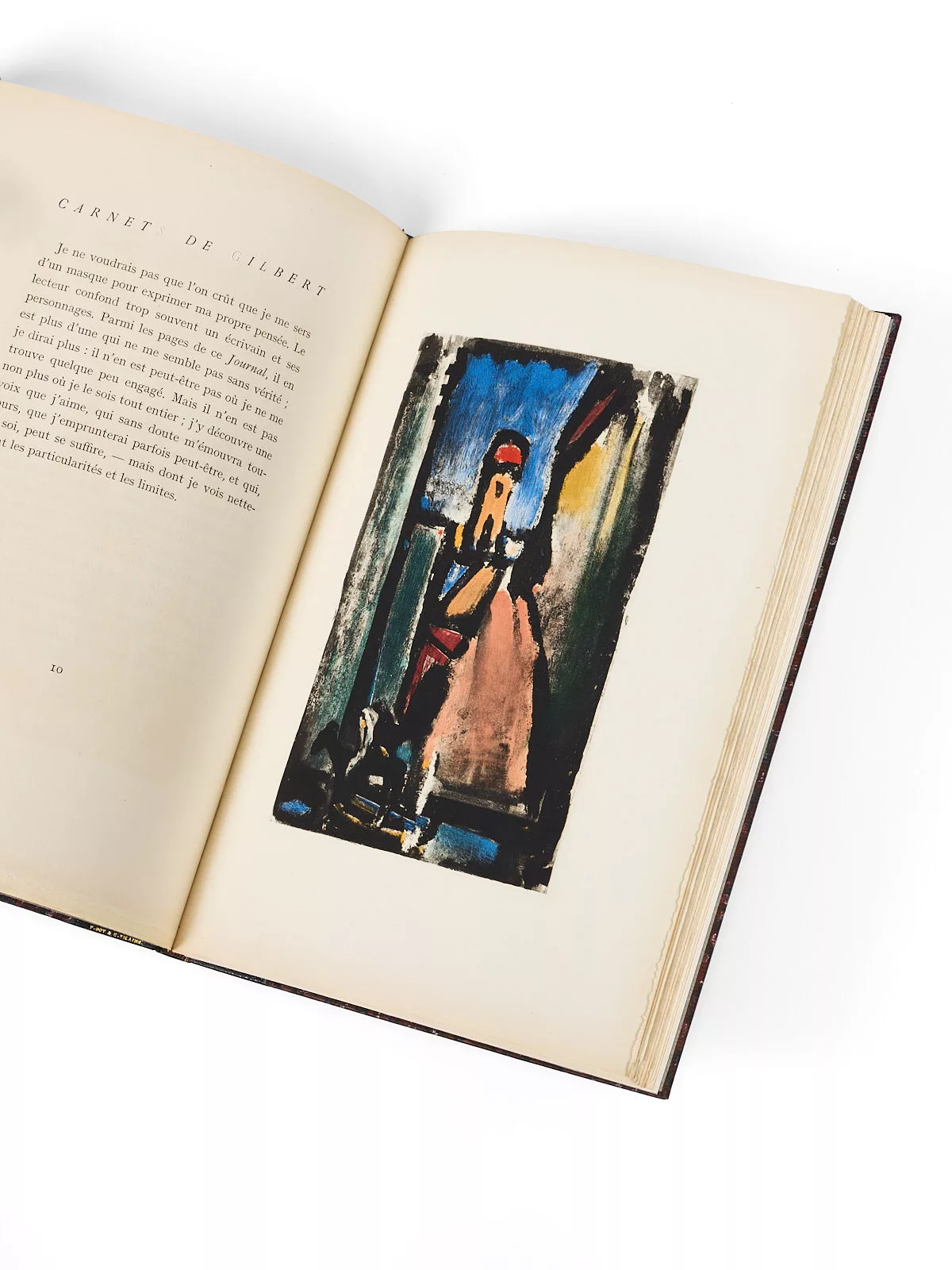
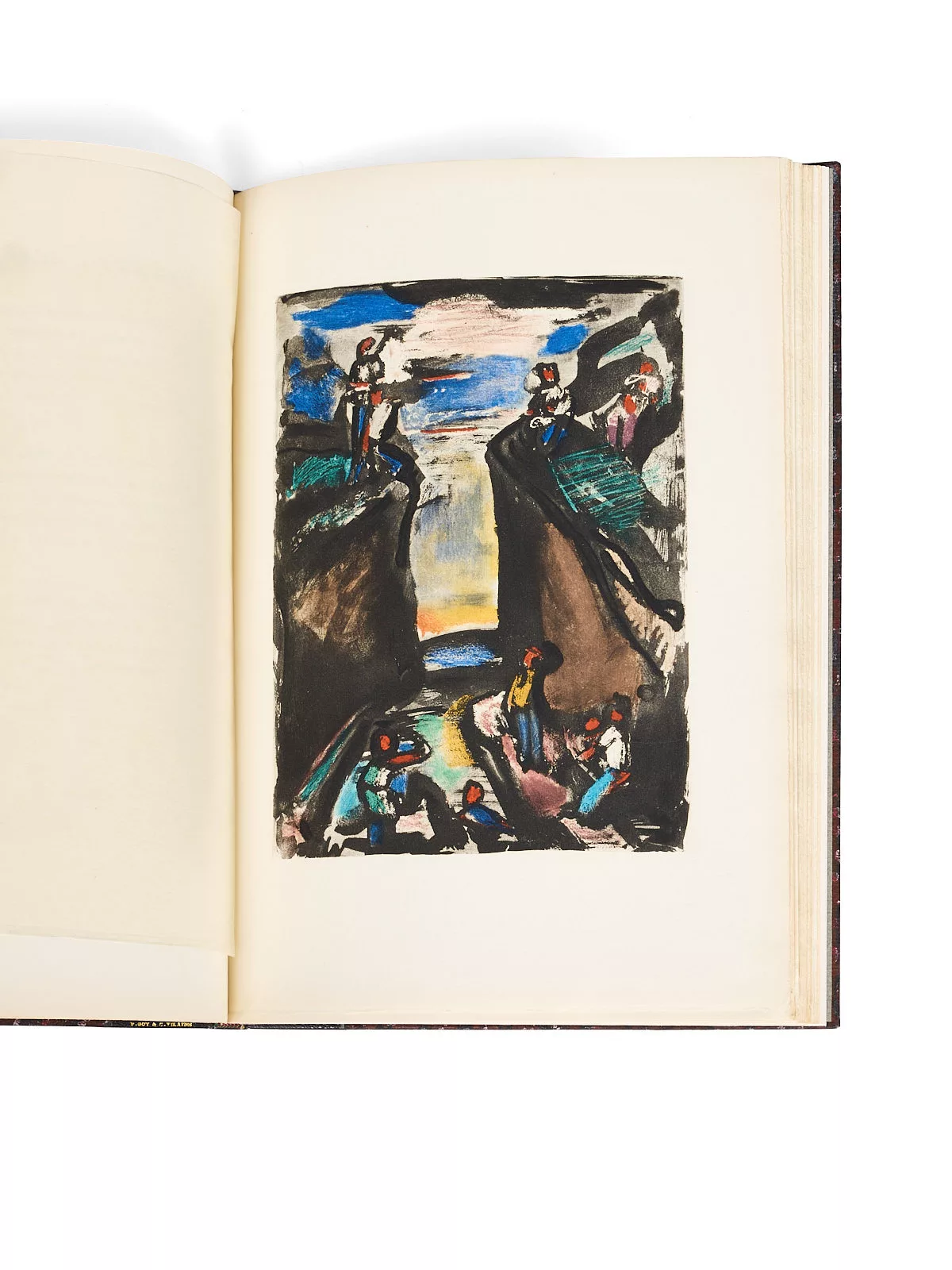
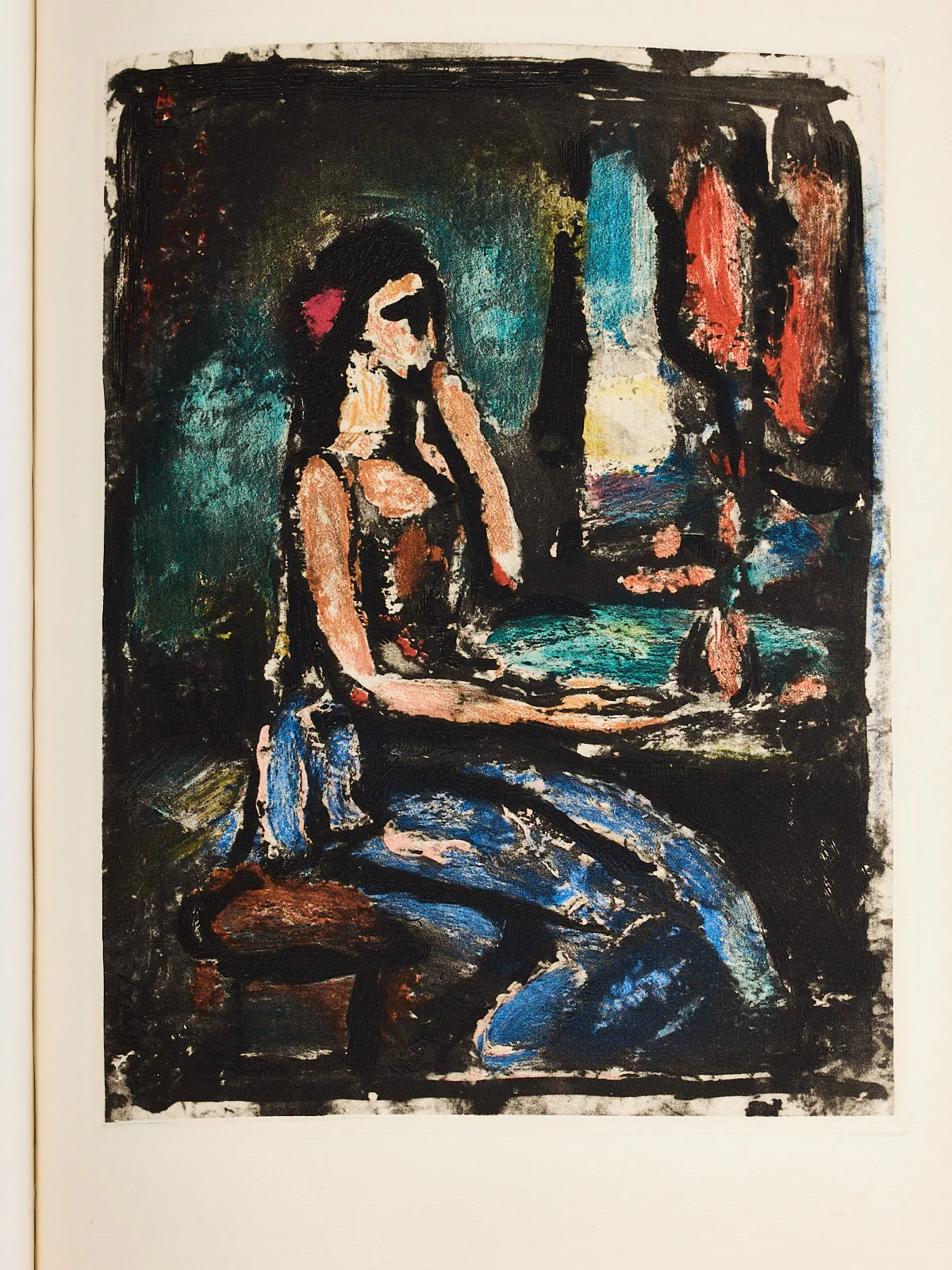
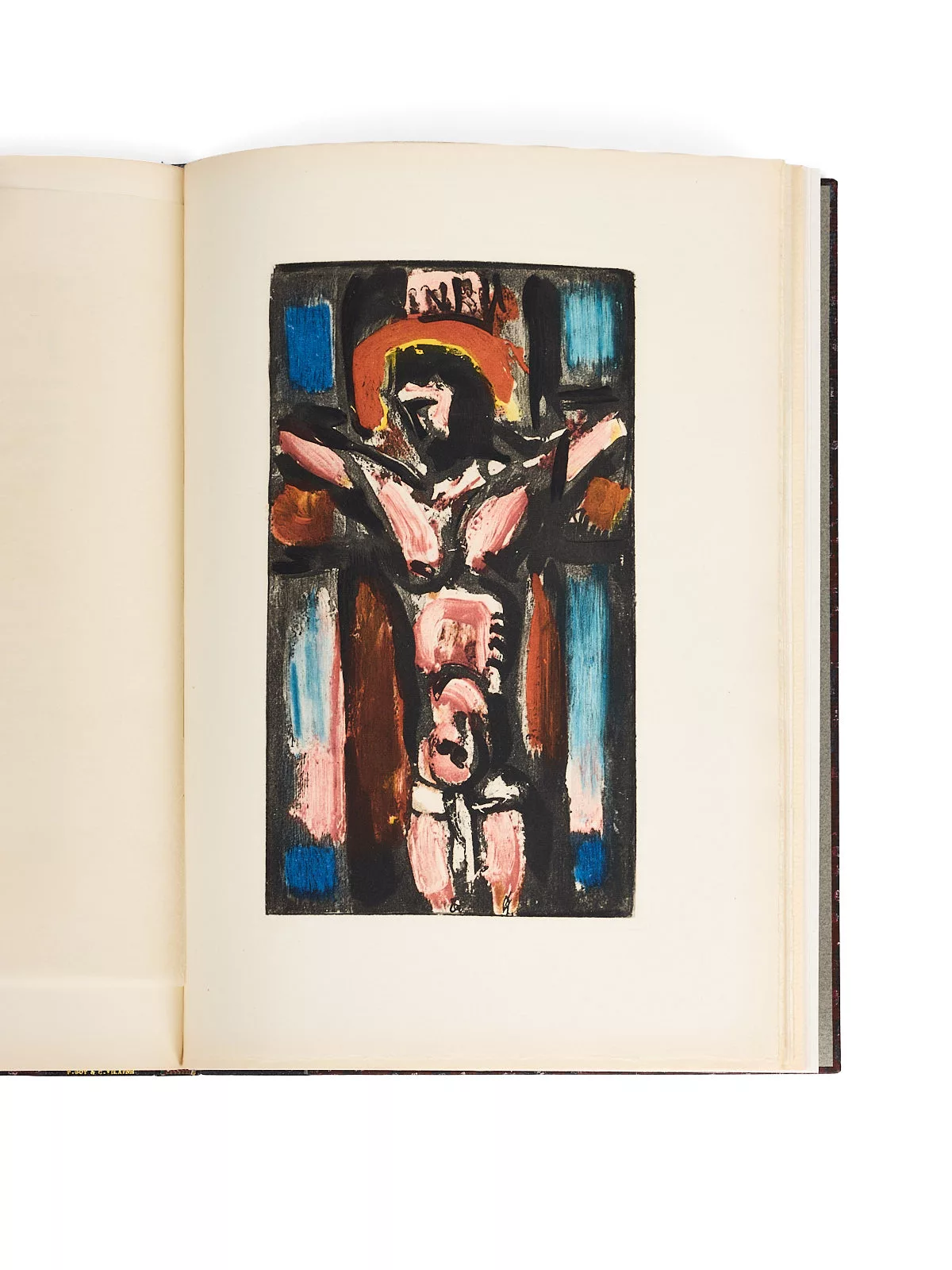
The character stayed with Arland after the novel’s publication. This anxious adolescent, at odds with a society he hates and means to fight, continued to speak through Arland’s pen: first in these Carnets, which the author asked Georges Rouault to illustrate, then, after an enlarged new edition in 1944, in further notebooks (1960 and 1965). Together they form, as Jean Duvignaud wrote, a “striking dialogue between the novelist and his hero (…). The Carnets de Gilbert were a kind of collaboration. What resulted was barely a book, some fifty pages — but pages that became precious to me through the grace of a new collaborator. Yet these plates that Rouault composed, admirable as I found them, at first surprised me by the meaning they imposed on my notes. I am no longer surprised, now that thirty years have passed. While I was writing in the margin of a novel, Rouault seems to have anticipated a much longer story, one without fiction” (in M. Arland, La Nuit et les sources, Paris, Gallimard, 1968, p. 170).
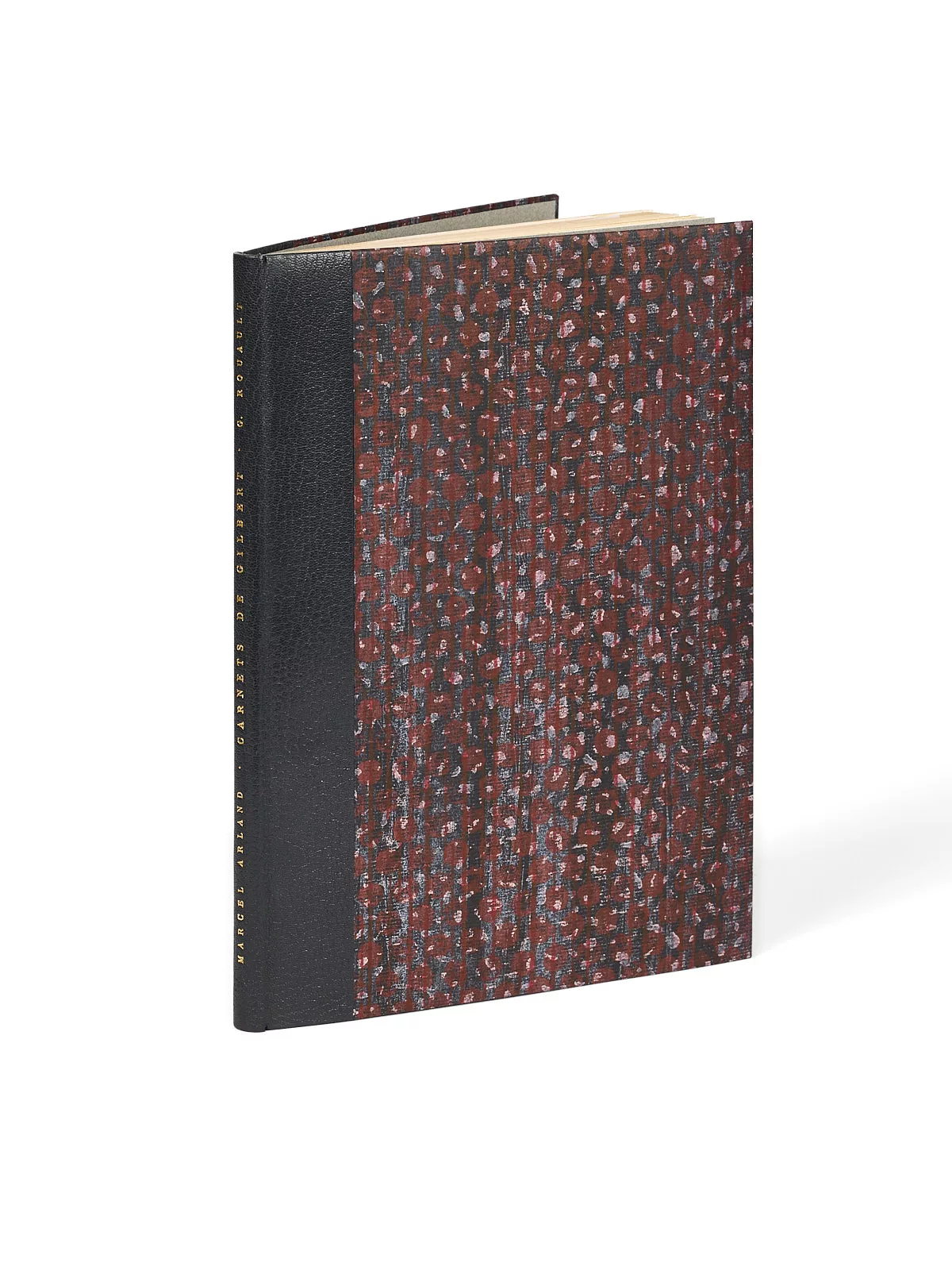
A very fine copy, with perfect impressions of Rouault’s etchings, in a delicate binding by Patrice Goy, titled by Claude Ribal.
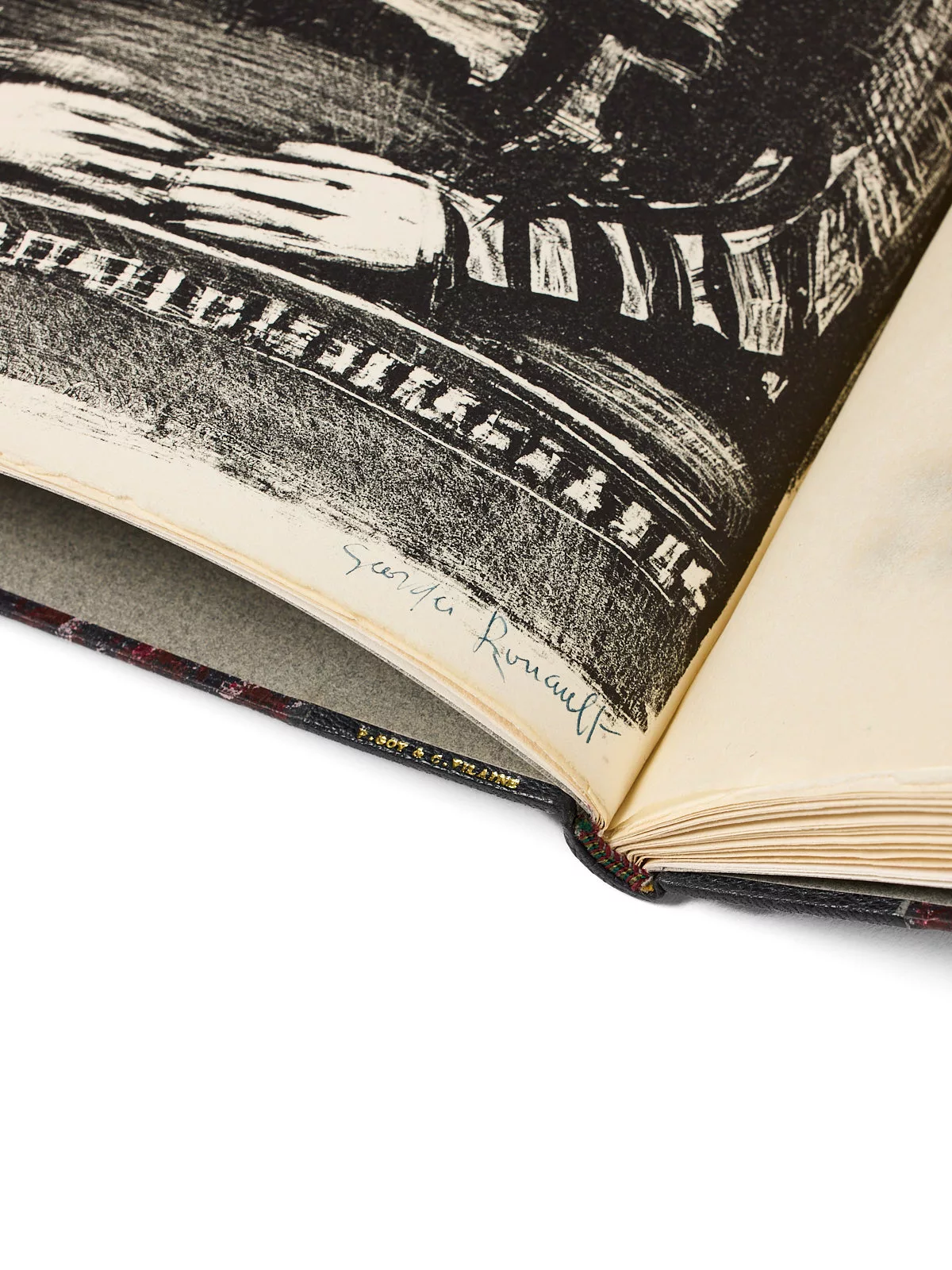
Isabelle Rouault and François Chapon, 359; Carteret IV, 48; Monod 470; Skira 314; Rauch 151; The Artist & the Book, p. 181. “Despite frequent descriptions of these color plates as reproductions, they are original etchings, as recorded in the colophon. The single black lithograph and the etching on the title-page demonstrate Rouault’s mastery of black as a positive color value.”