

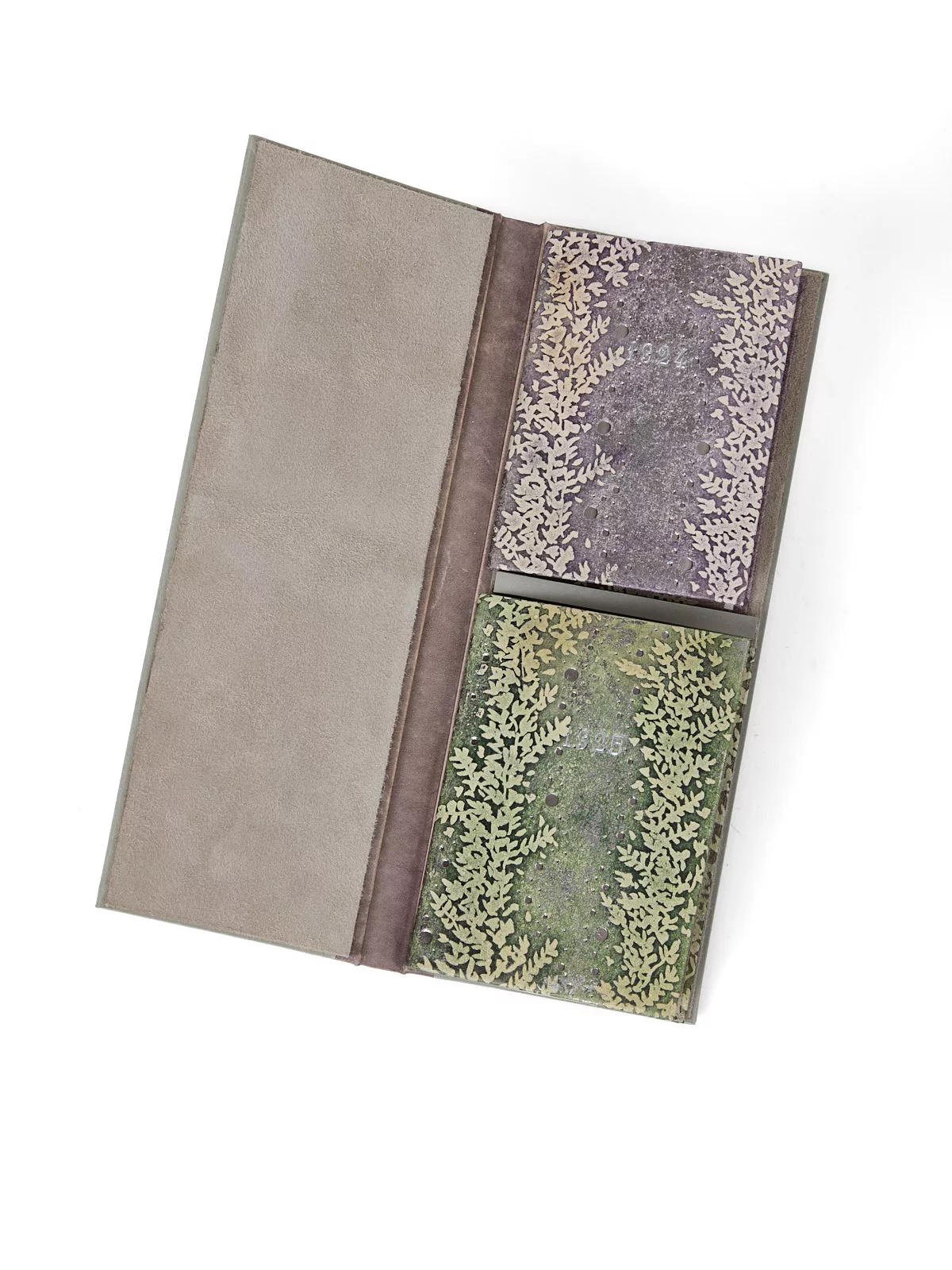
« Agendas »
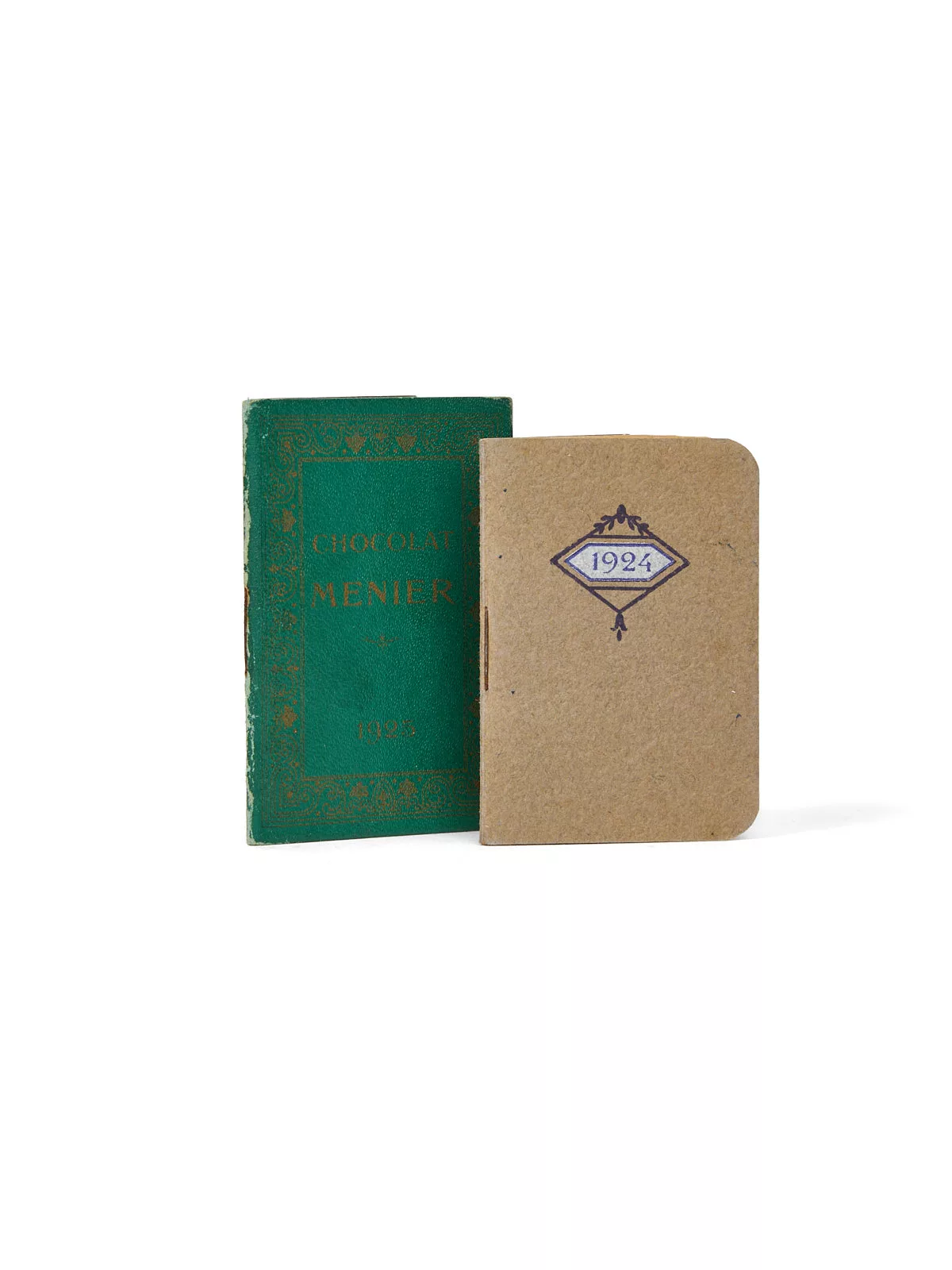
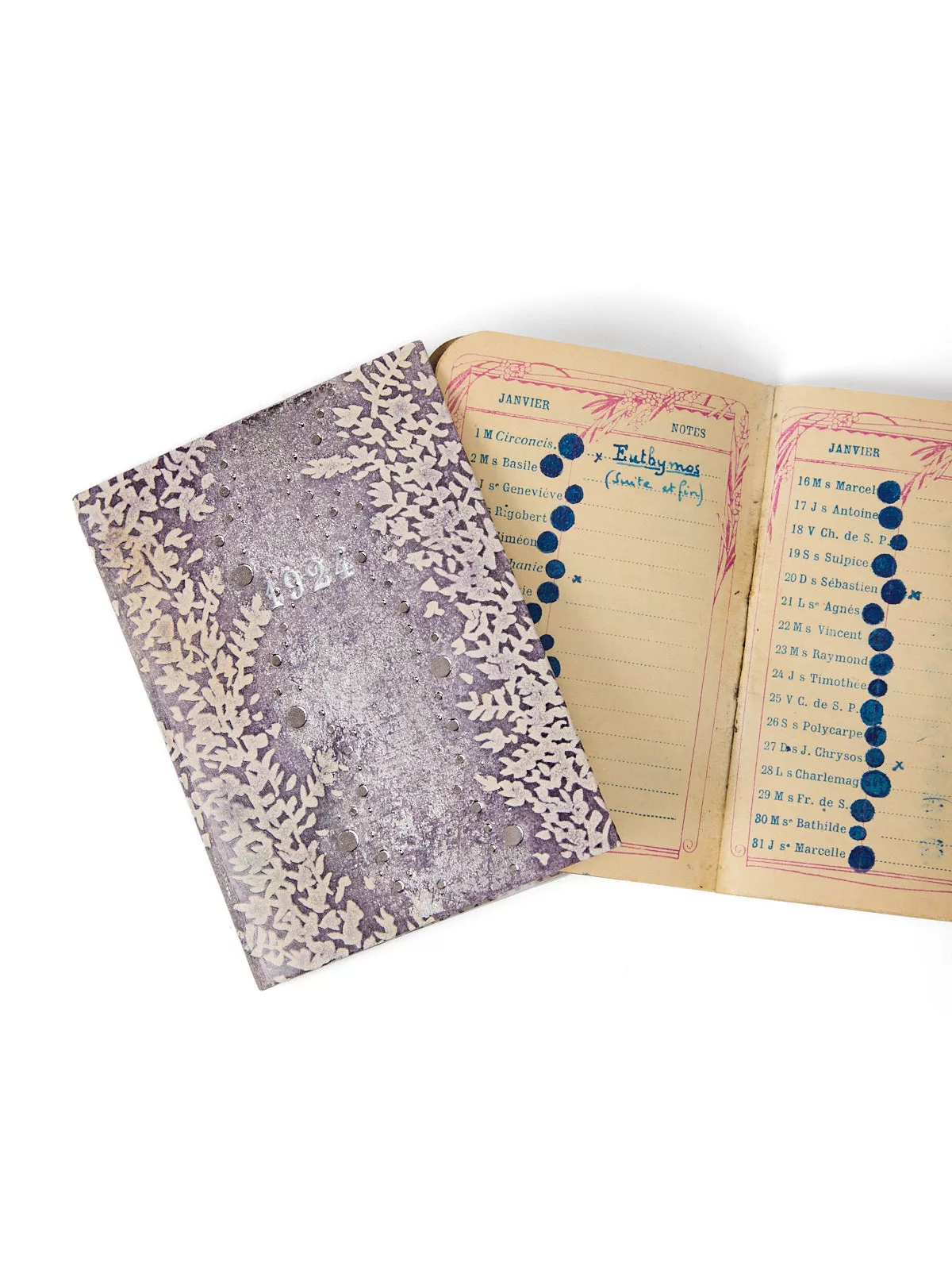
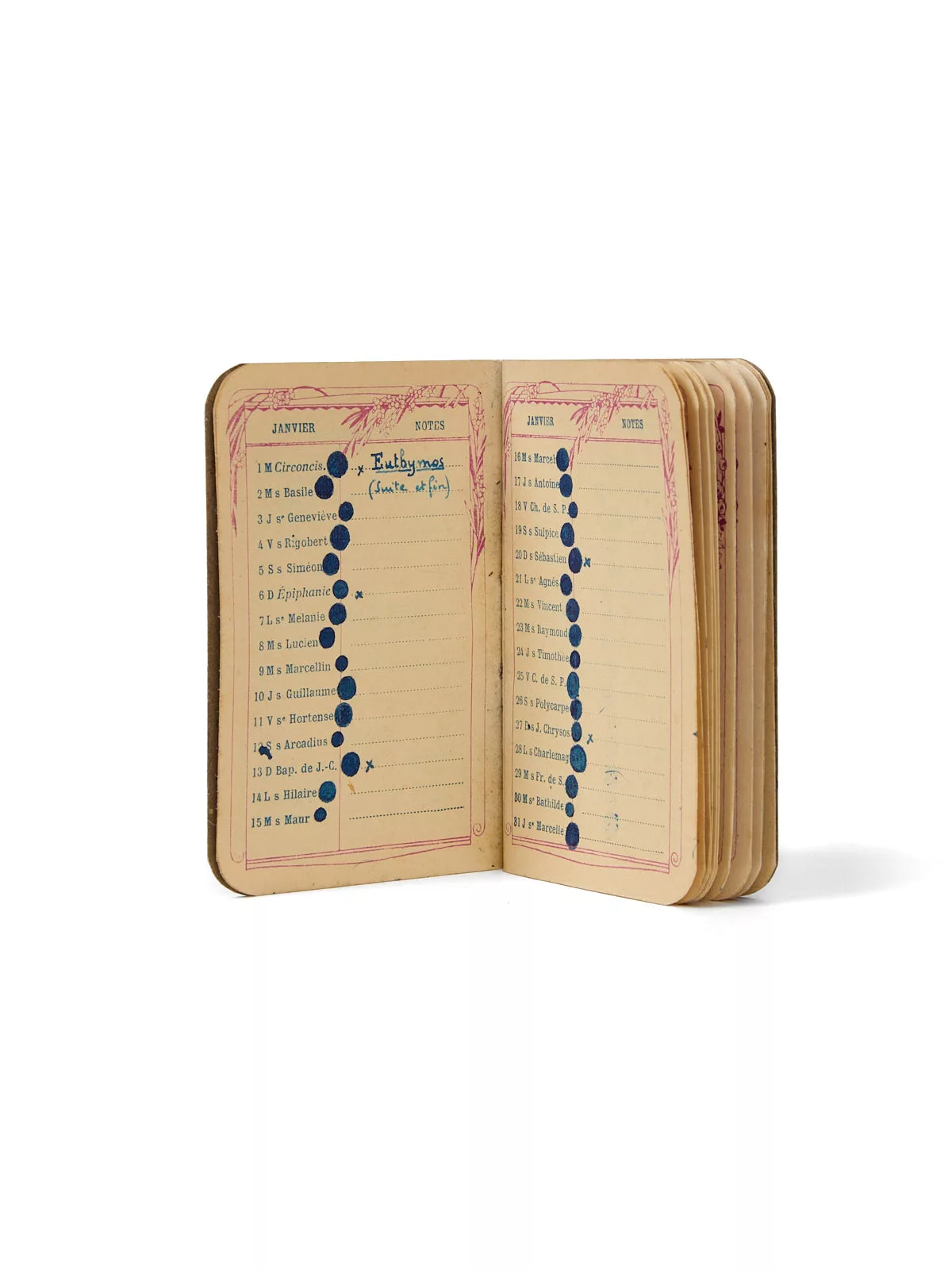
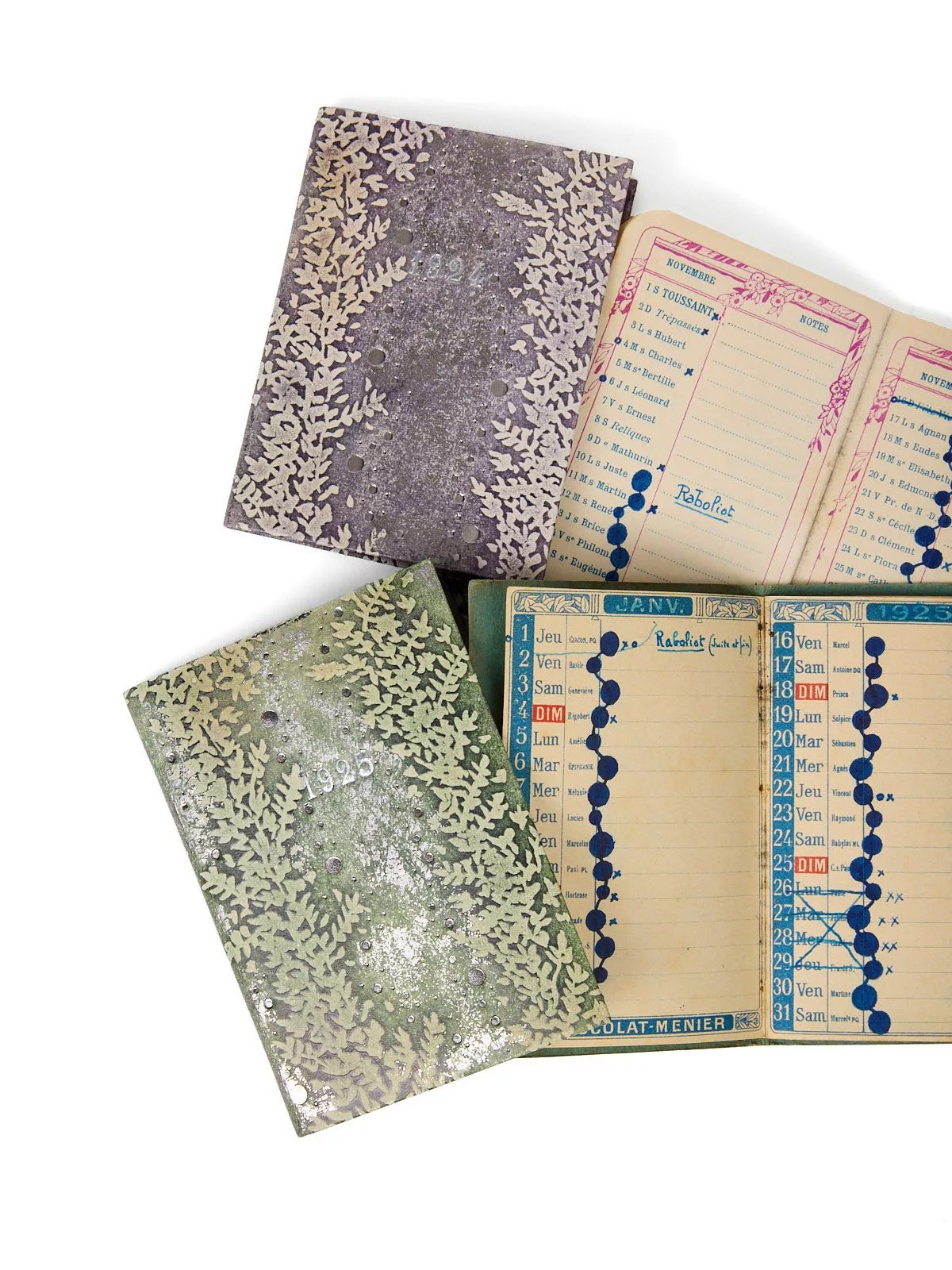
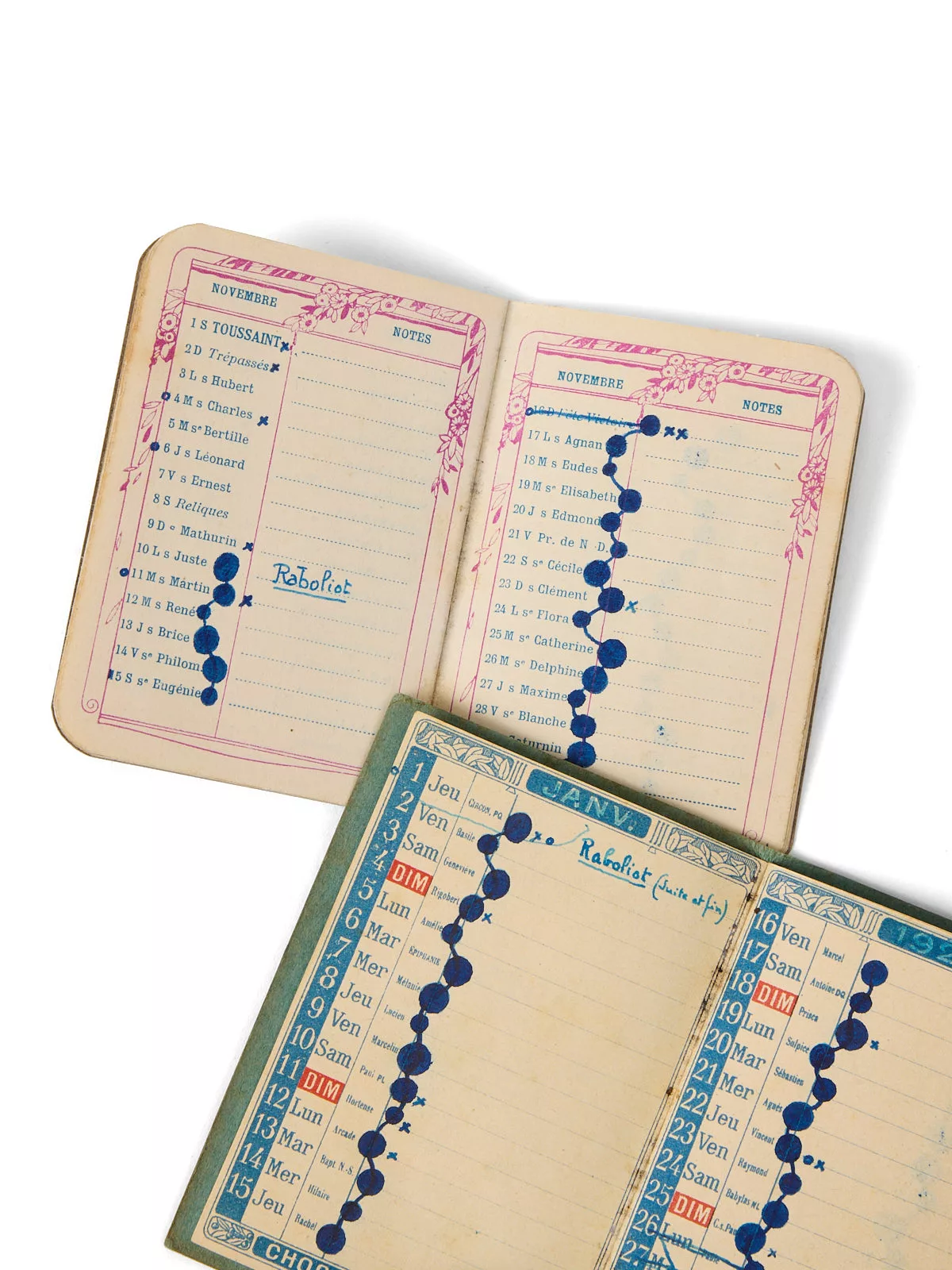
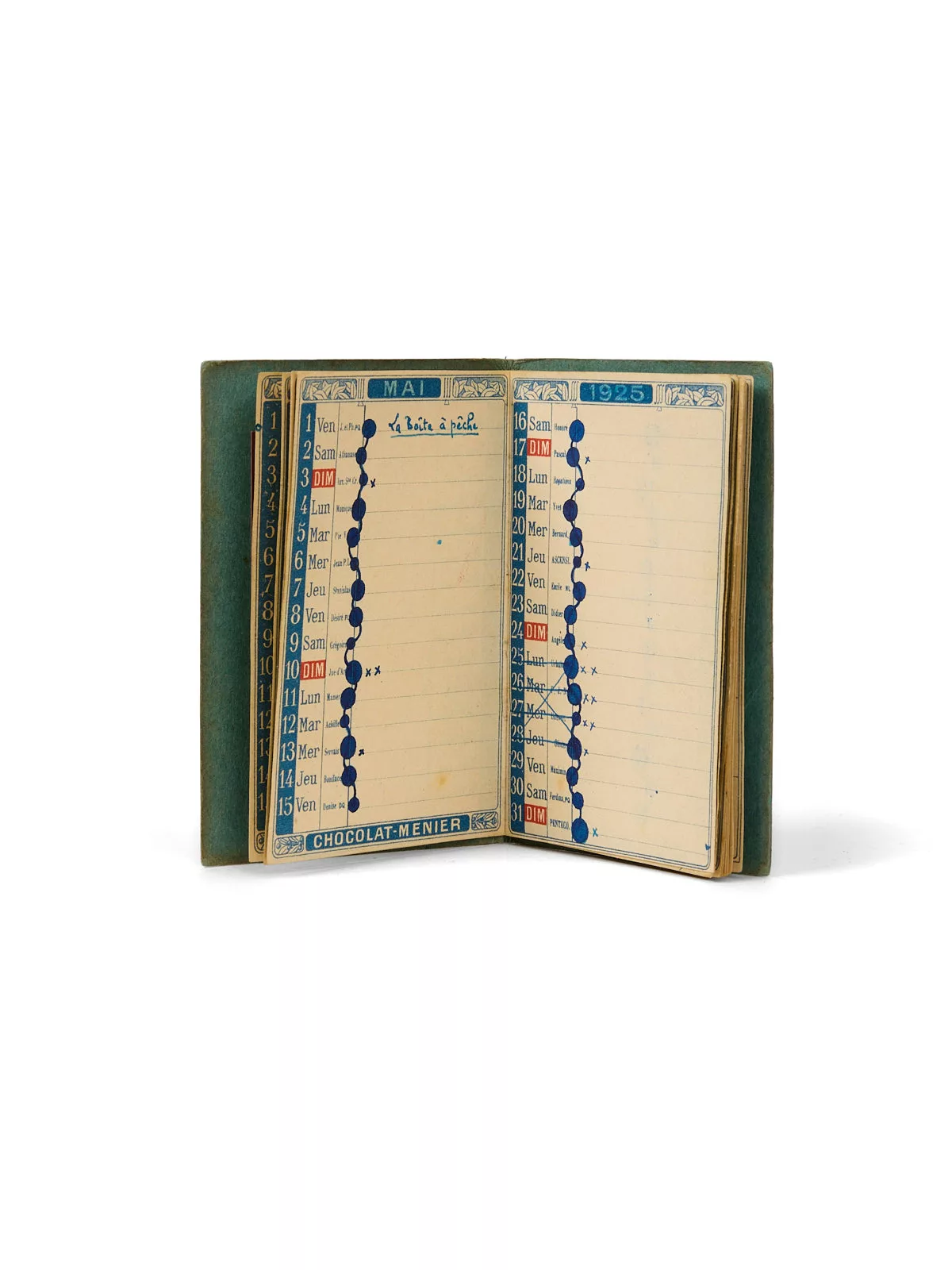
Each page bears small daily marks in blue ink recording the day’s writing, their size and density indicating the intensity of the work. These notebooks thus allow us to follow the author very closely through the time of creation.
The first notebook opens with the days of writing devoted to Euthymos (January–April 1924), a novel set in antiquity inspired by the eponymous boxer, a three-time Olympic champion. Published by Flammarion in June 1924, a few weeks before the opening of the Paris Games on 5 July 1924, Euthymos marks a clear attempt to escape the trauma of 1914–1918. Genevoix waited until 1960 to allow its republication, under the title Vaincre à Olympie.
After finishing Euthymos, Maurice Genevoix surely already had his next novel in mind. It would be regionalist, and it would be naturalist. Since 1919 he had been living again in Châteauneuf-sur-Loire, which had inspired his wonderful Rémi des Rauches (1922), depicting the Loire through the figure of a cooper and already offering the reader magnificent descriptions. But this time he wanted to cross the river: to the south lay the Sologne, which he had been exploring since his return to the region. Born in Decize (Nièvre) but raised in Châteauneuf-sur-Loire, Genevoix had sensed the silent presence of the Sologne since childhood: forests, mists, birds, poor moorland and remote villages. As soon as he returned from the front to convalesce in 1919, he began exploring it, with several stays recorded at its heart, in Brinon-sur-Sauldre, Nouan-le-Fuzelier and Lamotte-Beuvron, where he absorbed the customs, stories and local speech. He resolved to say more of it: “I wanted to do for the Sologne what I had done three years earlier for the Loire Valley: to evoke it, to translate it as I saw it, my attachment to it since childhood, my gratitude for all it meant to me.”
It was at Brinon-sur-Sauldre that his uncle had acquired a hunting ground after the war, and it was there, yielding perhaps to the same pull toward nature, that Maurice Genevoix decided to settle in the summer of 1924: “One evening I put my bicycle on my shoulder, took the little train that ran along the road and would take me to Brinon. I arrived at dusk, mounted the saddle, and dismounted after six kilometers in front of the gamekeeper Trémeau’s house” (in Trente mille jours, p. 200). It was there, facing the Étang des Clouzioux — which becomes the Étang de la Sauvagère in the novel — that his ideas took shape: “The Sologne teems with game. The hero of my future novel, a true son of this hunting country, could only be a hunter […] but an instinctive hunter, a free man, indifferent to social constraints, answerable only to his own nature and to the calls that summon and compel him — in other words, a poacher.”
Brinon is the native village of the man known as “the most famous, the cleverest, the most skillful, the most sensational poacher of the region: Alphonse Depardieu,” called Carré, with whom Genevoix obtained an “audience” in the autumn, once the novel and its cast of characters had taken firm shape in his mind. A meeting was arranged, in Brinon. It never took place: suspicious, the poacher did not come. It made no difference; determined to shape this universal poacher by fusing several real people, Genevoix created “his” poacher: Pierre Fouques, known as Raboliot.
Genevoix would later recount this failed meeting with Carré-Depardieu in detail in Jeux de glaces (1961), noting that Carré “was not the last to claim, and perhaps to believe, that he had served as my model. And indeed I owe a great deal to this man who did not come, one autumn day in 1924, to the back room of the rustic inn where I waited for him in vain” (p. 90). He also explains there the nickname of his hero: the name Raboliot — designating a young wild rabbit still in its burrow, or “rabolière” — came to him from Sologne hunters, and evokes something lively, cunning and free.
In the notebook, the date of 21 October is specifically noted, with the entry: Brinon. This is probably the exact date of the missed, and profoundly founding, meeting. Less than three weeks later, on 10 November 1924, Genevoix began writing the novel, finishing it on 23 January 1925, without interruption.
Genevoix drew a great deal from Brinon-sur-Sauldre, as though from an ideal epicenter: the commune is quite simply the one that occupies — still today — the largest territorial area in its département: it covers 11,600 hectares and is crossed by some 340 km of rural paths! In 2025, only 132 communes in France cover more than 100 km2.
Following Raboliot came the writing of La Boîte à pêche, extending from 1 May to 15 July 1925. The book would be published, again by Grasset, in October 1926.
A wonderful and unique document, revealing Genevoix’s relationship to time: work of remarkable regularity, written in a single sustained effort, in total concentration. This method, which he never comments on but applies with constancy, speaks volumes about the writer’s inner discipline and his attachment to a daily, almost ritual, rhythm.
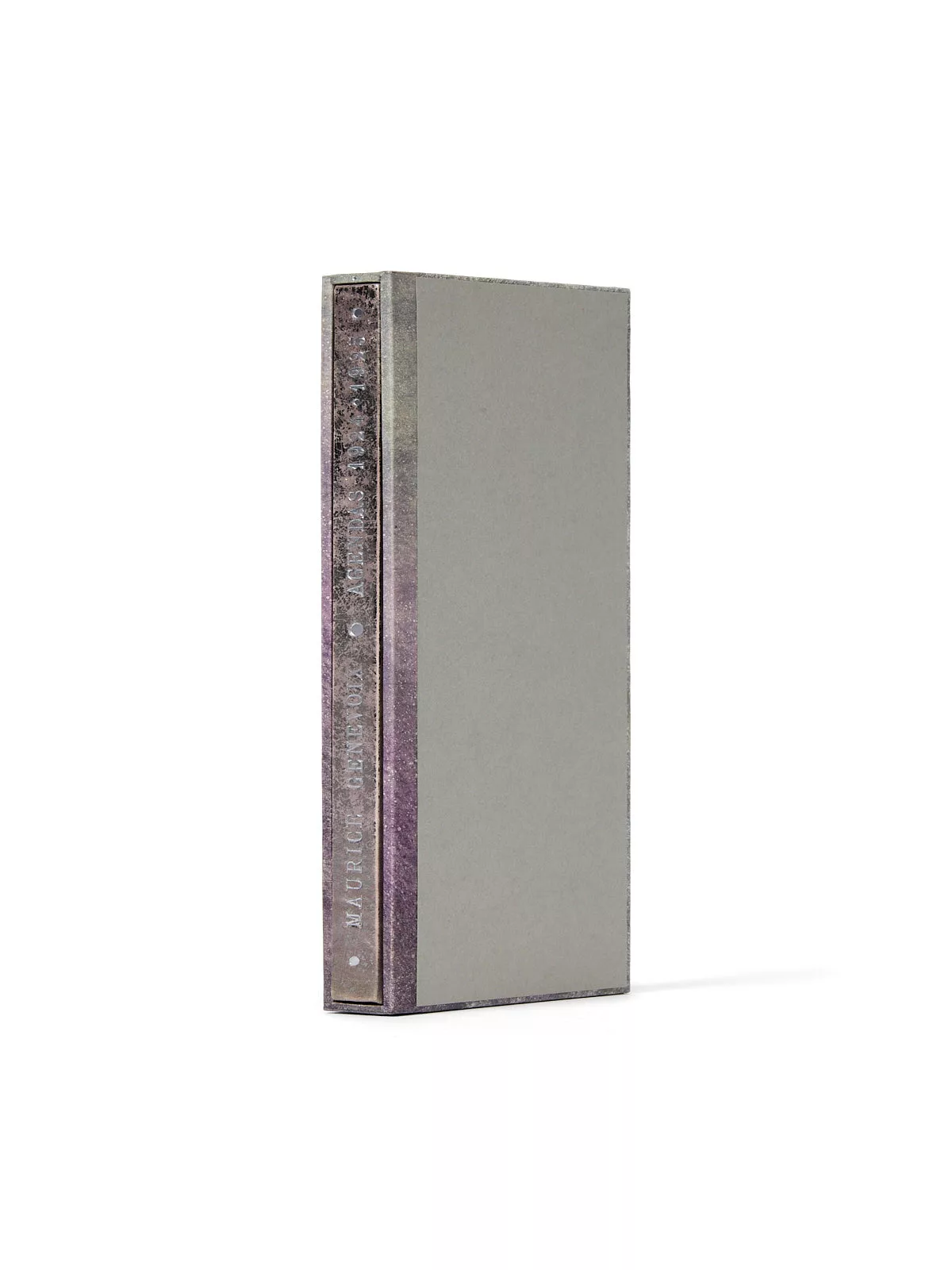
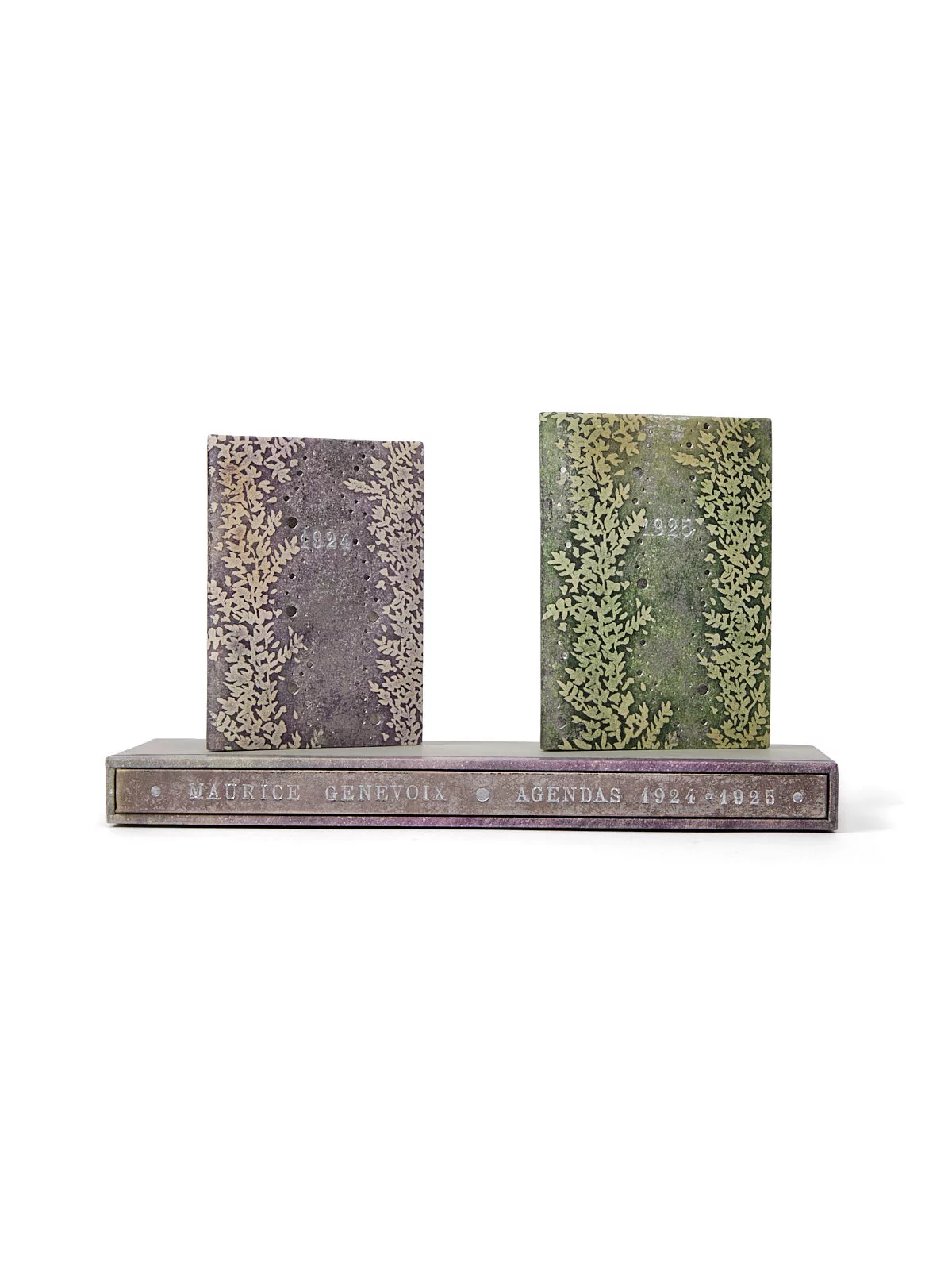
These two notebooks are preserved in a case intelligently and delightfully conceived and executed by Louise Bescond: two small folders with a leafy green decoration, evoking both the world of the novel and the rhythm of its composition, protected within a matching slipcase-folder in book format.