

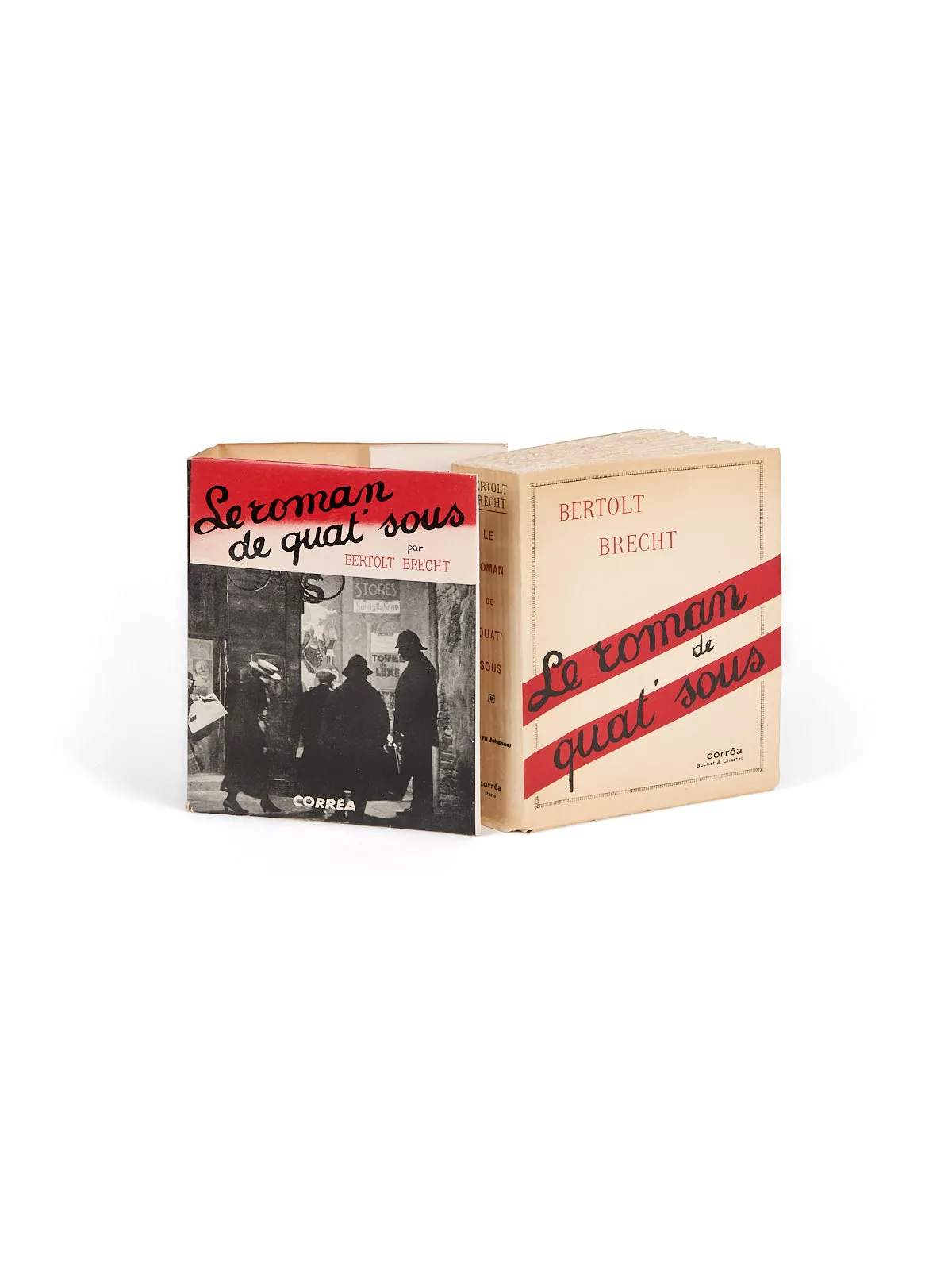
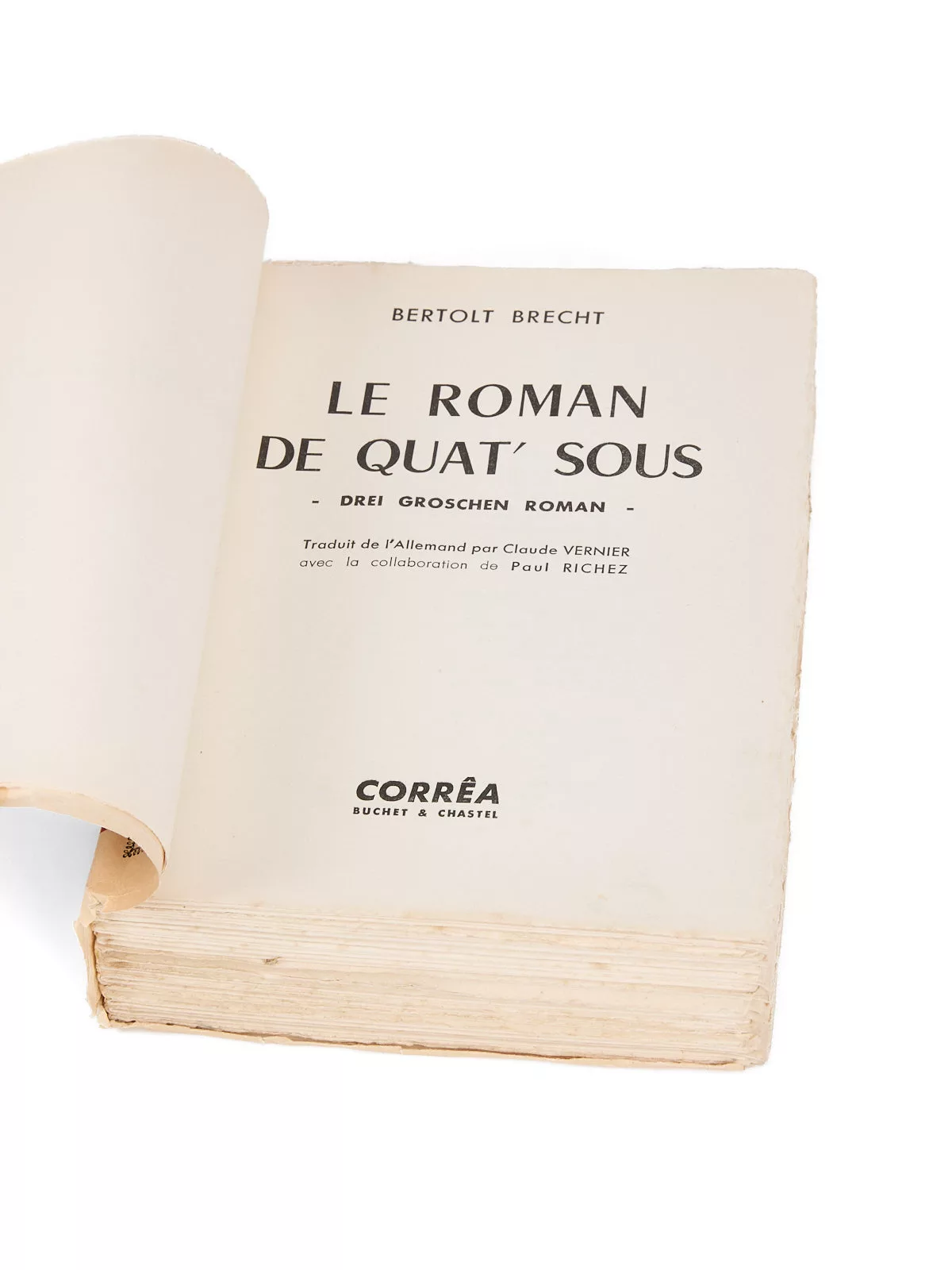
Le Roman de Quat’sous
One of 35 deluxe copies on pur fil Johannot paper (no. 5).
In 1928, the premiere of Die Dreigroschenoper (The Threepenny Opera) was one of the greatest theatrical successes of the Weimar Republic, bringing Bertolt Brecht international fame. Beggars, thieves and prostitutes: a vivid plunge into the underworld of Soho around 1900, where crooks and bourgeois alike exploit one another, dream and slum it. Peachum, who has turned poverty into a business, grows rich off the backs of fake beggars trained to arouse passers-by’s pity.
The production — premiered on 31 August 1928 at the Theater am Schiffbauerdamm in Berlin — adapts John Gay’s The Beggar’s Opera (1728), whose satirical violence against capitalist society Brecht retained. Originally titled La Canaille, this opera, a new genre of musical theater conceived against the “total idiotization of opera,” was composed by Kurt Weill and stands as one of the first milestones of the “epic theater” Brecht would later theorize. Cinema adapted it as early as 1931, but following the Reichstag fire on 28 February 1933, Brecht was forced to leave Germany with his wife Helene Weigel. Prague, Vienna, then Switzerland followed. It was during the first months of his emigration, while traveling back and forth between Switzerland and Paris to see Weill, with whom he completed the ballet The Seven Deadly Sins, that he met the German novelist Hermann Kesten, another émigré who had become literary adviser to a publishing house in Amsterdam. It was then that the first discussions took place concerning a novelized version of the opera, under the title Le Roman de quat’sous (Threepenny Novel), which would be published the following year: Brecht’s adaptation resonated fully with the political situation in Nazi Germany.