

Le Musée Grévin
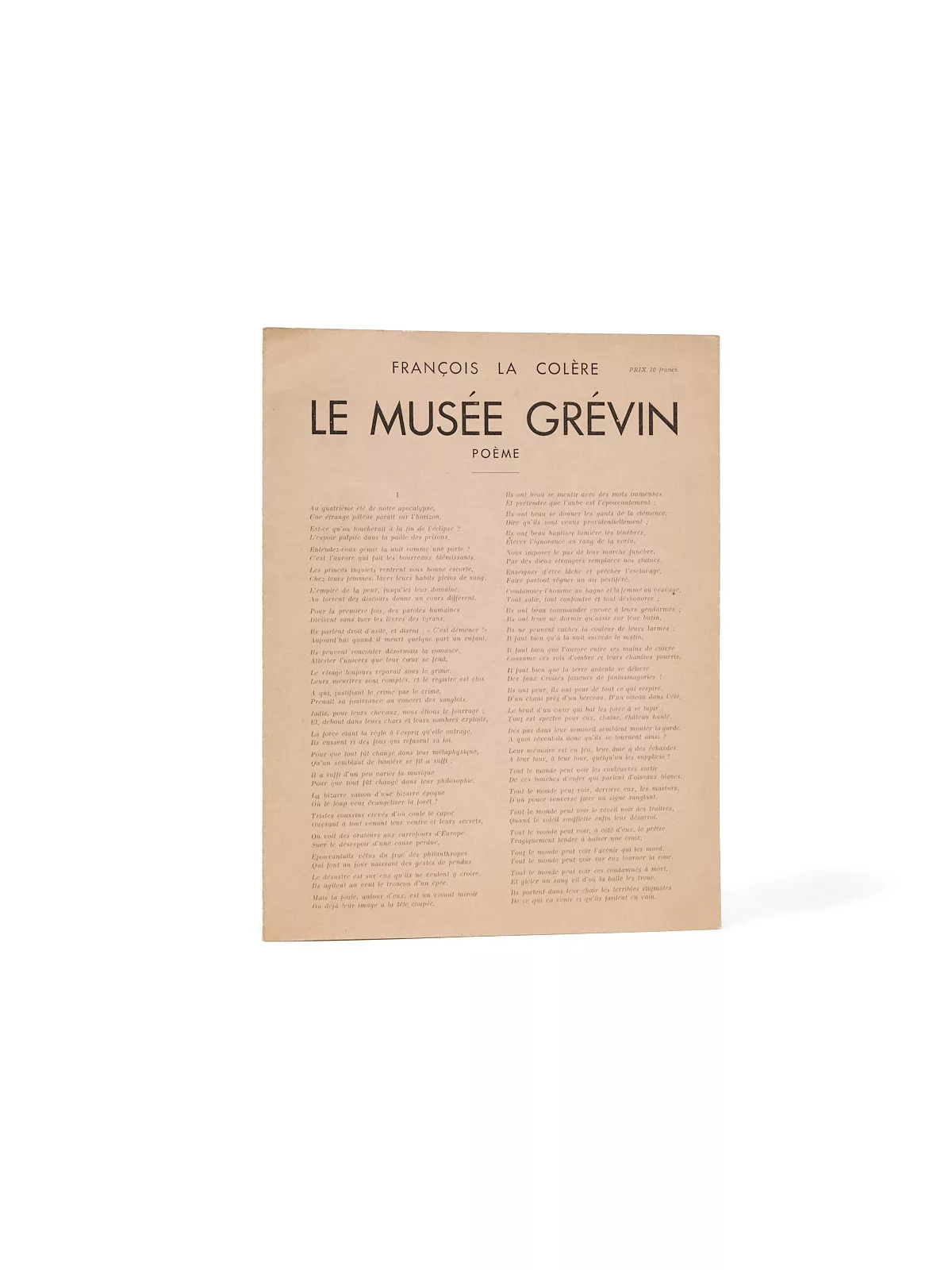
A landmark text of clandestine wartime poetry, Le Musée Grévin contains one of the earliest literary evocations of Auschwitz: “Aux confins de Pologne, existe une géhenne dont le nom siffle et souffle une affreuse chanson. Ausschwitz ! Ausschwitz ! ô syllabes sanglantes ! Ici l’on vit, ici l’on meurt à petit feu. On appelle cela l’exécution lente. Une part de nos coeurs y périt peu à peu.”
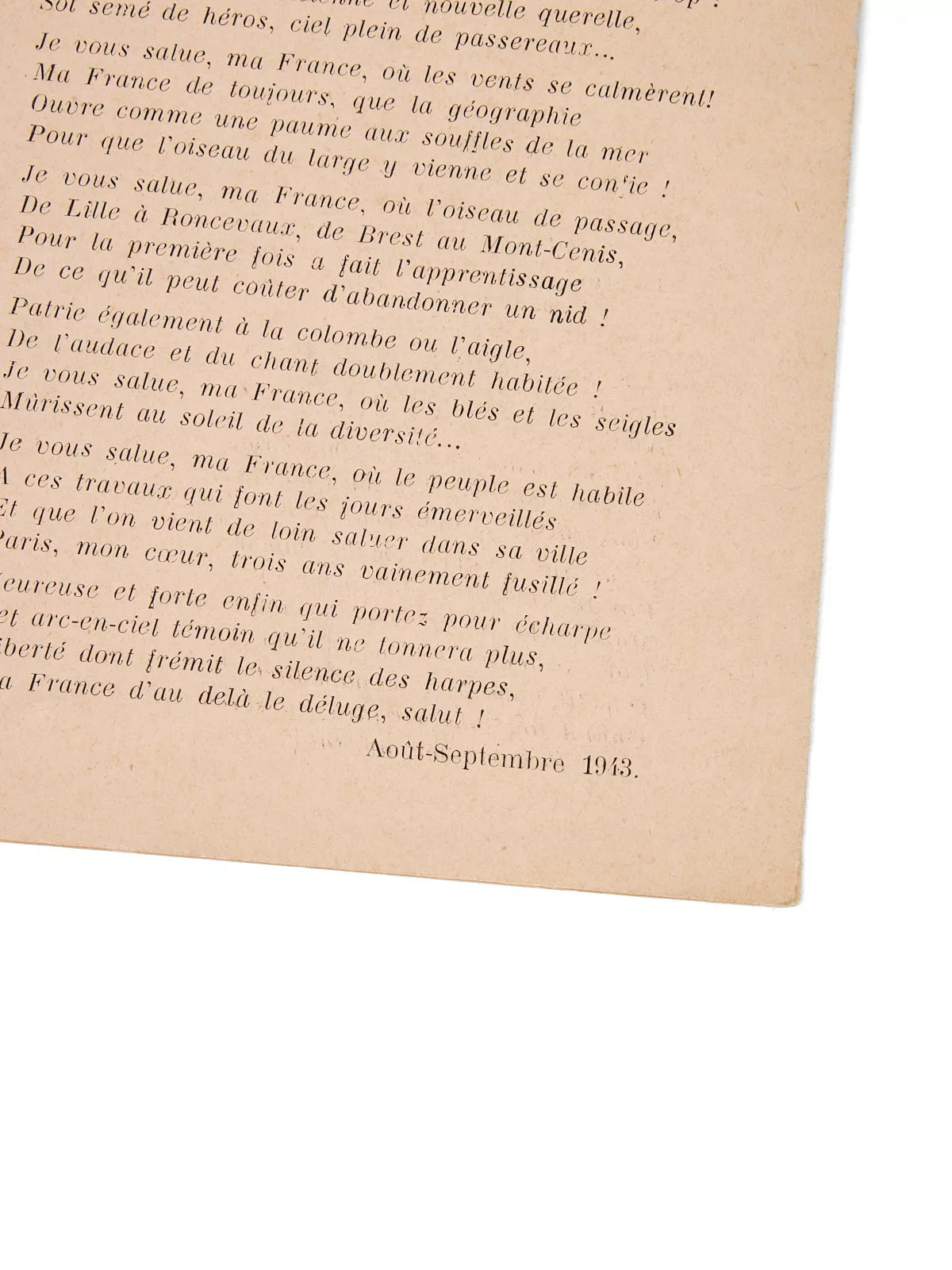
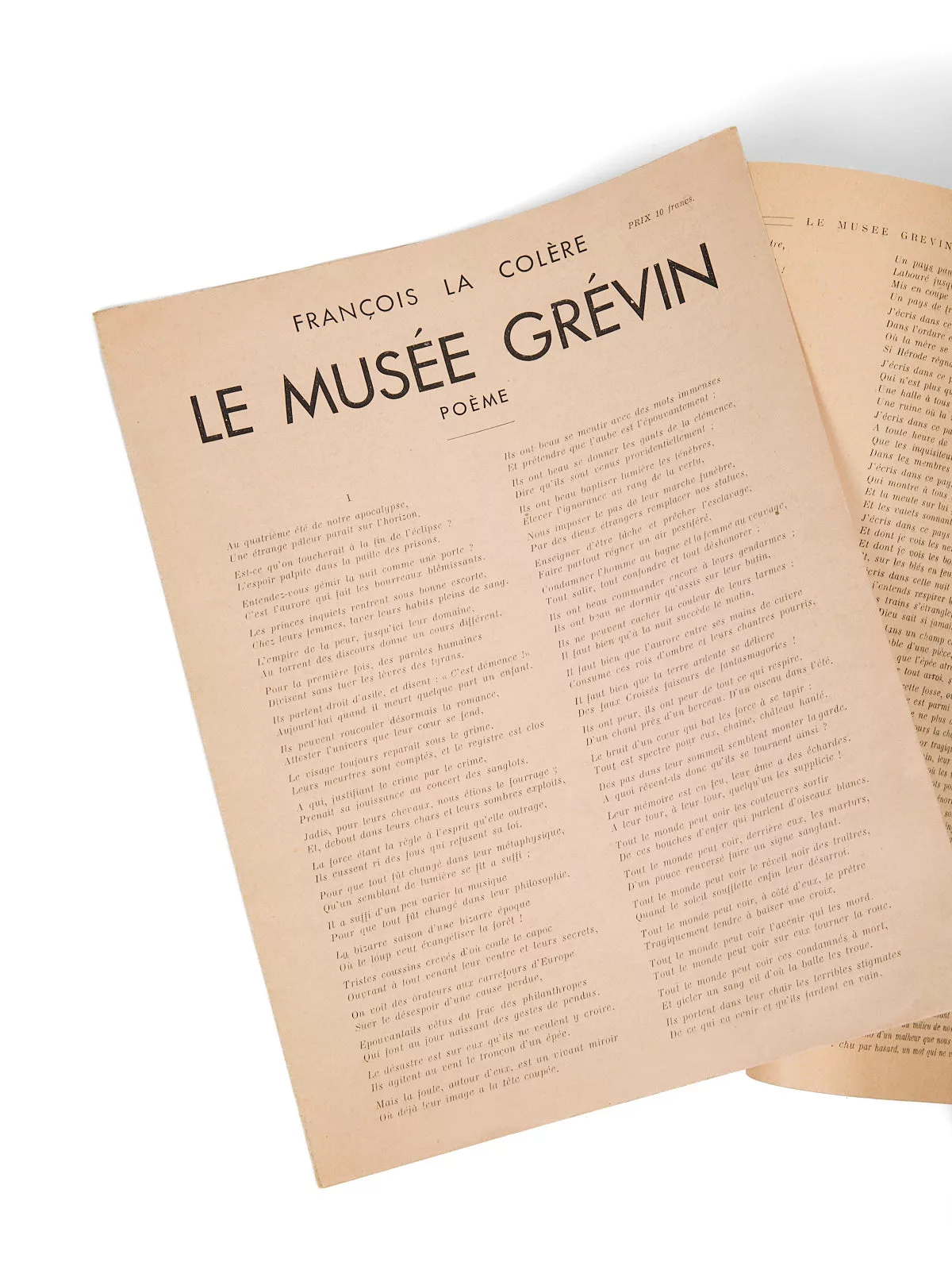
The publishing history of the poem is complex. It appears to have been published almost simultaneously by Minuit in Paris and in Saint-Flour, in the Bibliothèque française collection (founded by Aragon and directed by Éluard) — Aragon recalling that the wrapper was made possible “thanks to a small stock of bathroom wallpaper found in Lyon.” The poem was almost certainly composed after Aragon read an article in the clandestine newspaper Les Étoiles (August 1943), which revealed, based on the testimony of an escapee, the fate of one hundred hostages from Romainville deported to Auschwitz. Aragon, who even carried over the newspaper’s misspelling “Ausschwitz” into his own poem, wrote the text in haste from the Drôme immediately after these revelations, wishing it to be distributed as widely as possible, in the occupied zone through Minuit and in the southern zone through Saint-Flour.
The same newspaper, Les Étoiles, hailed the poem’s appearance as an event in its December issue: “Les Châtiments de 1943.” Louis Parrot, in L’Intelligence en guerre (1945), wrote that the poem, “shot through with dazzling images, is at once an uncompromising condemnation of traitors, a prayer, and an act of faith toward their unfortunate victims. It depicts, in vengeful terms, the wretches who delivered them to their executioners, and evokes the faces of so many tortured French women.”
Our copy lacks the mention “Imprimerie spéciale des Éditions de Minuit”: “Could this be a printing produced by Éluard for his bibliophile friends? The typesetting of the text differs slightly from that of the tract described as the original, so that, in the absence of a printer’s colophon, it is impossible to know which precedes the other” (Vignes).
Vignes, Bibliographie des Éditions de Minuit, no. 8.