

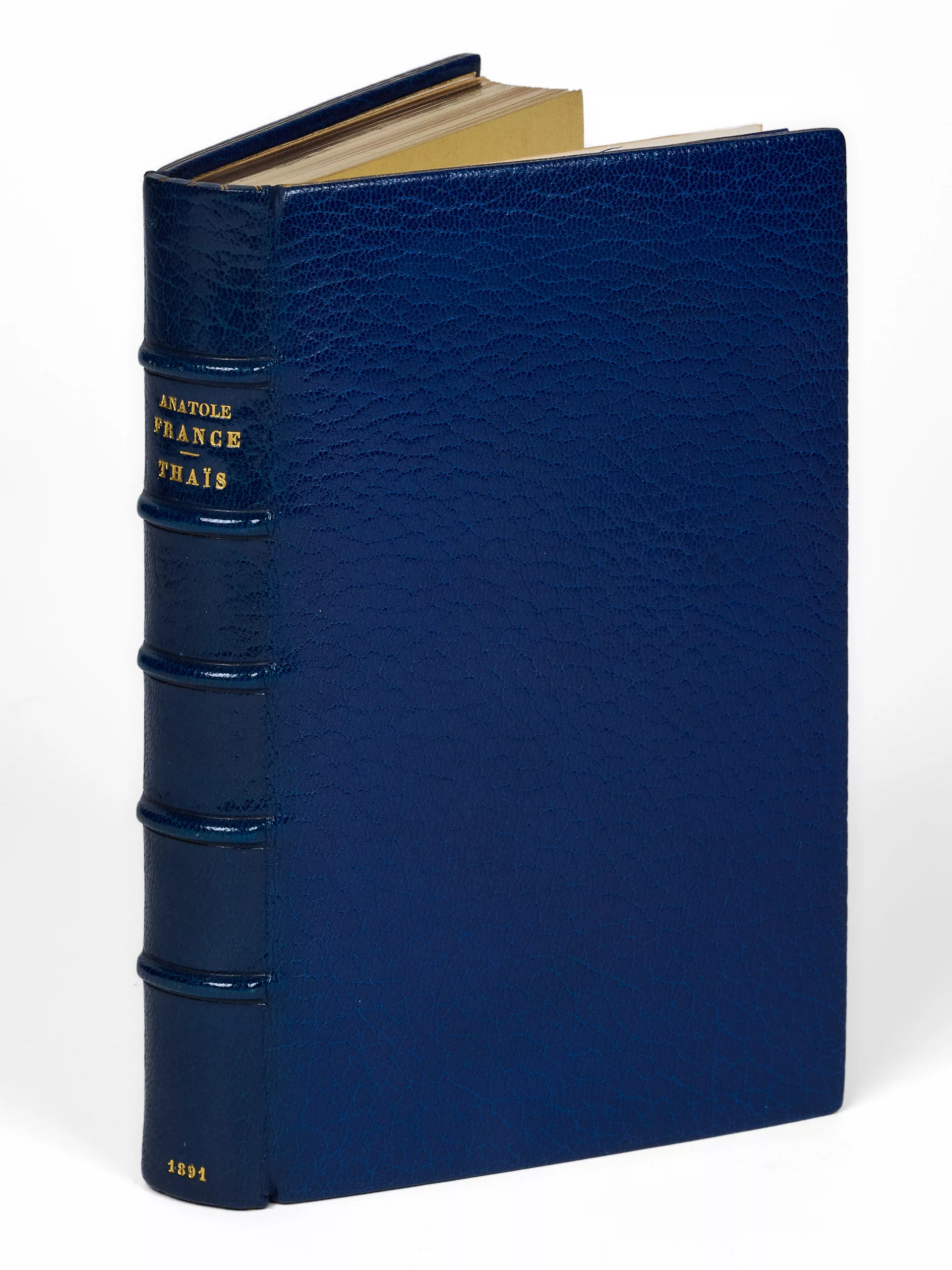
Thaïs
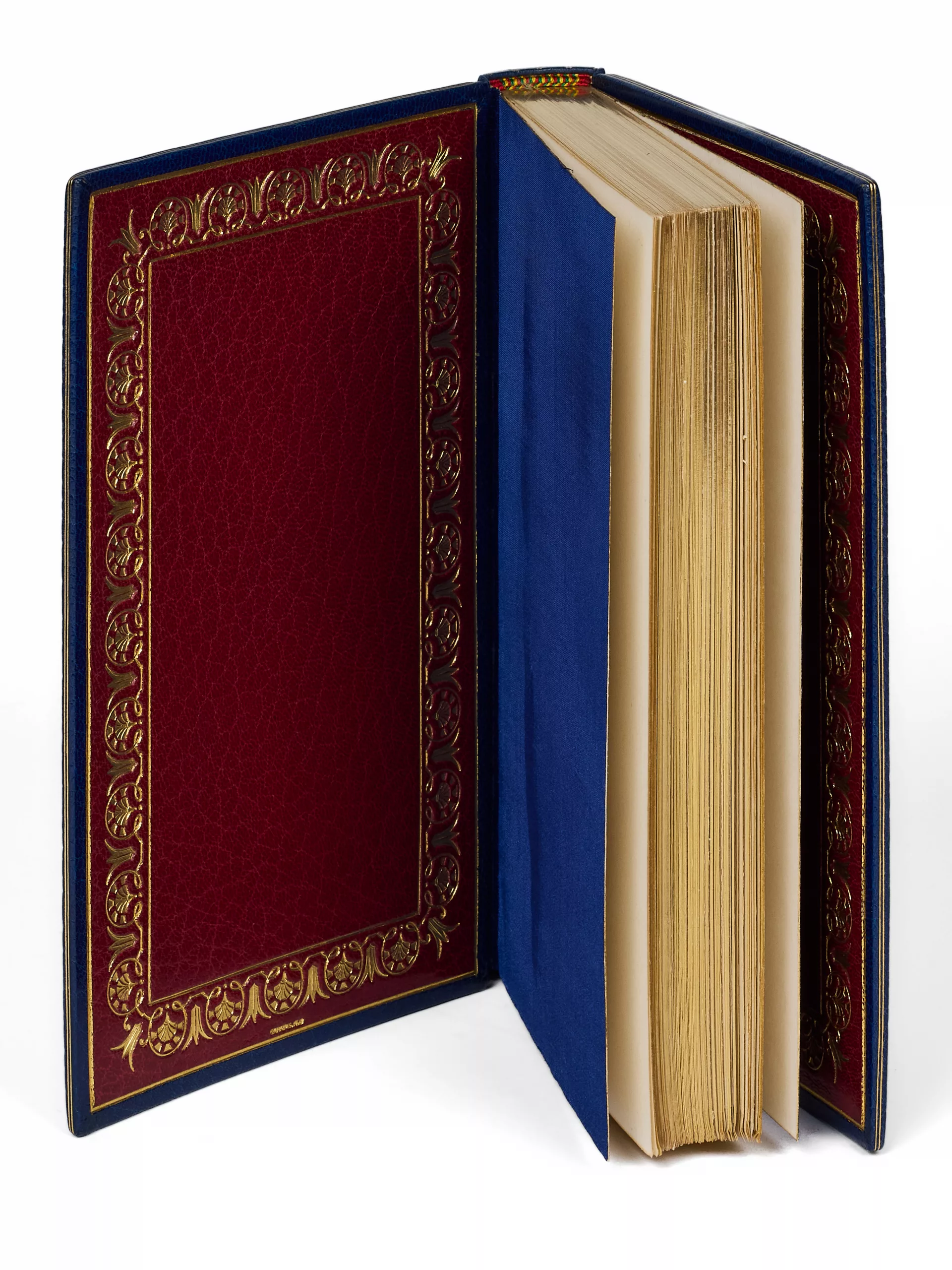
A ravishing and luxurious doublure binding by Canape, in fine condition.
“Thaïs, according to the Lives of the Desert Fathers, was a gentle and charming sinner who devoted herself especially to theatrical entertainments. Leading a dissolute life, she was still young and her fame filled the world, so much so that one day the holy abbot Paphnutius heard tell of her. Paphnutius, like all the holy hermits who were disciples of Father Anthony, lived in the desert, not far from an Egyptian city — which M. France assumes to be Alexandria — where Thaïs flourished: which suggests that this desert was occasionally visited. Be that as it may, Paphnutius, having heard of Thaïs and her beauty, resolved to snatch her from the clutches of the devil and make her do penance for all her sins. Paphnutius therefore came to Alexandria, succeeded in bringing Thaïs to a monastery, where she was converted. Then Paphnutius returned to his desert retreat, where he died in the odor of sanctity. There, does that not seem to you a rather banal story, one of a thousand we know about these good fathers, imitators of Saint Anthony? That is because you are not a poet. Around this simple fact, M. Anatole France’s imagination builds an entire life for the brilliant actress and the holy abbot” (A. Maurel, in La Revue bleue, vol. 45, 1890, pp. 542–543).