

Notre-Dame de Paris
Copy on fine vellum paper.
The Renduel edition, published by one of the leading houses associated with the Romantic school, appeared in a single volume five years after the first edition. It includes three previously unpublished chapters — among them the celebrated chapter “Ceci tuera cela,” with its prophetic statement that “the book of stone, so solid and so durable, was about to give way to the book of paper, more solid and even more durable still.” While the phrase was meant to convey that “printing would kill architecture,” the preface was in fact a vigorous plea for the preservation of the architectural monuments of the past: “Let us inspire in the nation, if possible, a love of national architecture. That, the author declares, is one of the principal aims of this book.” Just weeks before the scheduled reopening of Notre-Dame de Paris following the devastating fire of 15 April 2019, these words resonate powerfully.
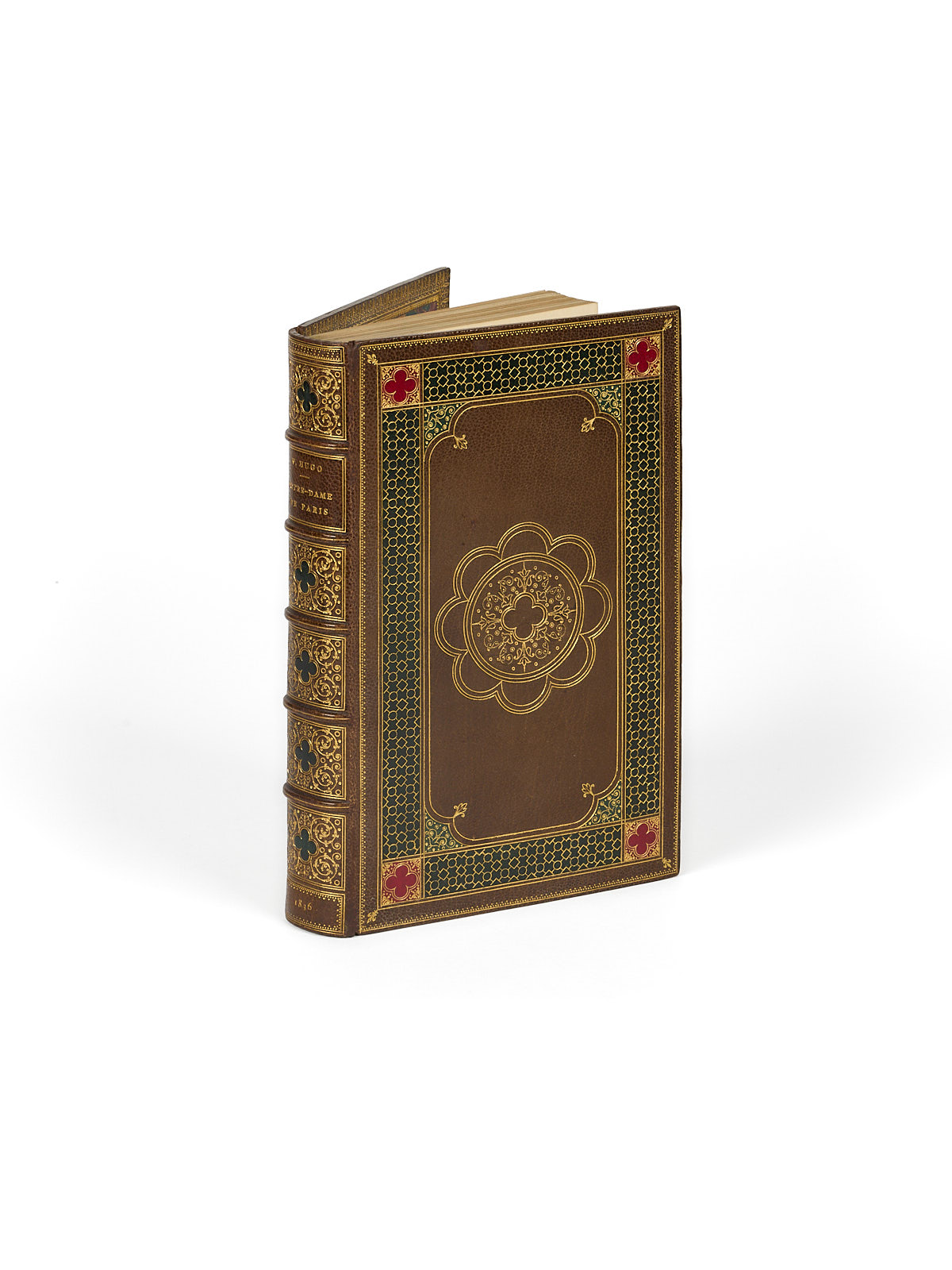
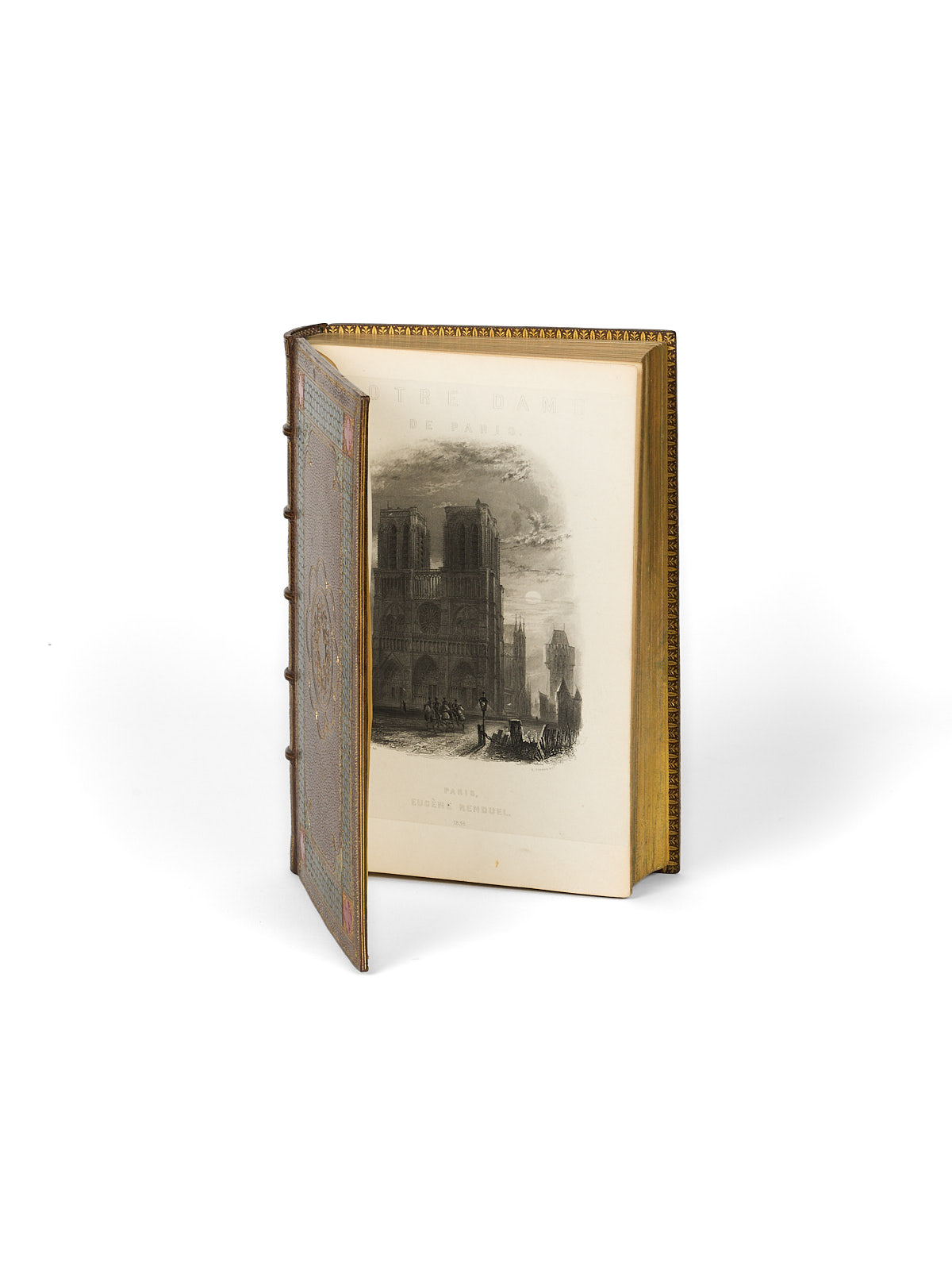
Known as the “Keepsake edition” (by analogy with the English keepsakes, small illustrated literary anthologies), this edition was often given elaborate bindings, frequently decorated in a “cathedral” style echoing the plate depicting the cathedral’s façade. For this edition — probably the finest ever produced of Notre-Dame de Paris — the publisher Renduel commissioned a number of deluxe copies bound by Boutigny in various publisher’s bindings, either “à la Cathédrale” or in “Rocaille” style.
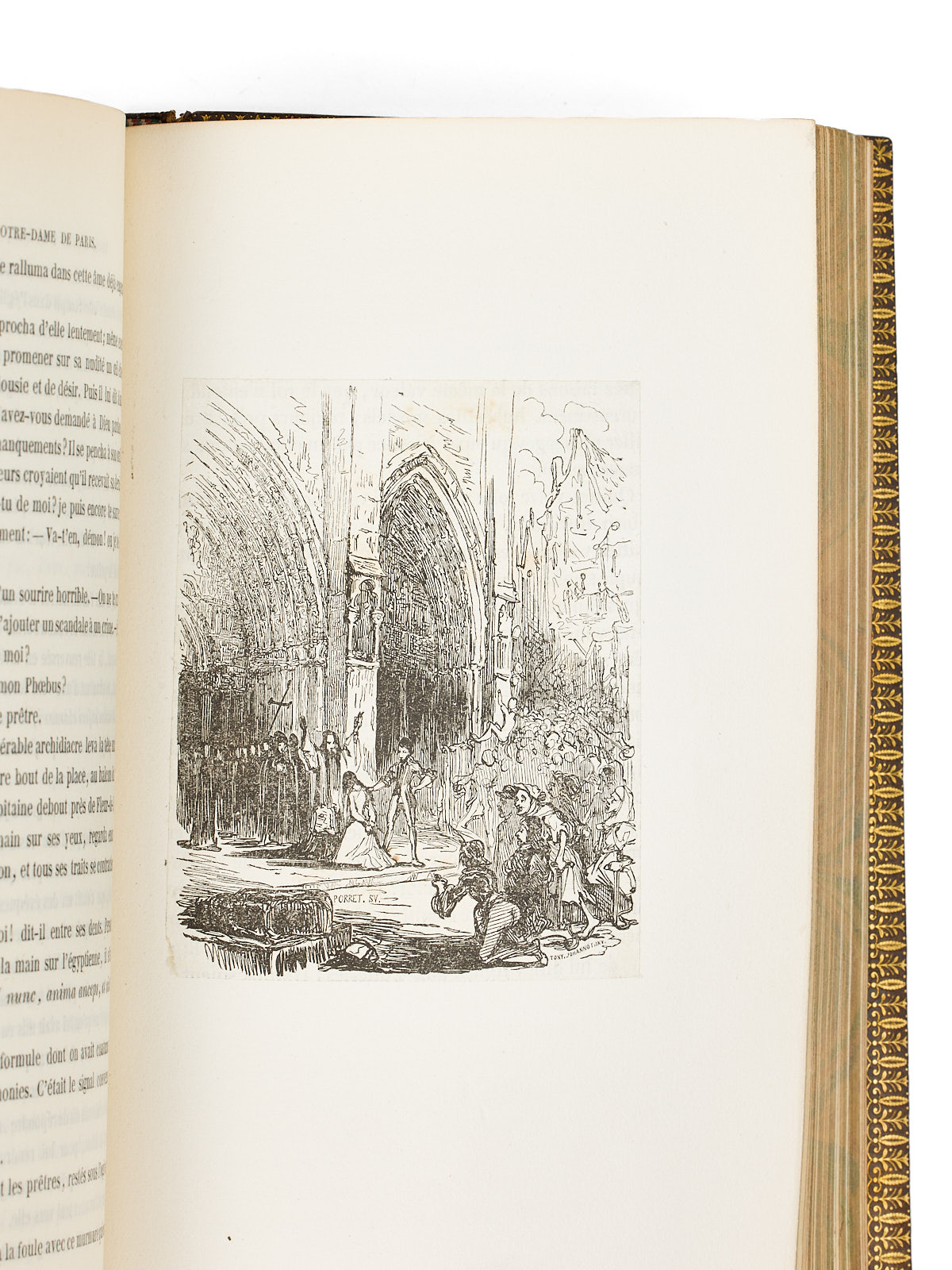
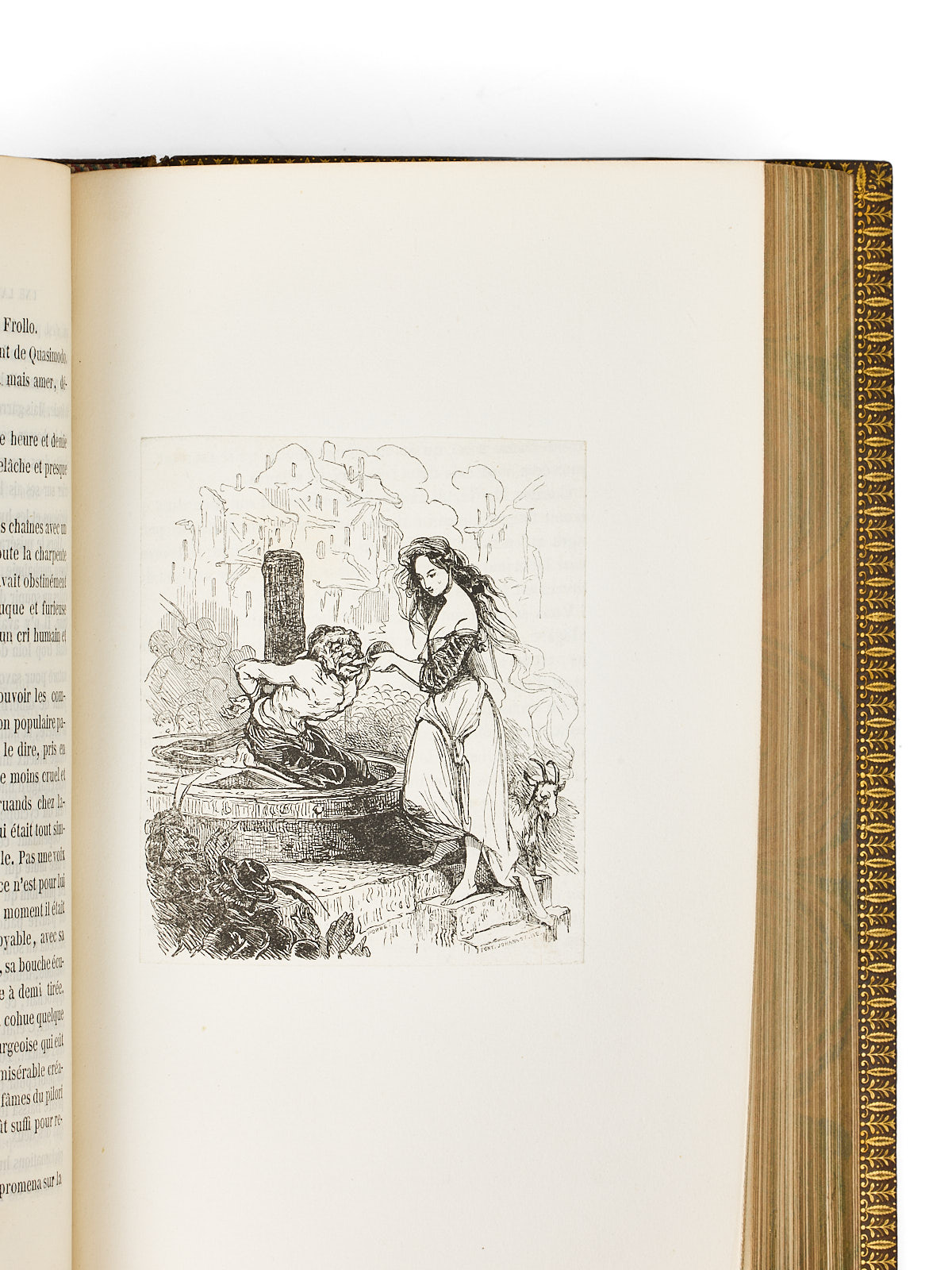
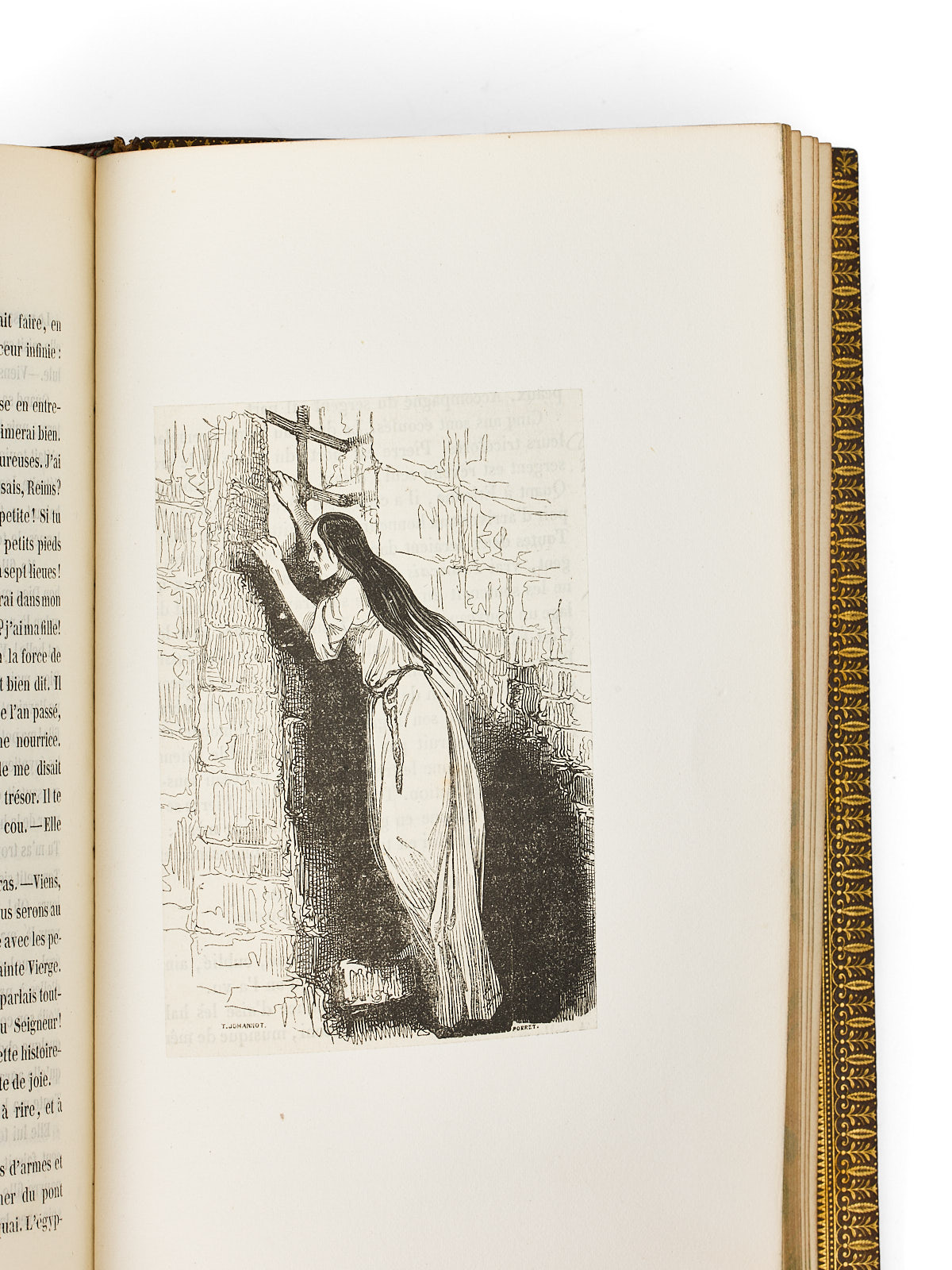
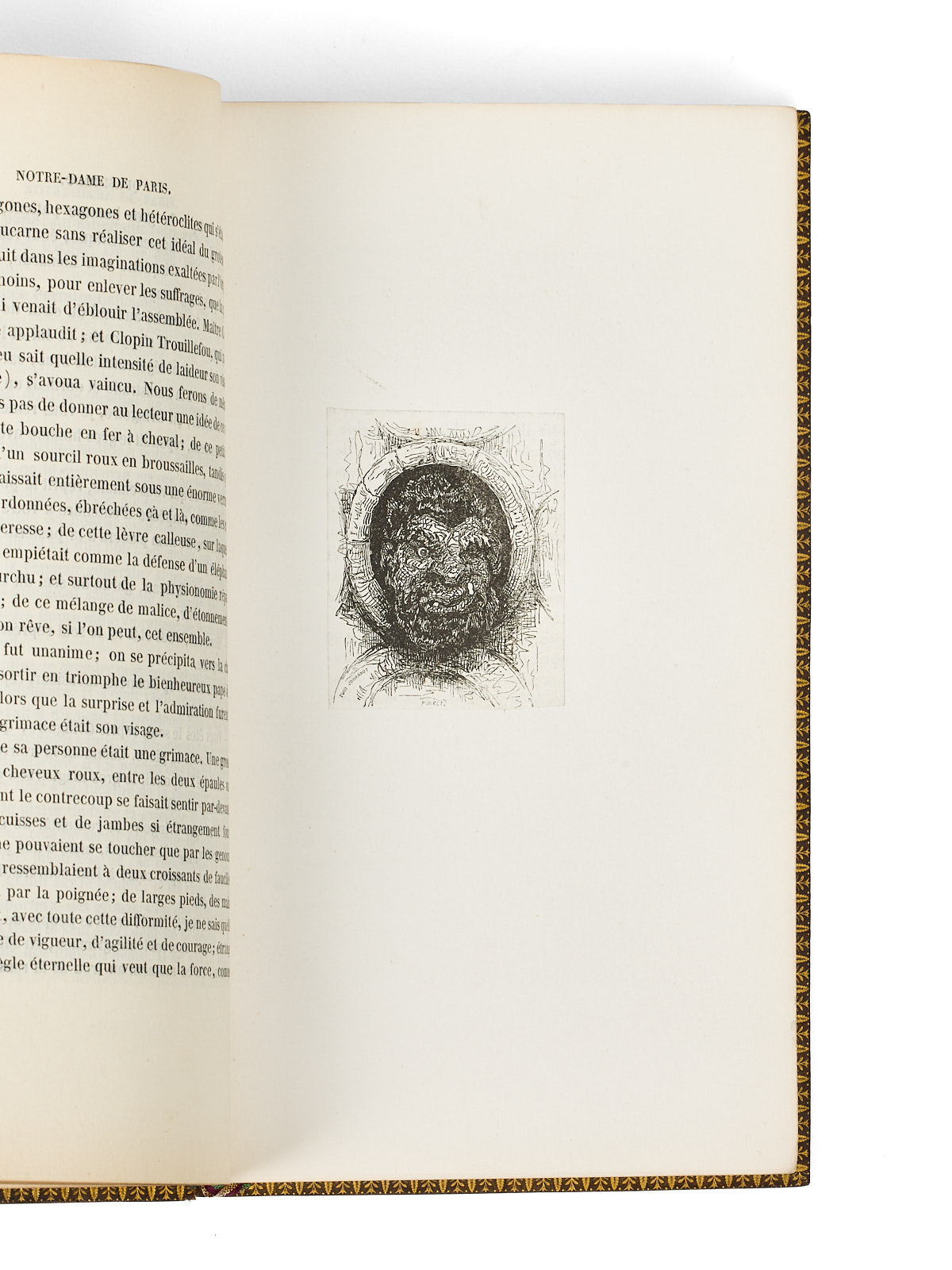
This copy, one of the rare examples on fine vellum paper, was luxuriously bound, probably around the turn of the century, in a finely worked mosaic binding. Five vignettes, mounted on strong vellum paper, were added at that time.
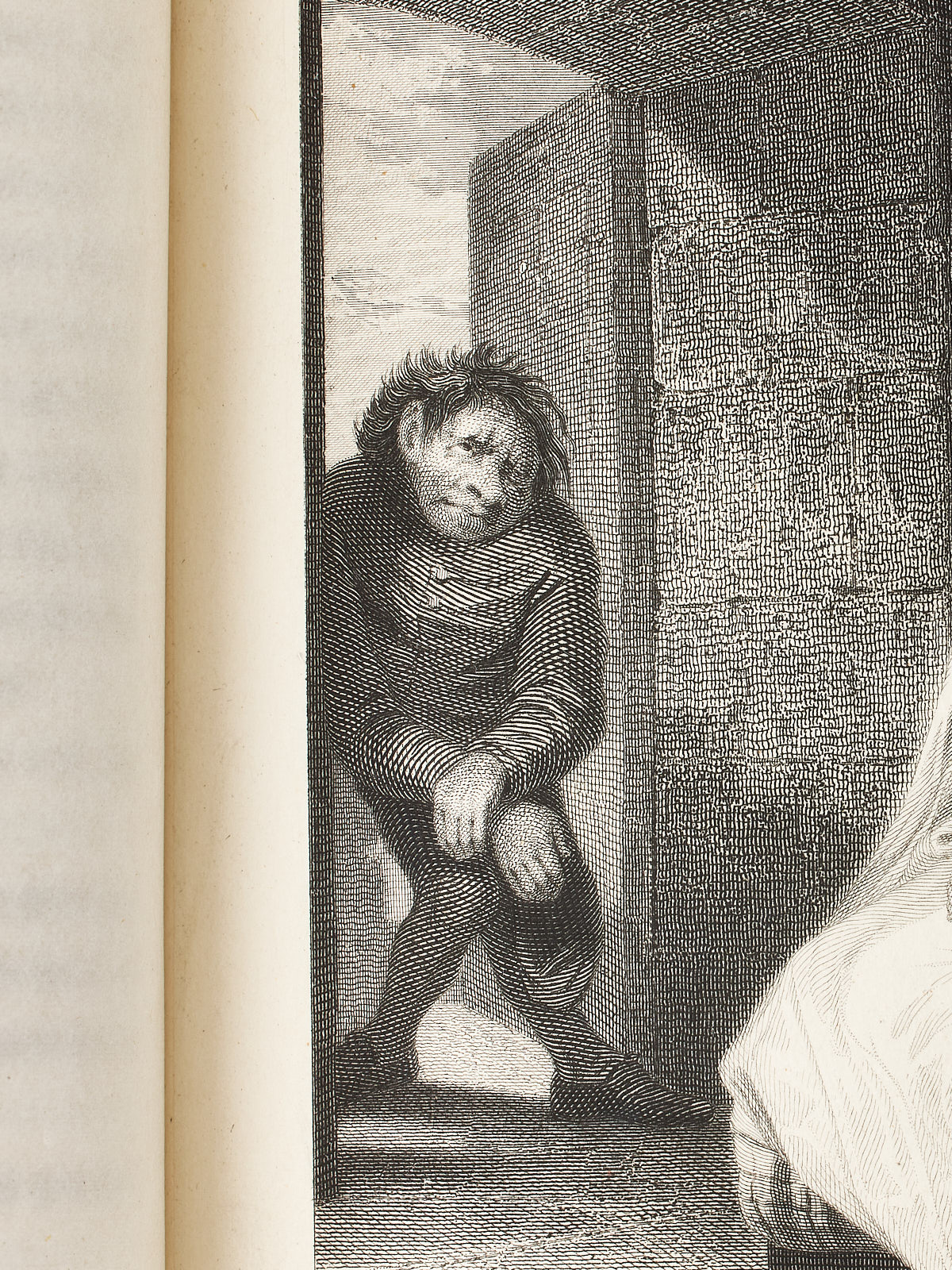
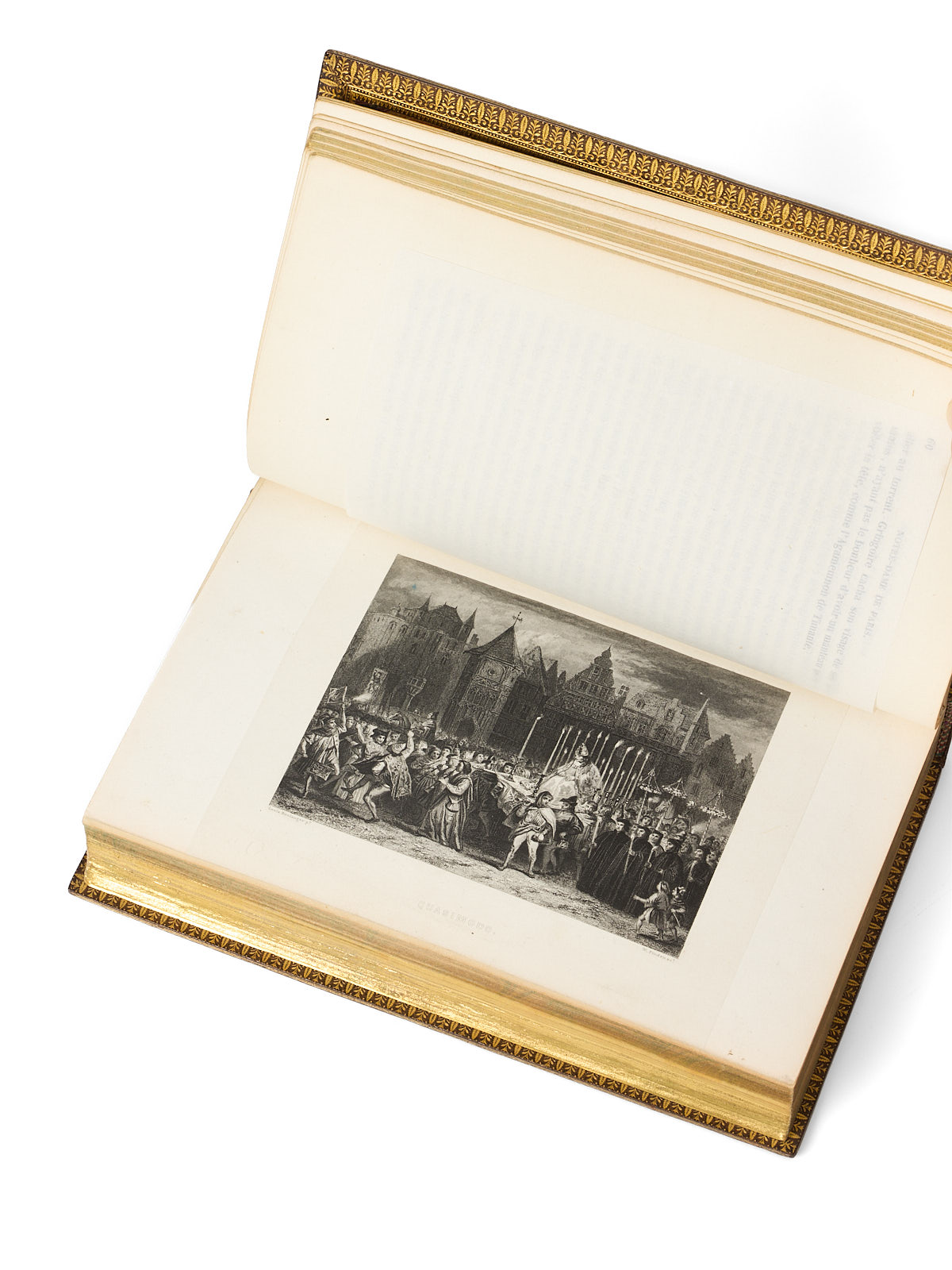
It also includes, as it should, the engraved title-frontispiece and 11 steel-engraved compositions by Finden, Lacour Lestudier and Staines, Tony and Alfred Johannot, Louis Boulanger, Denis Raffet, Camille Rogier and Adolphe Rouargue, all printed on separate leaves.
These illustrations are printed on China paper and mounted on strong vellum paper.
The plate “De l’utilité des fenêtres qui donnent sur la rivière,” usually absent from copies of the first issue (it was not yet ready at the time of printing), is present here, added by a knowledgeable collector once the engraving became available, at the time of the three-volume and then two-volume editions issued a few months later — all dated 1836. This twelfth plate is printed on strong vellum paper (the other 10 original engravings are on China paper).
According to Clouzot, this edition had a print run of 2,000 copies, and he notes that “the work is most often heavily foxed.”
A very fine copy, complete with all these plates in first printing, on fine vellum paper free of any foxing.
A choice copy.