

Pilote de guerre
In early December 1942, Gallimard published the novel, its visa granted on condition of removing only the words “Hitler qui a déclenché cette guerre démente.” An oversight by the censors? Critical reception was enthusiastic, and the “official” press praised the book. But in early 1943, Je suis partout published, in quick succession, two inflammatory articles by Robert Brasillach, mocking the book’s “drooling clichés,” its “praise of holy democracy” and “cult of the individual.” The effect was immediate: the book was instantly banned at the request of the German authorities.
The clandestine editions that followed originated in the encounter between Gaston Riby and Terre des hommes. Deeply moved by that text, Riby began a correspondence with Saint-Exupéry that the war interrupted. Mobilized, taken prisoner, escaped, recaptured, and finally freed, Riby founded la Chaîne, a mutual-aid organization “for all the destitute.” Under cover of this association, he undertook various acts of resistance, including the publication of this first clandestine edition of Pilote de guerre, printed in December 1943 in a run of about a thousand copies.
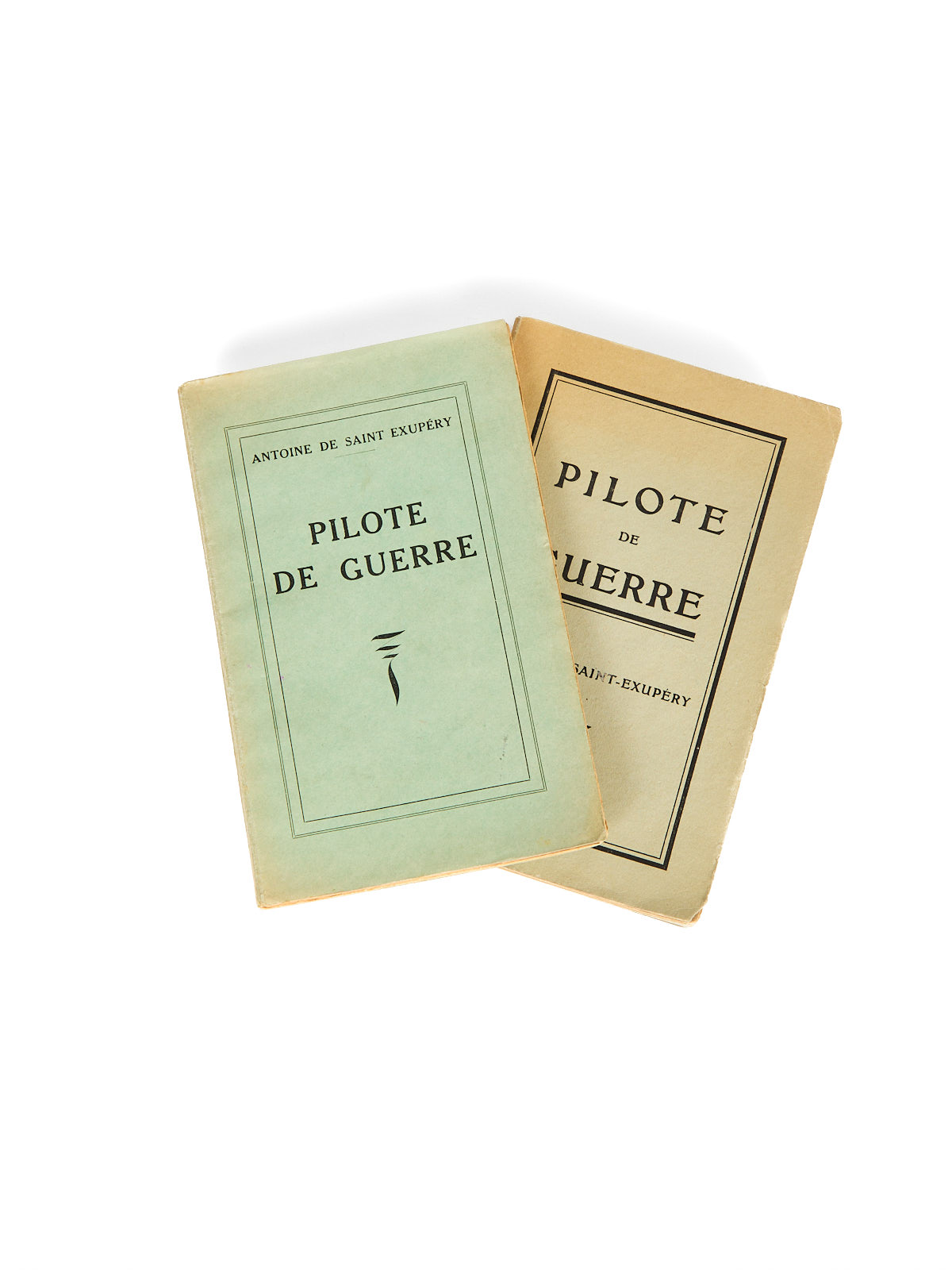
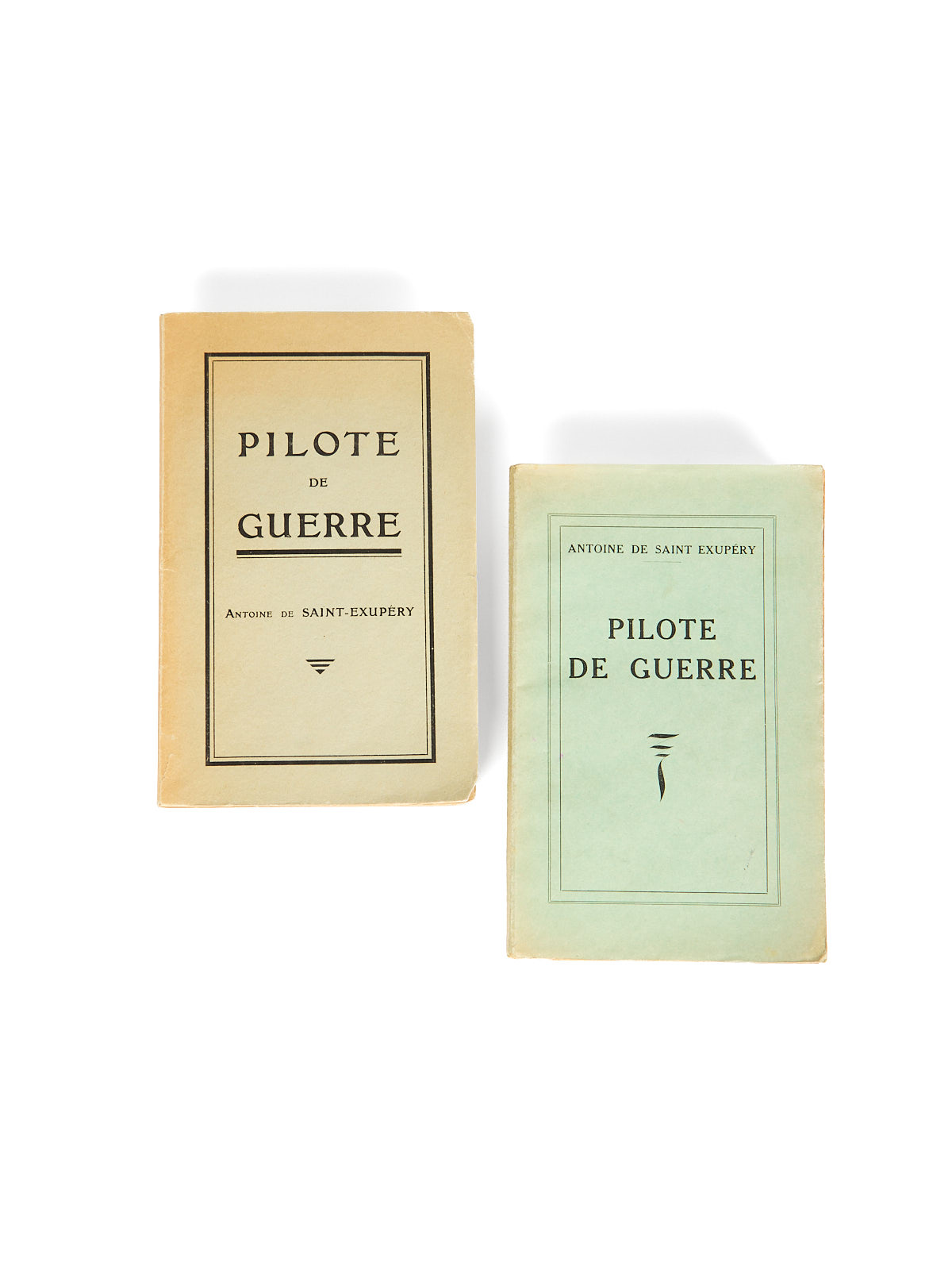
After a few months in Lille, la Chaîne moved its headquarters to Paris, in the Halles district. It was there, on 14 April 1944, that the Gestapo seized the hundreds of copies not yet distributed, which were probably destroyed — explaining the great rarity of this edition. Gaston Riby managed to launch a new printing from his former Lille offices: of the same format as the first, this Lille edition runs eight pages longer, owing to a slightly larger typeface than the Cheltenham used in the first edition, which had halved the page count compared with the original edition.
Both clandestine editions contain countless — and different — errors (misprints, omissions, truncated sentences and mistaken corrections), under two similar but distinguishable covers, differing in their typographic layout and the ornament used.
Riby was arrested and deported in July, and spent more than eight months in a camp under especially harsh conditions. Among his fellow prisoners was Marguerite Duras’s husband, Robert Antelme, who would later recount the ordeal and Riby’s heroism in L’Espèce humaine.
A rare gathering of these two fragile publications, usually found in poor condition.
Laid into the copy of the Lille edition is a press cutting from the newspaper Témoignage chrétien of 24 December 1948, containing the “Lettre aux hommes,” almost certainly written on 7 June 1943 while Saint-Exupéry was undergoing training flights on the Lockheed P-38 Lightning. This celebrated letter was found among his personal effects after his disappearance (31 July 1944). Contrary to what is sometimes claimed, this letter is neither Saint-Exupéry’s last written text nor dated July 1944; it is therefore misleading to regard it as his “testament,” though its content remains of great interest. The text was first published by Éditions Dynamo, in Liège, under the title Que faut-il dire aux hommes? Lettre au général X…, before being reprinted in Le Figaro littéraire of 10 April 1948, and then in Témoignage chrétien under the title “Lettre aux hommes.”
Two early ownership inscriptions, one manuscript, the other a stamp, on each of the volumes.
Icare, no. 96, pp. 31–41, 50–51.