

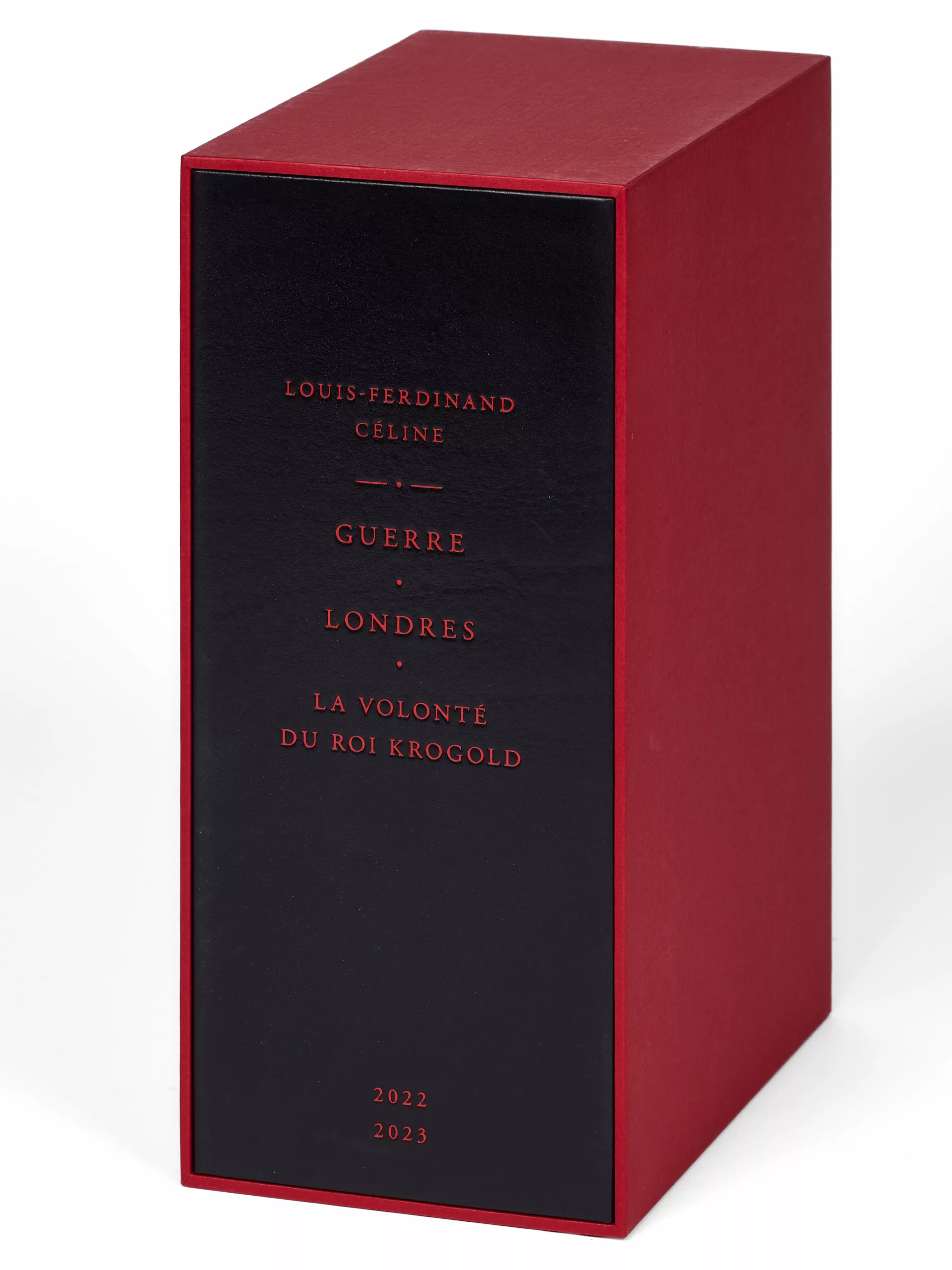
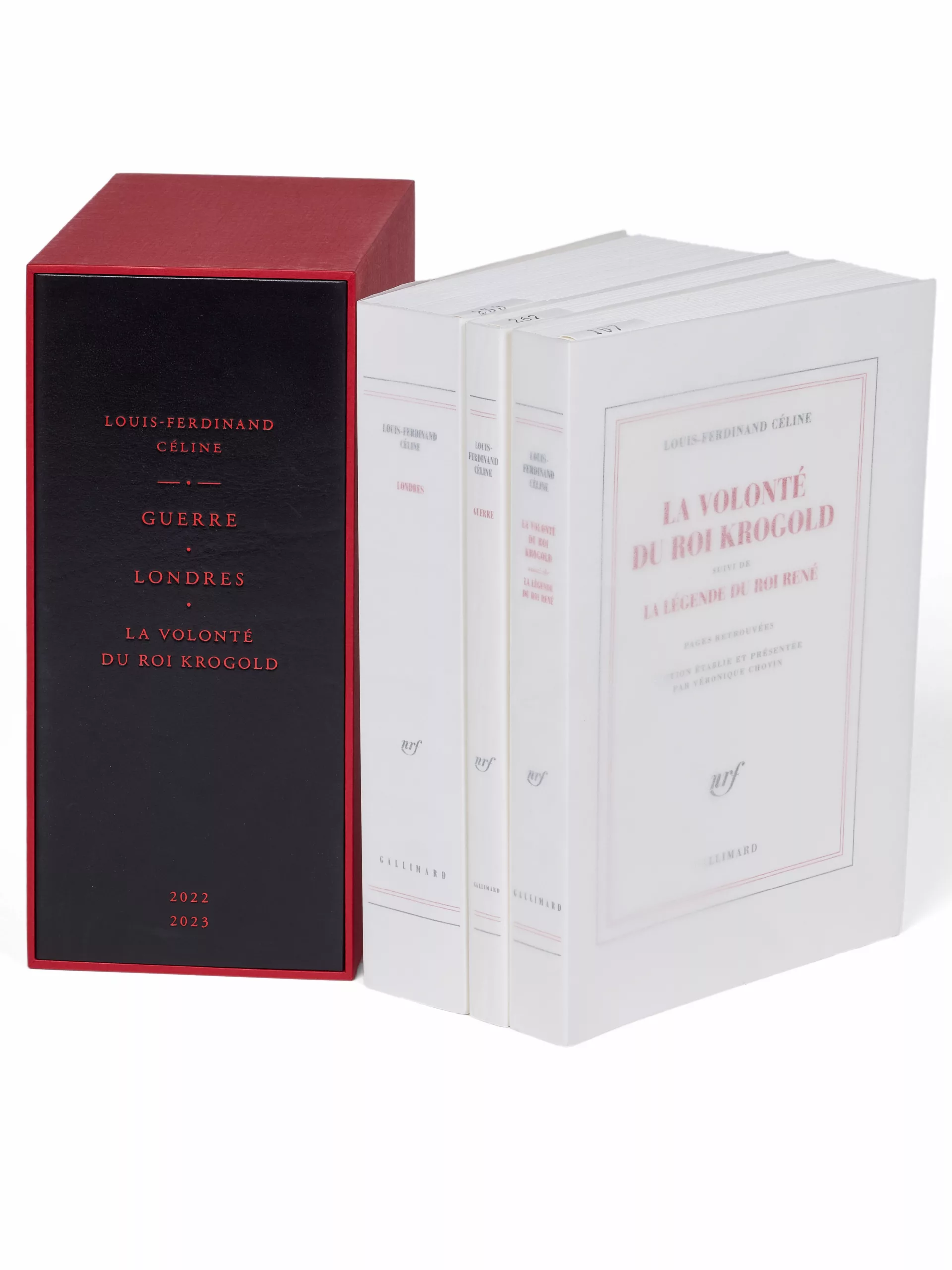
In 2011, Céline’s inclusion in the official calendar of national commemorations caused such an uproar that it had to be withdrawn. Ten years later, and sixty-one years after his death, Céline returned to the forefront of publishing with three posthumous works, Guerre, Londres and La Volonté du roi Krogold, based on unpublished manuscripts handed over in the summer of 2021 by the former theater critic Jean-Pierre Thibaudat to François Gibault, Céline’s literary executor.
Guerre lifts the veil on the central experience of his life: the physical and moral trauma of the front, in the “international slaughterhouse gone mad.” It follows the convalescence of Brigadier Ferdinand from the moment he regains consciousness, gravely wounded, on the battlefield, up to his departure for London. In this longer sequel (500 pages, against about a hundred), we meet again Ferdinand, wounded in 1914–1918, and Angèle, the prostitute at the front. This posthumous diptych is completed by La Volonté du Roi Krogold, a medieval tale recounting “the war waged by the King against the treacherous Prince Gwendor, the murder of the prosecutor Morvan by the troubadour Thibaut, and the passion of Joad for the beautiful Wanda.” The edition presents two versions of the work: the first, typed by the author in 1930 and titled La Légende du roi René, and the second, dating from 1940, a very different second version of the story.
A perfect set, in a perfect slipcase.