

Portrait photographique
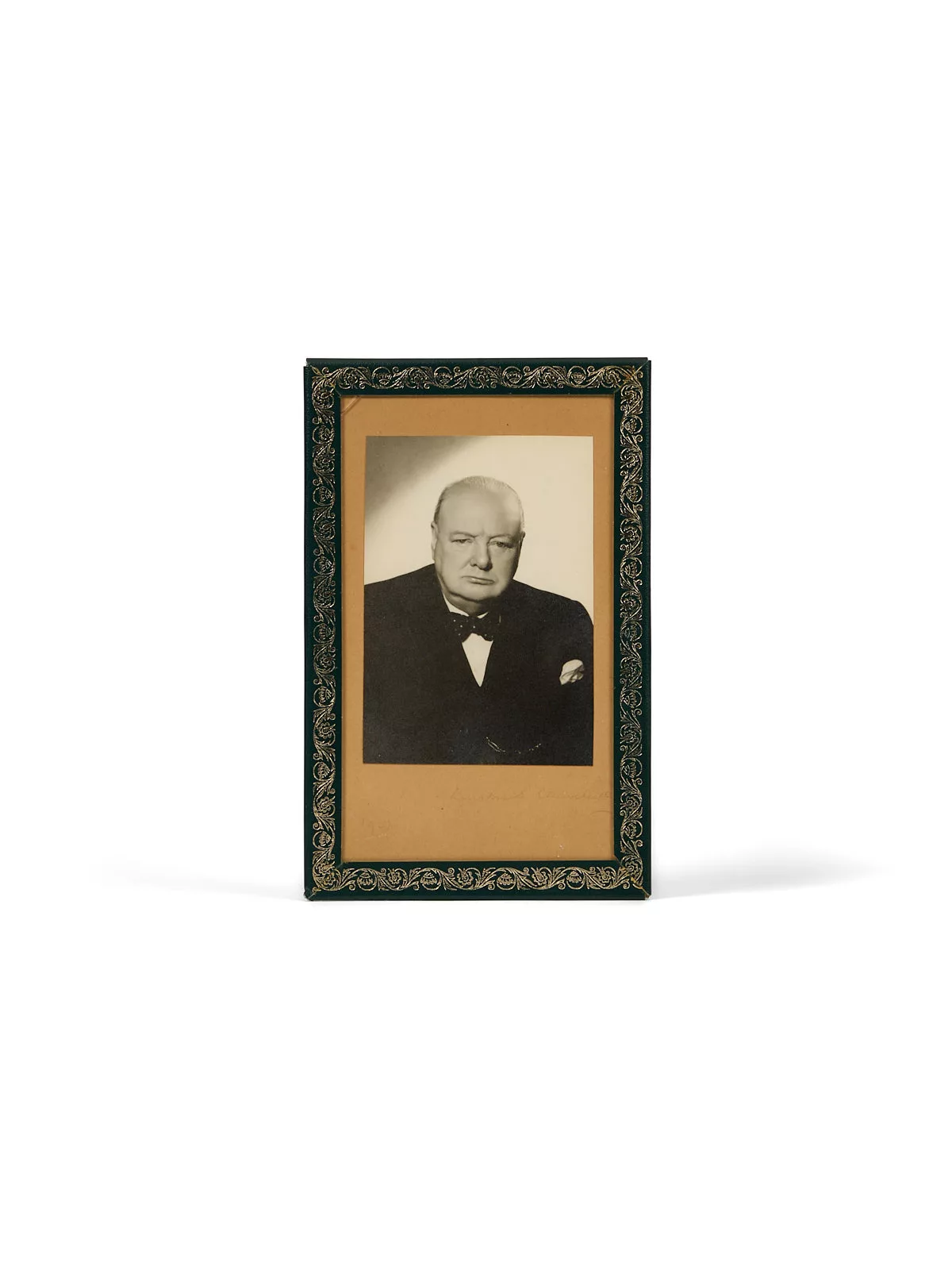
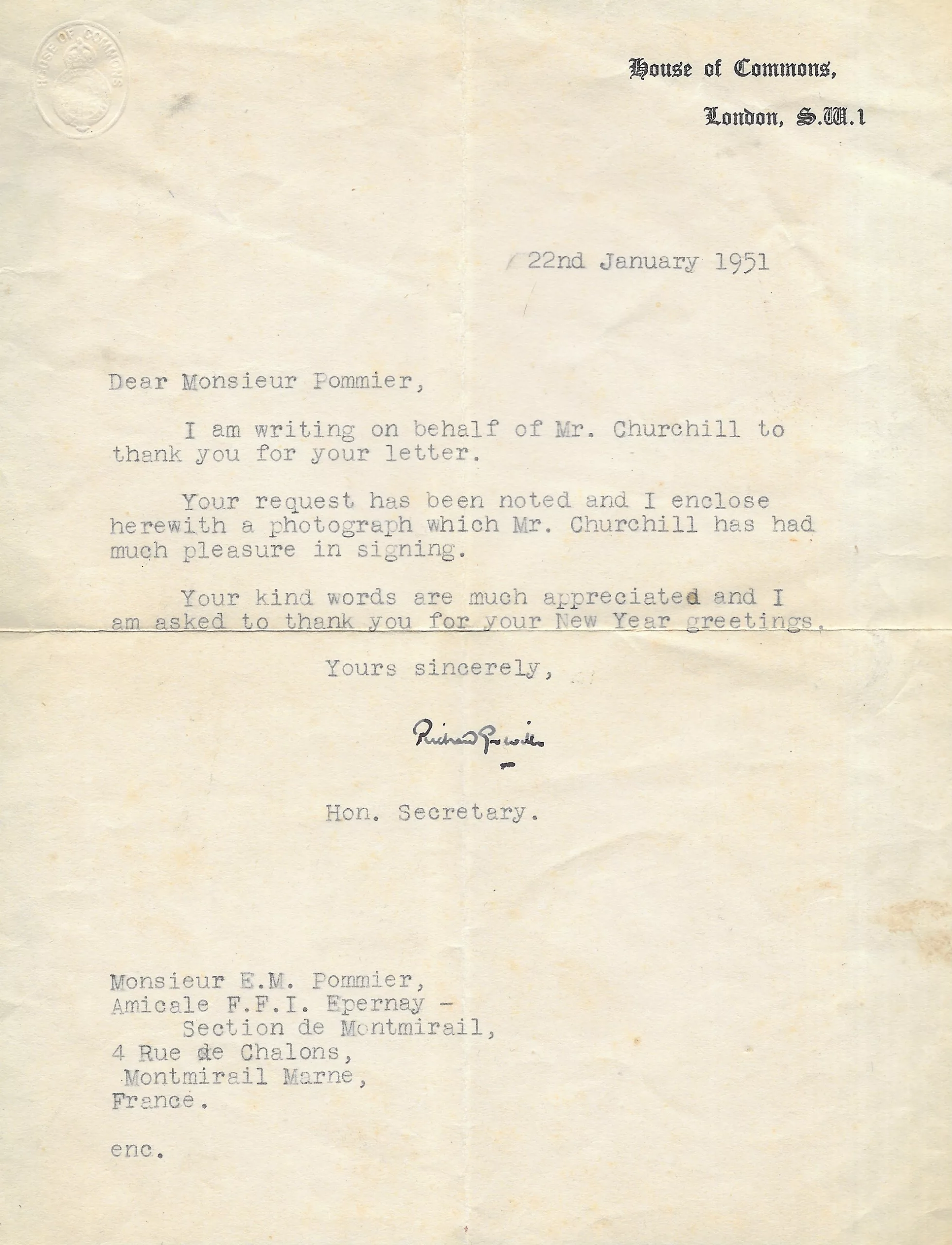
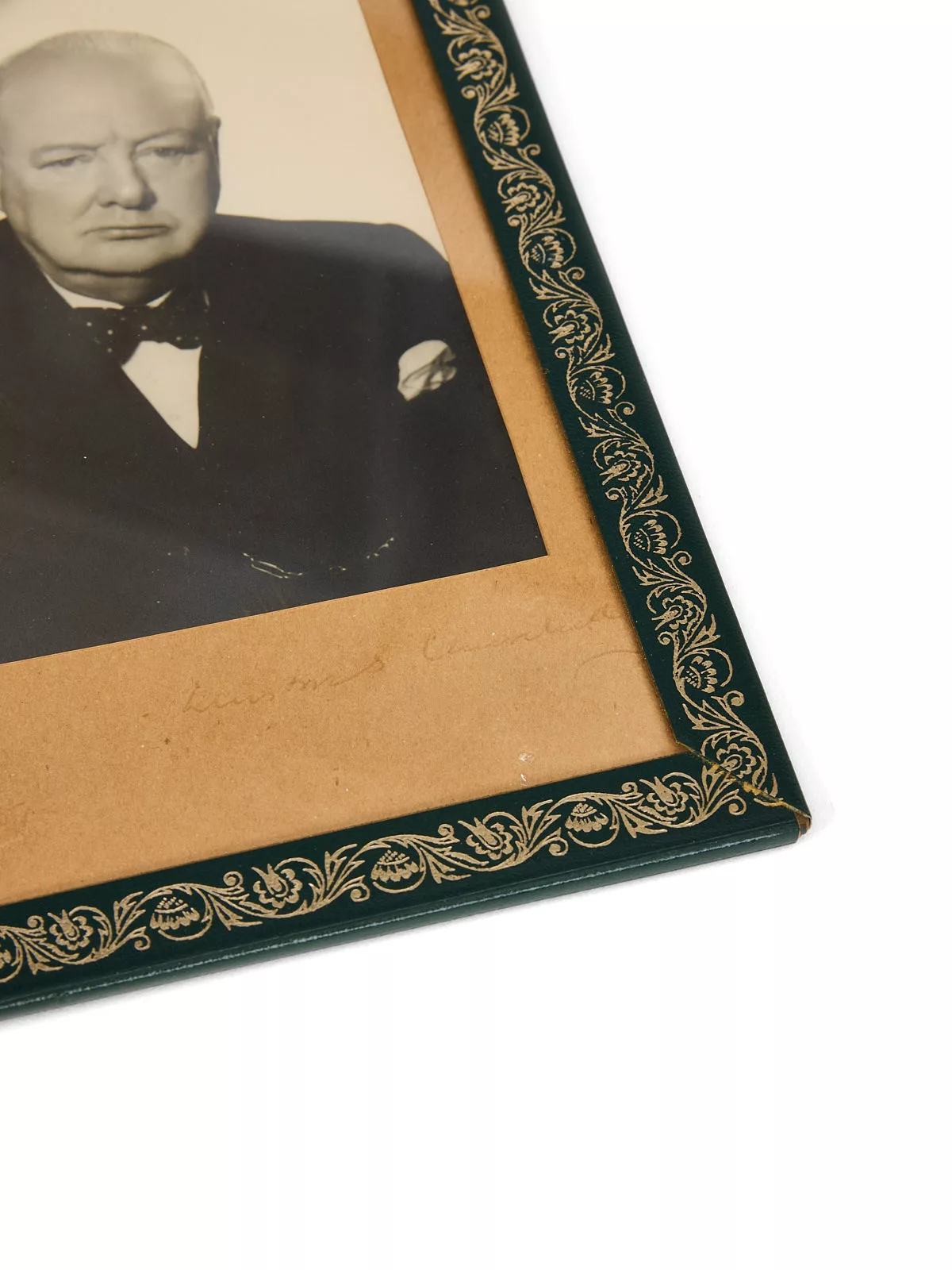
A rare print presented by Winston Churchill: it bears, in the lower margin, Churchill's signature to E. M. Pommier, a member of the French Resistance. A letter from Churchill's private secretary has been preserved on the verso, certifying that this photograph and the signature were sent to Pommier with the compliments of the Prime Minister.
Florence Vivienne Entwistle began her career in photography in 1934, assisting her husband, Ernest Entwistle, and her son, Antony. She opened her own studio in the late 1930s and specialized in portraits of well-known figures. Her connection with the Churchills went beyond a purely professional relationship: in October 1949, the Churchills’ daughter, Sarah, married Vivienne’s son, Antony. The Churchills “learned of the marriage… from the newspapers and were very upset about it… especially Clementine, who took it very badly.” Nonetheless, on 19 December 1949, the Churchills met the Viviennes and, “after an enjoyable lunch together, Florence Vivienne took the portrait of Winston Churchill in her Piccadilly studio” (Gilbert, Vol. VIII, p. 496). Churchill liked the portrait so much that he used it the following year for the February 1950 general election campaign, and it became one of the Prime Minister’s most famous portraits. Florence Vivienne was known for requiring her sitters to come to her studio, and the dust jacket of her autobiography (They Came to My Studio, published in 1956) is illustrated with this very photograph. Vivienne recalls (p. 16) how iconic this image became, noting that it was at the time the only photograph she had taken of Churchill.
The National Portrait Gallery holds 214 portraits by Vivienne, including this one (14 in total of the Churchill family, most taken at their country home, Chartwell).