


Capitale de la douleur
One of 109 deluxe réimposé copies on Lafuma-Navarre laid paper (no. 85).
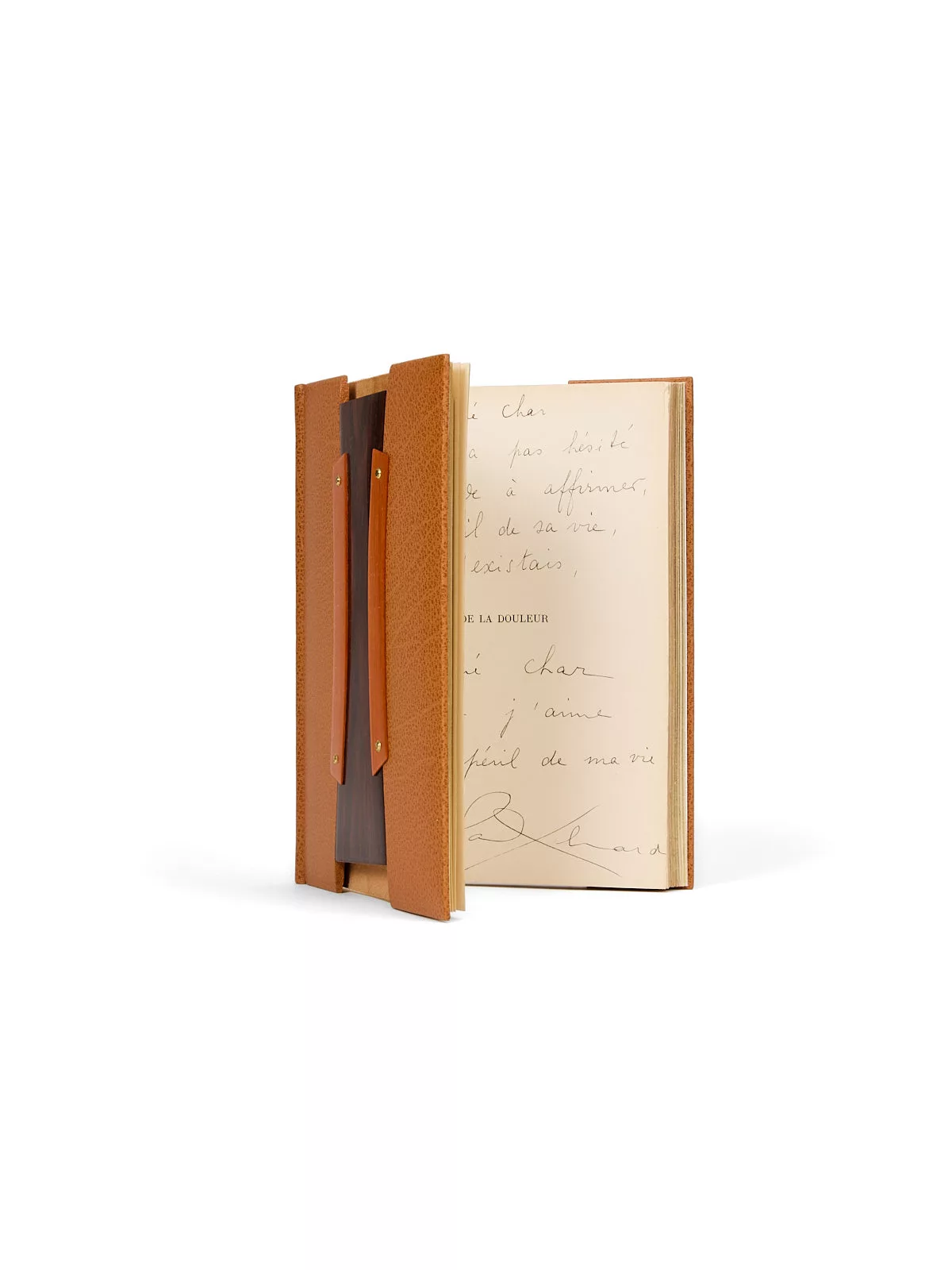
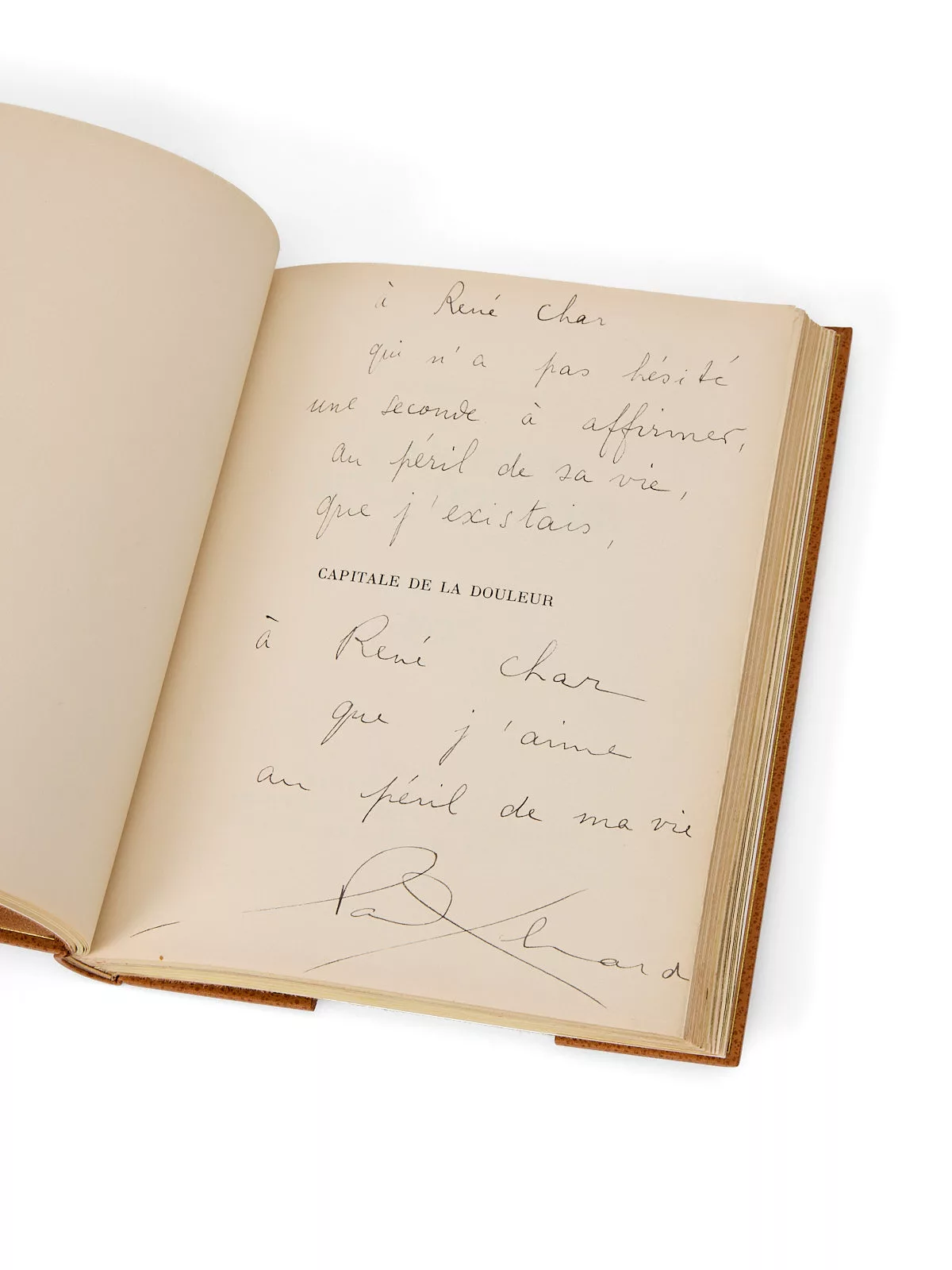
Signed presentation inscription: “à René Char qui n'a pas hésité une seconde à affirmer au péril de sa vie, que j'existais ; à René Char que j'aime au péril de ma vie, Paul Éluard.”
Mounted at front:
* An original photograph showing Paul Éluard and René Char together. It is annotated by René Char on the verso, “Nice, 1930.”
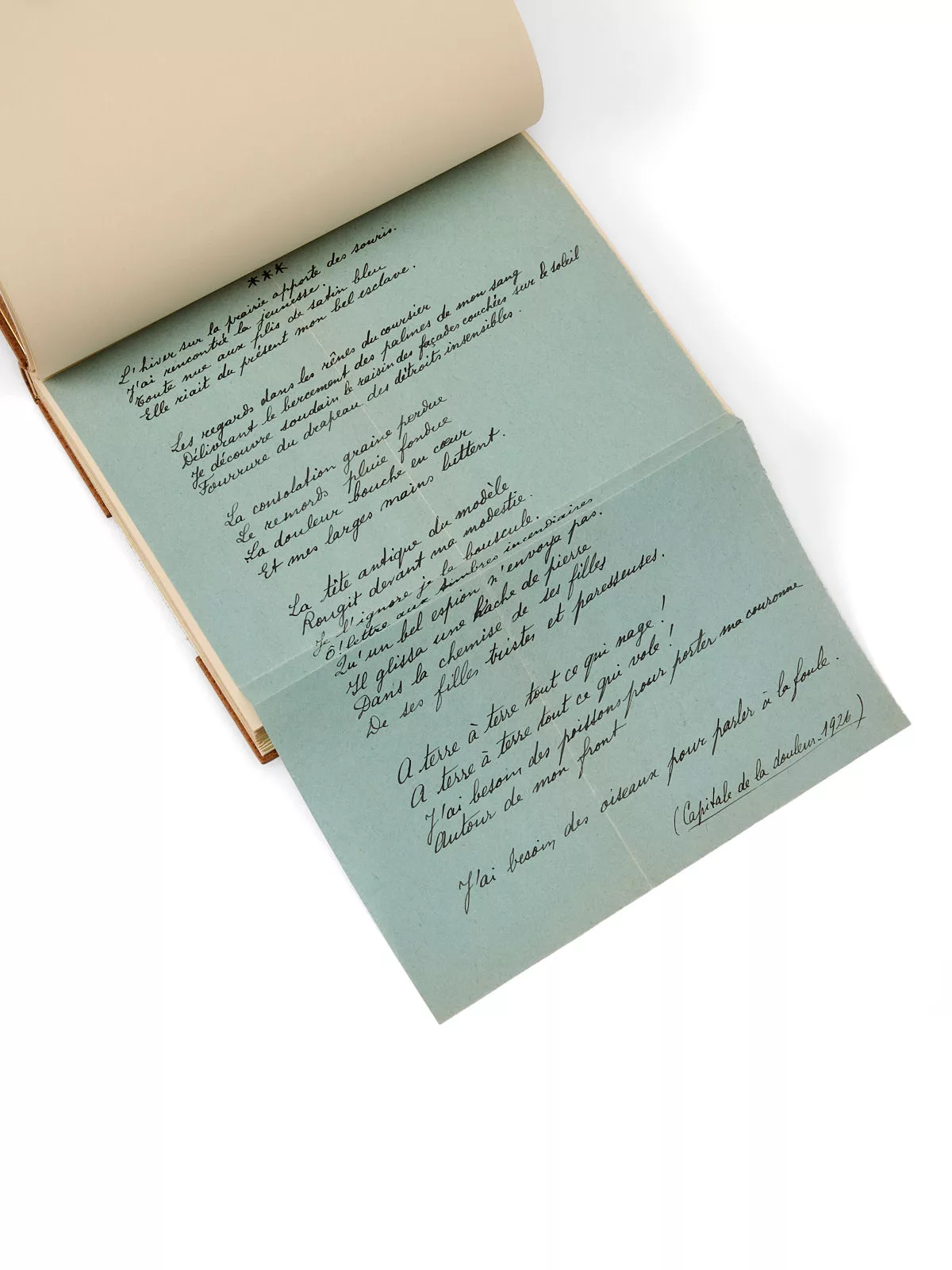
* Autograph poem signed “L'Hiver sur la prairie,” incorporated into the “Nouveaux poèmes” section (p. 116) — 1 leaf (225 x 280 mm) on blue paper.
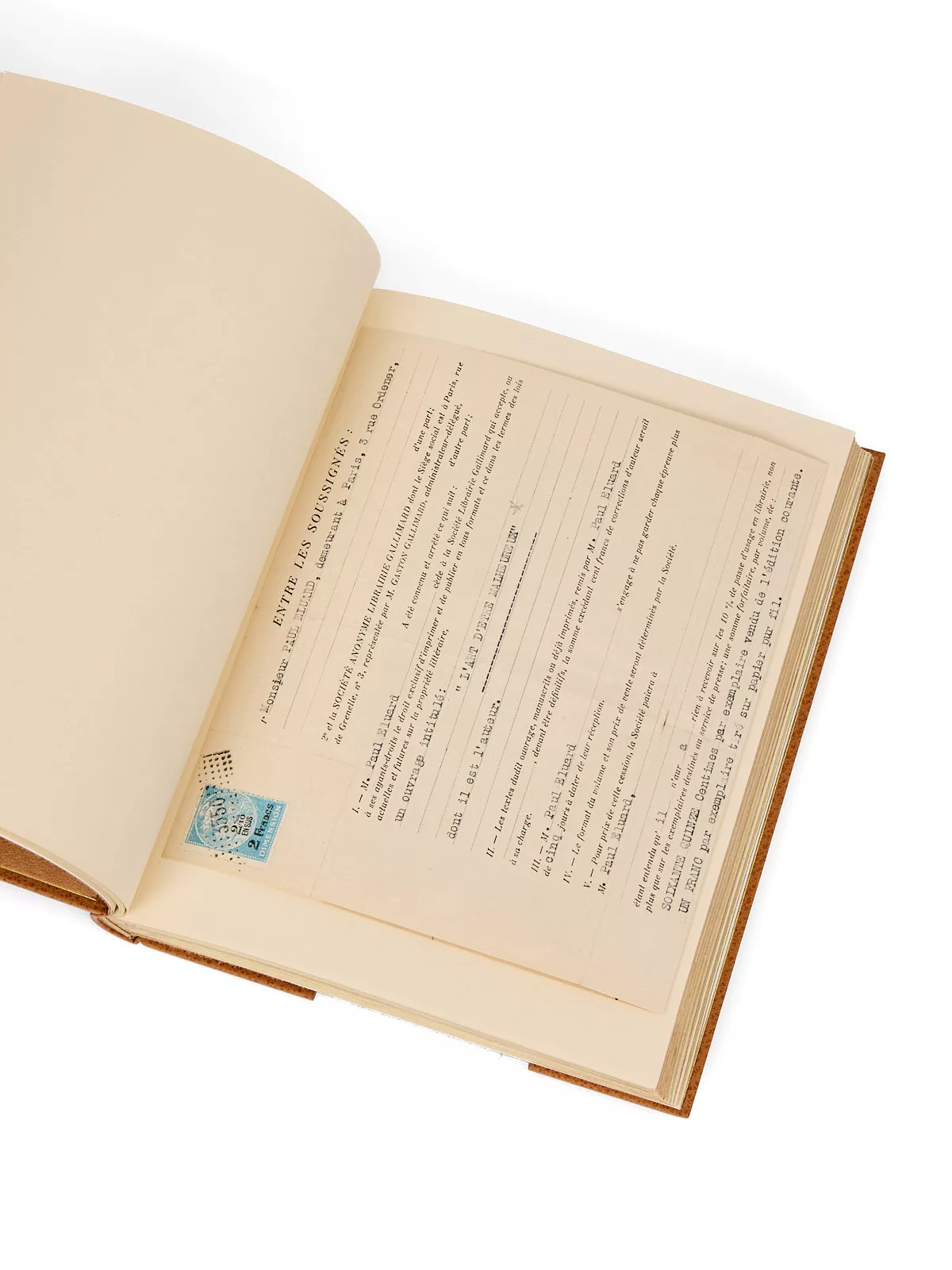
* The publishing contract for the collection under its original title “L'Art d'être malheureux” [corrected to its final title in René Char's hand], signed by Éluard and Gaston Gallimard and dated February 26, 1926.
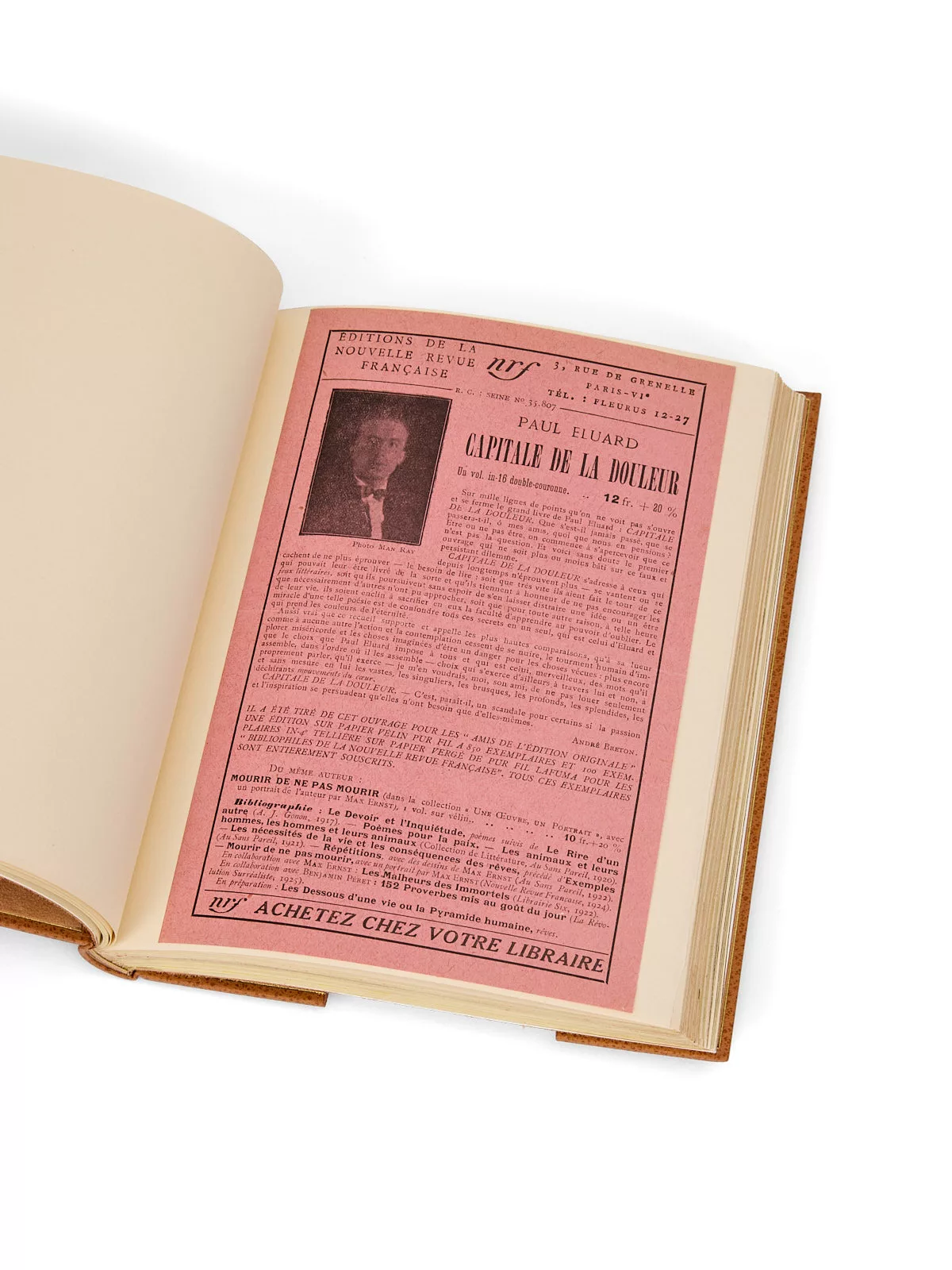
* The publisher's insert on pink paper, with the presentation text by André Breton, illustrated with a photographic portrait of Éluard by Man Ray.
Capitale de la douleur is unquestionably Paul Éluard’s first major collection, a key volume that would remain one of the most widely read books of poetry of the twentieth century.
The collection traces a sentimental and poetic itinerary, distilling the entire evolution of the poetic forms Éluard had tested up to that point. The pain in question is that of separation from Gala, then involved with Max Ernst — and soon with Dalí. The final section is written for her, forming a song of sorrow, passion and revolt in which purity, grace, absence, longing, desire and the fear of separation resurface: “Le front aux vitres comme font les veilleurs de chagrin / Je te cherche par delà l’attente / Par-delà moi-même / Et je ne sais plus tant je t’aime / Lequel de nous deux est absent.”
On its release — the achevé d’imprimer is dated September 8 — the promotional band around the volume announced: “Allez-y voir vous-mêmes, si vous ne voulez pas me croire,” echoing the closing injunction of the last of the Comte de Lautréamont’s Chants de Maldoror. A fitting invitation to discover the contents of Capitale de la douleur: one hundred and thirteen poems, arranged in four independent sections. The first two draw on earlier collections: a few texts from Les Nécessités de la vie et les Conséquences des rêves (1921), from Répétitions (1922, thirty-five poems from the Dada period, illustrated with collages by Max Ernst), from Mourir de ne pas mourir (1924, though without its epigraph or dedication to Breton), and the bulk of the booklet Au défaut du silence (already composed for Gala and originally published secretly in 1925, anonymously illustrated by Max Ernst). Éluard added Les Petits Justes (eleven short poems modeled on Japanese haiku) and, above all, the Nouveaux Poèmes (forty-five previously unpublished poems, again dedicated to Gala), the last two of which are among Éluard’s most celebrated: “La courbe de tes yeux” and “Celle de toujours, toute.” André Breton wrote the publisher’s insert (also preserved): “more than the choice which Paul Éluard imposes on us all, the marvelous choice of the words he assembles, and the order in which he assembles them… I would reproach myself, as his friend, for not praising in him, without measure, the vast, singular, sudden, profound, splendid, heartrending movements of the heart.”
Éluard thus established himself as one of the committed practitioners of the poetry emerging from nascent Surrealism. Breton had recognized this early on: in issue no. 1 of La Révolution surréaliste of December 1, 1924, he chose to include among the inaugural texts a poem by Éluard, “L’hiver sur la prairie.”
The copy contains, as its only added autograph piece, the manuscript of this poem. René Char’s ownership is documented from the outset, and it is cited by Lucien Scheler in the notes to his 1968 Pléiade edition, quoting four unpublished variants, although the copy has never left the poet’s collection.
The volume also contains the publishing contract with Gaston Gallimard, signed February 26, 1926, which documents the conditions of publication. At that time the collection was to appear under the title L’Art d’être malheureux. Given to René Char, who annotated it regarding the change of title, Éluard decided the following summer to change the title to Capitale de la douleur, to the regret of his friend Jean Paulhan, who wrote to him: “Gaston Gallimard is most unhappy that you wish to change the title: the book has already been announced, subscriptions have already been received, etc. And I myself regret L’Art d’être malheureux. Won’t you agree to keep it?” (letter reproduced in Robert Valette, Éluard. Livre d’identité, Paris, Tchou, 1967). Éluard would not be moved, and the collection was completed in print on September 8, 1926.
Among the notable presentation copies are those given to René Crevel, Théodore Fraenkel, Louis Aragon and André Breton at the time of publication, and, later, to Gala: first in 1930, then, once the breakup had been absorbed, a second copy in 1931.
The copy given to René Char dates from this second period, yet remains one of the most significant: the two poets discovered each other in the autumn of 1929, when Char sent Éluard a copy of his second published collection, Arsenal. Charmed, Éluard decided to visit him that autumn at L’Isle-sur-la-Sorgue, staying three weeks, before returning the favor and inviting Char to Paris in November. Char stayed with Éluard on the rue Becquerel and met Louis Aragon, André Breton, René Crevel and their circle, joining the Surrealist group. On February 14, 1930, a Valentine’s evening, the Surrealists did not write a love letter but instead organized an expedition to a Montparnasse nightclub that had named itself “Maldoror” — an insult, in their eyes, to Lautréamont. It is worth recalling that Éluard reportedly owned the “Isidore Ducasse manuscript,” a manuscript dated 1864 of the first Chant of Maldoror. During the brawl that ensued, René Char was wounded by a knife in the groin. The episode strengthened the bond between the two men, who then shared a free and exuberant life during which, in May 1930, on the boulevard Haussmann, they together met Maria Benz, known as Nusch. She moved in with Éluard shortly afterward — in 1934, René Char would serve as witness at their wedding.
Meanwhile, in that eventful year of 1930, came the famous spring journey to Avignon, where Breton, Char and Éluard wrote Ralentir Travaux. Back in Paris, the three men founded, in July, the review Le Surréalisme au service de la révolution; Char then returned south and spent the summer near Cannes with Nusch and Éluard, before sailing from Marseille to Barcelona to stay at Cadaqués with Salvador Dalí and Gala, who had by then become the painter’s new muse. It was during this stay on the Côte d’Azur that the photograph mounted at the front of this copy was taken, probably by Nusch, the only one accompanying them. Only two earlier photographs of Char and Éluard together are known, both taken during the Provence stay (one in Avignon, by Breton, the other at the Château de Lacoste, by Valentine Hugo).
A precious and moving copy, whose inscription speaks volumes: it may well allude to the brawl of February 14, since no other occasion readily explains such a phrase, even at a later date — unless it is, after all, simply a deferential and magnificent proof of friendship.
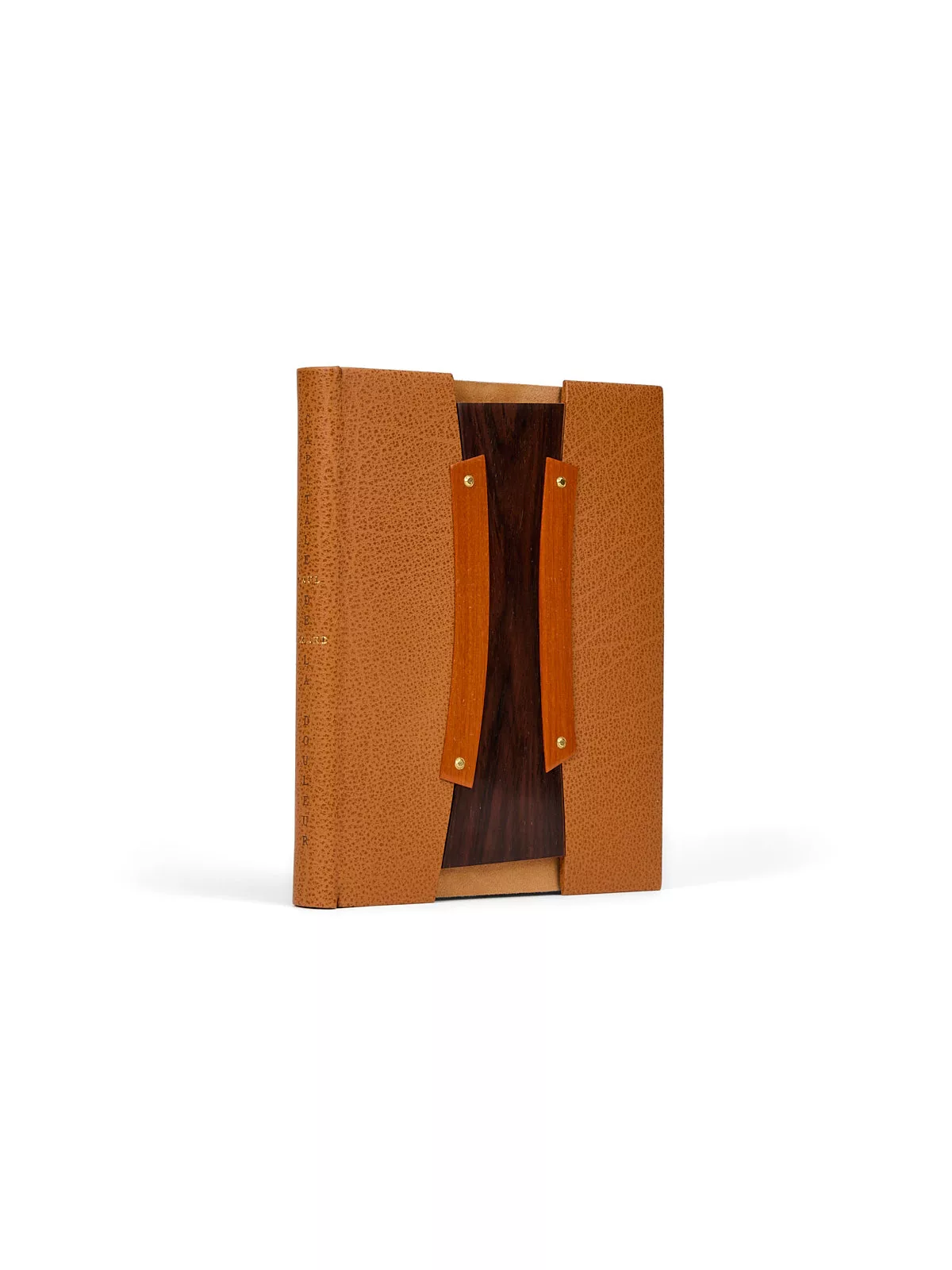
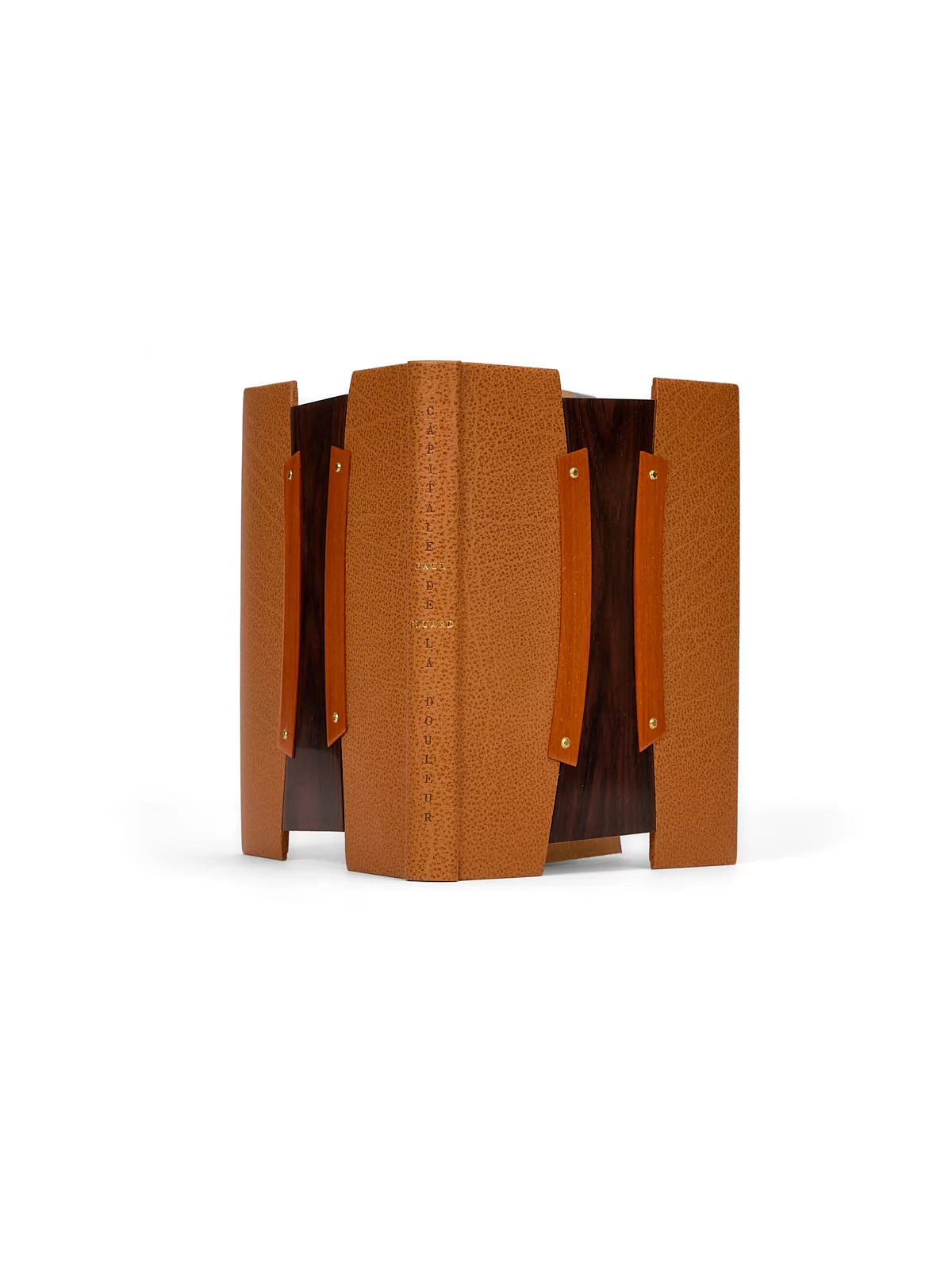
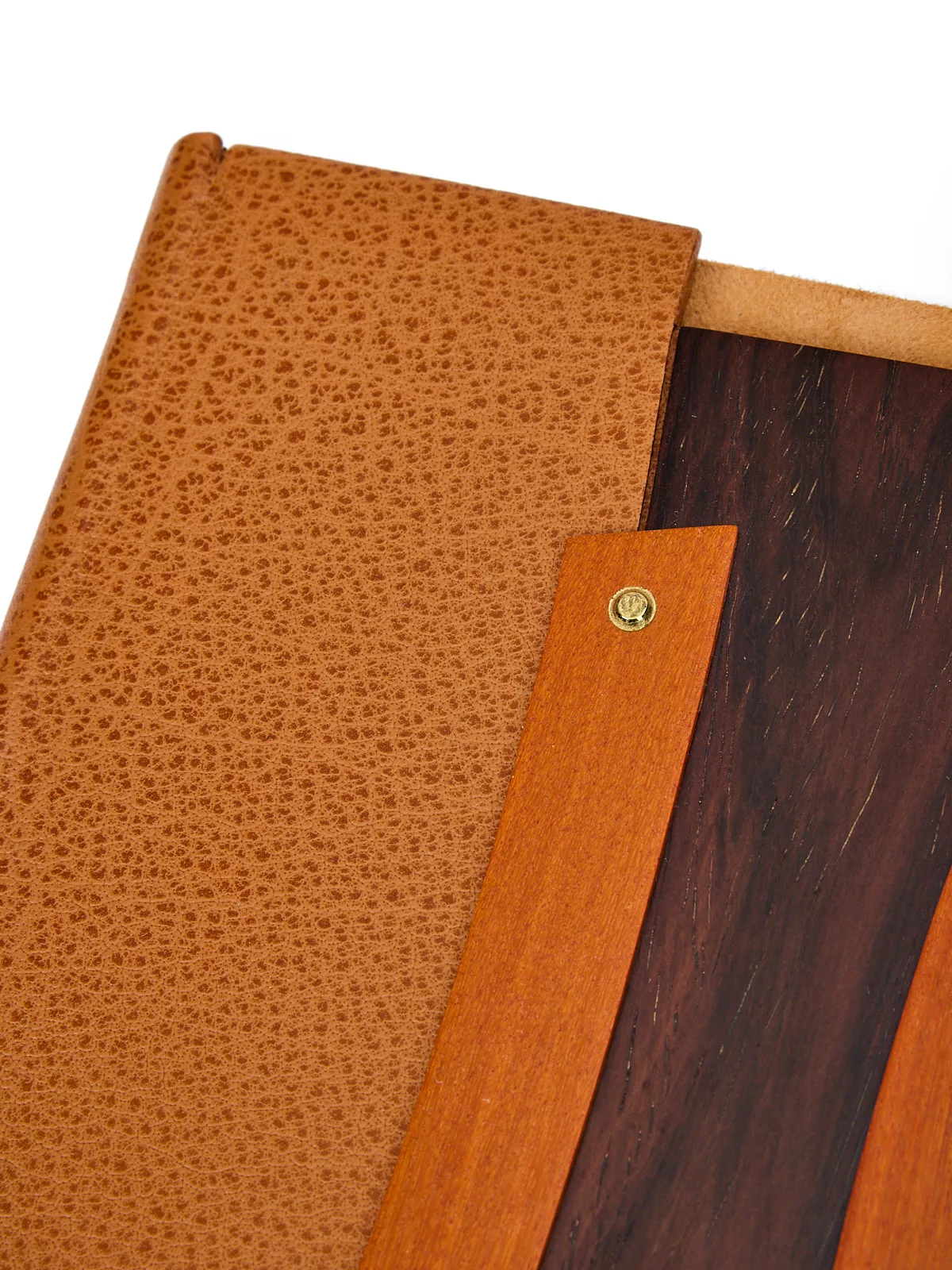
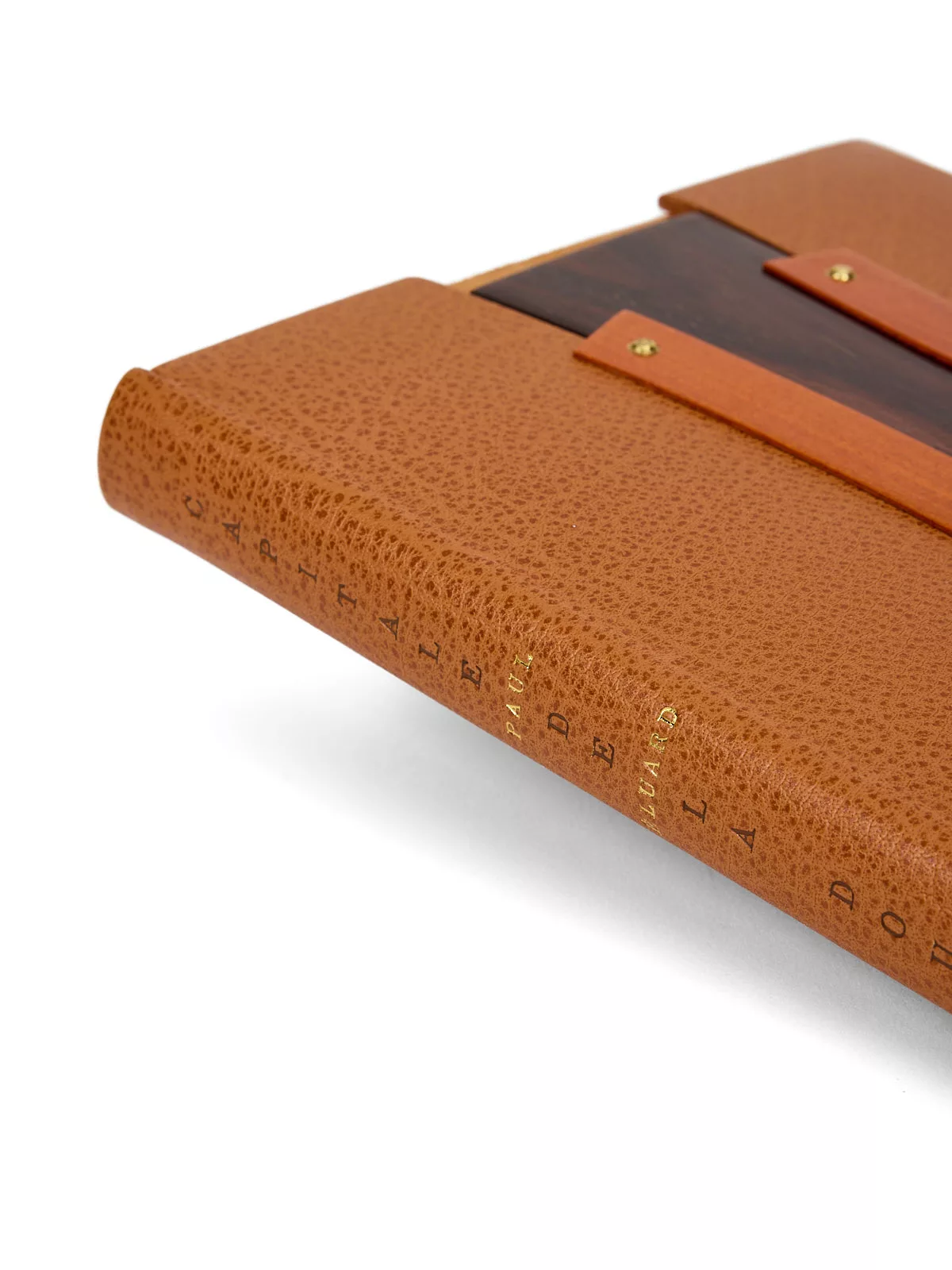
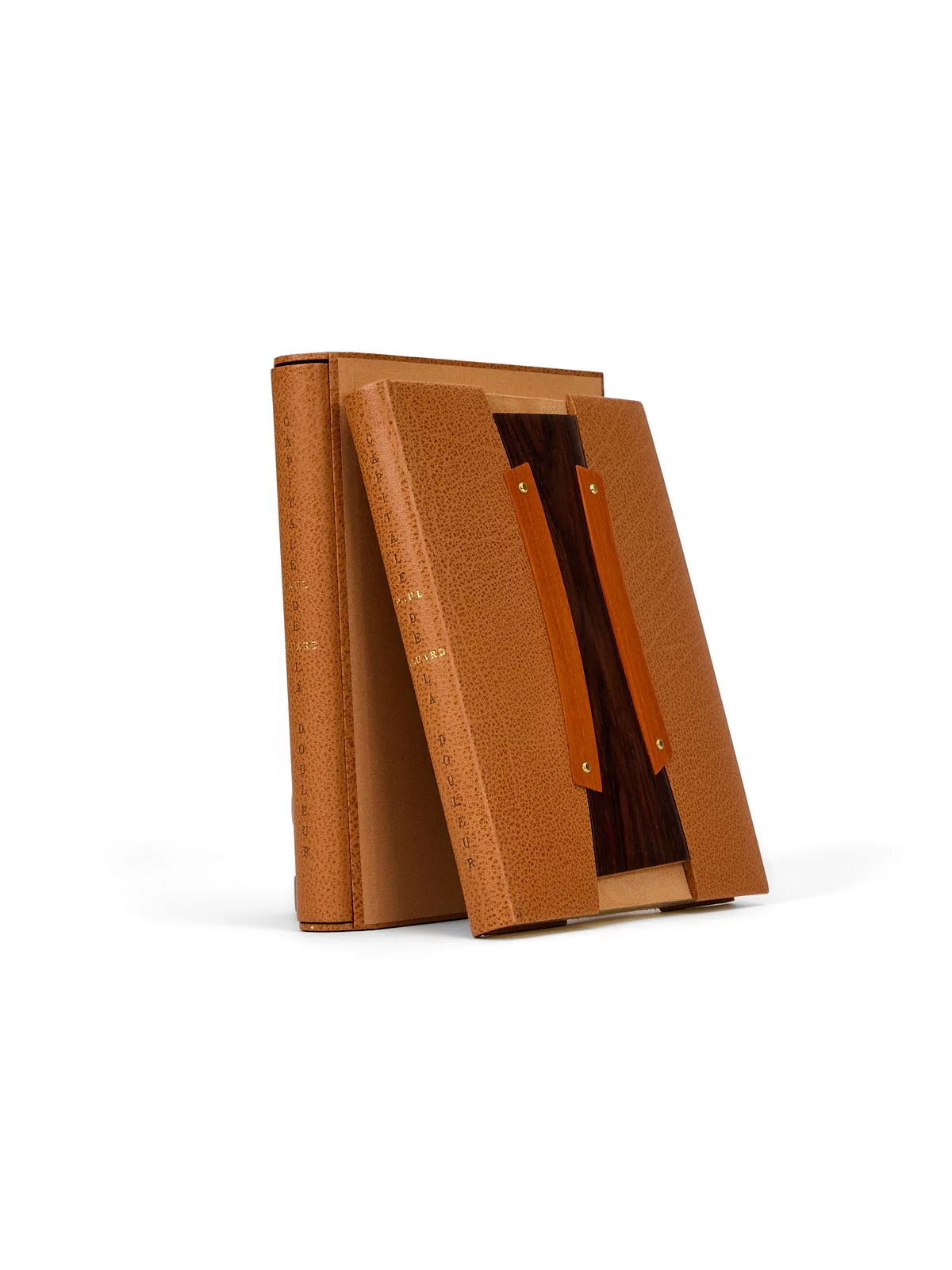
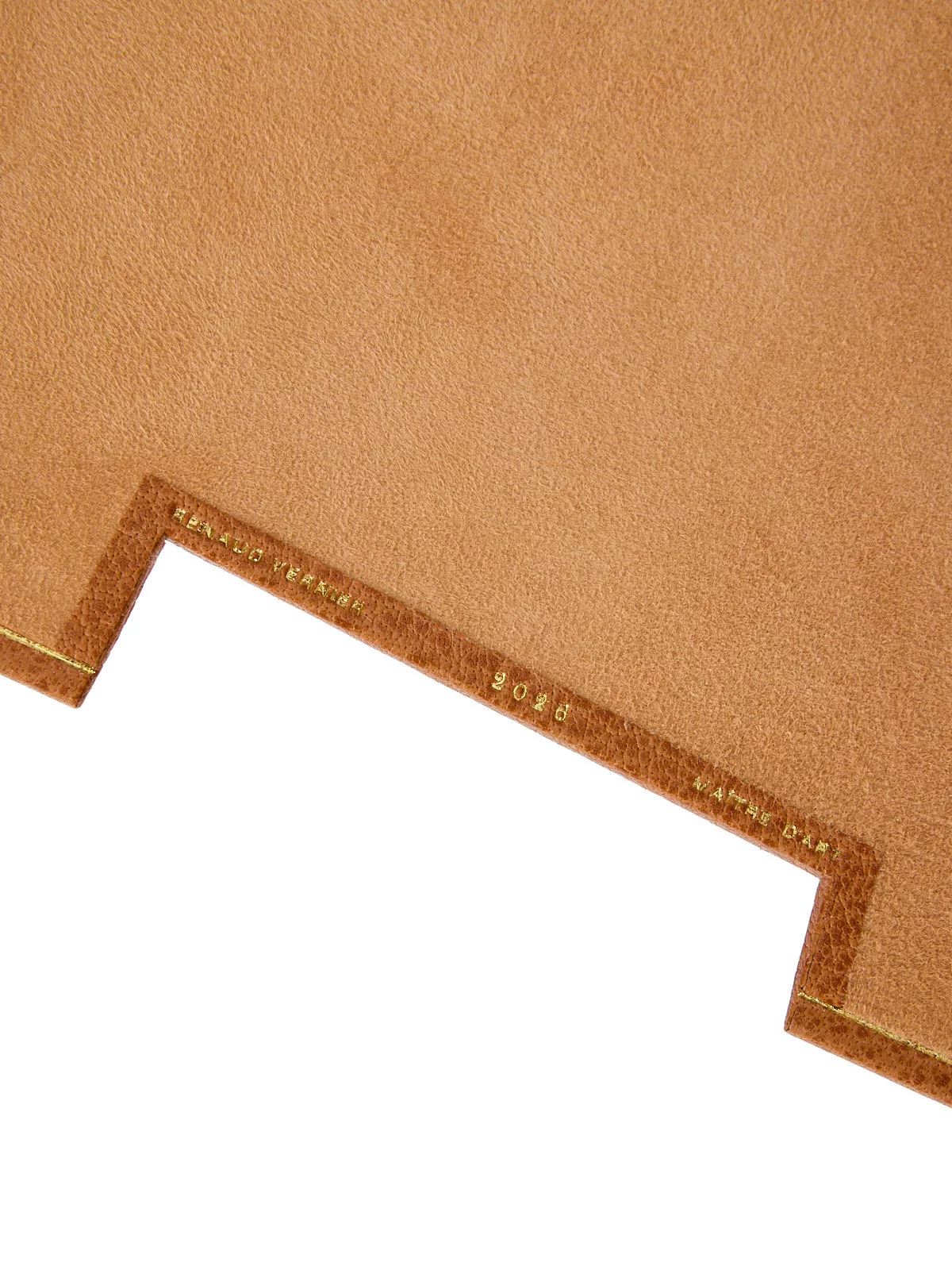
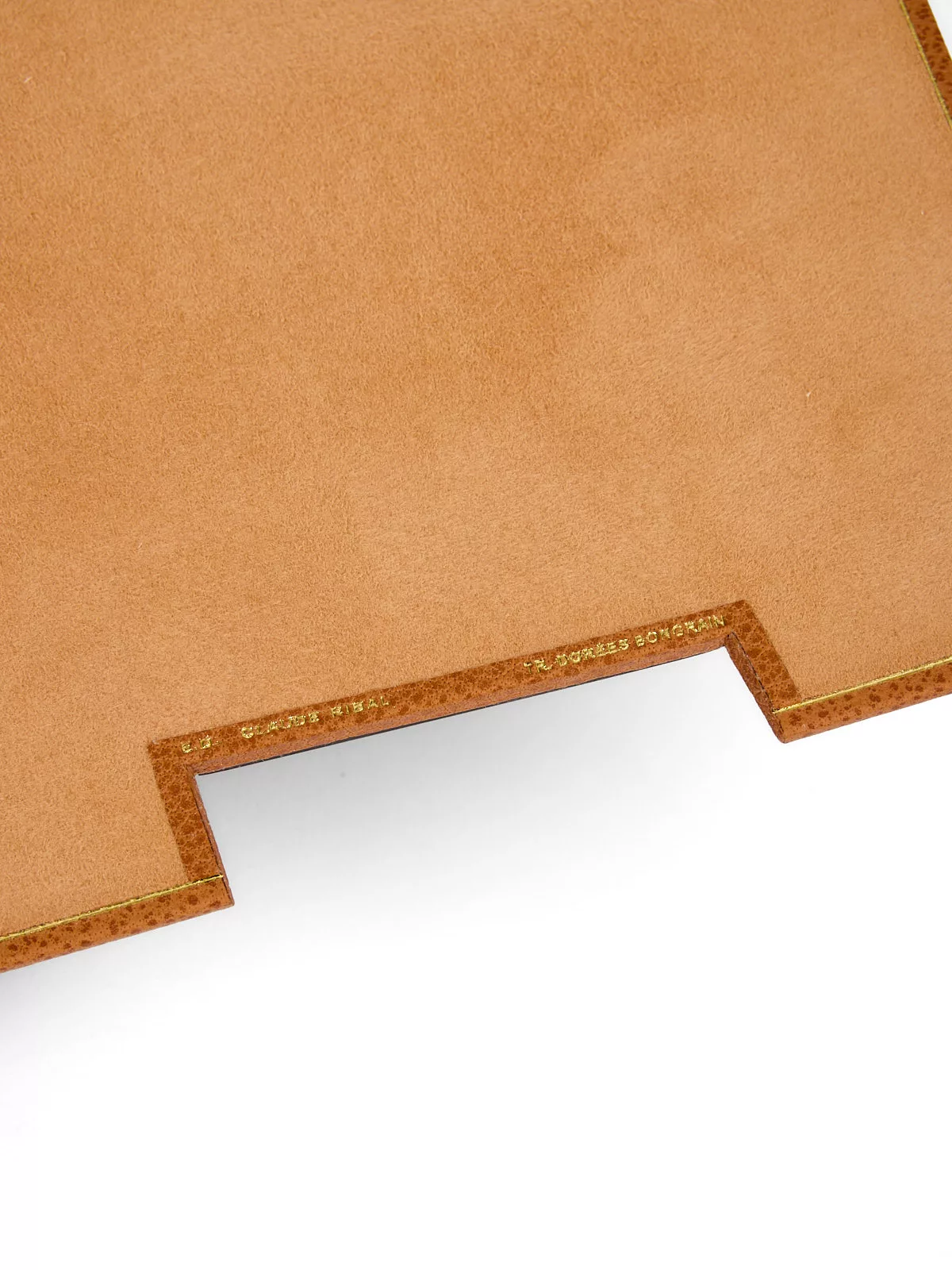
A striking binding designed and executed by Renaud Vernier and Claude Ribal, in buffalo hide and fine woods.
Provenance: René Char (presentation inscription); Pierre Leroy (Collection littéraire, Sotheby’s, June 28, 2002, lot 190, then in wrappers and without the photograph).
Bibliothèque nationale, En français dans le texte, 1990, no. 357; Œuvres complètes, La Pléiade, notes et variantes, p. 1380.