

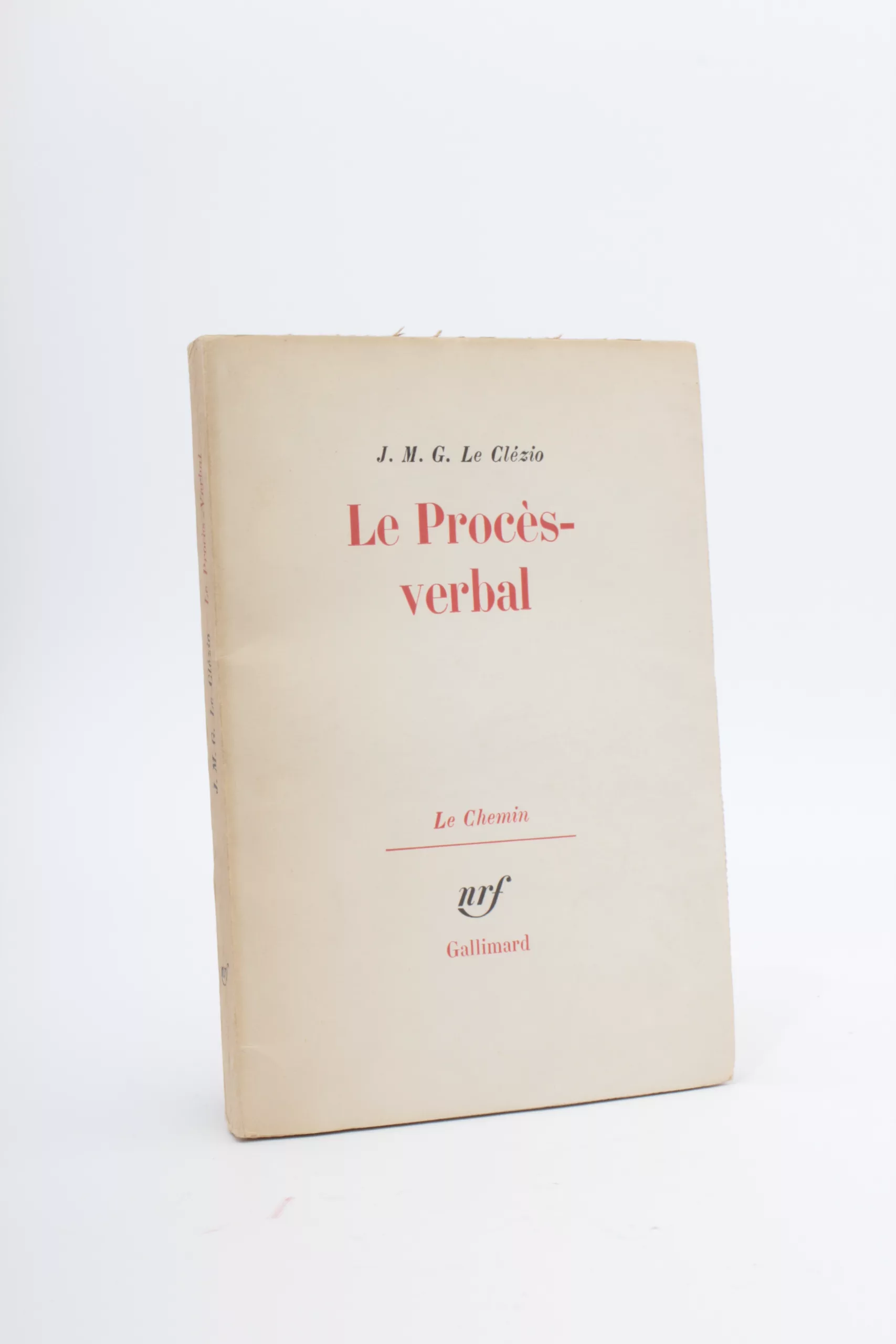
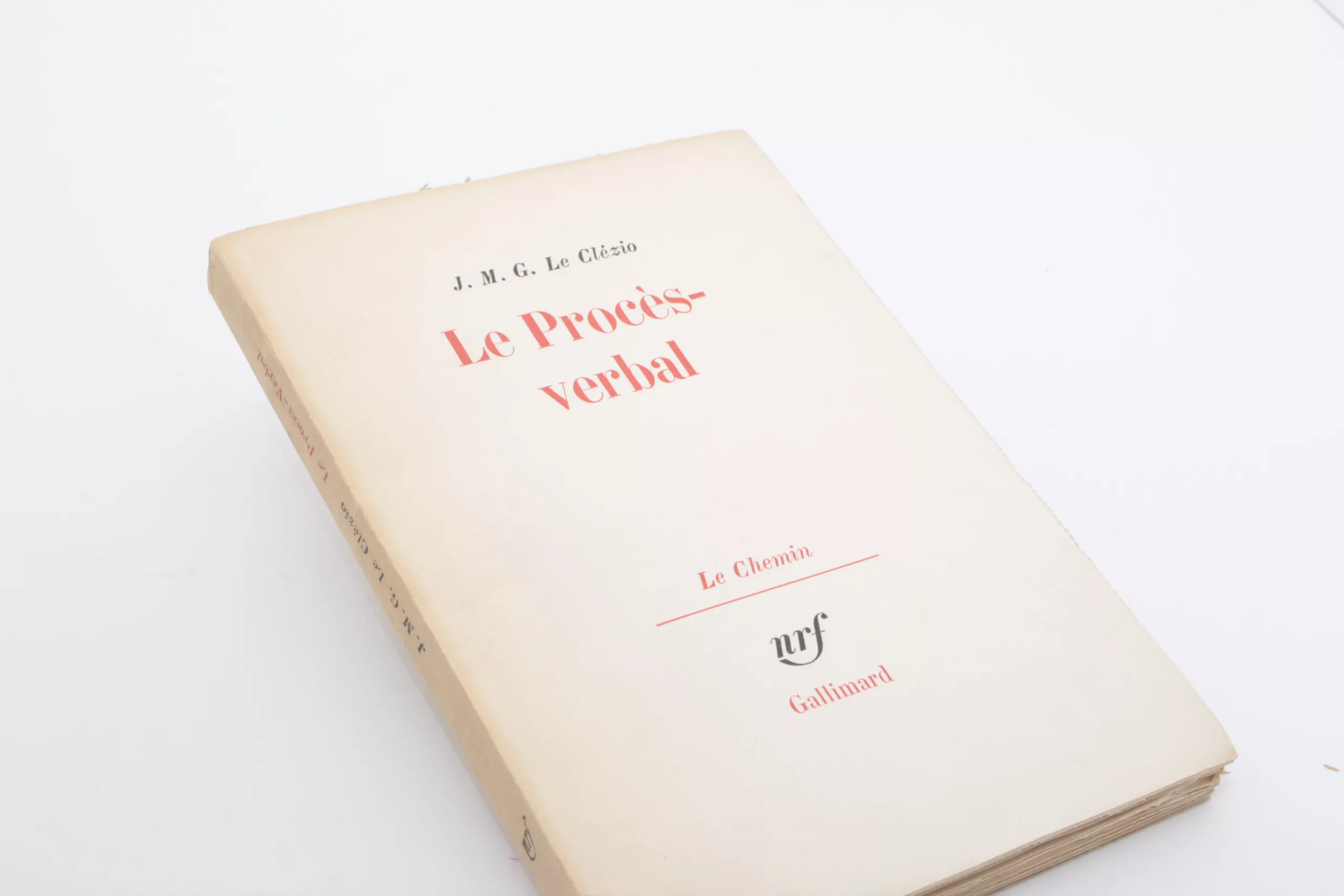
Le Procès-verbal
Press copy, stamped as such.
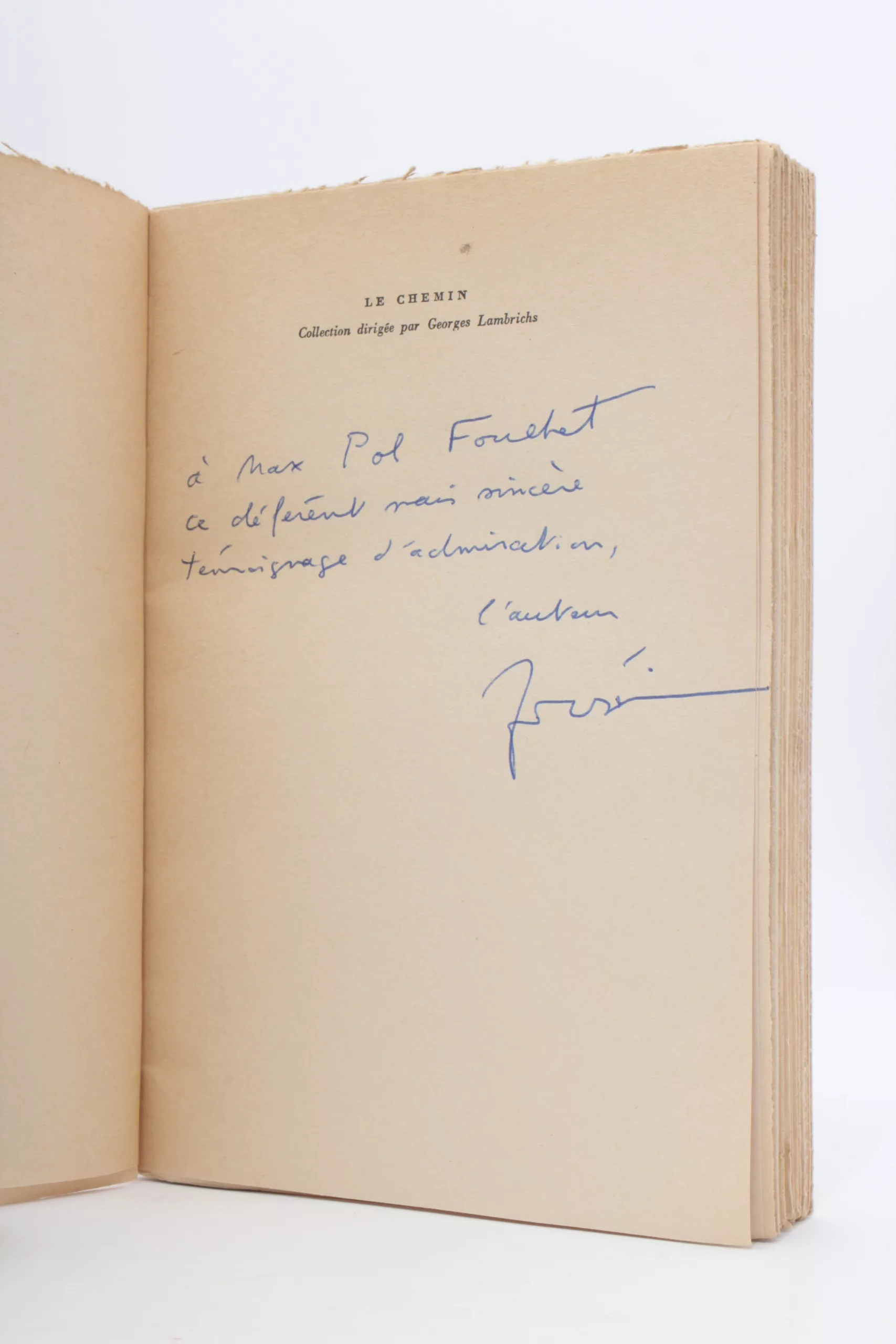
Presentation copy inscribed by Le Clézio to Max-Pol Fouchet: “À Max Pol-Fouchet, ce déférent mais sincère témoignage d’admiration, l’auteur, J.M.G. Le Clézio.”
Constructed like a puzzle, this novel tells “the story of a man who did not quite know whether he was leaving the army or a psychiatric asylum” and is, according to its author — then twenty-three years old — a work of adolescence. Speaking to the journalist Jacques-Pierre Amette of Le Point, the novelist explained the context of its writing: “It was a strange time. I began writing this book while the Algerian War was still going on, with the threat of conscription hanging over young men. One of my friends, a very artistic, very rebellious boy named Vincent, was sent off at the end of 1960 because of his poor grades, and was killed almost immediately in an ambush. Another was smuggling funds for the FLN. Another came back on leave with his mind wiped clean, talking only of bazookas and ‘special drums’ (as napalm was euphemistically called). (…) So I wrote Le Procès-verbal in fragments, at the back of a café, mixing in snatches of overheard conversation, images, newspaper clippings. Day by day. The novel was finished after the Évian Accords, when I understood that the threat was over, that we were going to live. It remained a manuscript for a little over a year…”