

Colline
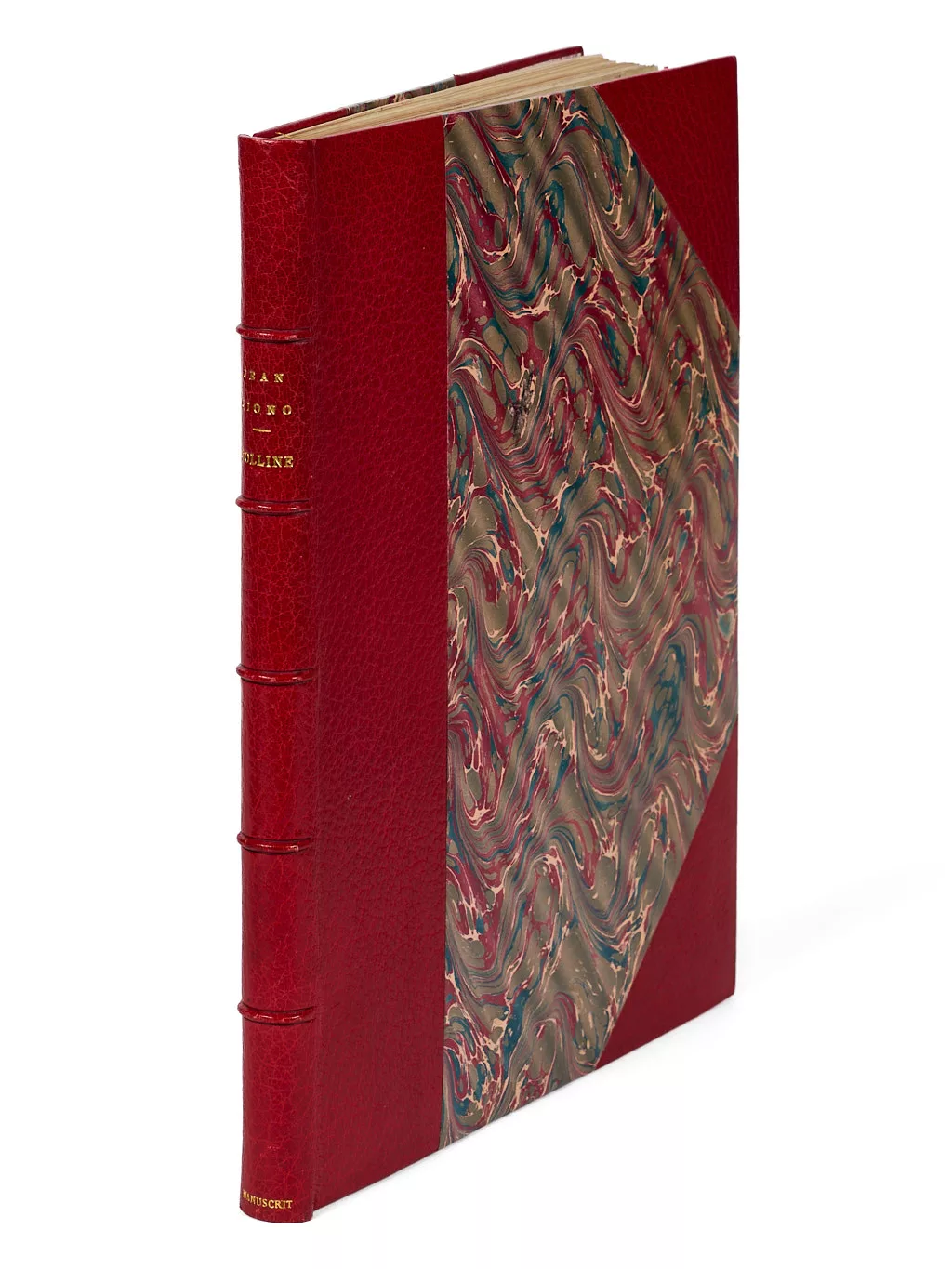
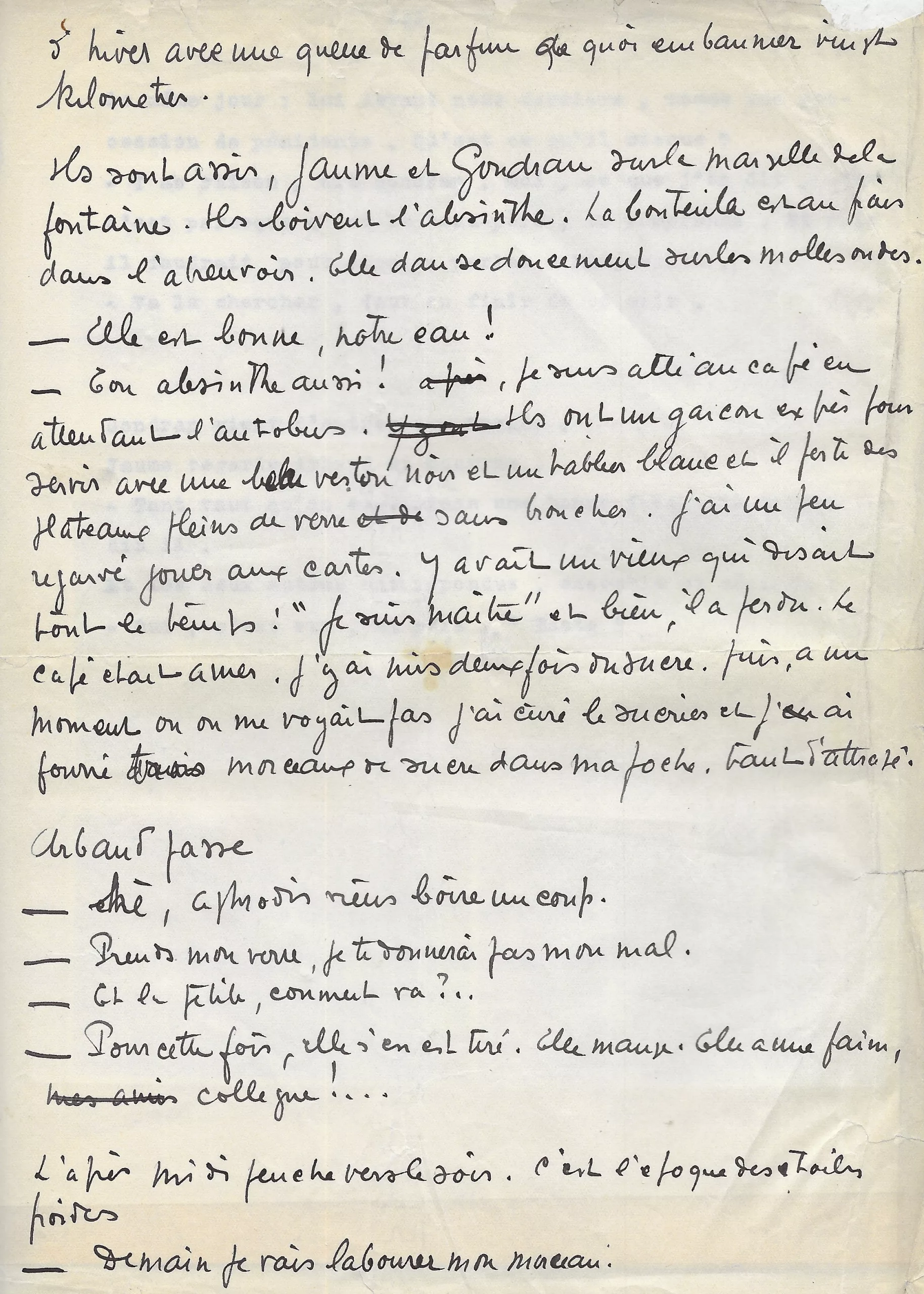
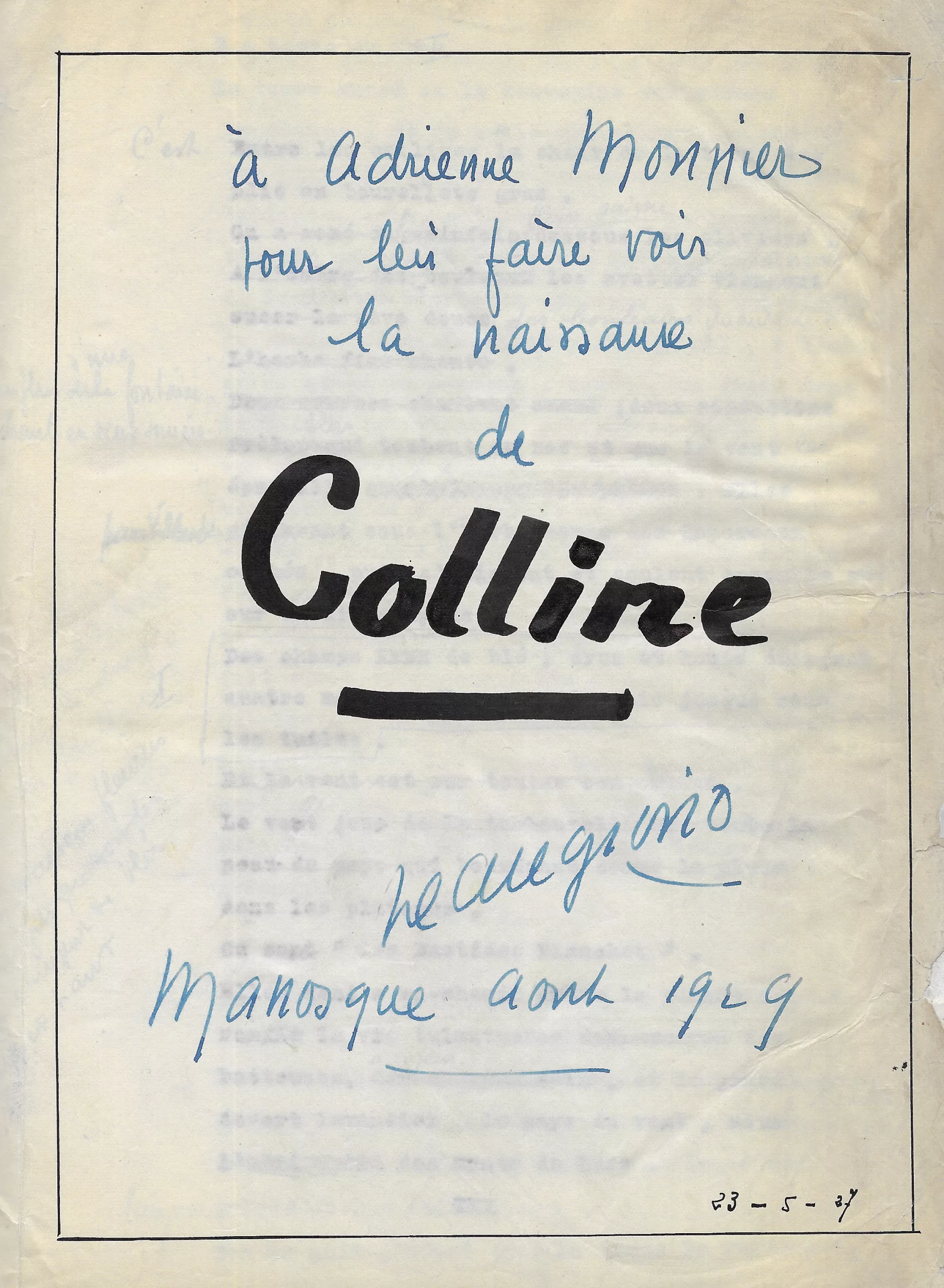
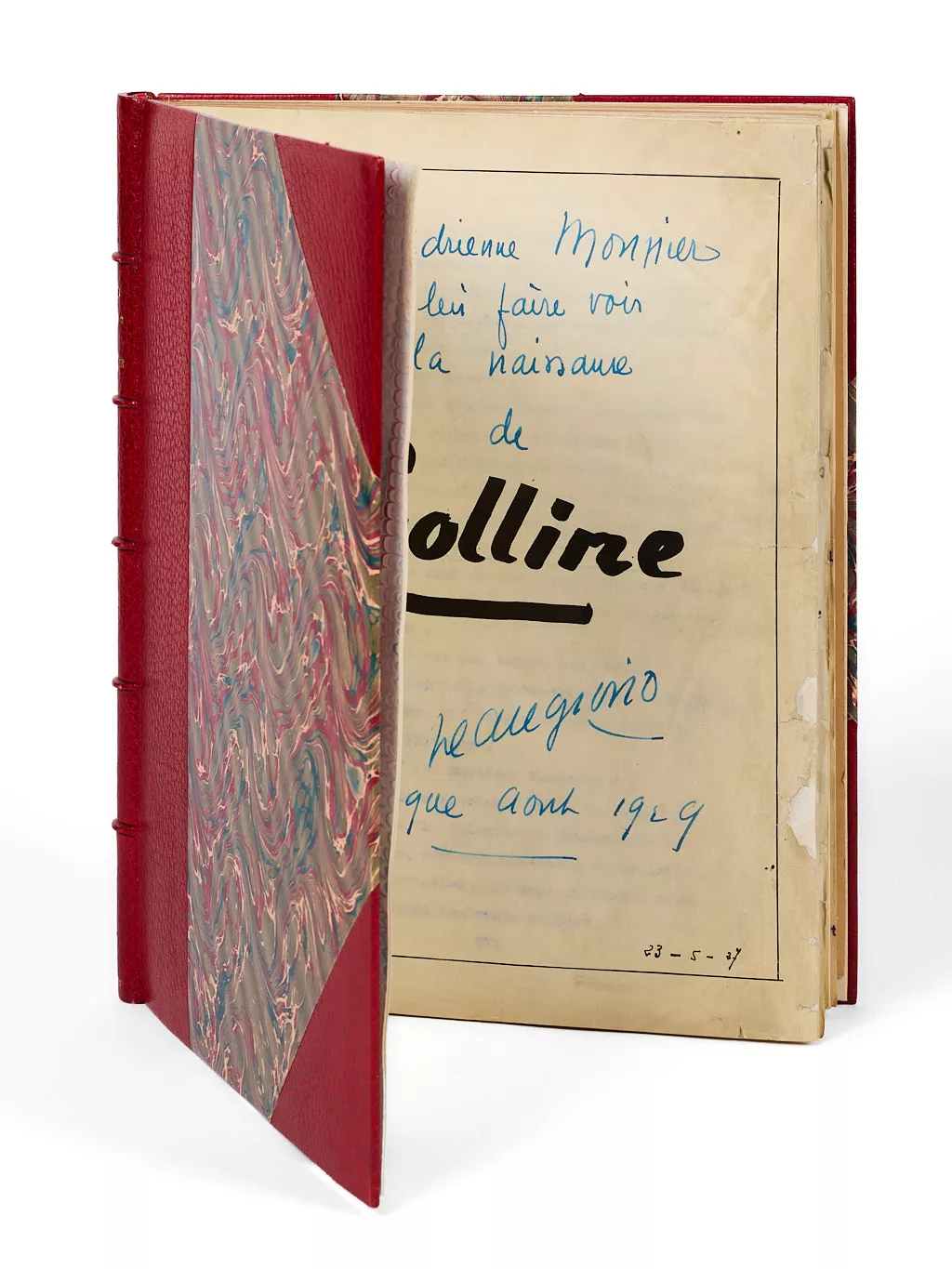
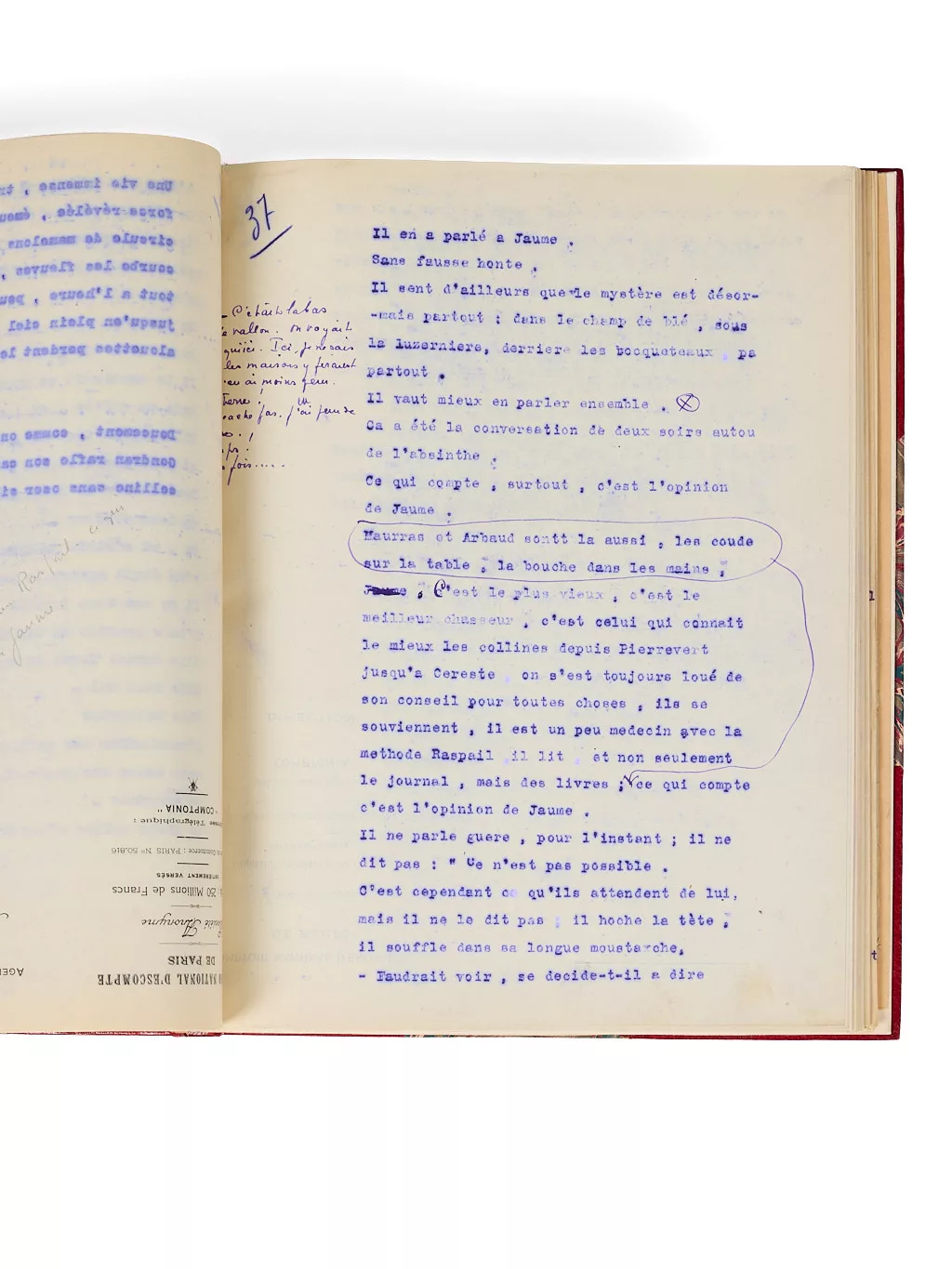
Carbon typescript of the first draft, with numerous corrections, dated by Giono on the title page 23 May 1927. Giono corrected his text throughout (some pages show more than 15 changes, others are largely rewritten) and made substantial autograph additions on the versos or on inserted manuscript leaves (5 leaves added between leaves 4 and 8, one of them with its verso entirely in manuscript; 4 manuscript leaves are inserted between leaves 15–16, 31–32, 100–101, and after leaf 151; the rectos of leaves 33 and 87 are in manuscript). The leaves come from the Comptoir National d'Escompte de Marseille (some bearing its letterhead), where Jean Giono was then employed.
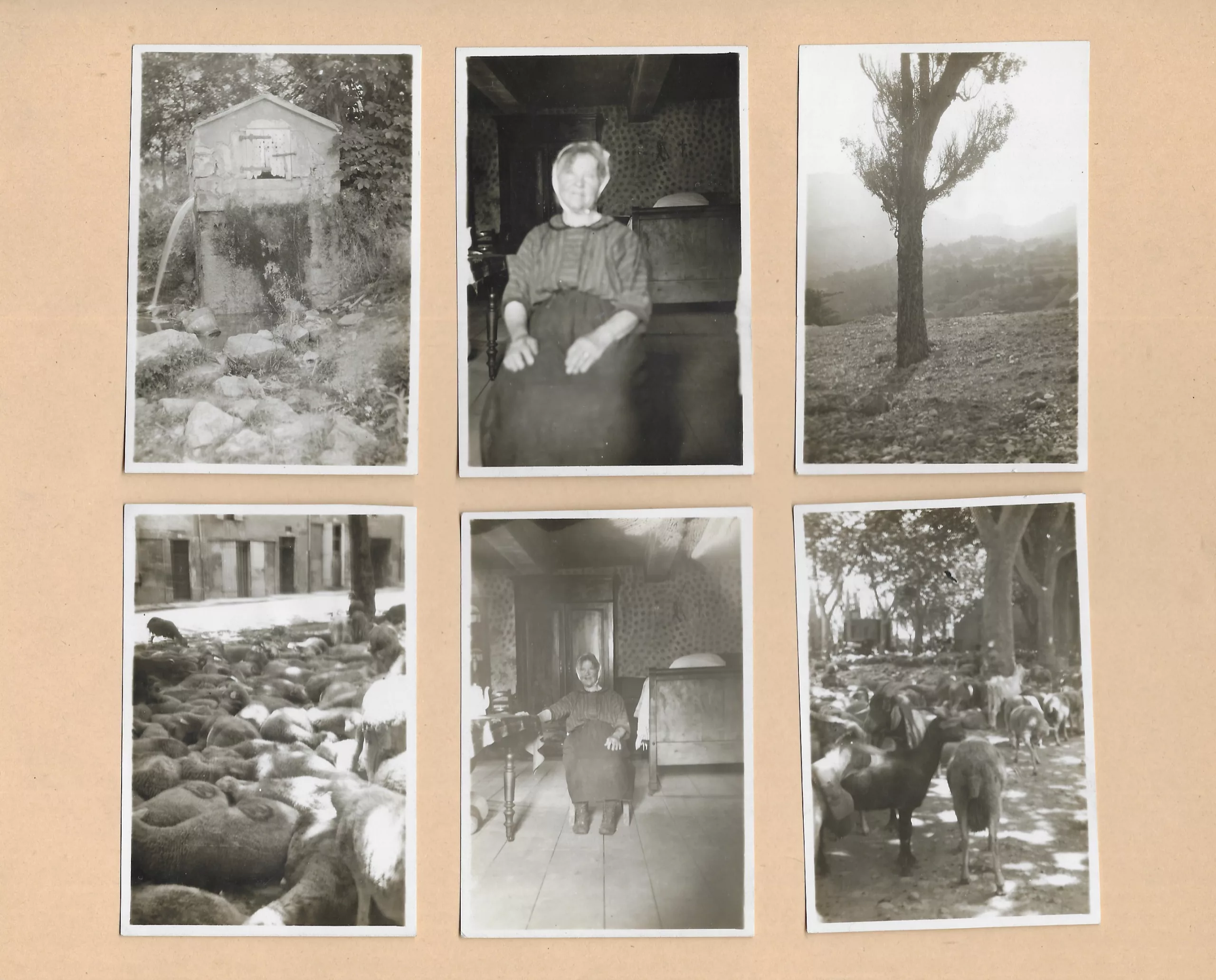
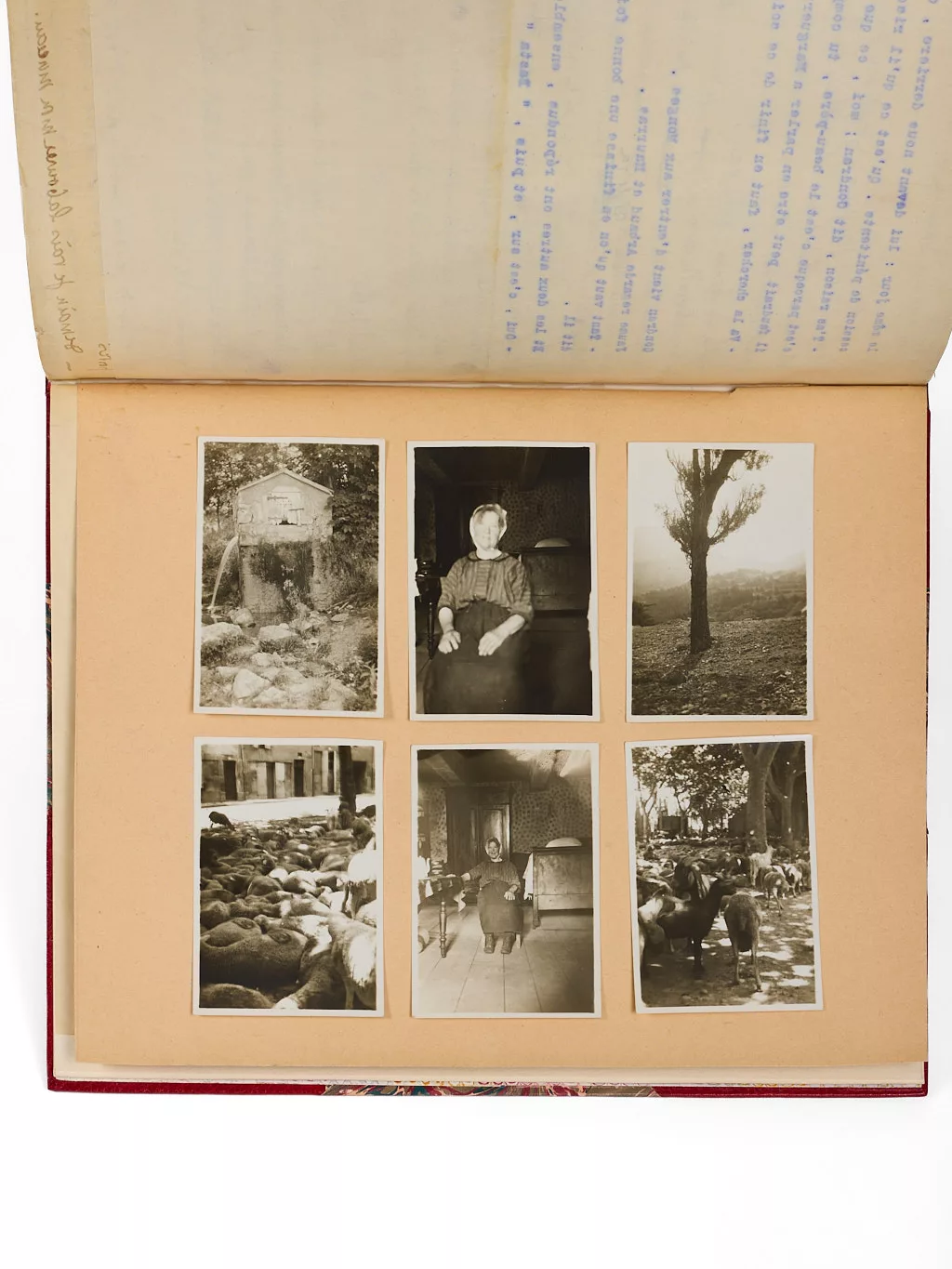
Six original photographs (86 x 60 mm each), taken by Giono at “les bastides blanches,” the hamlet where he set the action of Colline, have been added at the end of the volume, mounted on a cardboard leaf.
Daniel Halévy was the first to receive the manuscript of Colline, in January 1928, having earlier declined Naissance de l’Odyssée, which he felt “smelled a little too much of literary artifice.” But Halévy sensed he was in the presence of a true writer and asked to see the manuscript of another work: this was the first draft of Colline, which Giono was then completing, and of which he had at least two typescript versions. In May 1928 a contract was signed for this novel and two more to come. The text then passed to Jean Paulhan, who arranged a partial pre-publication in the review Commerce, and then, in June, on his recommendation, in Gaston Gallimard’s Nouvelle Revue Française. Gallimard, enthusiastic, wrote to Giono to say he would be glad to become his publisher once his contract with Grasset expired. The novel was published in February 1929 by Bernard Grasset.
An edition of 15 copies had been printed in 1928, on alfa paper, to be submitted to the members of the Goncourt jury for the 1928 prize (cf. Brun sale, 1942, no. 193, and the Bellefroid copy, 2001, no. 238).
With this short text, Jean Giono made a brilliant entrance into literature, a masterpiece that immediately brought him recognition far beyond any “regional” label. On its publication, Gallimard pressed his case again, seeking to sign Giono — and succeeded, since in spring 1931 the NRF published Le Grand Troupeau, which opened the eyes of Giono’s original publisher, to whom he was nonetheless still bound. Grasset and Gallimard then agreed to share Giono’s literary output over the following five years between their respective houses, according to Giono’s own choice.
This precious typescript was given to Adrienne Monnier, who visited Giono in Manosque that summer, where, thanks to the success of Colline, Giono had been able to buy his house, “Lou Paraïs.” He described to the bookseller-publisher of the rue de l’Odéon his joy at having “bought, on a hillside, five minutes from town, a small house; a palm tree, a persimmon tree, a pond, two hundred vines, a peach tree, an apricot tree, a laurel, a terrace; and there we all live together on cabbage soup.” (letter to Adrienne Monnier, spring 1930). Giono had met Adrienne Monnier in February 1929, on the occasion of the novel’s publication, and also corresponded with Monnier’s parents, to whom he wrote in January 1931 of his “hope of seeing Mademoiselle Adrienne and Miss Sylvia again this summer in Manosque” (in Lettre, collection Roger Sailles, Marseille, 2019, no. 150).
The only original manuscript of Colline is held at the BnF; it is the one prepared for the novel’s publication in the review Commerce (dated “23 May 1927–13 February 1928”). It incorporates the corrections found in our typescript, which is therefore either slightly earlier or strictly contemporary with it.
That same summer, Monnier had published the French translation of Ulysses.
Provenance: Adrienne Monnier (presentation copy); R. & B. L. (Paris, Sotheby’s, 2019, no. 26, with bookplate).