

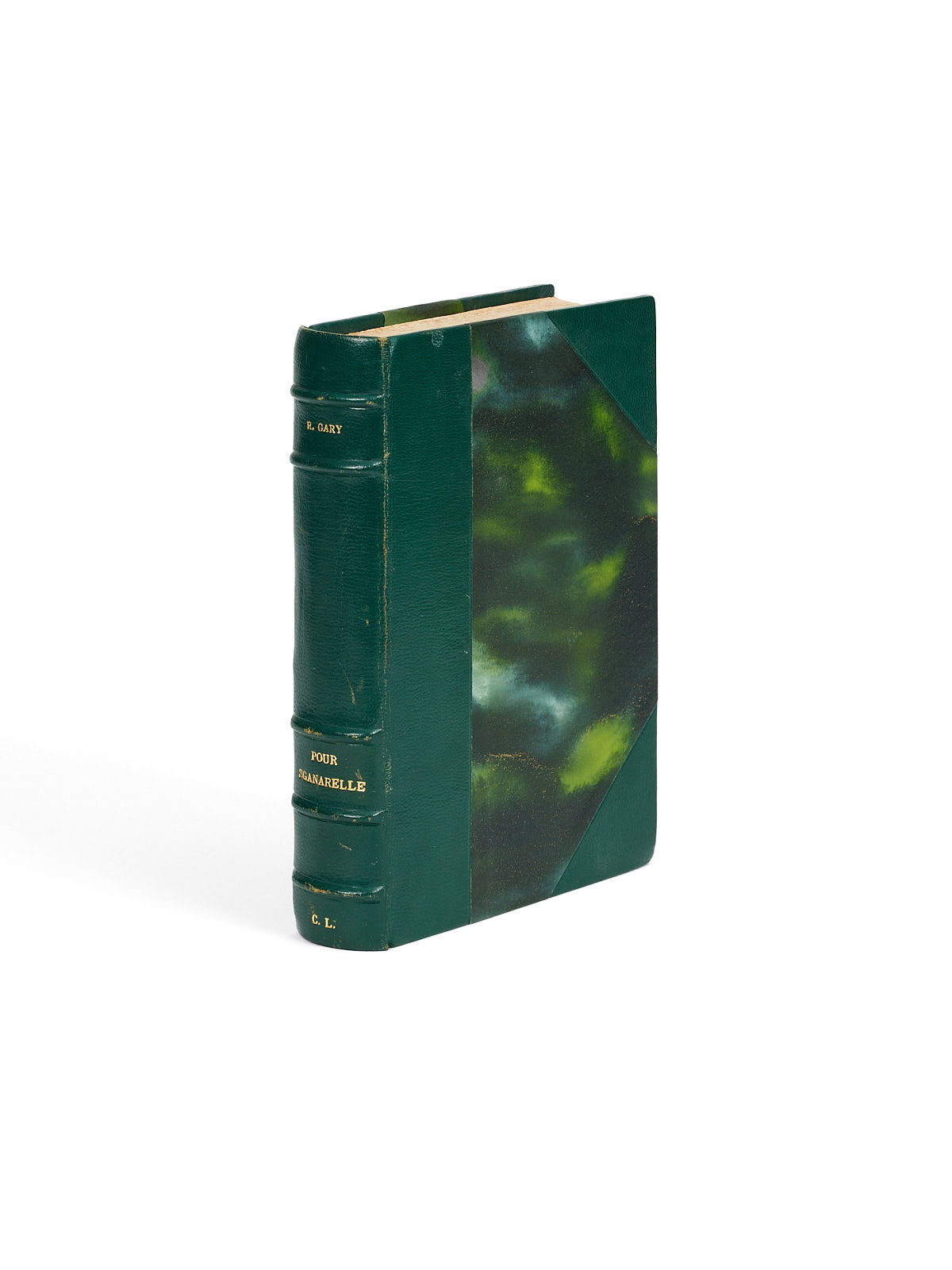
Pour Sganarelle
Press copy, stamped as such.
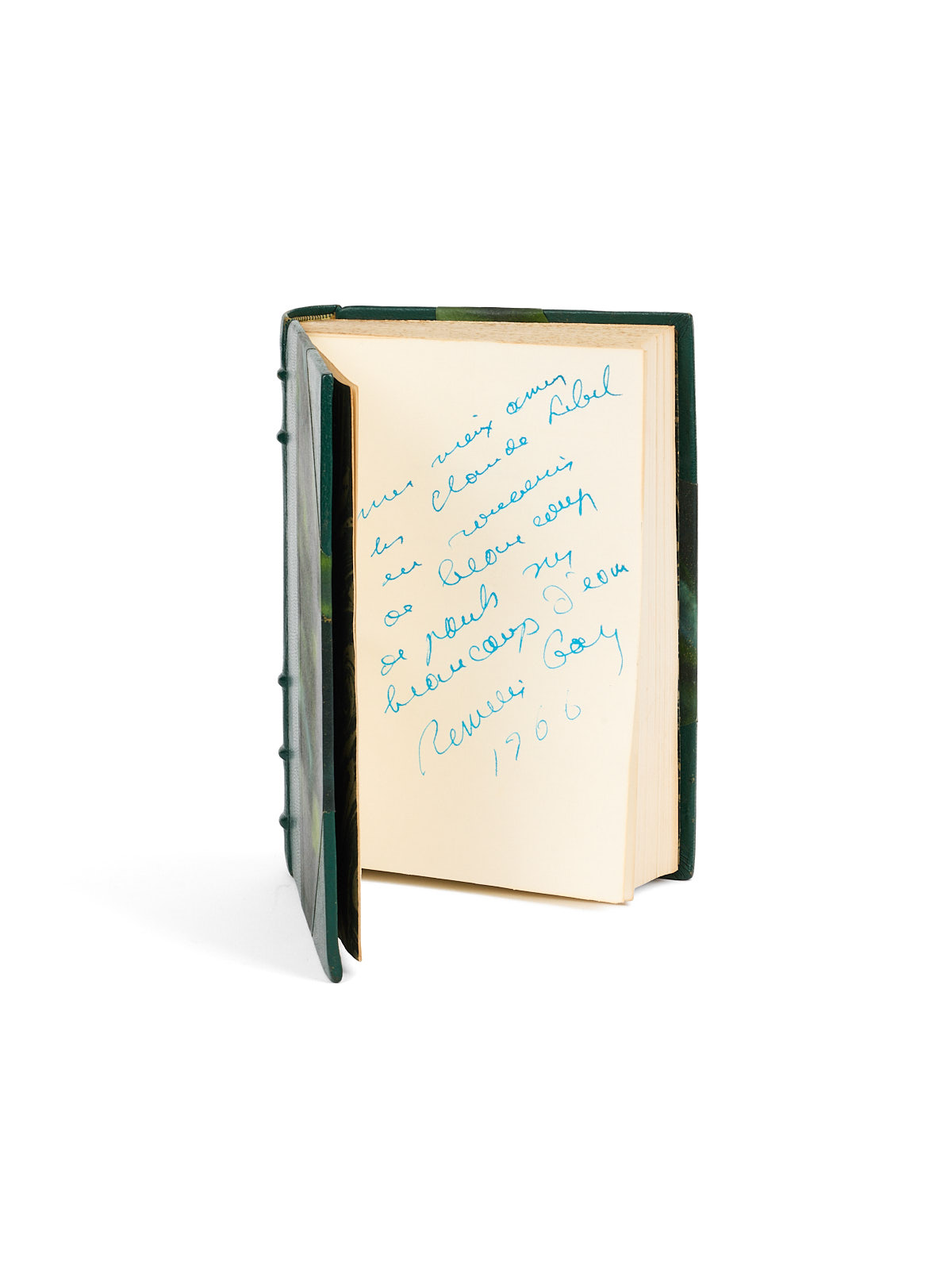
Signed presentation inscription: “à mes vieux amis les Claude Lebel, en souvenir de beaucoup de ponts sous beaucoup d’eau. Romain Gary, 1966.”
“‘What matters is not theory, but whether, through trickery and imposture, the author manages to create a world and to give it that power to convince which constitutes realism without reality.’ So Gary asserts in Pour Sganarelle, a book which, according to the note given at its very end, was written between 1964 and June 1965, between the Cyclades — at Mykonos, in the house Jean had bought — and Lima, Peru. The novel-essay is dedicated to his son Diego’s governess, Eugenia Lacasta de Muñoz, and to Peter Ustinov, an old friend of Romain Gary, ‘because of Sganarelle’: “this double dedication immediately situates the book’s purpose: the search for a character and a novel with the help of examples drawn from certain models of European literature […] This is the first and only time that Gary undertook the writing of a theoretical work, and […] it constitutes an indispensable key to understanding exactly what Romain Gary sought to do and express through his past work, but also his future work, since the book was meant to serve as the introduction to the Frère Océan cycle, and since the Ajar experiment draws its theoretical foundations and justifications from it.” (Larat, Romain Gary, une trajectoire dans le siècle, II, p. 62).
An important book, then, presented here to a friend from the Quai d’Orsay: Claude Lebel entered the diplomatic corps in 1938. Having resigned and been dismissed by Vichy in 1942, he served at the Commissariat aux affaires étrangères in Algiers in 1943 and 1944, before being appointed by General de Gaulle as counselor in Athens and then in London, from 1950 to 1955, and subsequently minister-counselor in Washington. From 1962 he headed the information and press services of the Quai d’Orsay, at the time when Gary published Pour Sganarelle. It was probably during their time in the United States that the two men met. A minister plenipotentiary hors classe, he was an officer of the Légion d’honneur and held the Croix de guerre.