


Le Roman de Renard
Among the copies reserved for the collaborators, we know of Paul Jouve’s own copy, bound by Georges Cretté for the collector Francis Kettaneh, who acquired it from the artist in 1962. This precious copy, enriched with the original drawings, was sold at Christie’s in 2009 (27 November 2009, no. 141) and has not resurfaced since.
Our copy is therefore probably the one intended for Jacques Beltrand, kept by Maurice Genevoix, who retained it thereafter in his library at the house of Les Vernelles, in the Loiret.
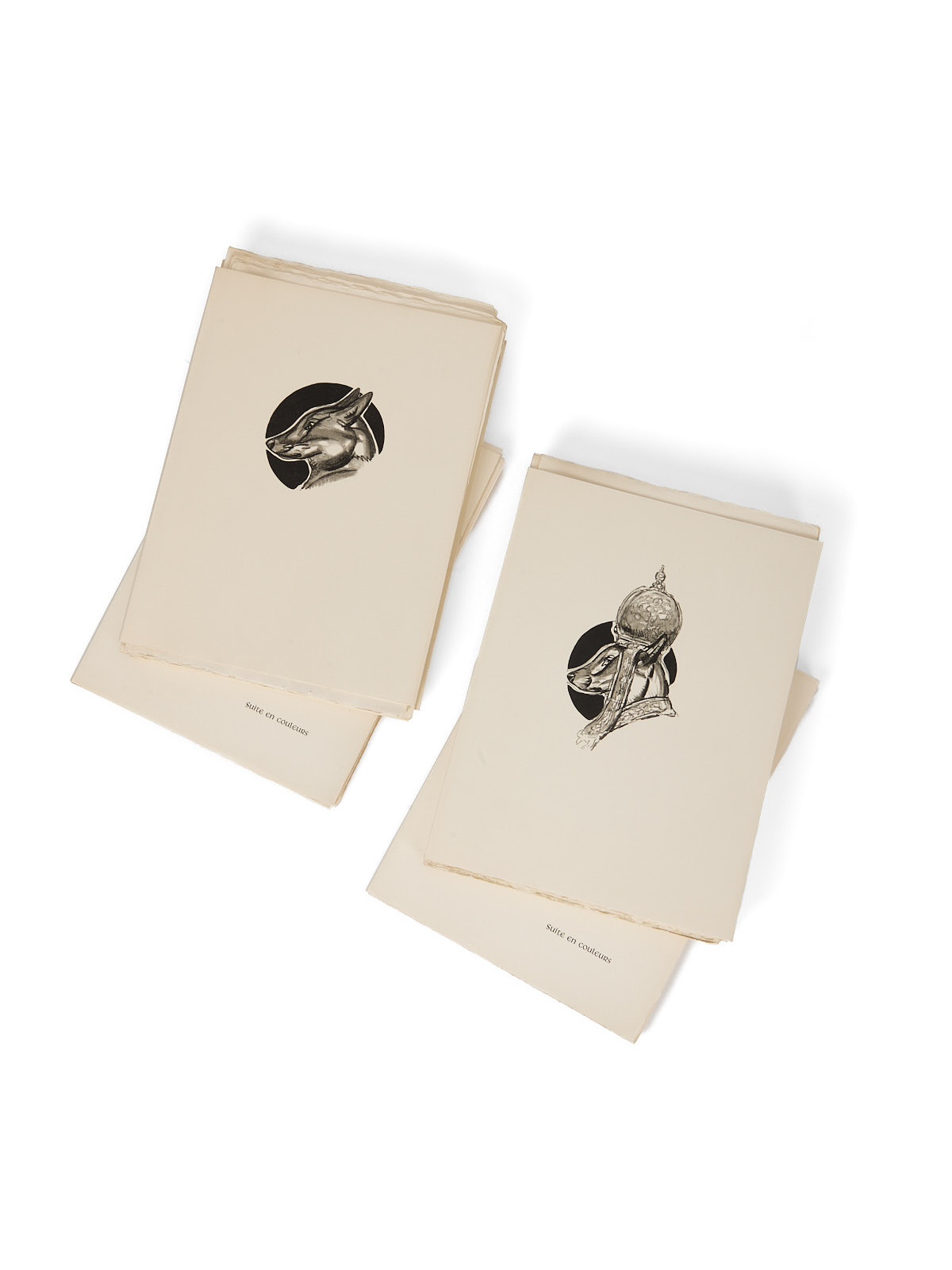
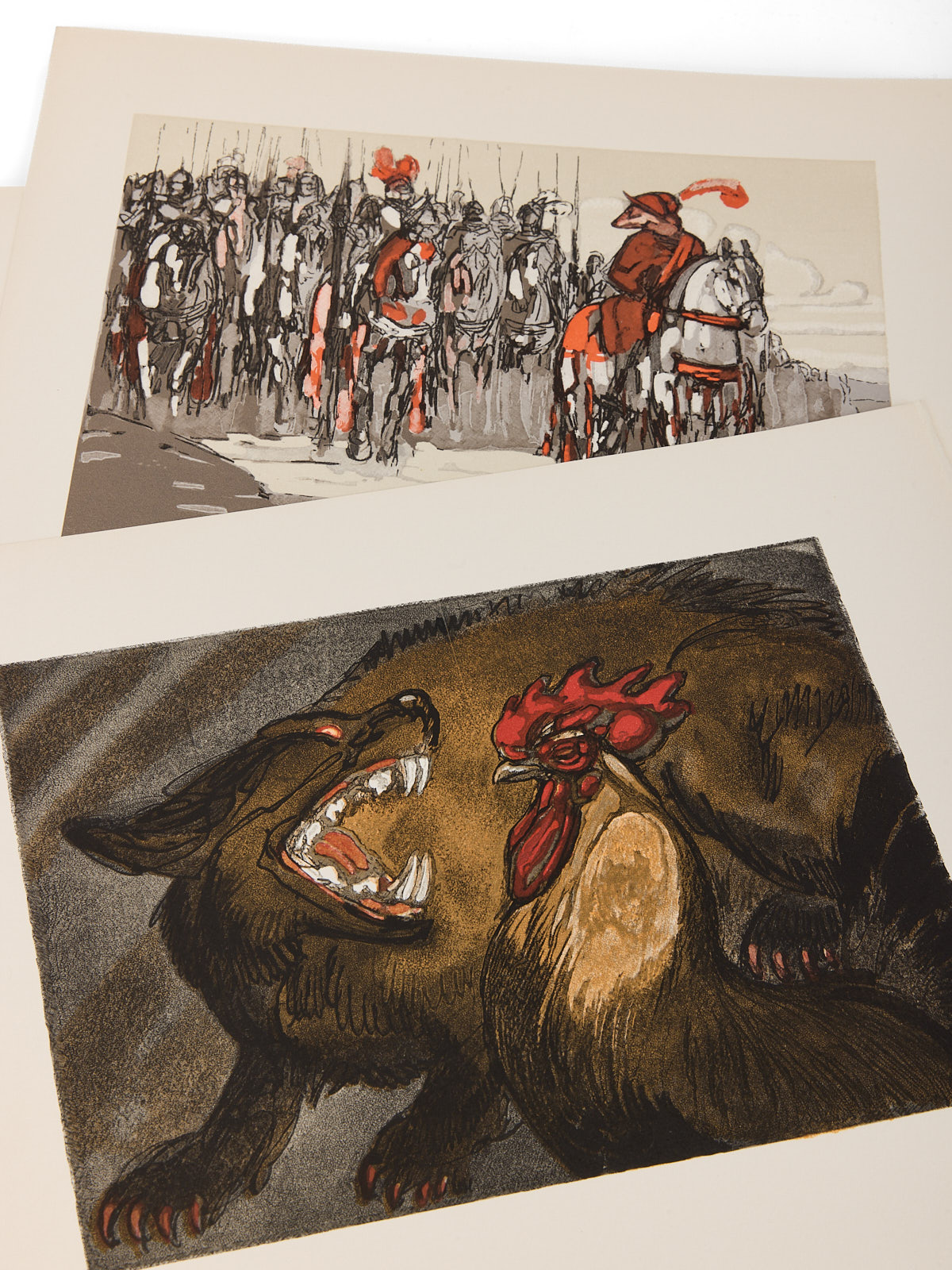
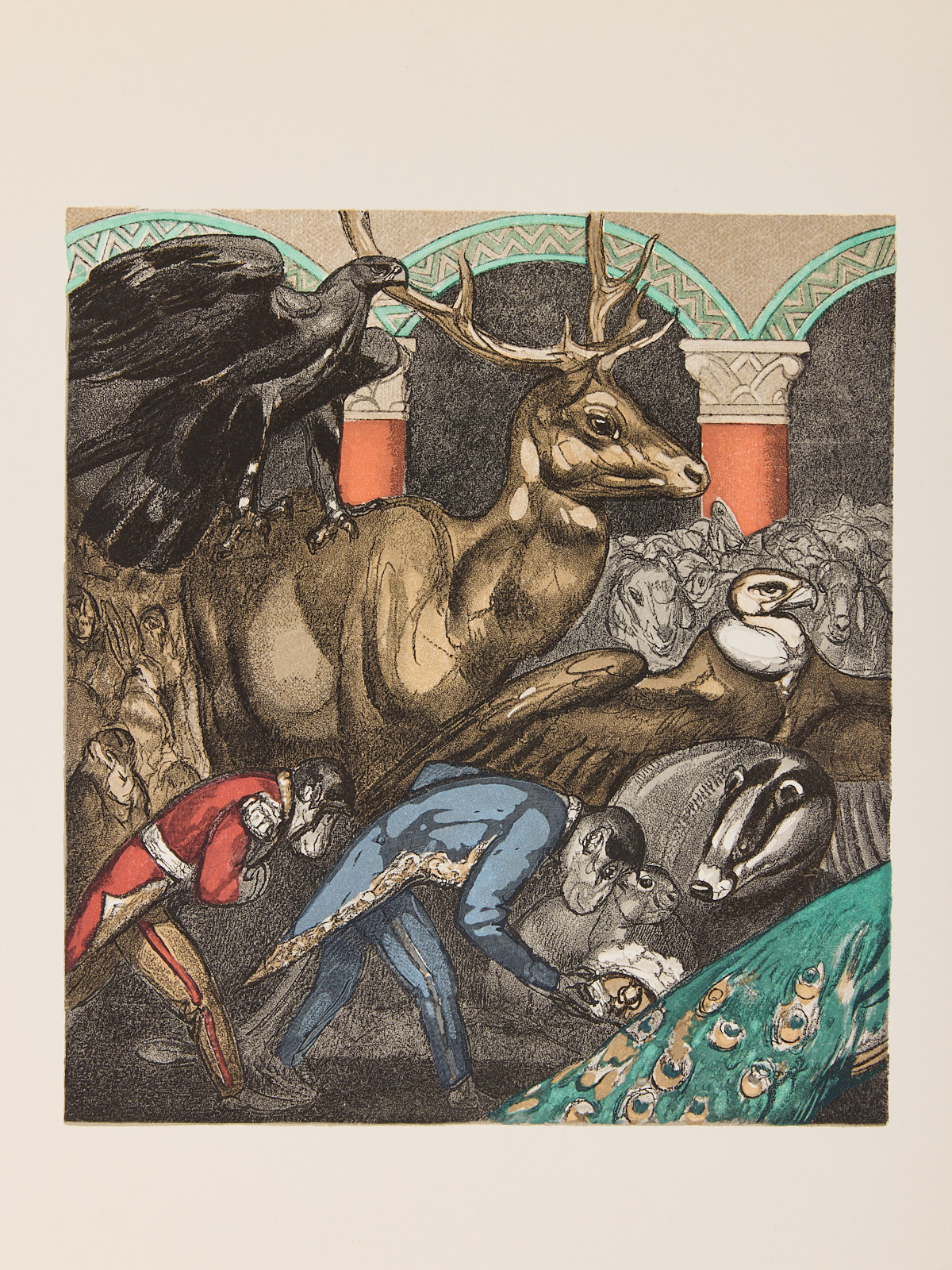
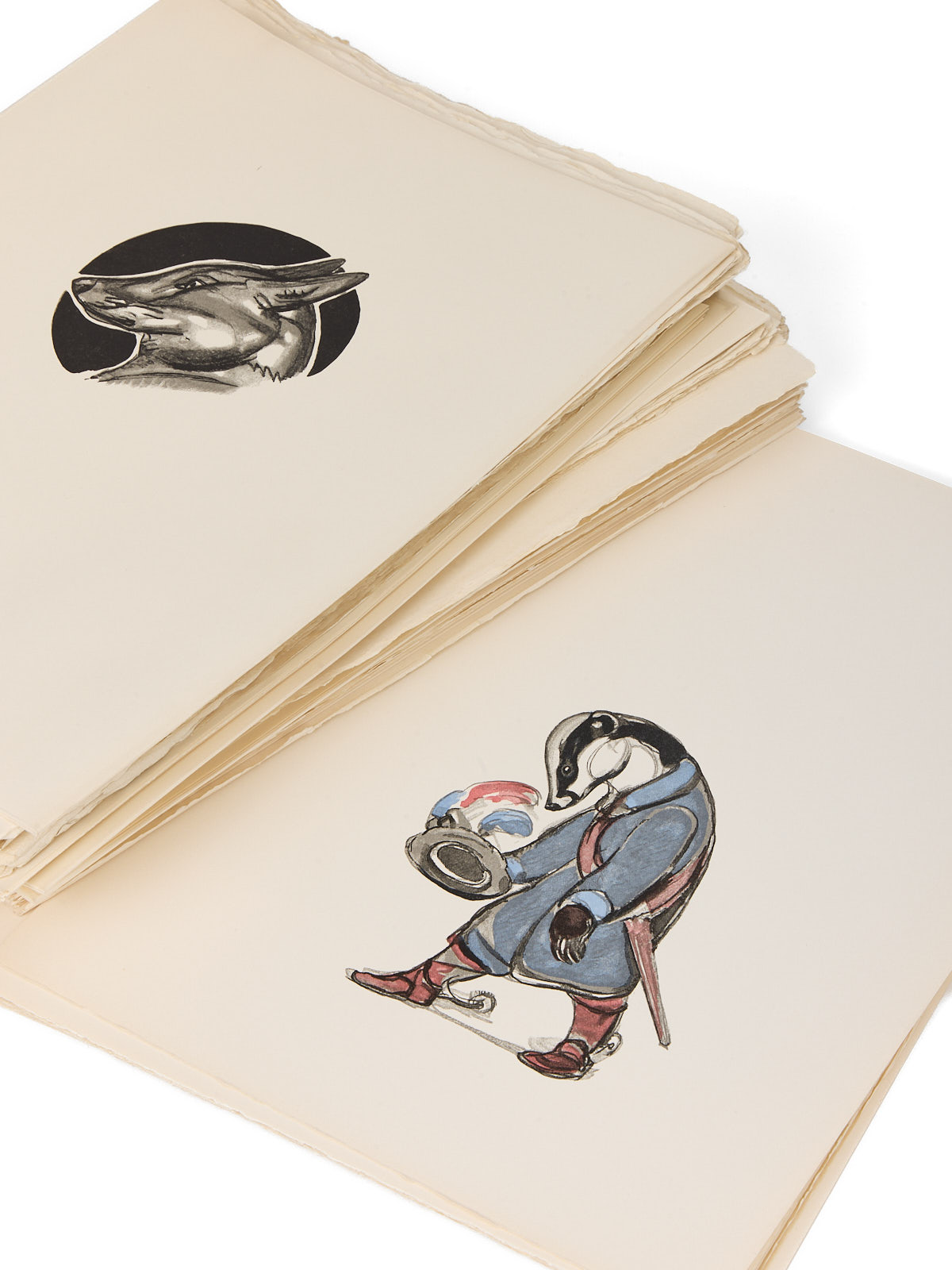
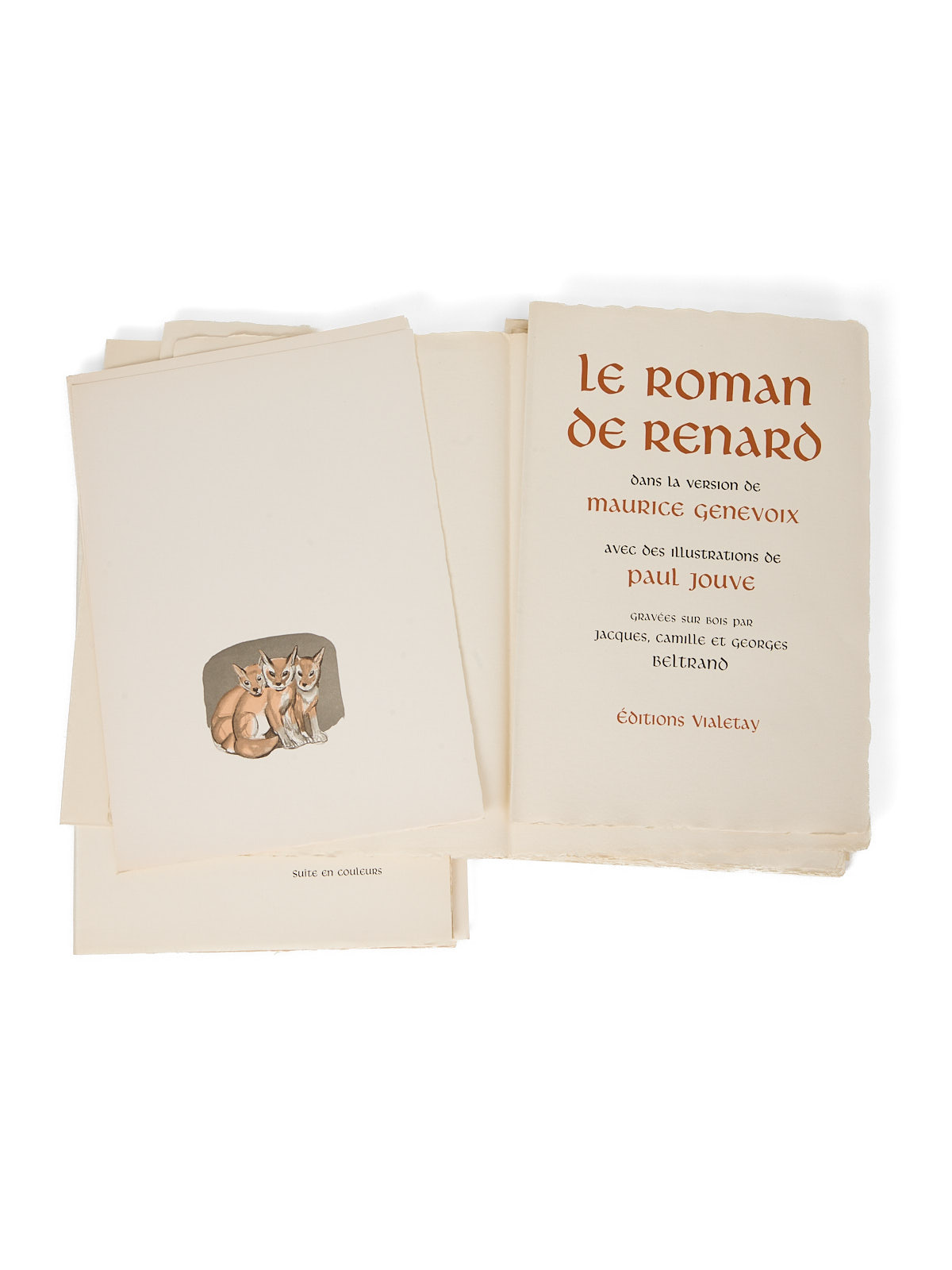
It is enriched with the suite in black, the suite in colors, and the suite of decomposition of the double plates; it is signed by Genevoix, Jouve and Beltrand.
The edition of Le Roman de Renard, illustrated by Paul Jouve and adapted by Maurice Genevoix, stands at the crossroads of medieval literary tradition, modern animal art, and the great illustrated French bibliophile book of the twentieth century. Genevoix, a writer devoted to nature and living creatures, always brought an empathetic and poetic gaze to the animal world, as shown by Raboliot, La Dernière harde, and L’Hirondelle qui fit le printemps. His choice to revisit Le Roman de Renart — a masterpiece of medieval satire — belongs to this continuity: Renart, cunning, free and irreverent, embodies a figure of resistance to imposed order that Genevoix admired.
The text is adapted into modern French, serving as a prelude to La Forêt perdue, published ten years later and likewise set in the Middle Ages: this initiatory novel is a key work in his oeuvre, in which death becomes an increasingly present theme. He explained this shortly before his death, recalling his experience of death during the First World War: “I had the instinct for the hunt, very strong, very keen […], but I have known since […] that the shadow of death in the eye of a killed partridge is exactly the same thing.”
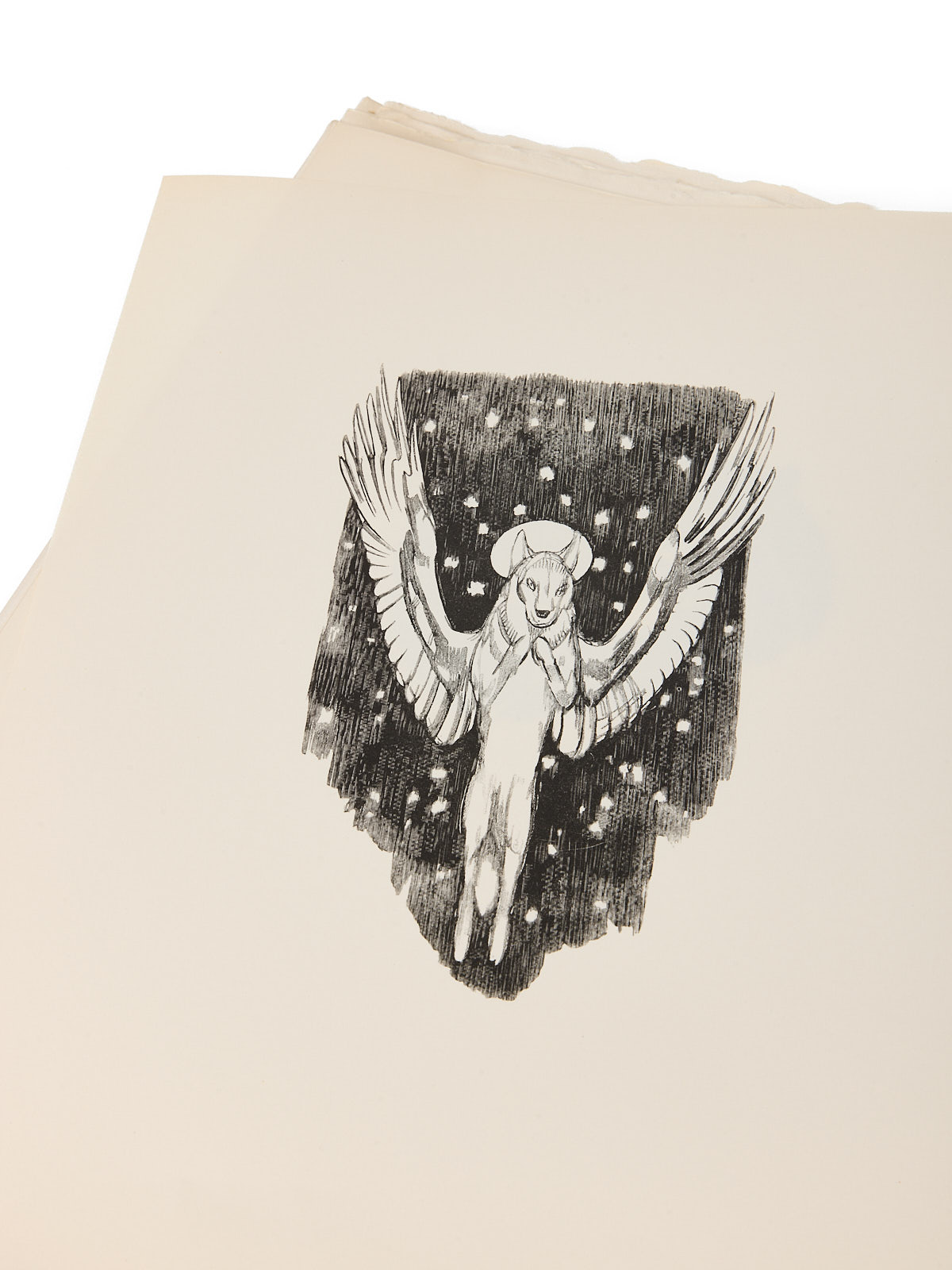
The choice of Paul Jouve as illustrator was not a matter of chance but of aesthetic and moral evidence: the painter was then the greatest animal artist of his time, celebrated for his vivid depictions of wild cats, monkeys, and horses. He produced here a rich set of illustrations: 53 color compositions engraved on wood by Jacques, Camille and Georges Beltrand, and 33 large woodcut initials, the fruit of more than ten years of work, begun as early as 1941, at a time when he had no publisher to support him in this monumental project. It was the bibliophile Jules Exbrayat and the publisher Jacques Vialetay who initiated this edition and its distribution, and who called upon Maurice Genevoix to establish the text.
Jules Exbrayat, president of the Société des Bibliophiles franco-suisses, unfortunately did not live to see the edition completed: he died in 1958, a few weeks before the book was printed, to which it is dedicated.
This was to be one of Paul Jouve’s last works and one of his masterpieces.
From the library of Maurice Genevoix, at “Les Vernelles” (bookplate).