

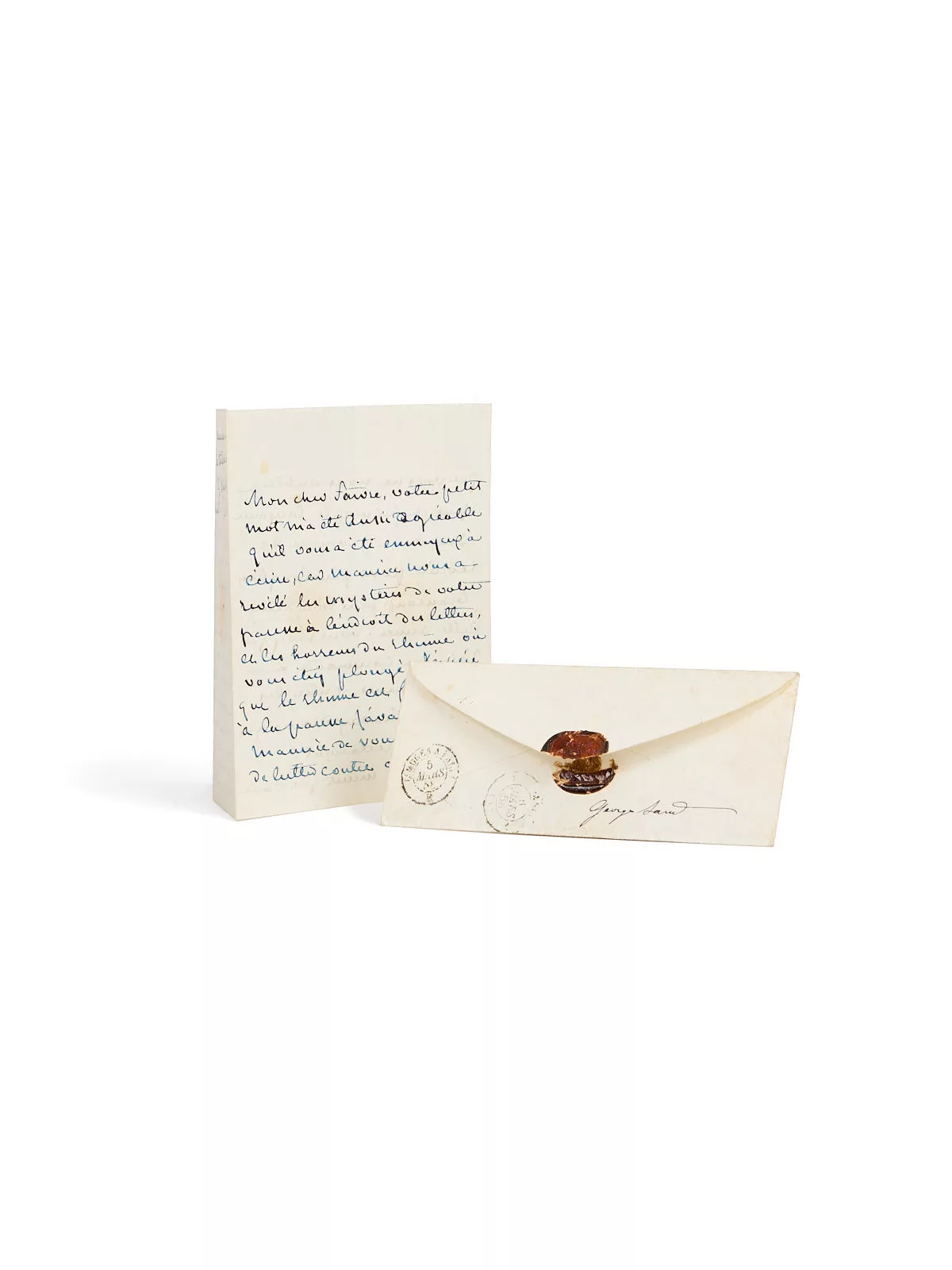
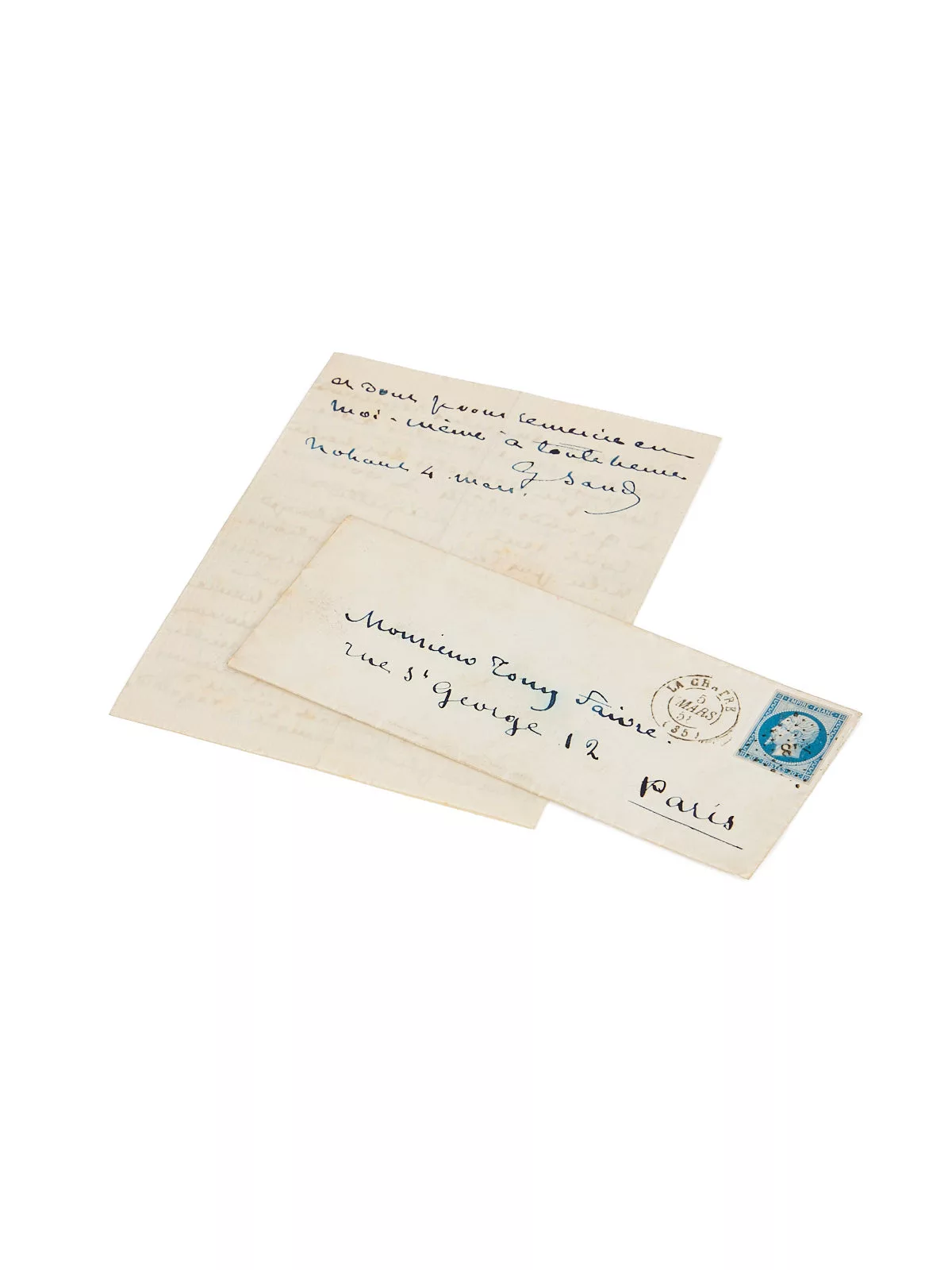
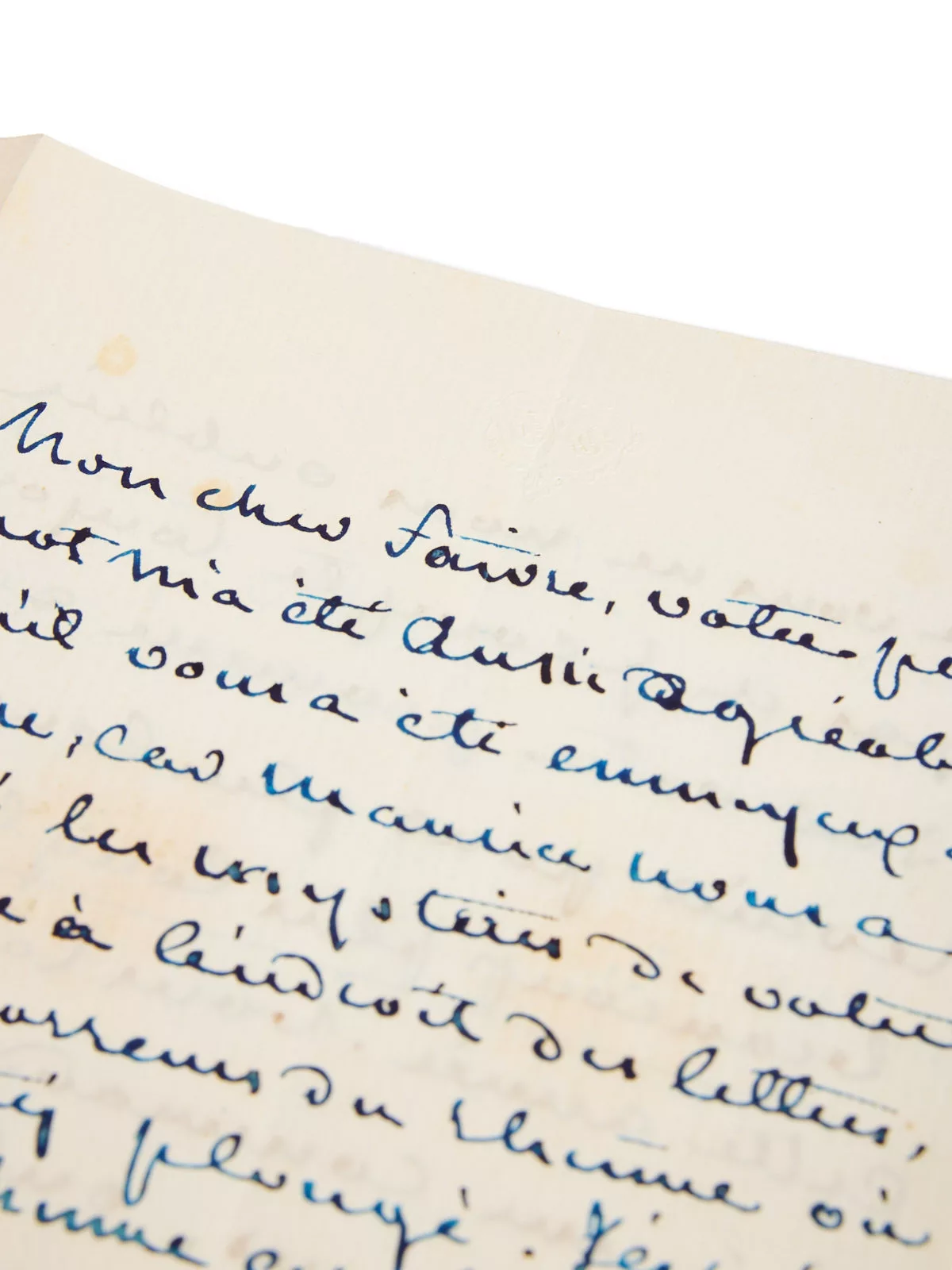
Lettre à Tony Faivre
In Le Théâtre de marionnettes de Nohant, published in 1876, George Sand recalled the installation of the first puppet theater at Nohant: “It was in 1847 that, for the first time, with the help of Eugène Lambert, Maurice set up a puppet booth in our old drawing room.” George Sand immediately set about designing costumes for the puppets, an opportunity to indulge her imagination and display her considerable talent as a “bricoleur.” Maurice Sand and Eugène Lambert made the puppets themselves, known as “Burattini” — glove or sleeve puppets in fabric, their heads carved by hand. More than a hundred puppets were made at Nohant over thirty years, carved in linden wood, then painted, with nails for eyes and real hair obtained from the hairdresser in La Châtre.
An excellent watercolorist, Antoine Jean Étienne Faivre, known as Tony Faivre, was a former pupil of the École de dessin de Besançon. He produced charming fans and decorative panels, and, alongside Eugène Lambert, was Maurice Sand’s faithful companion both in Paris and at Nohant, where he added vocal effects and took part in staging the plays. He stayed in the Indre at least four times between 1857 and 1859, actively participating in the theatrical performances: “Faivre is behind the scenes handing us the puppets. I direct the whole thing, and it makes for a rather complete show,” as Maurice Sand enthusiastically reported to his mother in several letters.
Correspondance, vol. XIV, no. 7758.
Two letters from Maurice Sand to George Sand attest to their friendship with Tony Faivre, preserved in the Fonds patrimonial of the Bibliothèque de La Châtre (letters of 8 February 1858 and 5 March 1858).