

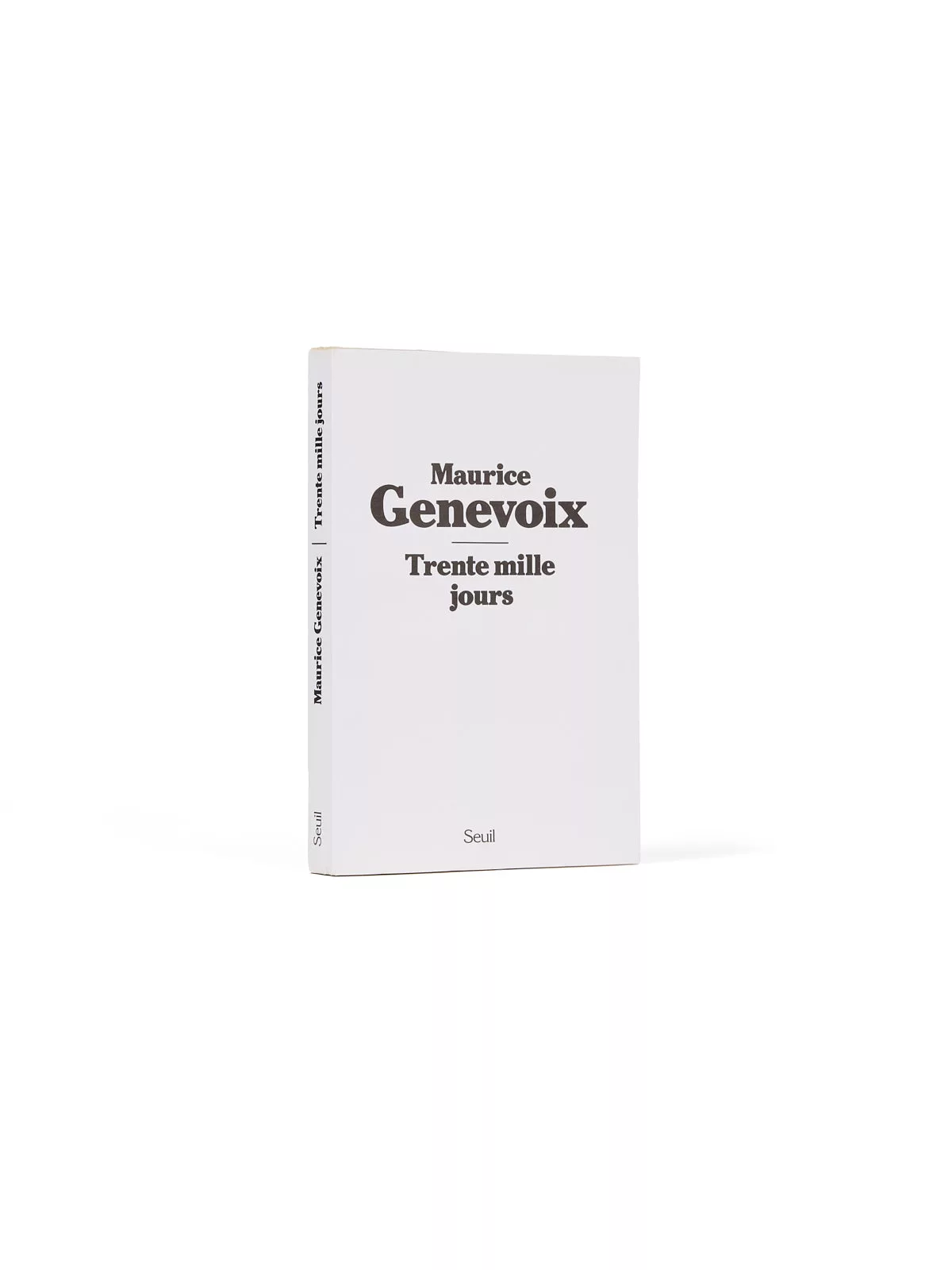
Trente mille jours
The last book Maurice Genevoix published in his lifetime, Trente mille jours is a masterpiece of memory, lucidity and transmission. Genevoix retraces the “thirty thousand days” of his life, from his Loire Valley childhood in Decize and Châteauneuf-sur-Loire to his election as Permanent Secretary of the Académie française, passing through the ordeal of the Great War. Rare sincerity and authenticity, combined with a prodigious memory, make his work an exemplary companion for life.
On 20 June 1980, he was the exceptional guest on Apostrophes, where Bernard Pivot questioned him about this book. The war, of course, but also the question of language, of that gift, that charm, that fluidity attributed to him: “That may be true, but underlying it there is patience. Patience. Curiosity, but also patience. Man always has less patience than animals, but one must have a patience comparable to theirs; if you give it time, you arrive at extraordinary things.”
This intellectual and sensitive autobiography is the literary testament of a man who remained faithful to himself, faithful to his values, to his dead, to nature and to writing. A long and moving passage is devoted to the genesis and legacy of Raboliot, the novel that transformed his fate. Genevoix recalls the Prix Goncourt he narrowly missed on two occasions — with Sous Verdun in 1916 and Rémi des Rauches in 1922 — before finally winning it in 1925: “Raboliot changed my life. And yet I did not write it for that. But perhaps, precisely, because I did not write it for that.”
From the library of Maurice Genevoix, at “Les Vernelles” (bookplate).