

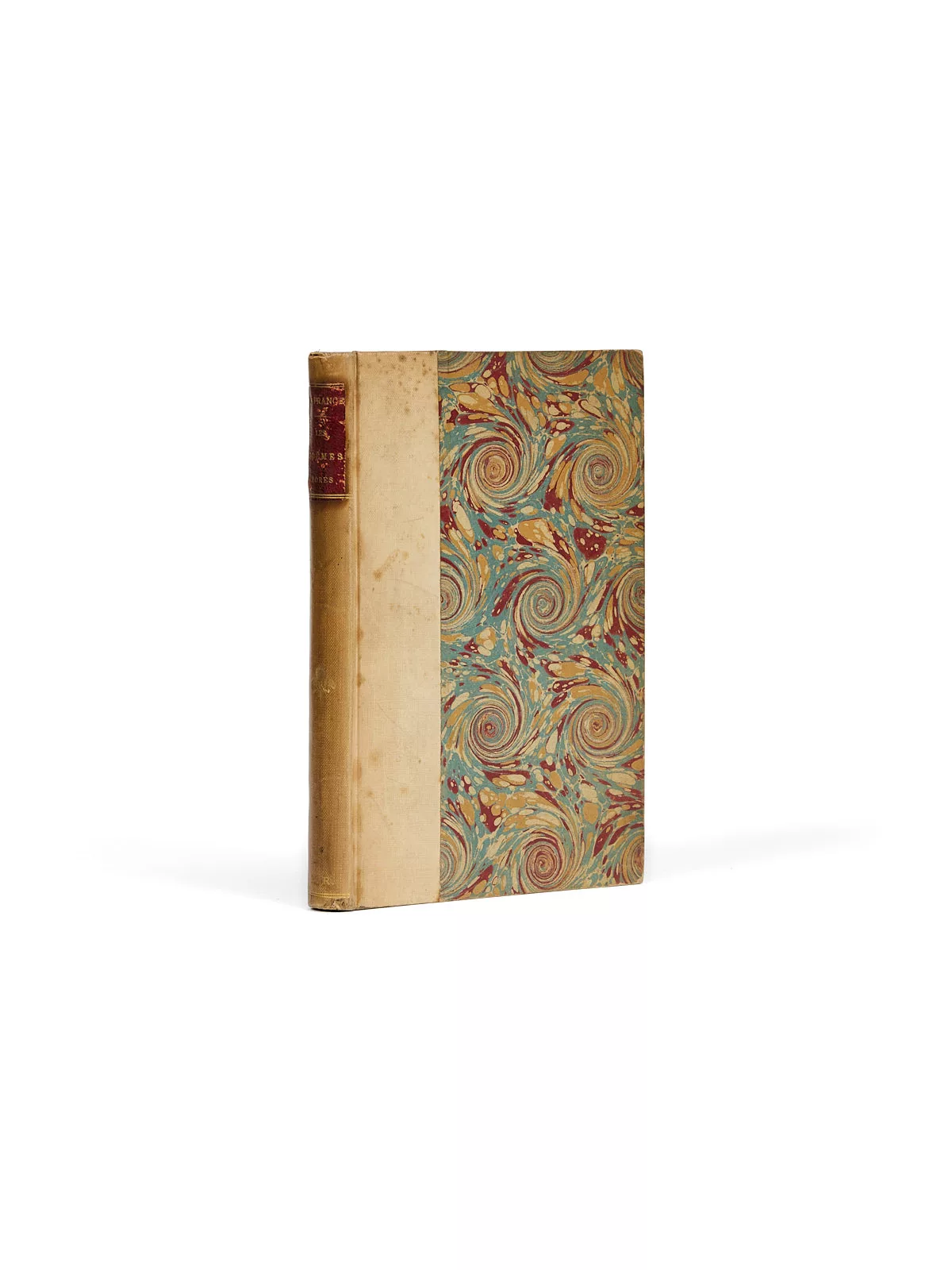
Les Poëmes dorés
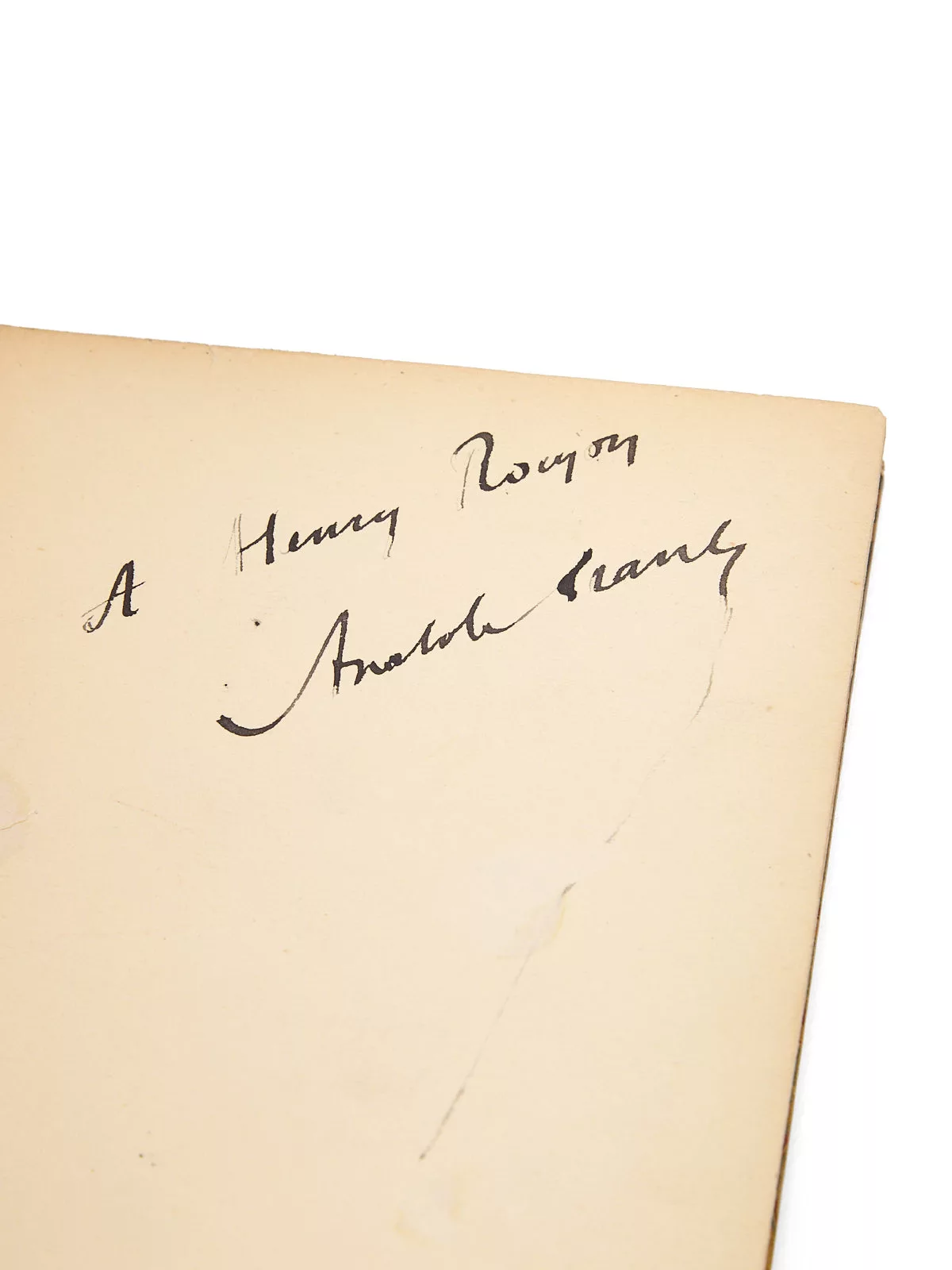
Presentation copy inscribed by Anatole France to Henry Roujon: “à Henry Roujon, Anatole France.”
One of 580 copies on vélin.
Accompanied by: Jacques Roujon, La Vie et les Opinions d'Anatole France. Paris, Plon, 1925.
The first of only two poetry collections published by Anatole France, at a time when he was deeply involved in the Parnassian circles, and above all with the publisher where it all began: Alphonse Lemerre, who almost ten years earlier had launched, in his brand-new bookshop on the passage Choiseul, alongside his editions of the great classic authors of the sixteenth and seventeenth centuries, a series of slim volumes by young poets first gathered at the home of the violinist Ernest Boutier. Shrewdly, Lemerre, who would go on to publish these Poëmes dorés, had devised a simple and effective system: “[…] he printed five hundred copies of the volume of verse submitted to him, and the costs (about 800 francs) were reimbursed by the author, in case of poor sales, by means of a promissory note.” (J. Roujon, La Vie et les Opinions d’Anatole France). Thanks to this system, the reviews of the Parnasse movement could flourish, in which Leconte de Lisle and others published their verse. L’Art, which would soon become, under the influence of Catulle Mendès, Le Parnasse contemporain, published young poets before they earned the honor of publication in book form.
At Lemerre’s, where this first collection appeared, the young Anatole France was then working as a preface writer and manuscript reader. It was there, at the time when the Parnassian group was forming, that he first met the man to whom this book is dedicated, Leconte de Lisle, twenty-two years his senior: “[…] the young poets went to Leconte de Lisle’s ‘as Muslims go to Mecca’ […] with this formidable guide, Anatole France would for a long time remain in the background, sitting at the edge of his chair.” (ibid.). This collection thus marked Anatole France’s true entry into literature, one that “established him as a master in the eyes of young writers such as Paul Bourget,” and above all strengthened his bond with Leconte de Lisle, whom he had already known for six years. It was in the latter’s salon that he became, at this time, one of the most listened-to poets. Only one thing was still missing, something others — Coppée, Mérat… and the master himself — had already secured: a position as librarian, that “modest and monotonous existence favorable to dreaming and the labor of verse.” (ibid.)