

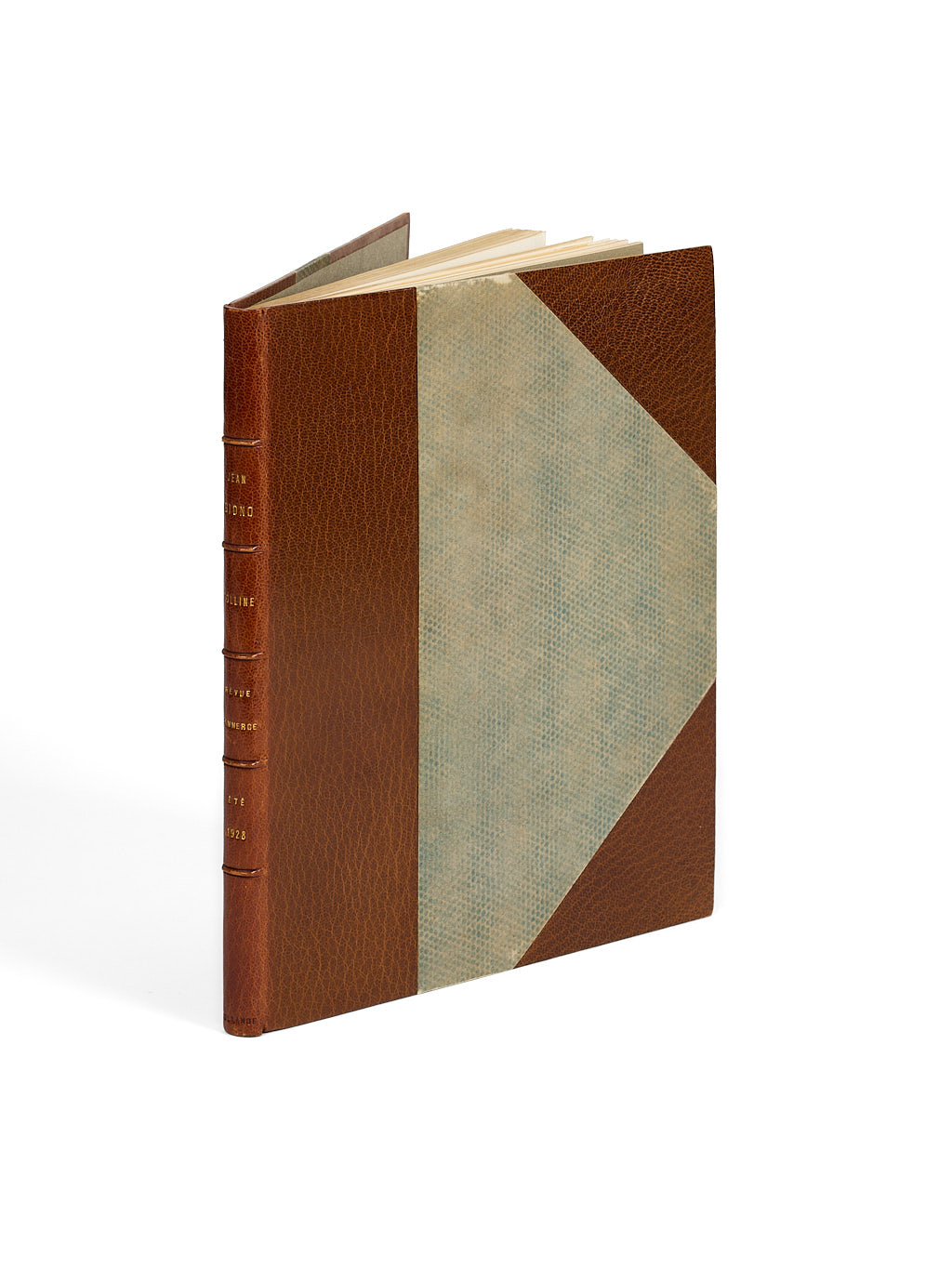
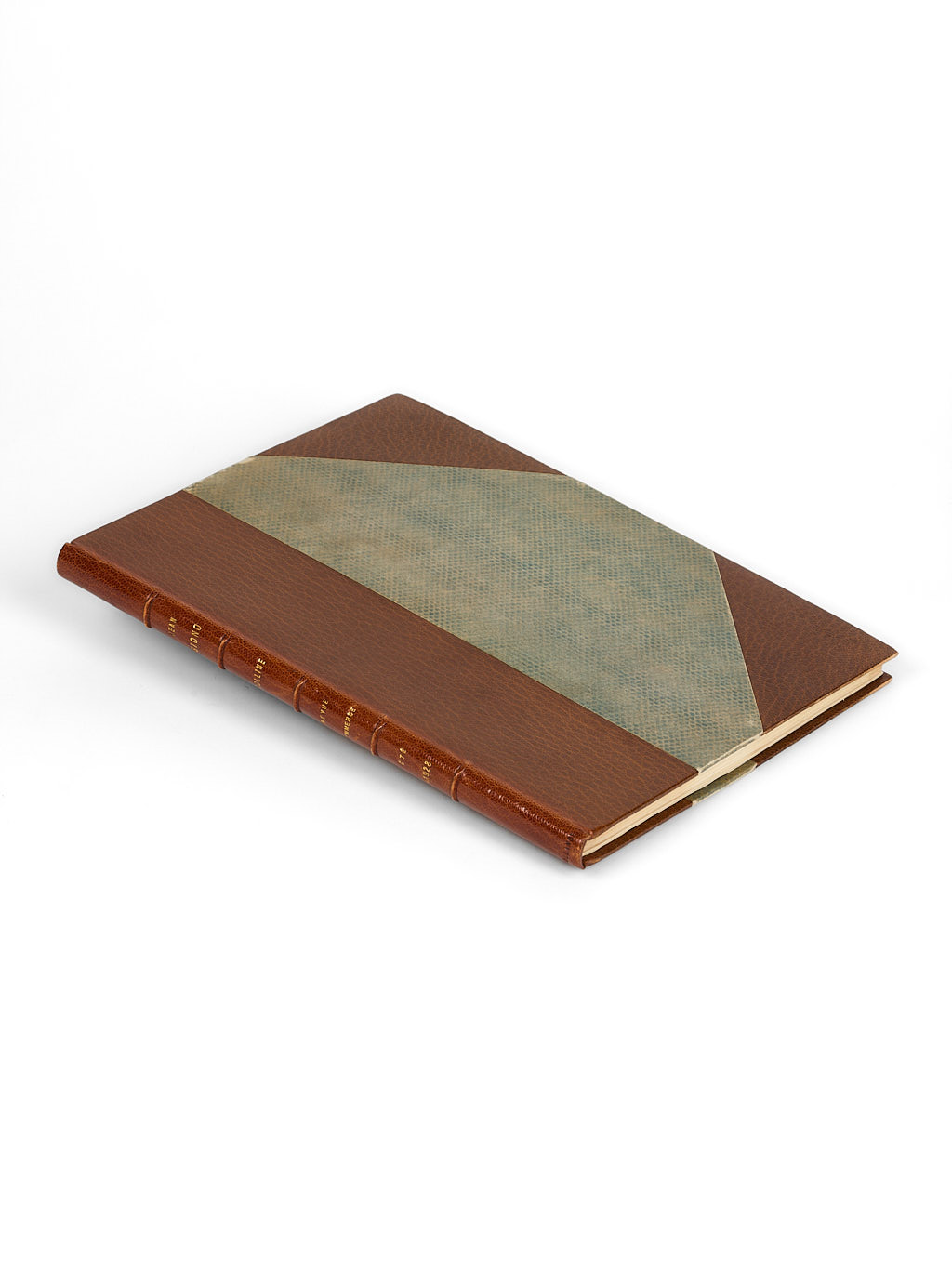
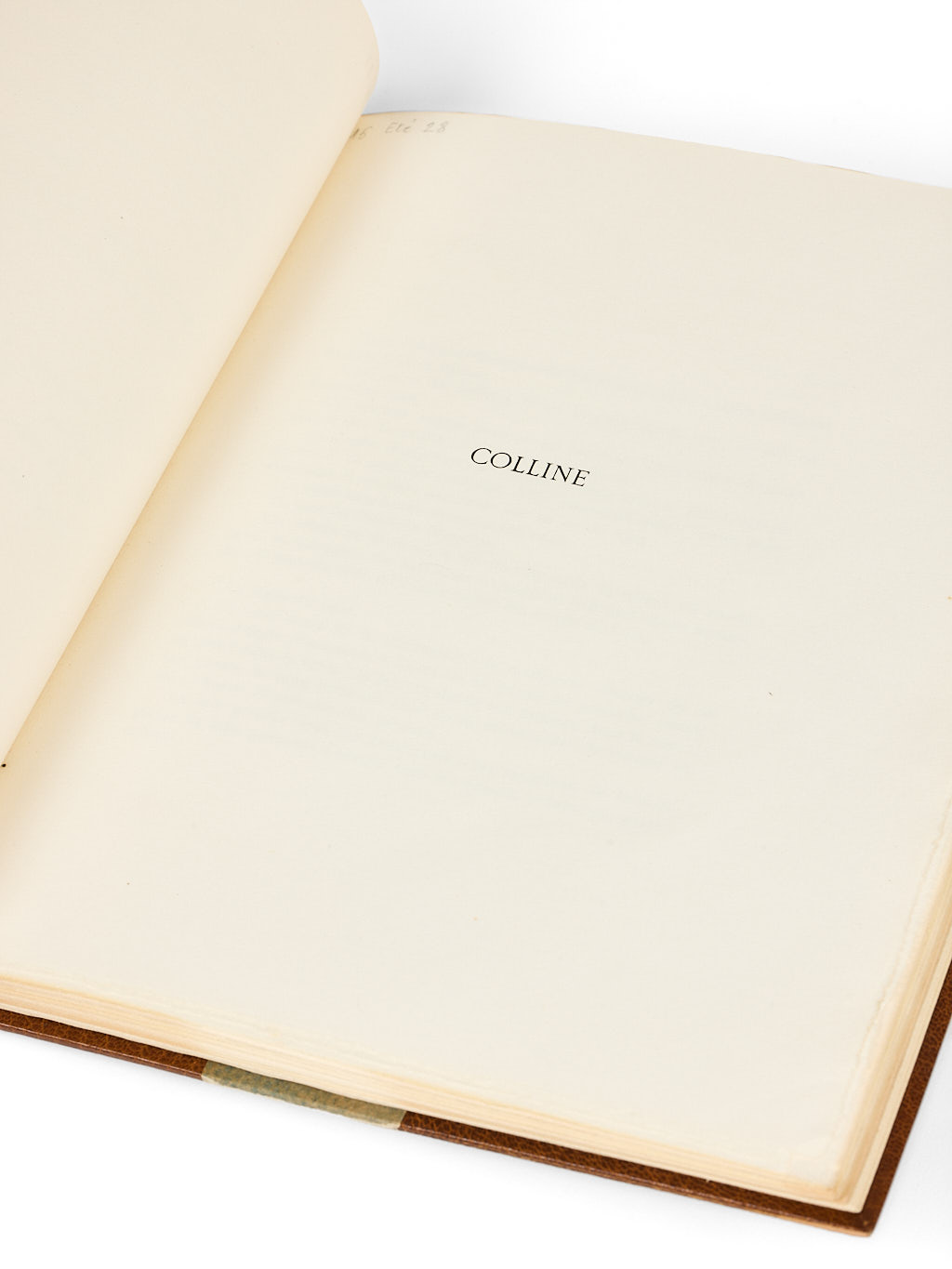
Colline
Daniel Halévy was the first to receive the manuscript of Colline, in January 1928, having earlier turned down Naissance de l’Odyssée, which he felt “smelled a bit too much of literary artifice.” But Halévy sensed he was in the presence of a true writer and asked to see the manuscript of another work: this was the first draft of Colline, which Giono was then finishing. In May, a contract was signed for this novel and two more to come. The manuscript of Colline then passed to Jean Paulhan, who arranged a partial pre-publication in the review Commerce, and then, in June, on his recommendation, to Gaston Gallimard, who wrote to Giono that he would be glad to become his publisher once his contract with Grasset expired.
Together with Un de Baumugnes and Regain, the novel forms the Pan trilogy, a narrative raised to the level of myth, celebrating the powerful forces of nature and the secret bonds established with men — those of a small hamlet in the wild Provence of the Lure mountains. With this inspired text, Giono made a spectacular entrance into literature with a masterpiece that brought him recognition well beyond any “regionalist” limits.
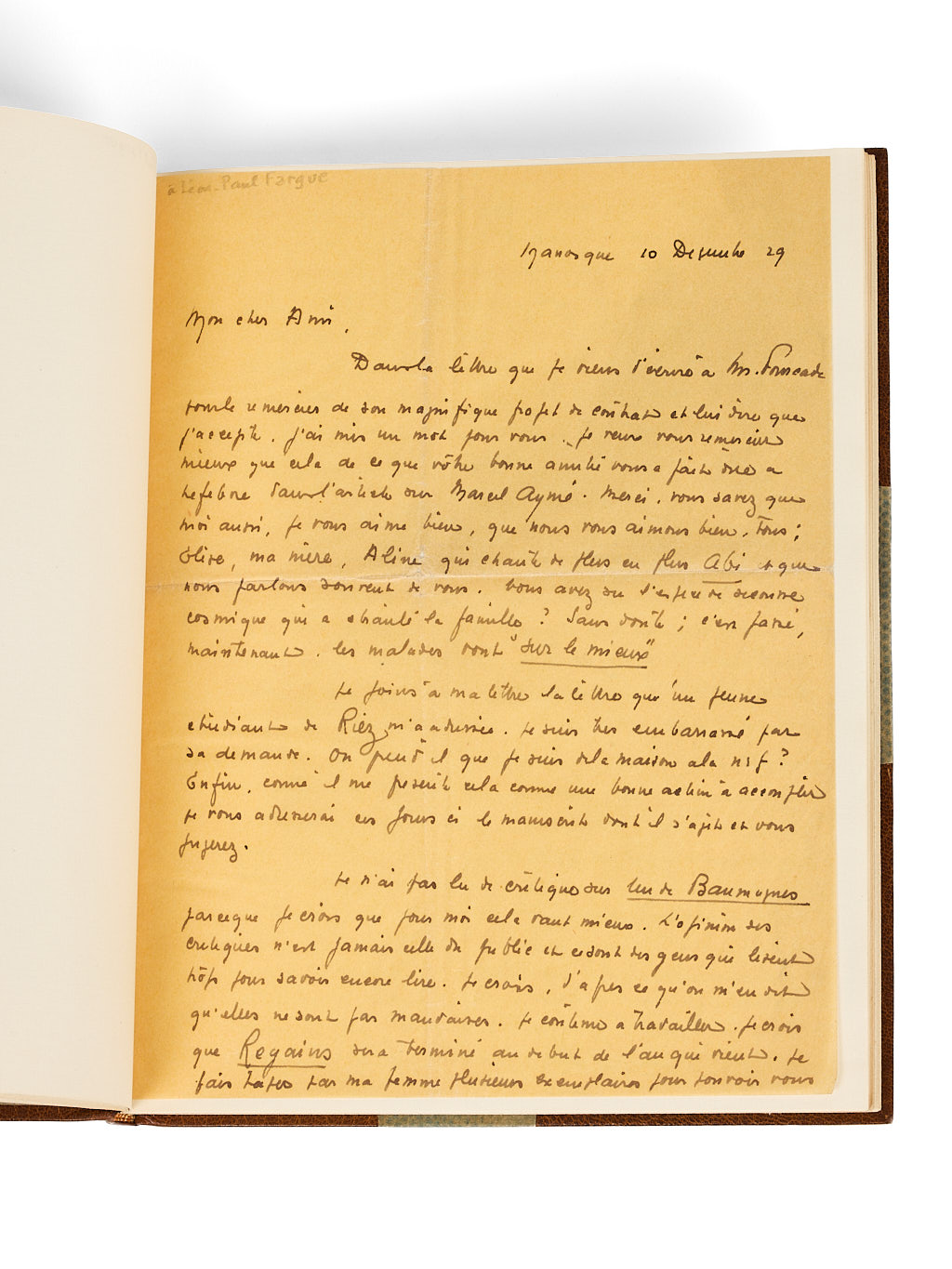
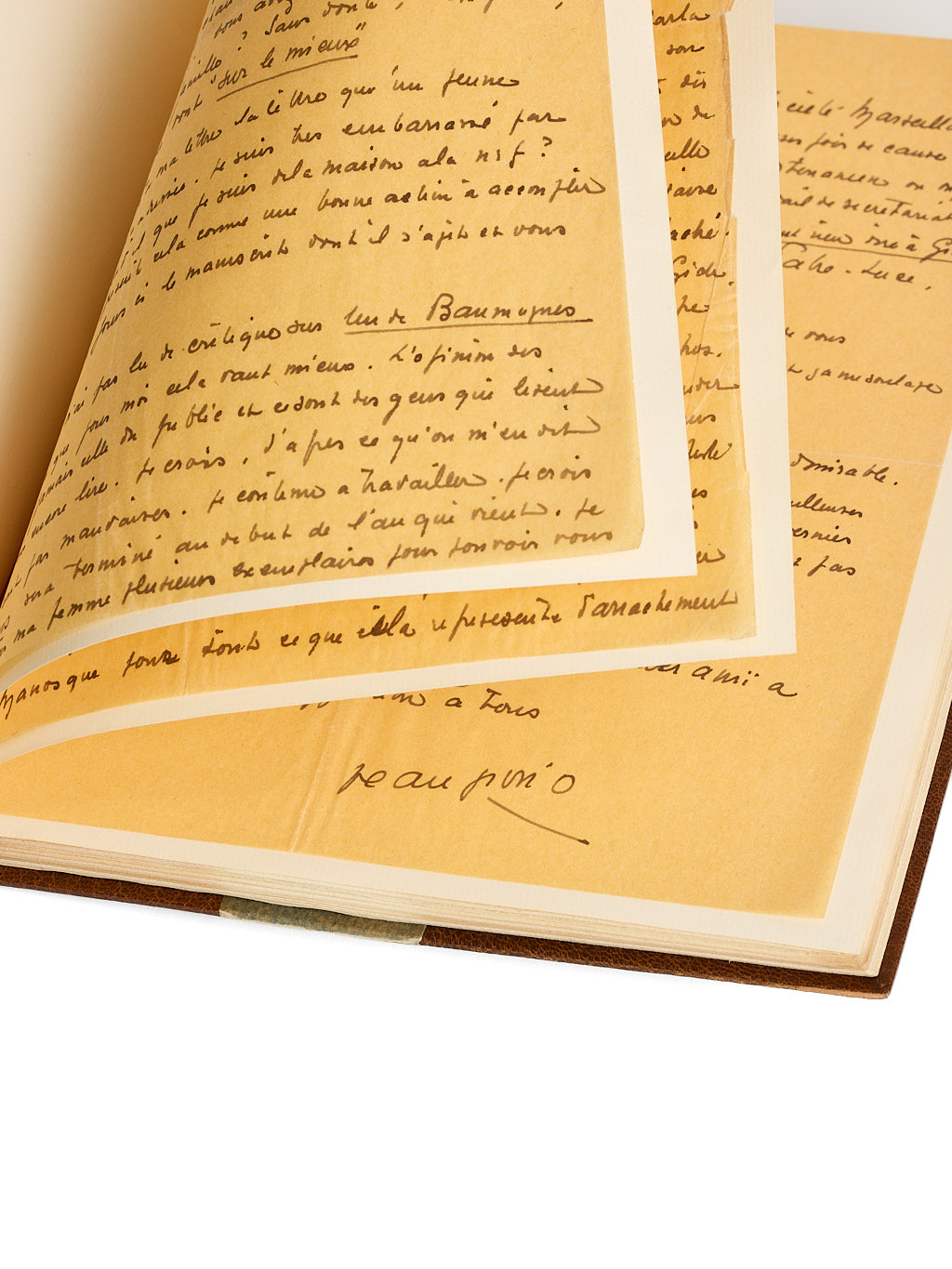
Bound in at the front: a fine letter to Fargue, one of the guiding figures of the review Commerce, expressing his affection for him and his response to reading his books, and thanking him for the contract proposed by the publisher Fourcade. Giono also mentions working on Regain and refers to articles he was writing, then discusses at length a conversation with André Gide and his search for office work, closing on a distinctly regional, Provençal note: “…the olive orchards are full of sunshine and olive-pickers. Everything is singing…”
A fine copy.