

« À ma chère petite maman… »
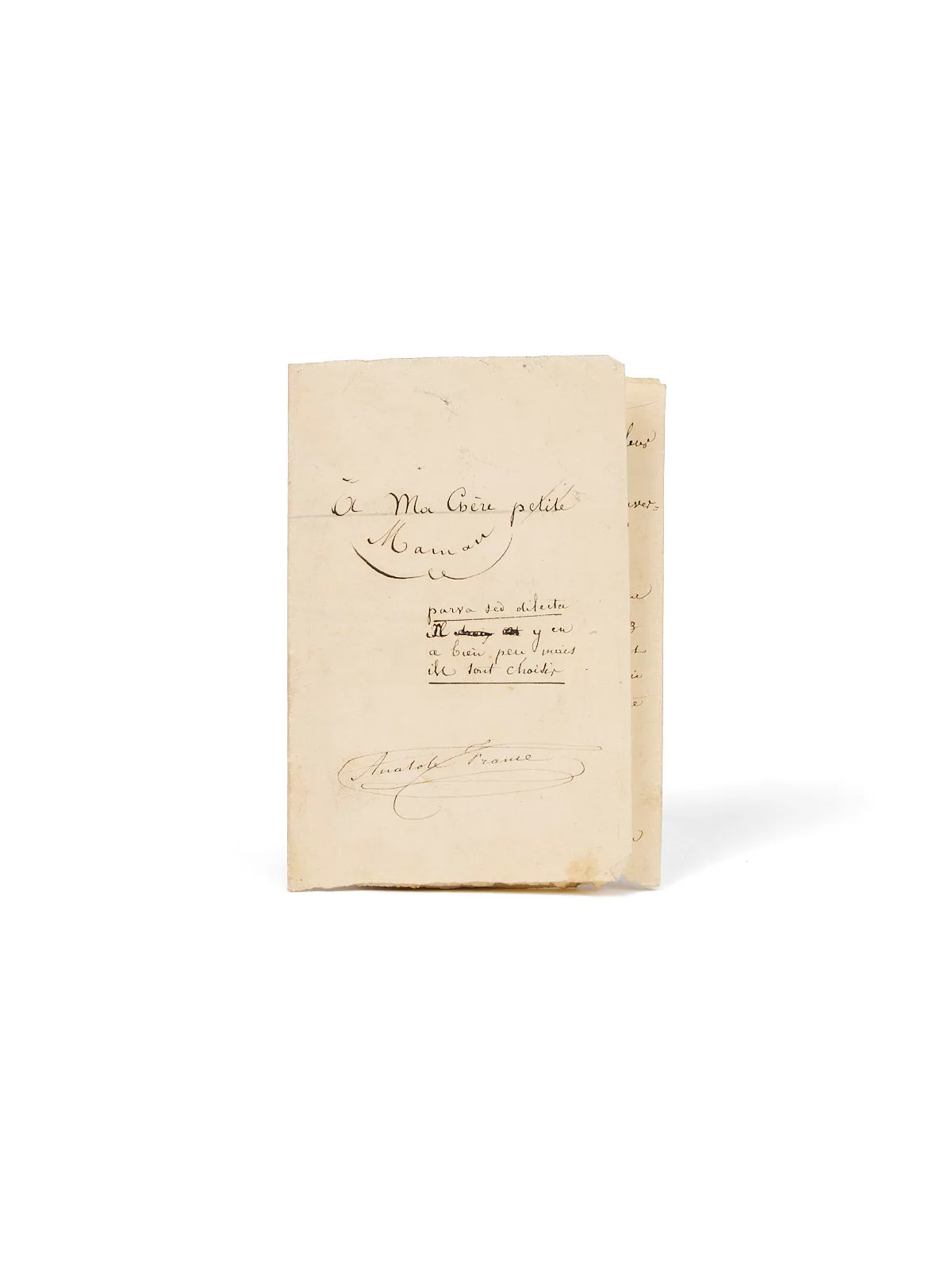
When he compiled the quotations in this entirely homemade little booklet, Anatole France was only eight years old, enjoying his last year of “freedom” before starting school and then the Collège Stanislas, where he would complete his entire education.
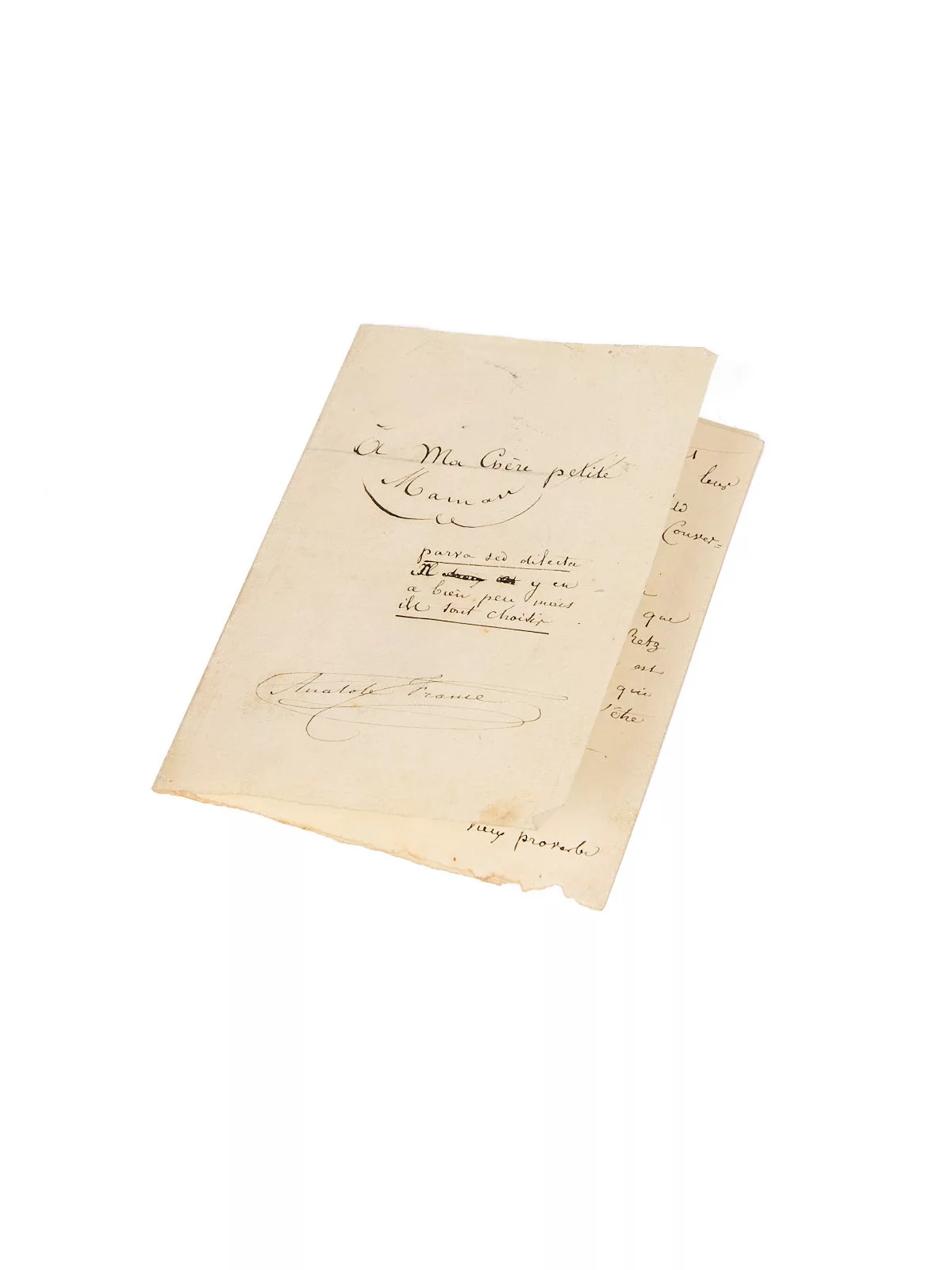
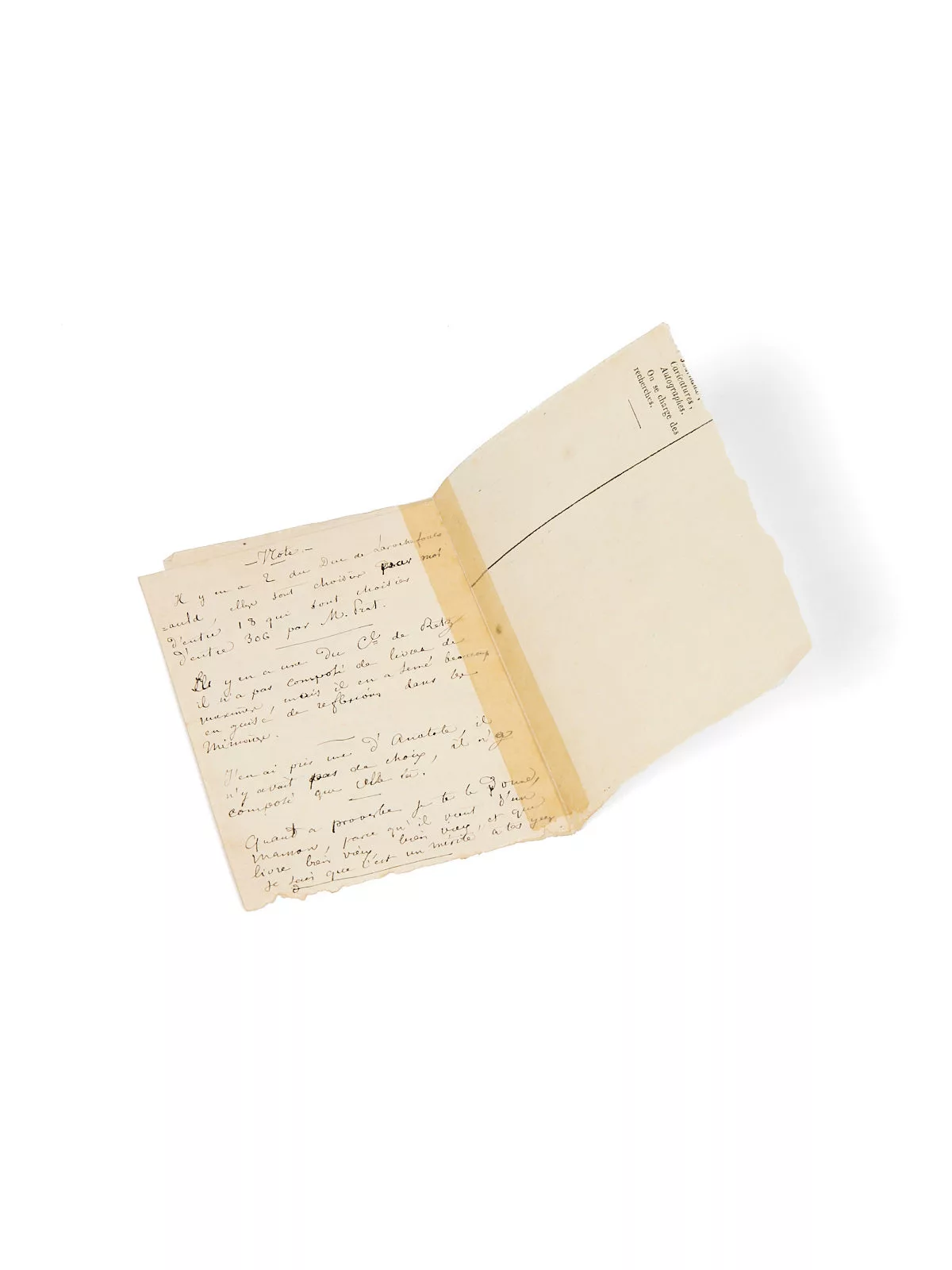
This improvised collection, made for his mother, contains almost everything of his life at the time and already shows certain important traits of the writer he would become: he records maxims by famous men alongside his own reflections, carefully accompanied by “Notes” addressed to the reader — in reality his sole reader; he skilfully fashions the “binding” from a leaf cut lengthwise, no doubt taken from his father’s bookshop or that of his godfather Jacques Charavay, founder of the celebrated autograph house; he takes care to compose a charming title page and, finally, sends the whole to the person to whom he would always remain close and who was surrounded with tenderness, his mother.
Among his childhood productions — notes, dutifully composed compliments — only two specimens of this kind of small anthology are known today: this little manuscript, “À ma chère petite maman,” and the now-lost “Nouvelles pensées et maximes chrétiennes par Anatole,” known only from a photographic reproduction preserved at the BnF (in the Jacques Suffel collection). The present manuscript is therefore the only one known to survive today.
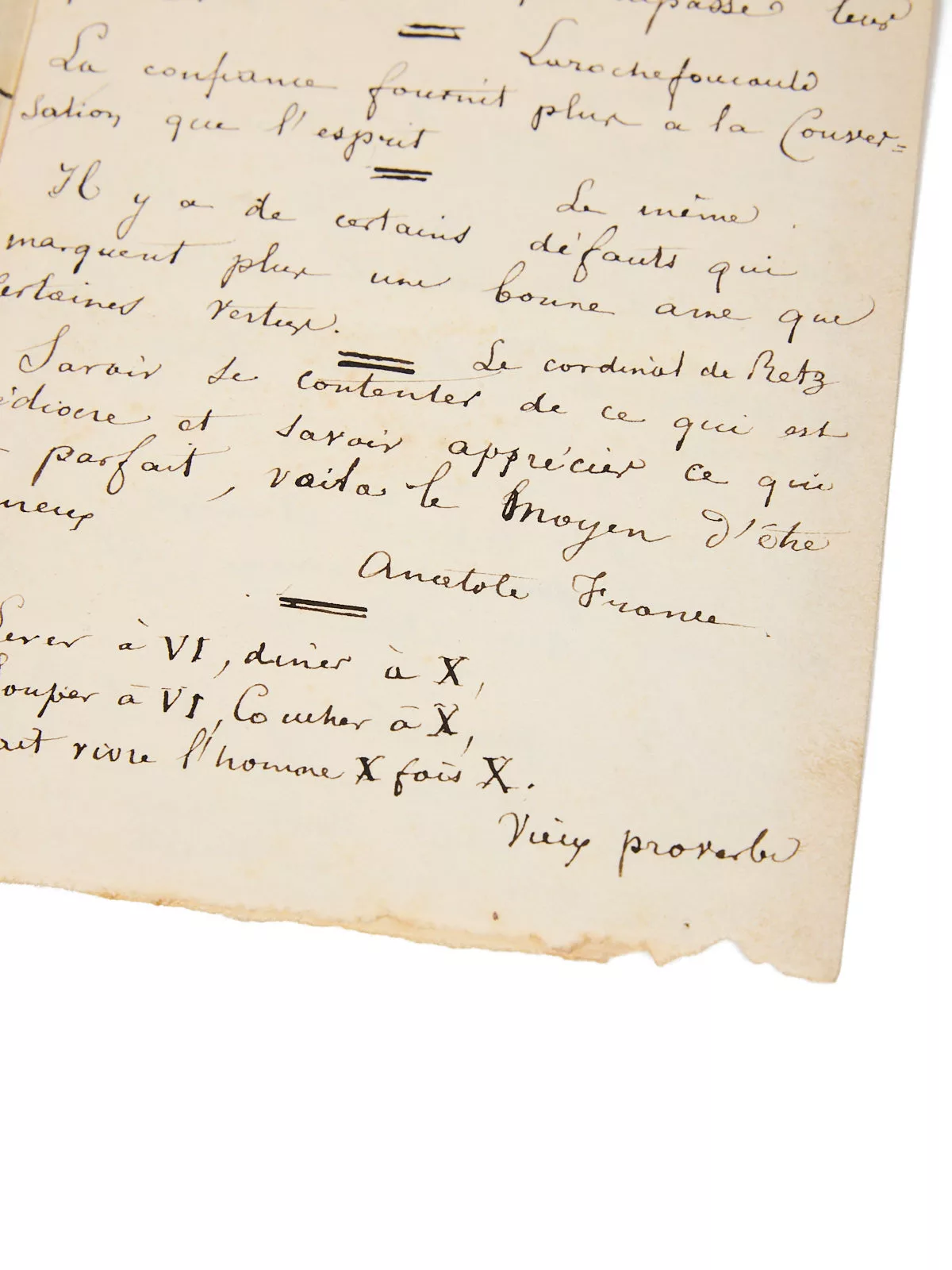
Cited and reproduced in several publications devoted to the writer’s youth, this child’s manuscript already reveals France’s taste for erudition and his tendency to set down his ideas rather than write for the pleasure of art alone: it is amusing to note that he could not resist inserting one of his own thoughts, “Il y a certains défauts qui marquent plus une bonne âme que certaines vertus,” which he candidly and humorously explains in his “Note”: “J’en ai pris une d’Anatole, il n’y avait pas le choix, il n’a composé que celle-là.”
France’s relationship with his mother (who died on 23 May 1886) was always tender and happy, and he often praised her noble character, though he later confided that her natural cheerfulness had darkened over the years under the strain of household difficulties, the burden of which fell in some sense on her: “Elle affligea mon enfance par des accès de mélancolie et des crises de larmes” (Fragments d’autobiographie, in Revue de France, 1924). One may imagine that this little booklet of maxims represented, for the child he then was, a way of responding to this disturbance in his mother’s emotions, its intent perfectly matching the deep affection that united France with her.