

Chronique des temps héroïques
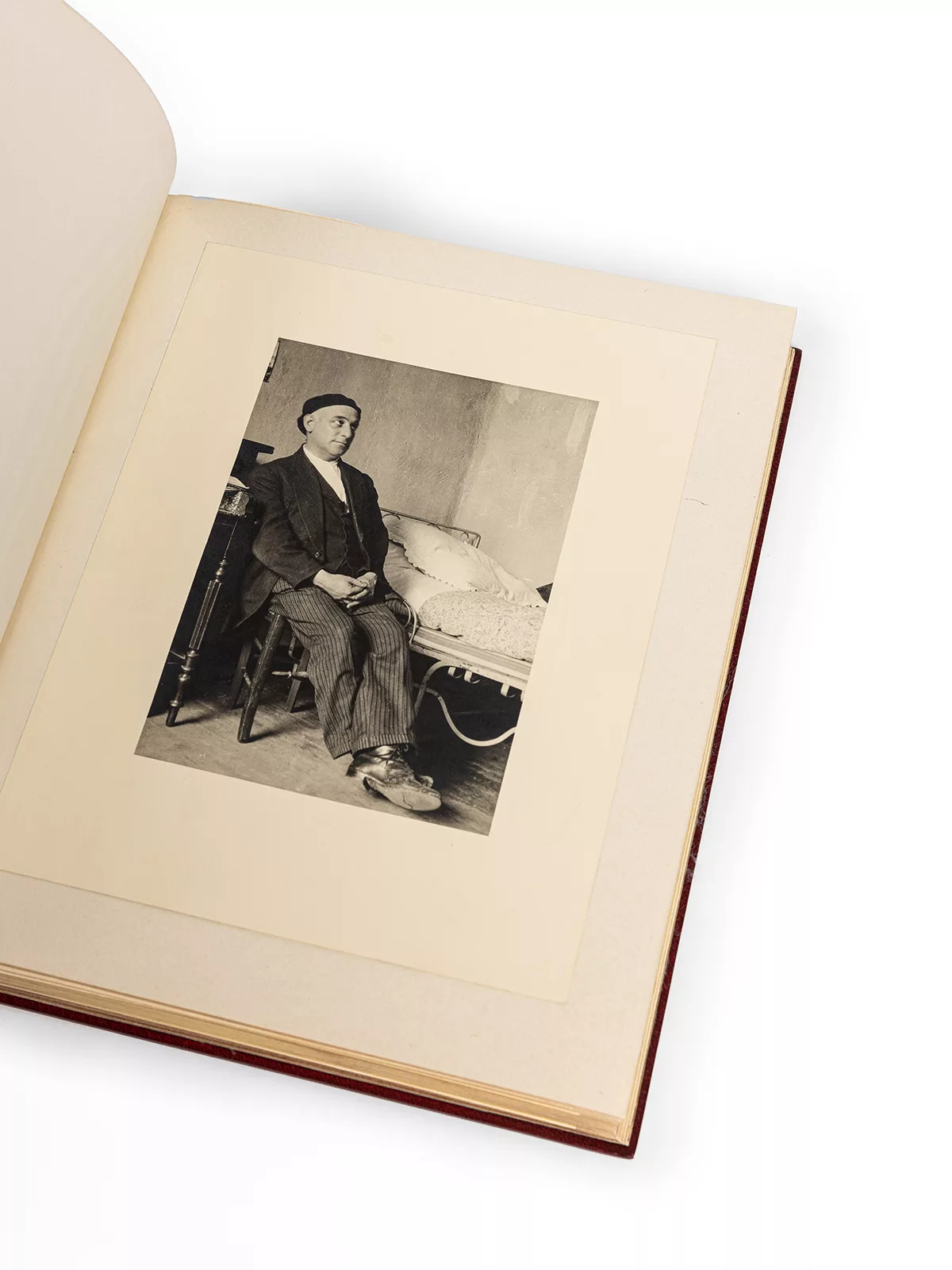
Mounted at front: a photographic portrait of Max Jacob, showing him in his room on the rue Gabrielle in 1917, according to the manuscript caption on the verso (gelatin silver print, 239 x 180 mm). It was used in establishing the text for the 1956 published edition.
This crucial firsthand account of Cubism was originally intended to introduce the memoirs of the art dealer Paul Guillaume, who died in 1934. Max Jacob worked on it for several years but published only a fragment in January 1937, in the review Les Feux de Paris, under the title “Le Tiers transporté.” For the eightieth anniversary of the author’s birth in 1956, Louis Broder published the complete text, illustrated by Picasso, Max Jacob’s longtime friend.
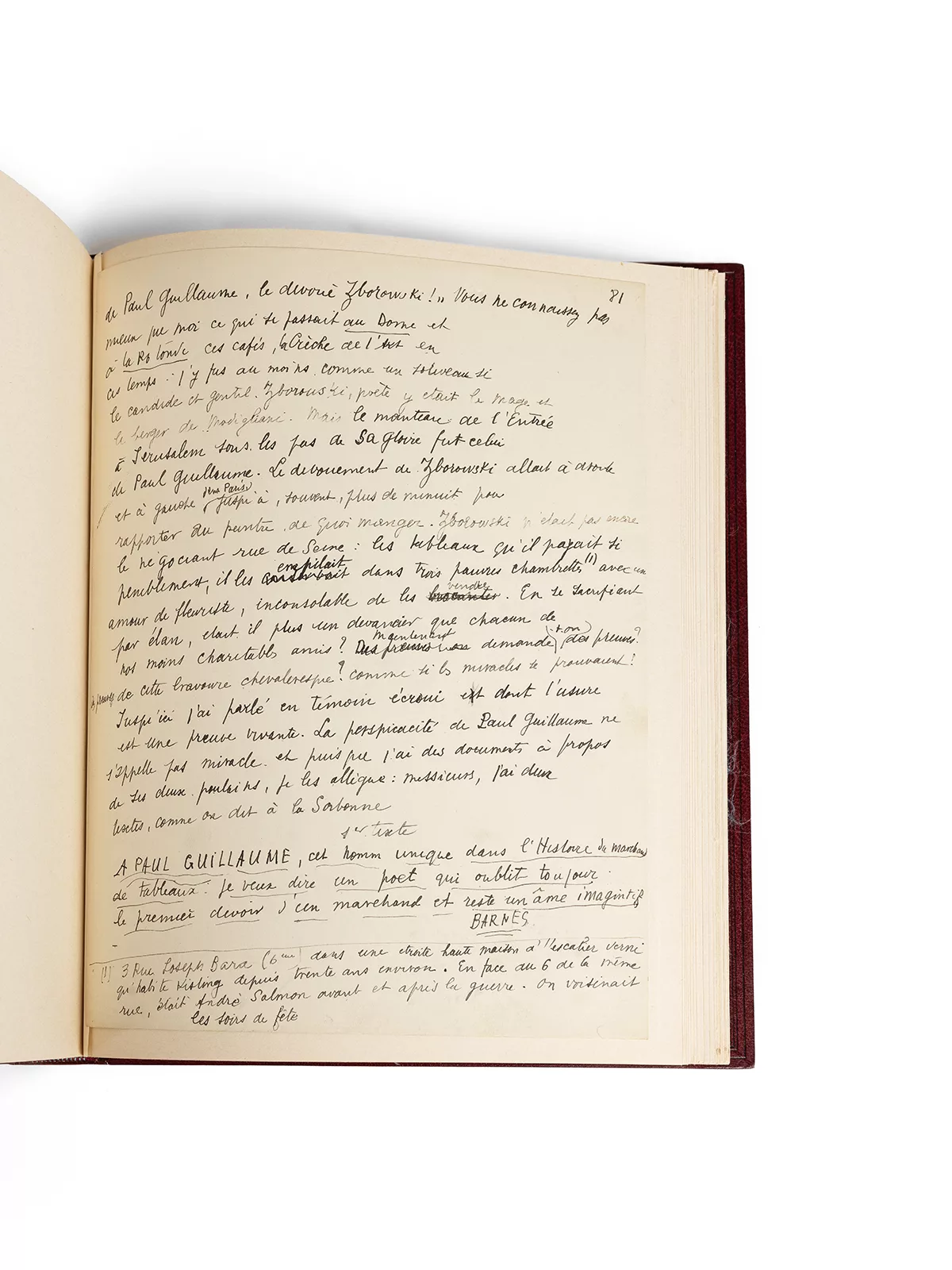
Pages 36–38 contain several crossed-out passages that remained unpublished. The manuscript also differs slightly from the printed edition in the placement of titles and subtitles. It was from this manuscript that Broder published the Chronique des temps héroïques, adding the section previously published in Les Feux de Paris in 1937, the manuscript of which he did not then possess (pp. 1–33, leaves 1–22). That earlier section belonged to the bookseller Bernard Loliée and was sold at the sale of his library (22 May 2019, no. 27).
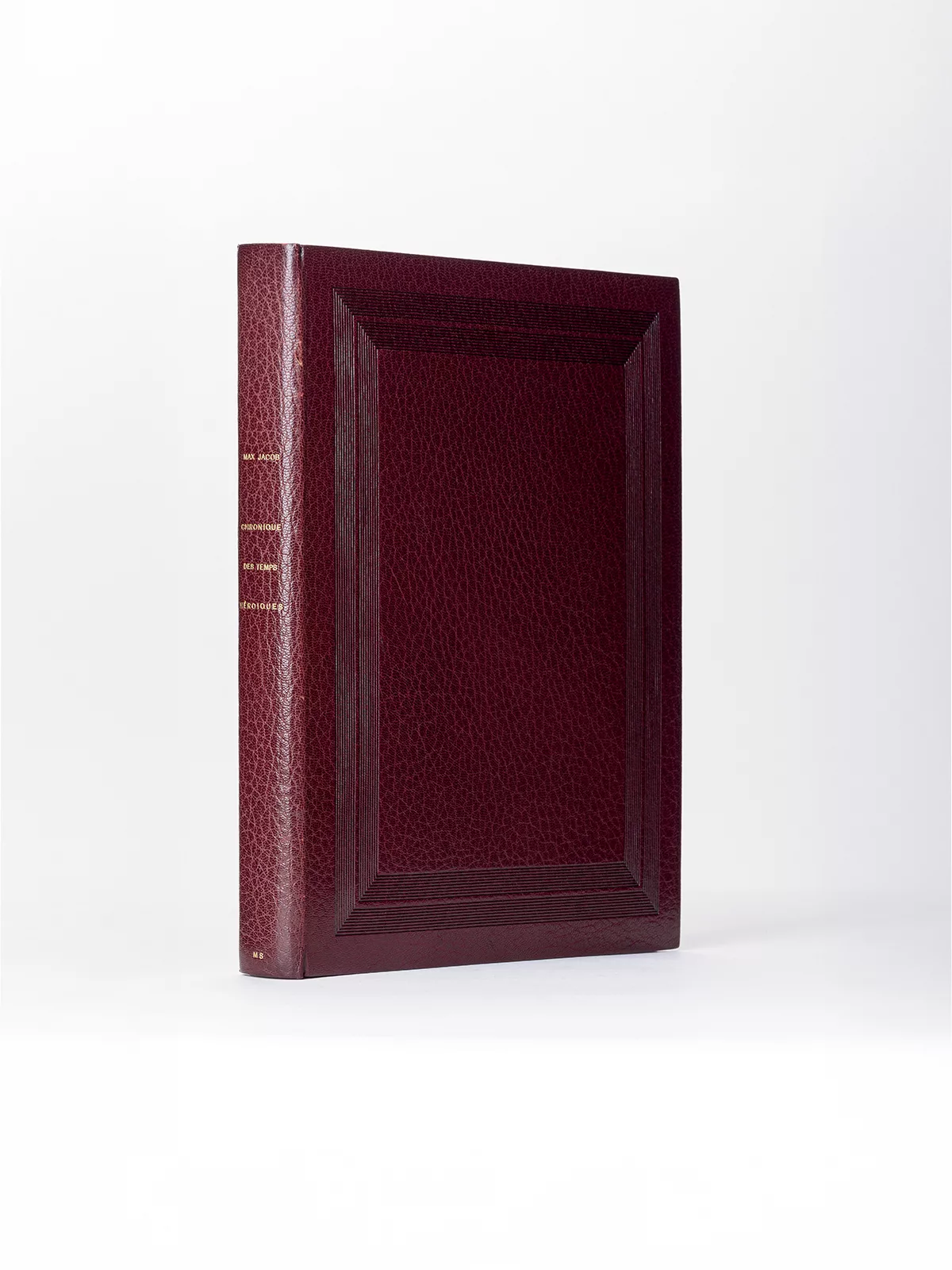
After the volume was published, Broder had the entire manuscript bound to match the unique copy on Japanese paper that he had designed for himself: a decoration of blind fillets composed by Plumelle, on a burgundy morocco binding executed by Semet. Intending eventually to add the 22 leaves comprising the beginning of the text, Broder asked his binder to reserve the necessary space at the front of the volume, where a number of blank leaves stand ready to receive them.
The Broder manuscript therefore begins at page 33 of the published text and offers the entire remainder of the Temps héroïques — with the exception of chapter VI, here replaced by three unpublished pages entitled “Voyage en Suisse” (pp. 71–73), acquired from a Paris bookseller in 1966: “They are unpublished and should be placed before page 99 of the Chronique des temps héroïques, at the start of a chapter,” along with leaf 70, “title page of the second part?”
The Loliée sale catalogue mentions two chapters of the Temps héroïques preserved in public collections: “Mouvement moderne” at the Orléans library, and “Art nègre” in the Gompel-Netter fonds at the BnF. On examination, this is inaccurate: these manuscripts are not original parts of the text, but merely notes and preparatory articles for its composition. The Broder manuscript is therefore the only surviving autograph document, and the only one that served in establishing the published text.