

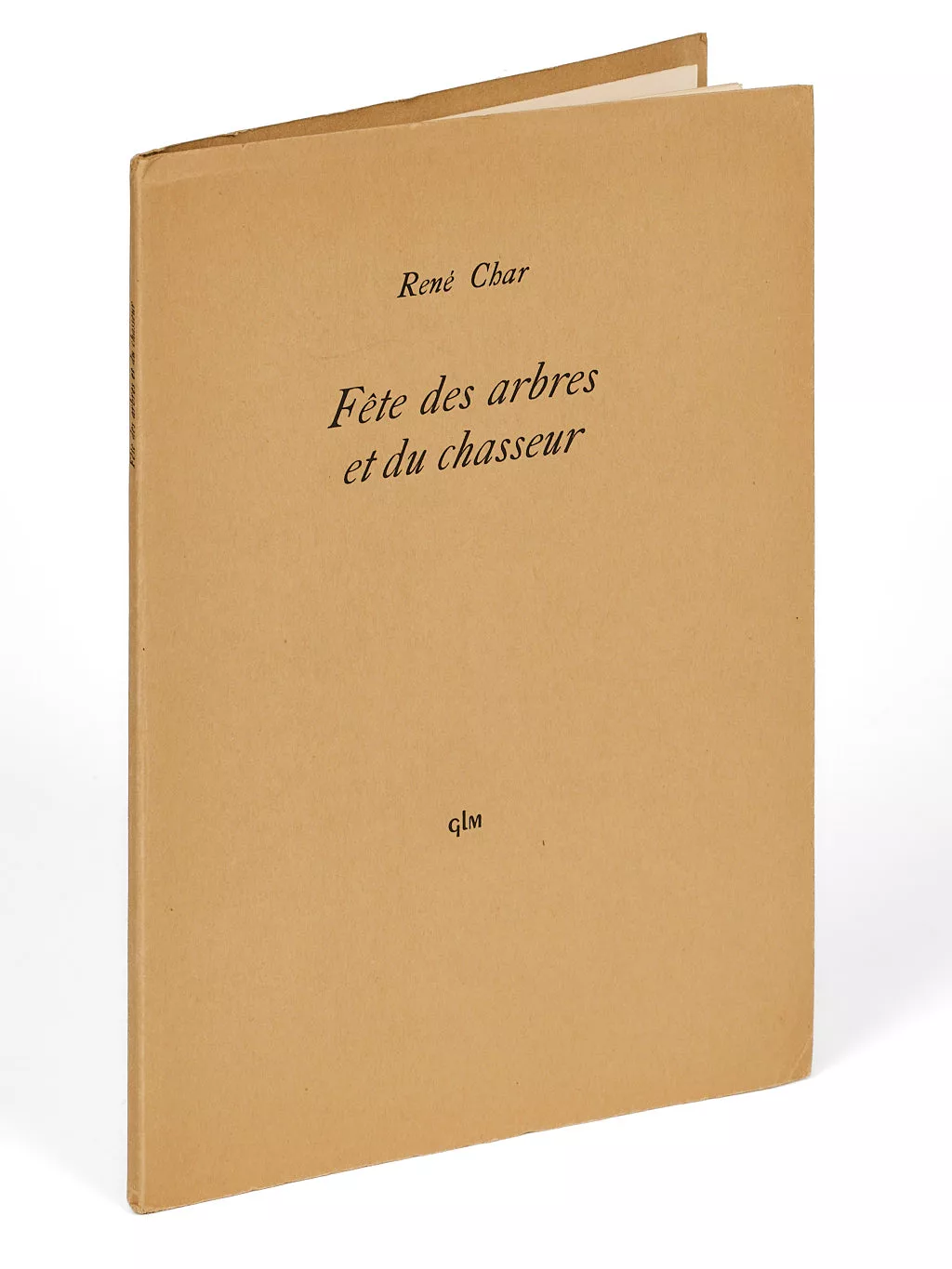
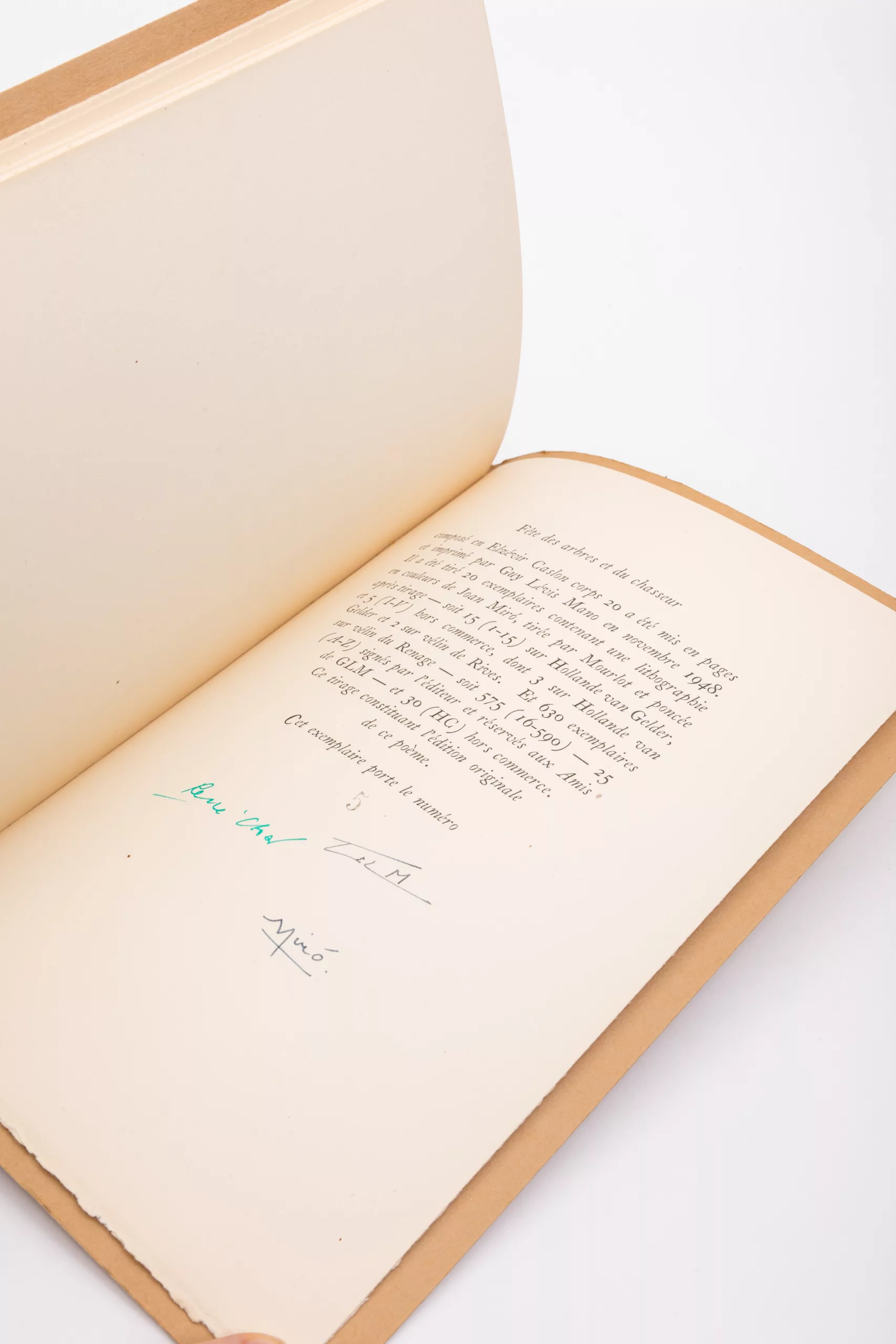
Fête des arbres et du chasseur
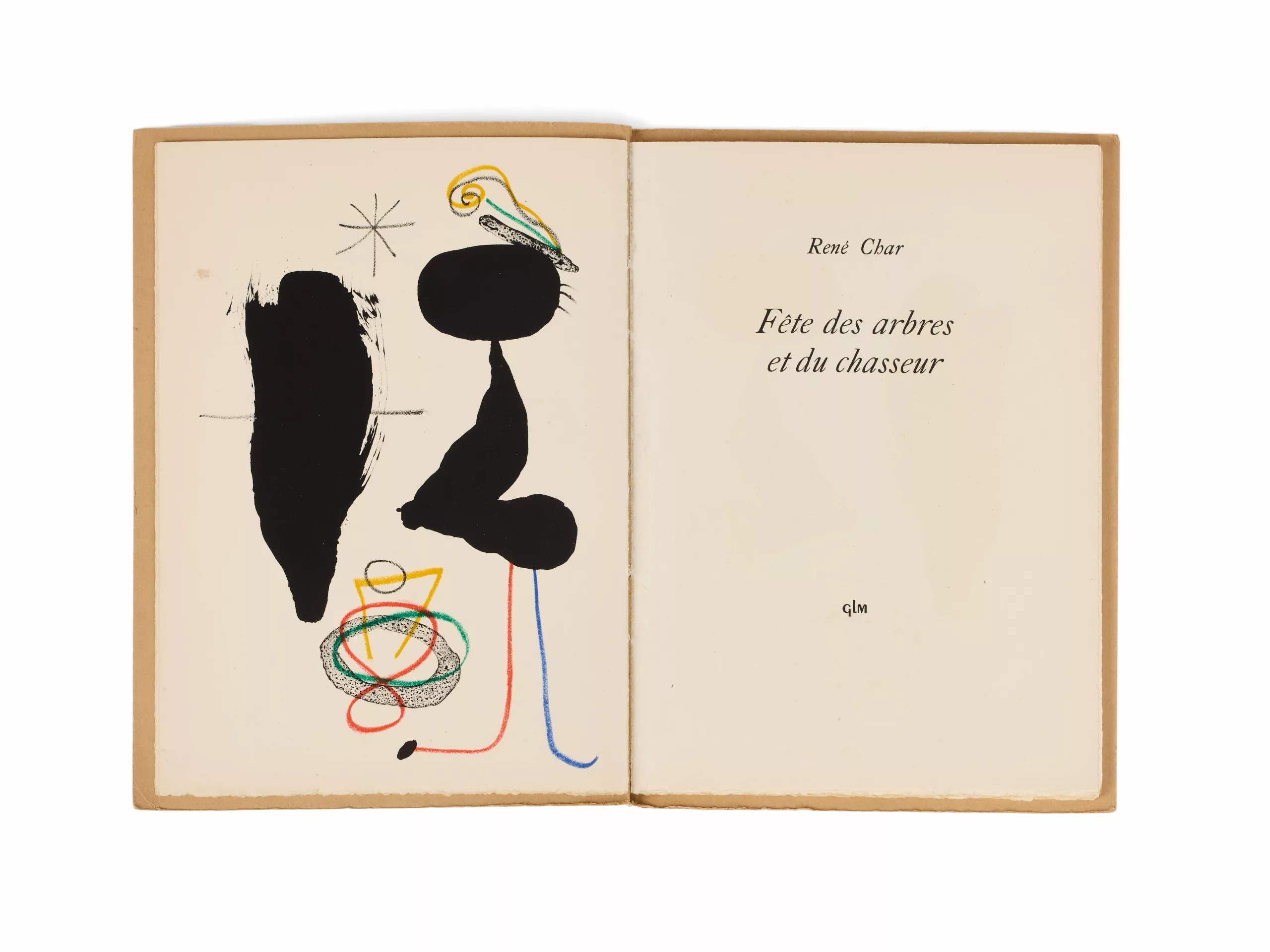
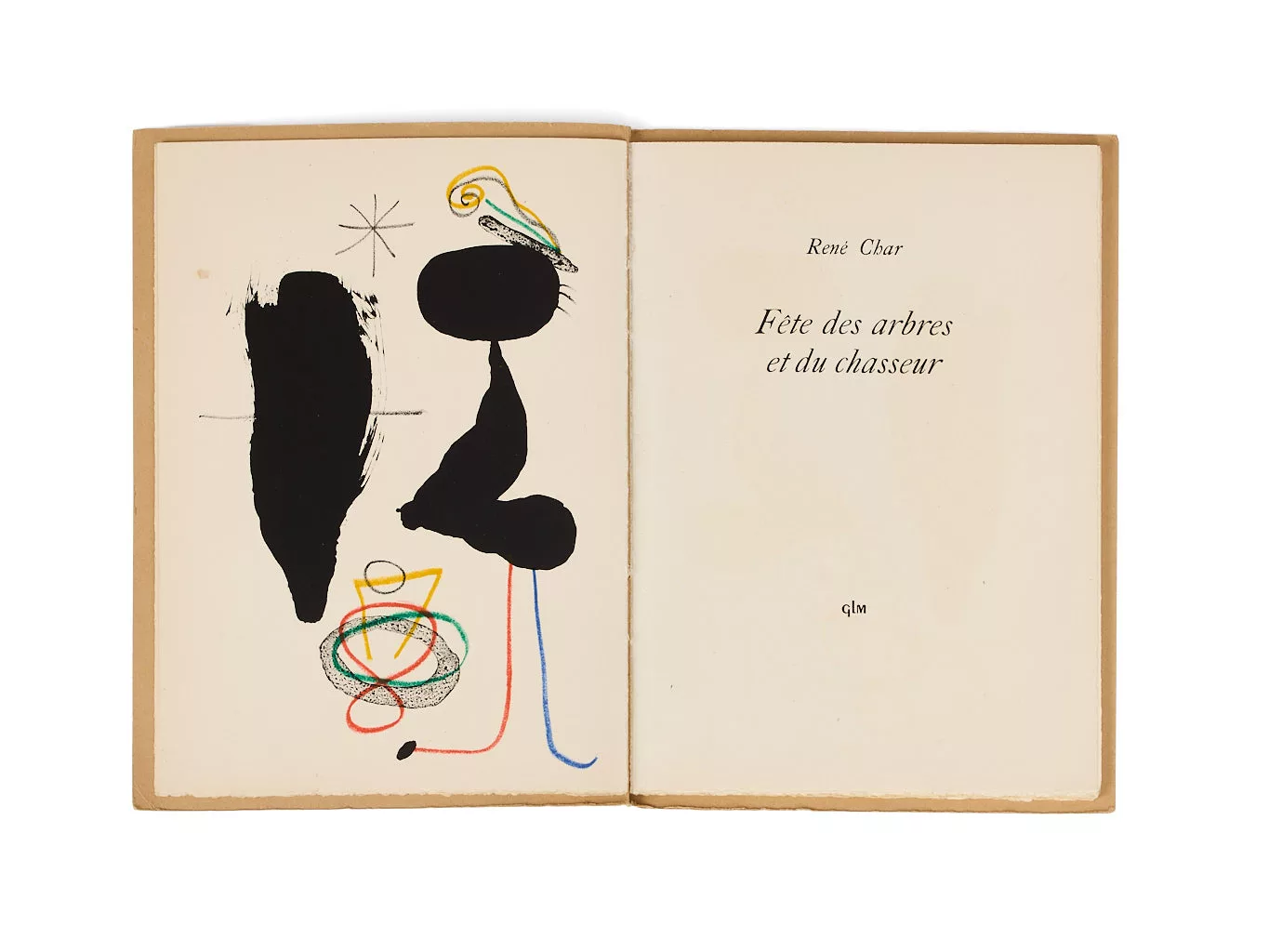
One of 20 deluxe copies on Hollande paper, signed by Char, Miró and the publisher, this copy no. 5.
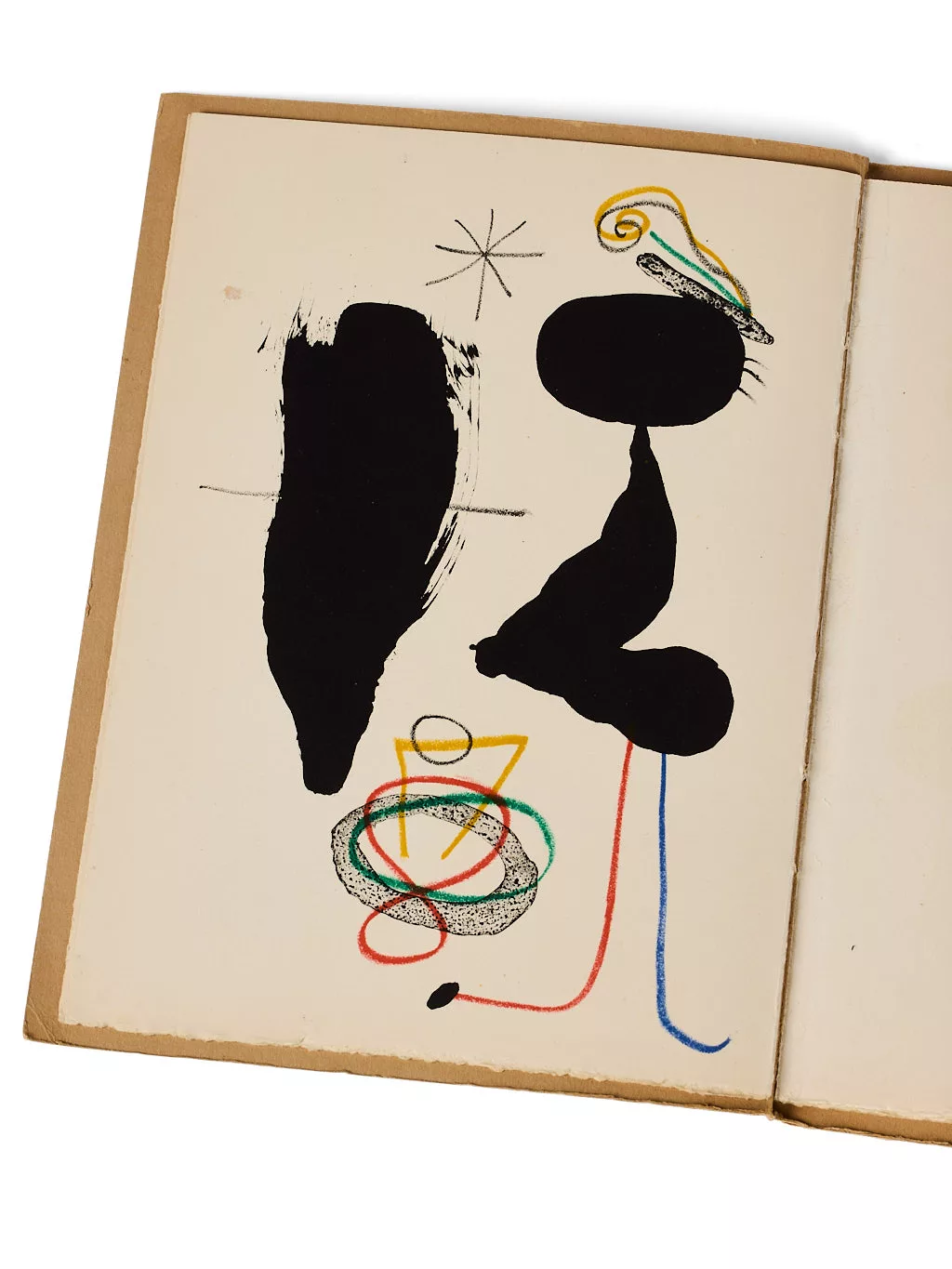
Miró’s illustration for Fête des arbres et du chasseur marks the first collaboration between the artist and the poet; this original lithograph is reserved for the deluxe issue alone.
Fête des arbres et du chasseur was written at the request of Catalan émigrés, comrades from the Resistance and the maquis of Céreste, who could not return to Spain because of Francoism. These companions, who had grouped together after the war, settled permanently in the region. The Destribats copy contained this autograph note at the head: “Fête des arbres et du chasseur was sung and performed in a forestry operation in the mountains of the Luberon, by a group of Spanish woodcutters, on 24 December 1948.” Regarding this song for “two guitars,” René Char specified: “The assonance of the verses was adopted at the request of the popular Catalan singers for whom this poem was composed. They believe it makes the song easier and better imprints their memory” (Œuvres complètes, pp. 1372–1373). The original title was Coplas, referring both to Spanish poetry and to the troubadours. A major expression of Cante flamenco and Cante jondo, the copla originated in Andalusia toward the end of the fourteenth century.
The poem was later included in Les Matinaux. Between Char and Miró, fifteen further publications followed, chiefly with GLM and PAB, up to the new edition of Le Marteau sans maître, published in 1976.