

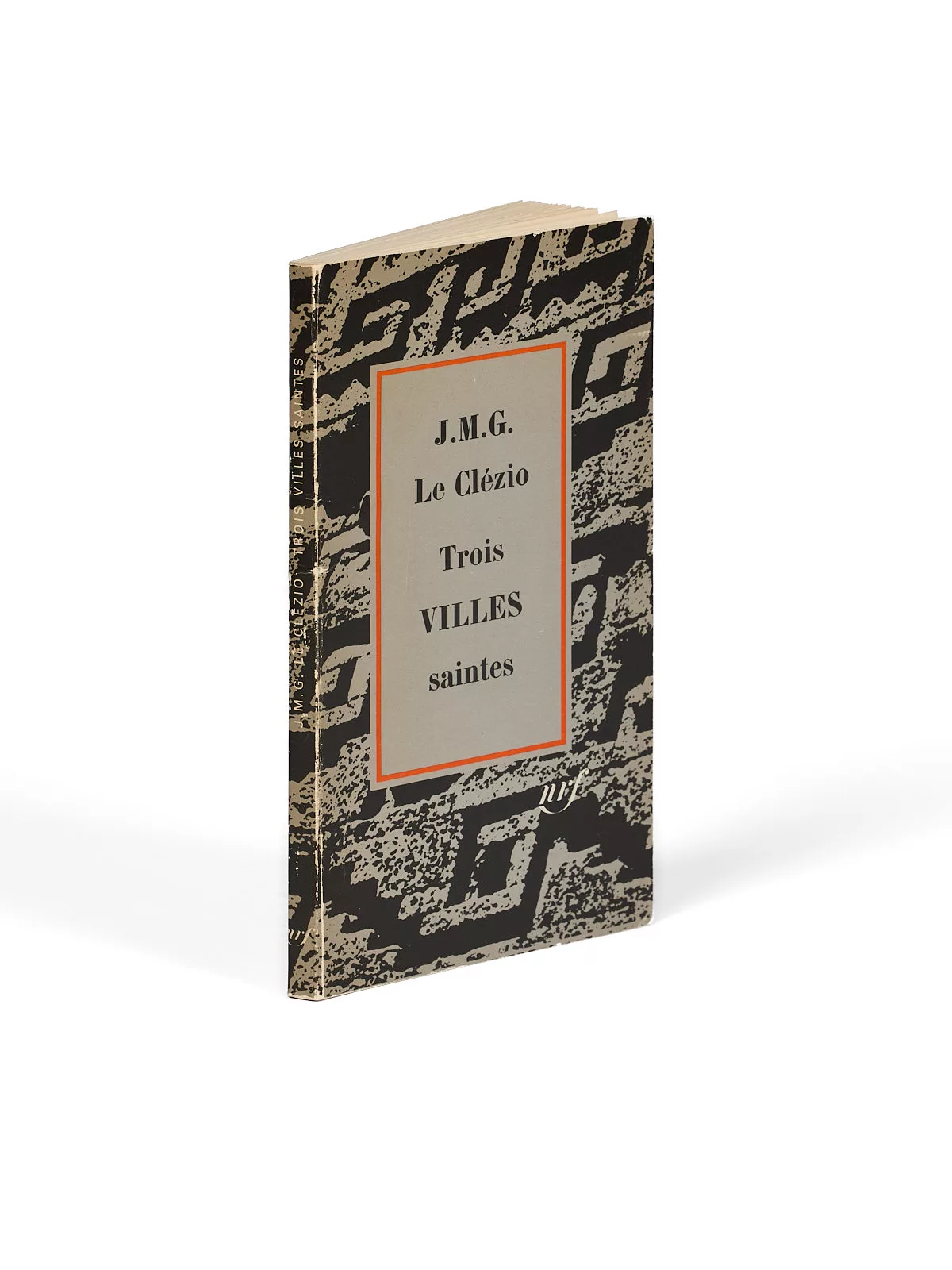
Trois villes saintes
One of the review copies, stamped as such.
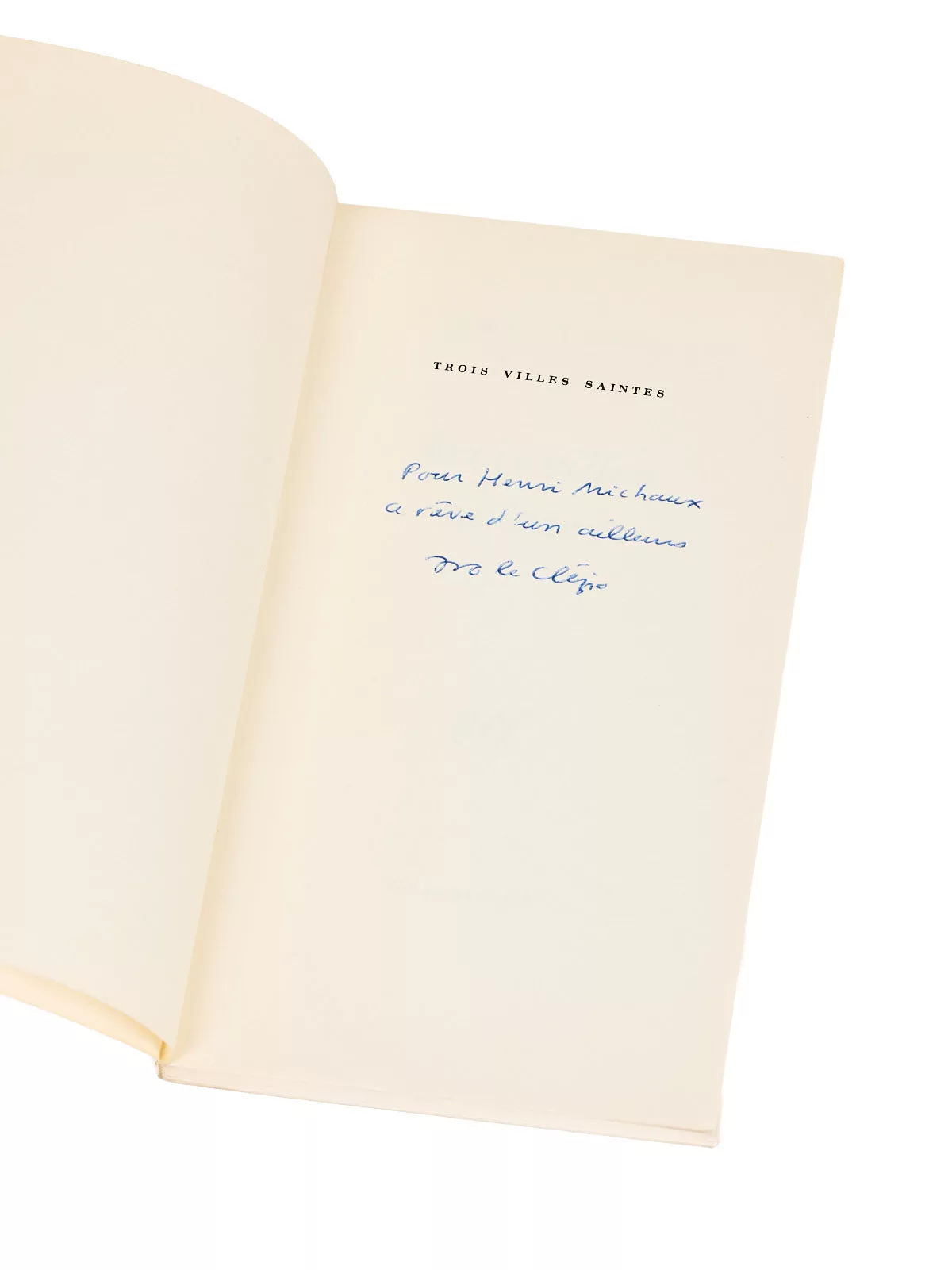
Presentation copy inscribed by Le Clézio to Henri Michaux: “Pour Henri Michaux, ce rêve d’un ailleurs. J.-M.-G. Le Clézio.”
Chancah, Tixacacal and Chun Pom are three ancient cities, Aztec or Mayan, celebrated by the young Le Clézio during his stay in Mexico in the 1970s. Then in his thirties, Le Clézio had turned away from narratives of urban anxiety to explore other worlds, and Mexico in particular. The book revolves around the dead gods of the Emberá Indians, ecological concerns, dreamlike vision and the meditative path without which no life is possible. The white invaders saw, came and conquered, and drought settled in with the end of these peoples. Yet for Le Clézio, the earthly places where civilizations were born cannot truly die. They wait for another people, or other circumstances, to allow their rebirth, interspersed with passages from ancient Indian texts drawn from the prophecies of the Chilam Balam. Le Clézio, who delights in rolling the sonorities of foreign names, or scattering them across the page, observes how “modern civilization” has sterilized or isolated these “first” peoples, who prefer the fixed eternity of a golden age to the changes of modernity. Truth and freedom are the water that falls from the sky, the water that irrigates fields and forest as well as the throats of men. Conscience neither waits nor demands: “It does not judge. What it asks, silently, with pride, is not vengeance, nor money. It is in accord with the desire of the gods, and it asks only this: bread and water.”
Trois villes saintes appeared in spring 1980, together with Désert. Two important publications that confirm protest and revolt as permanent elements of Le Clézio’s work, within an increasingly wide-ranging challenge to the Western world.