

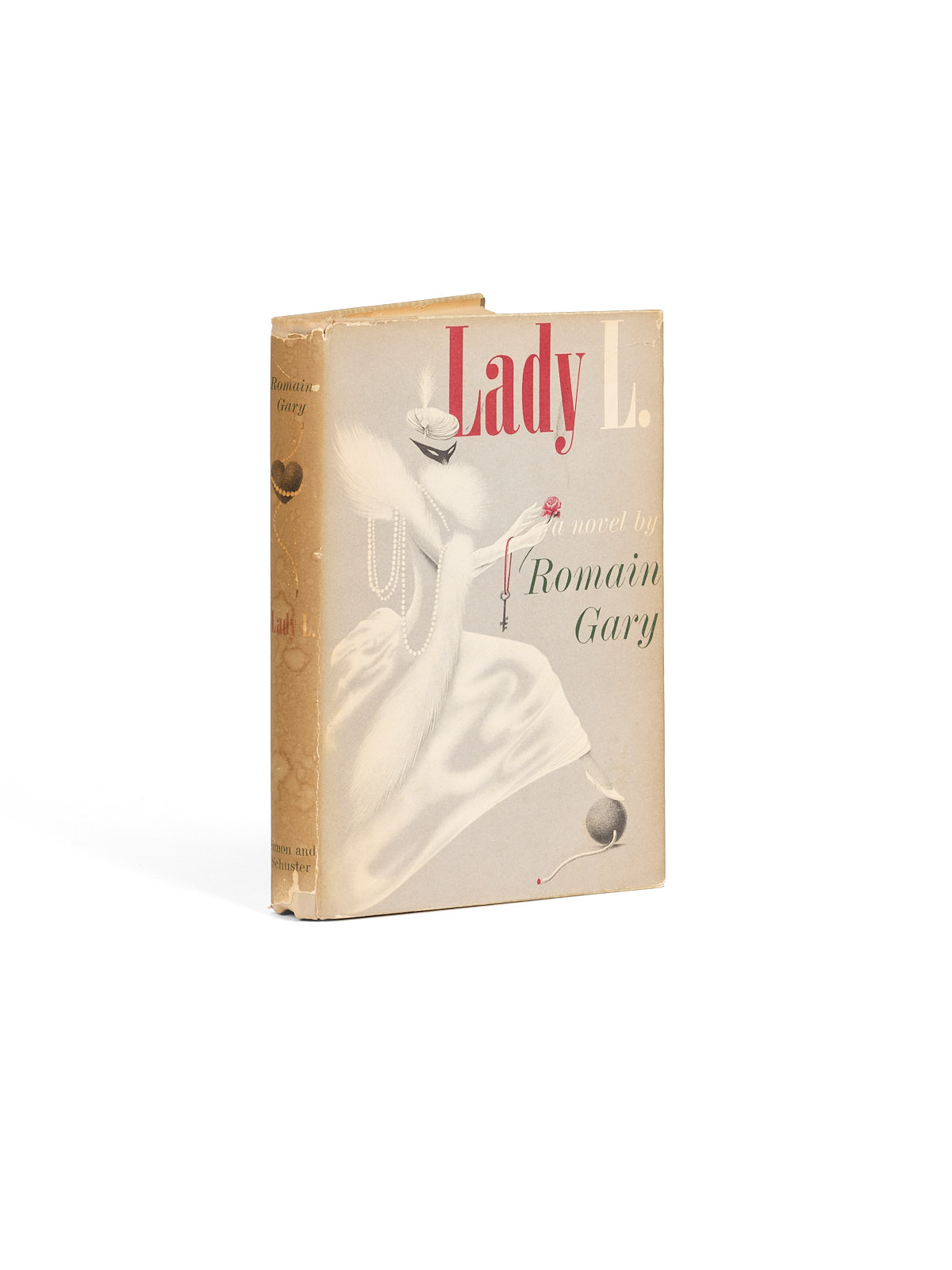
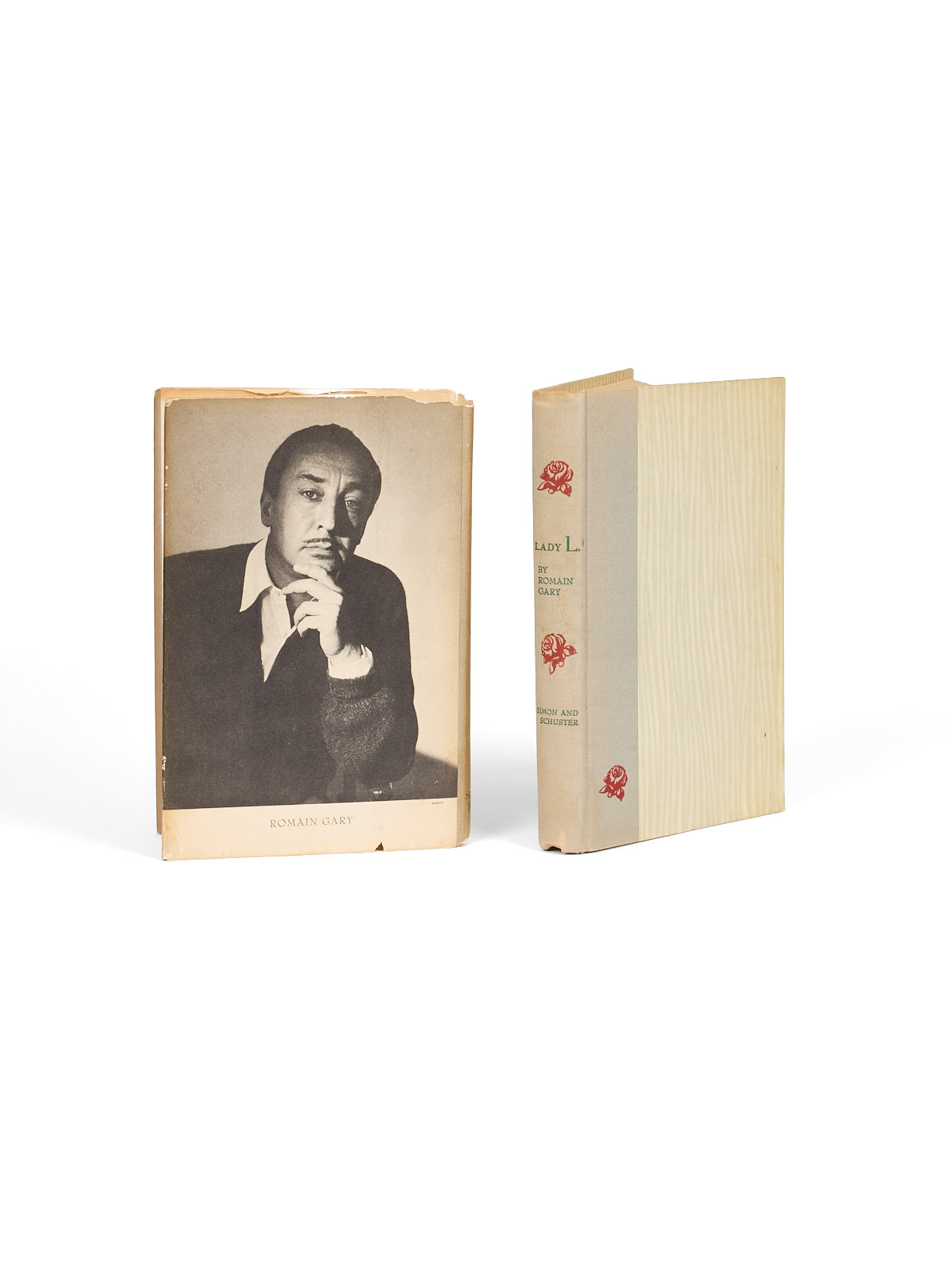
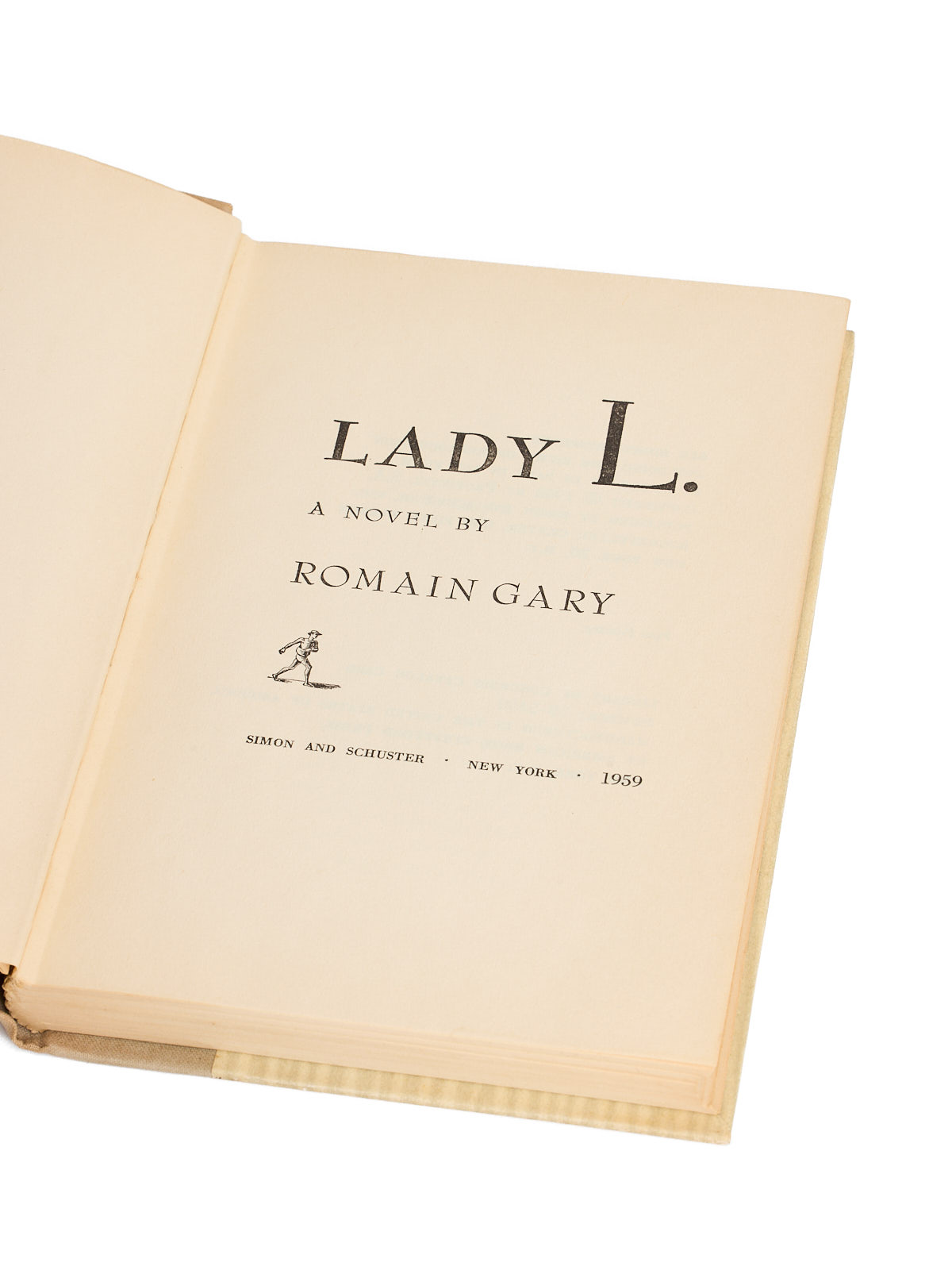
Lady L.
Lady L. was the first novel Gary wrote directly in English, and thus the first in any language other than French.
When Lesley Blanch met Romain Gary in 1944, she had just turned forty, on the very day of the Normandy landings. An editor at Vogue, where she had overseen features since 1937, this elegant and witty London columnist, gifted with real literary talent, was highly regarded in fashion circles. They married on April 4, 1945. A few months later, Gary embarked on a diplomatic career, and Lesley, a devoted wife, followed him from posting to posting — Sofia, Bern, Paris, New York and Los Angeles — teaching him her language to perfection. “His much-admired English accent,” she noted, “was made all the more charming by the rolling Russian r’s Romain added to it. He had acquired a perfect pronunciation; only the timbre of his voice, that deep, husky timbre, retained something Slavic.” Gary quickly gained real fluency, to the point of writing four novels directly in English: Lady L. was the first, in 1958 (translated in 1963), followed by The Talent Scout (1961), The Ski Bum (1964) and The Gasp (1973). Gary also fully translated La Promesse de l’aube, La Tête coupable and White Dog, and was closely involved in the translations of Colors of the Day, The Roots of Heaven, A European Education, The Dance of Genghis Cohn and Europa — and, indirectly, through Ajar/Pavlowitch, in that of Momo.
“Despite a stormy and painful divorce, Lesley Blanch and Romain Gary — especially after his separation from Jean Seberg, and even more so after her death — established a ‘telephone friendship.’ She had retired to Menton, to a house in the Bay of Garavan, where she had recreated her intimate world of carpets, divans, icons, works of art, curious objects, old grimoires and Russian books printed before the spelling reform. But on a fateful night in April 1994, a fire destroyed all these treasures. At ninety, Lesley had the courage to build a new home, before dying in 2007 at nearly 103.” (“Lesley Blanch, Une fée bienveillante,” by Lucien d’Azay, Revue des deux mondes, May–June 2021).
A fine copy.