

Des hommes
Review copy.
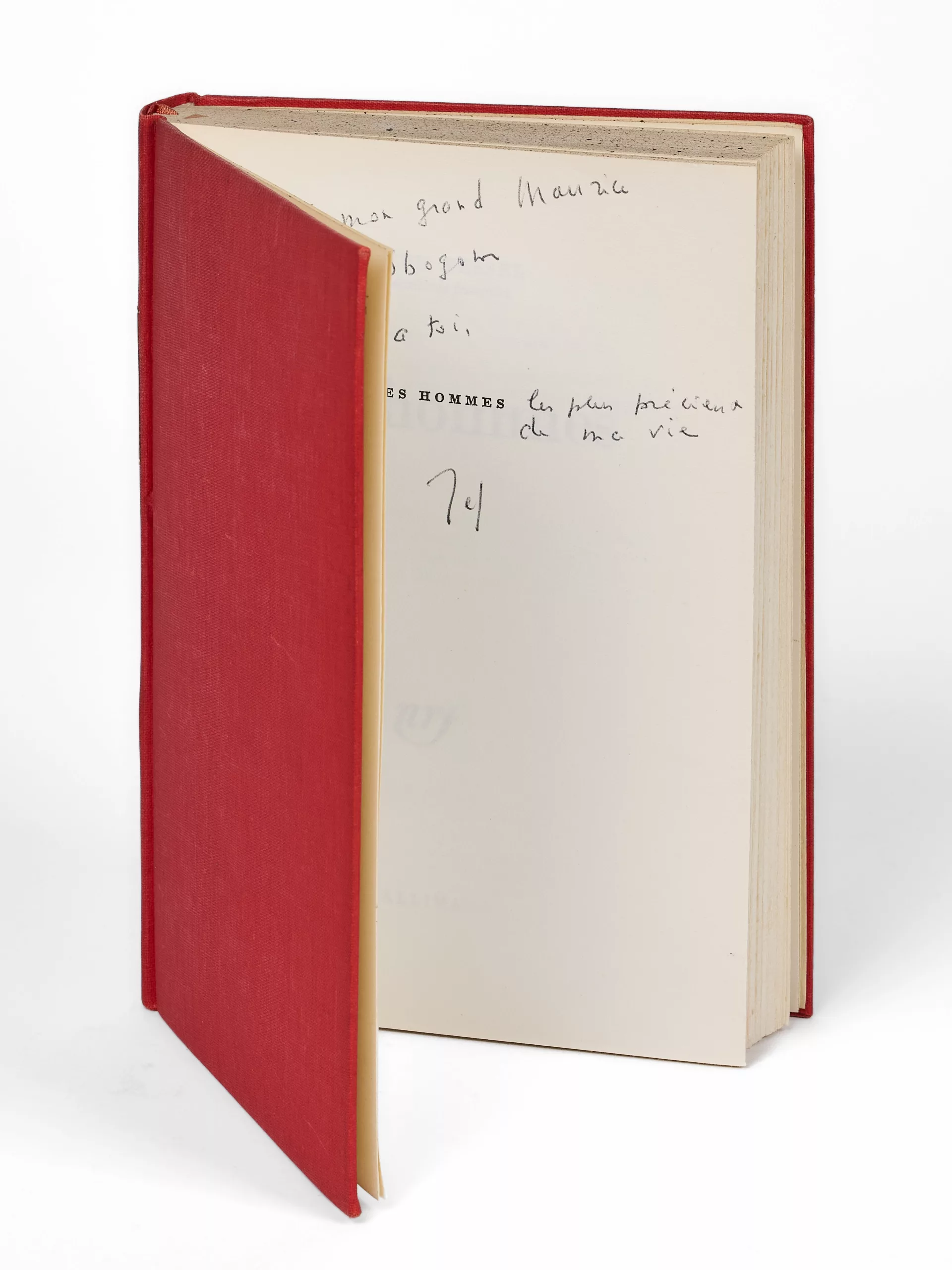
A precious copy belonging to Kessel's nephew, Maurice Druon.
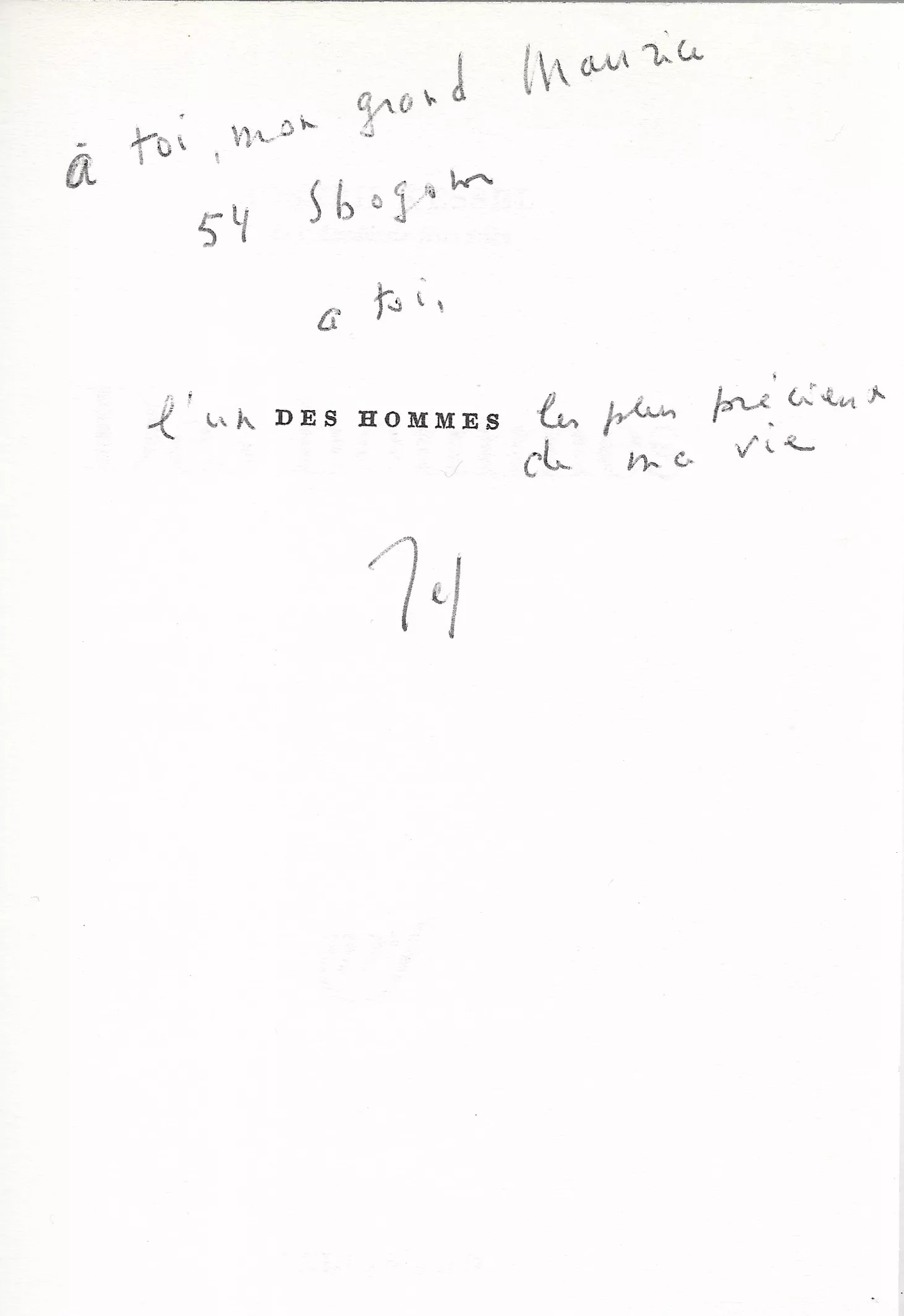
Inscribed and signed: “à toi, mon grand Maurice, 54 Sbogom à toi, l'un [Des Hommes] les plus précieux de ma vie. Jef.”
Late in life, Kessel decided to offer a kind of geography of his extraordinary encounters: artists, men of action, gypsies, revolutionaries and pioneers of Israel. Forty-seven portraits were gathered under the title Des hommes, forming a small masterpiece both for the quality of the writing and for the document it represents.
Most of these forty-seven portraits derive from articles, notes and prefaces previously published, but Kessel, who was a superb self-editor, reworked them again and again until fully satisfied with the tributes he wished to pay to his lifelong companions: Jean Cocteau, Romain Gary, André Malraux, Antoine de Saint-Exupéry, Raymond Radiguet, Jean Mermoz of course, but also his painter and journalist friends and other “men of action.” All are evoked with precision and tenderness. The book’s success in the shops was so considerable that Kessel regained his taste for writing and signed a contract with Éditions Rombaldi for a thirty-volume edition of his complete works, accepting the laborious revision work this entailed. He also accepted the role of editorial director for the review Combats d’Israël at Tallandier.
A precious copy belonging to Maurice Druon, very probably given to him as a birthday present: the book was printed on March 23, and Kessel’s nephew was born on… April 23, 1918. The book, distributed in the first half of April 1972, thus arrived just in time to celebrate Druon’s fifty-fourth birthday. What finer gift, then, than this copy with its inscription: “à toi, mon grand Maurice, 54 Sbogom à toi, l’un [Des Hommes] les plus précieux de ma vie”; fifty-four springs, fifty-four Zbogom: a term of Serbian and Bulgarian origin used in Russian to bid farewell in a deep and respectful manner, since it means “may God watch over you.”
In gathering his prefaces, notes and portraits, Kessel said he had simply “wanted to say thank you to men whose works made my life more beautiful and helped me to live it better”; his nephew, like none of his close relatives, does not appear among them, but his place in Kessel’s private pantheon was immense.
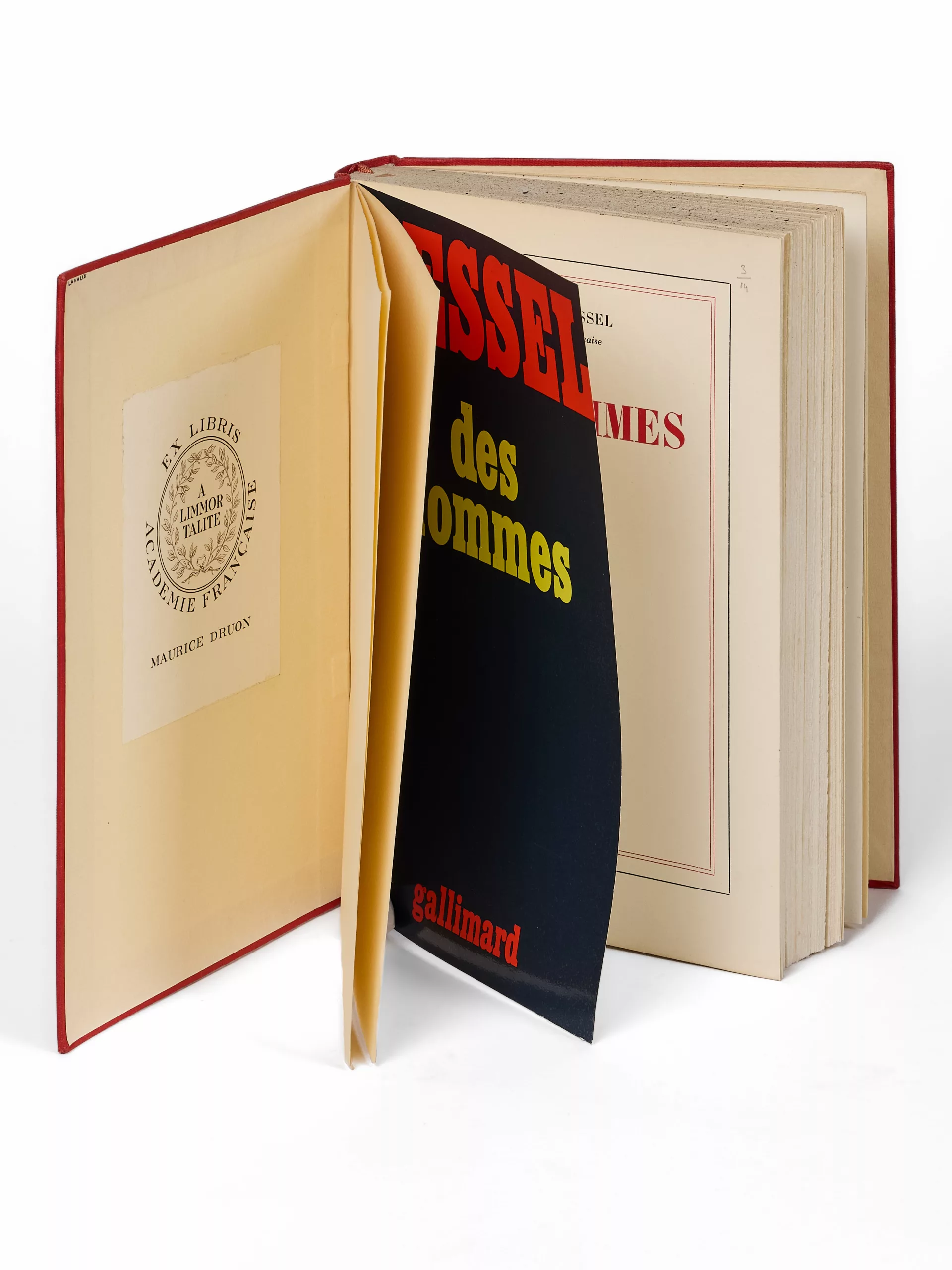
Maurice Druon’s bookplate at the front.