

Mémoires intimes
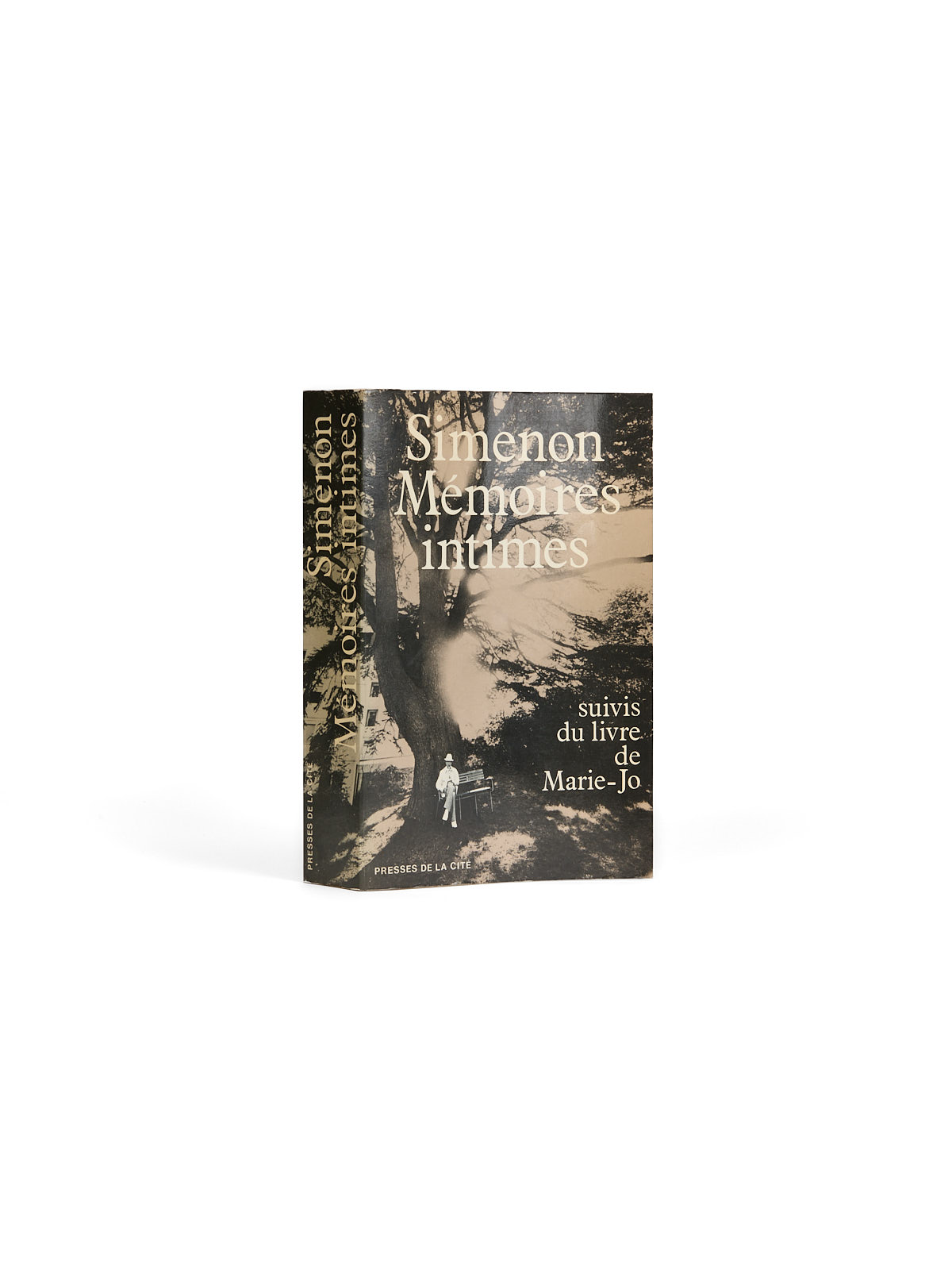
First printing, complete with the passages subsequently censored.
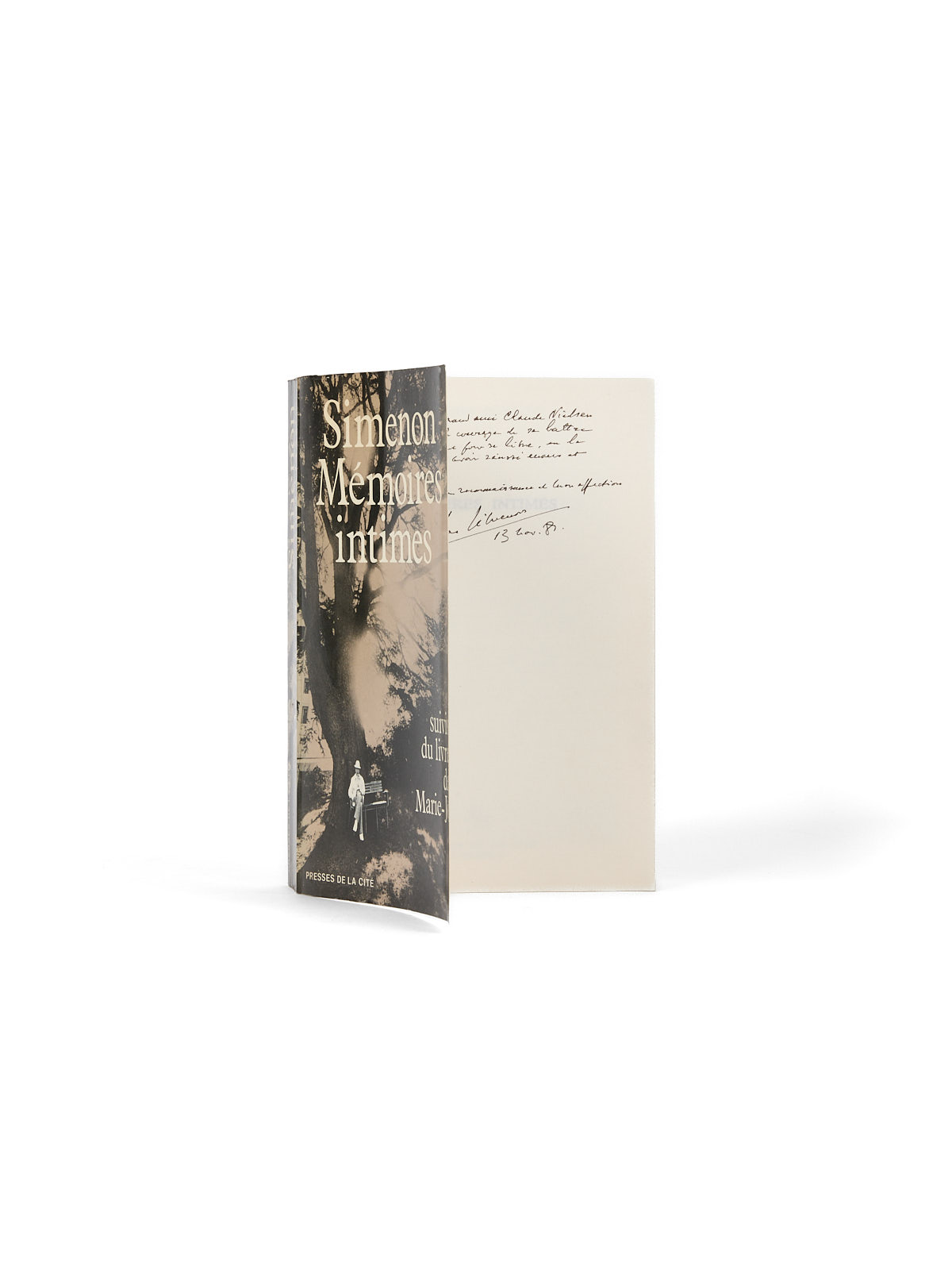
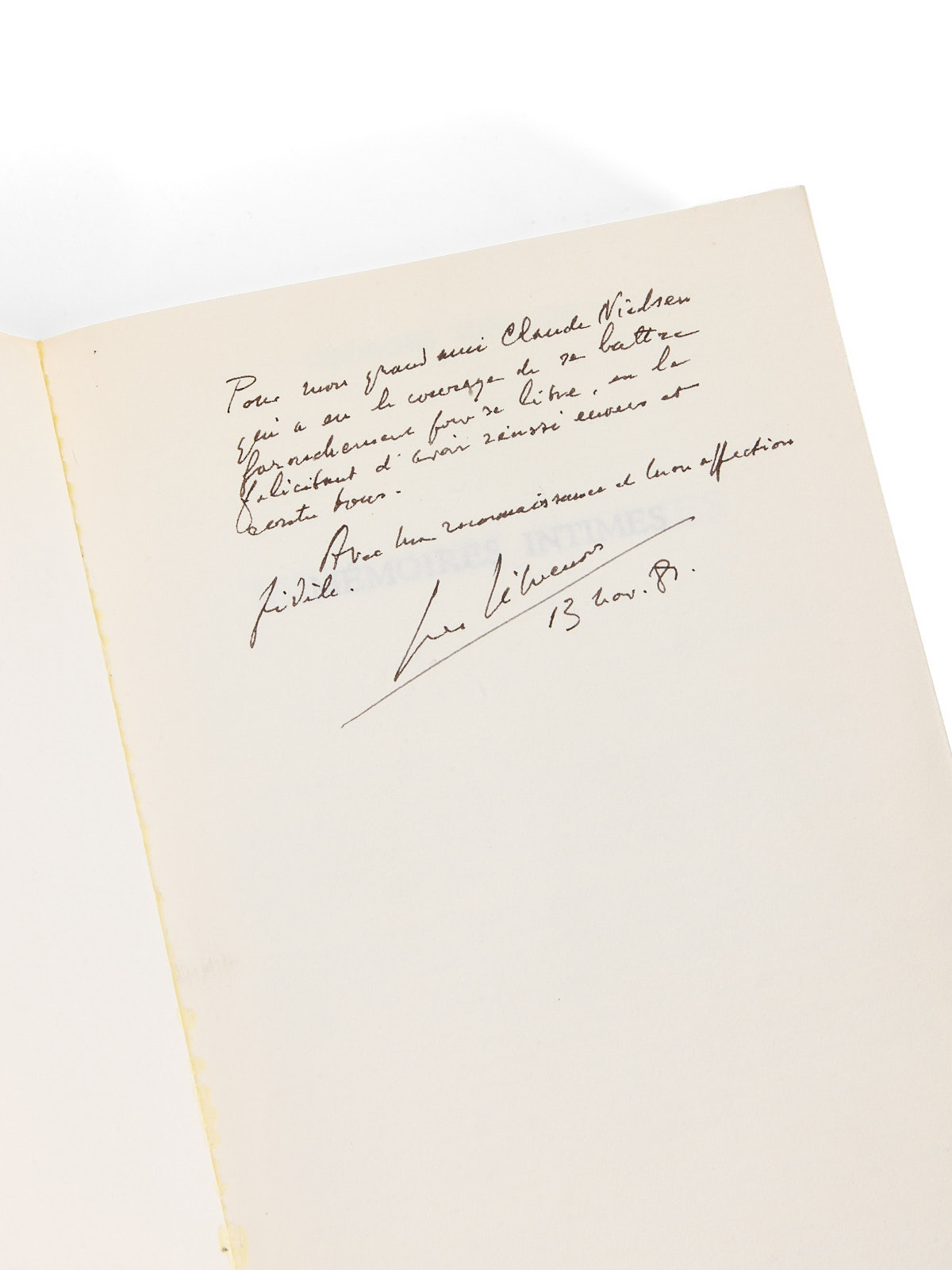
Signed presentation inscription: “Pour mon grand ami Claude Nielsen qui a eu le courage de se battre farouchement pour ce livre, en le félicitant d'avoir réussi envers et contre tous. Avec ma reconnaissance et mon affection fidèle. Georges Simenon, 13 nov. 81.”
The publication of Mémoires intimes was regarded as the literary event of the 1981 autumn season: “The book carries a whiff of scandal, and this in three respects: first, it discusses the sexuality of a man world-famous for having declared, four years earlier, in an interview with Fellini about his Casanova, that he had made love to 10,000 women; second, certain pages were bound to provoke his ex-second wife, Denyse Ouimet, who indeed obtained, on 9 November, the suppression of several passages; third, it addresses the most painful event that can overwhelm a human life: the suicide of one’s child — in this case Marie-Jo Simenon, who had taken her own life on 19 May 1978, at the age of twenty-five. Sexuality, the war between the sexes and death, in the autobiography of a world-famous writer benefiting from genuine media coverage: Mémoires intimes could not go unnoticed.” (Laurent Demoulin, “Simenon apostrophé,” Textyles, 63 | 2022, 87–97).
It was in 1979, after his twenty-first and last dictated novel, that Simenon decided to embark on writing his Mémoires intimes. It would become his most voluminous work. Abandoning his typewriter and tape recorder, he wrote by hand, between February and November 1980, from two to eight in the afternoon every day, 686 densely written manuscript leaves. At the same time, under the pseudonym Odile Dessane, Denyse Simenon-Ouimet, from whom he lived separated, published Le Phallus d’or, prefaced by the usual disclaimer that “any resemblance to actual persons… [etc.]”
As in Un oiseau pour le chat, published in 1978, she denied wanting to settle scores. “I simply tried to give my mythical husband a human dimension and restore to him a warmth he is losing.” In it she recounts the devouring passions of Maigret’s creator, his tyranny, and his semblance of affection toward the woman who always kept the name Simenon: “[He] does not want to divorce. And he pays me an allowance equivalent to a thousandth of his income.” Mother of his three children (John, Marie-Jo and Pierre), she objected to certain lines in Mémoires intimes, particularly those in which the novelist accused her of having permanently damaged Marie-Jo’s psyche, and took the matter to court.
This original October printing was on sale for barely a week: on 9 November 1981, the Paris tribunal de grande instance ordered the withdrawal of the books and the suppression of several passages (31 lines in total, 25 of them concerning Marie-Jo) for the new edition, which was to carry an author’s note (added at pages 495, 496, 719 and 721).
The new printings of November and December enjoyed wide distribution, boosted in France by the success of the remarkable interview Simenon gave to Bernard Pivot for a special edition of Apostrophes, recorded at the novelist’s home in Lausanne and broadcast on Antenne 2 on 27 November 1981. “This interview, lasting one hour fifteen minutes, perhaps deserves to be called ‘extraordinary.’ Not only because it brought together a major writer and a popular journalist, but because neither played his usual role, and neither followed the conventions of the writer’s interview as then practiced.” (Laurent Demoulin, op. cit.)
A precious copy: that of the book’s publisher, Claude Nielsen. He had taken over the reins of Presses de la Cité on the death of his father, Sven Nielsen, in 1977. The elder Nielsen had met Georges Simenon in 1945: the beginning of a very long collaboration — and friendship —, with Simenon transferring in 1947 to Presses de la Cité the entire literary exploitation rights to his work, to Gallimard’s detriment. Until 1981, Presses de la Cité published 141 previously unpublished books by Simenon, with an average print run of 300,000 copies, and some sixty translations, from Japanese to Buryat.